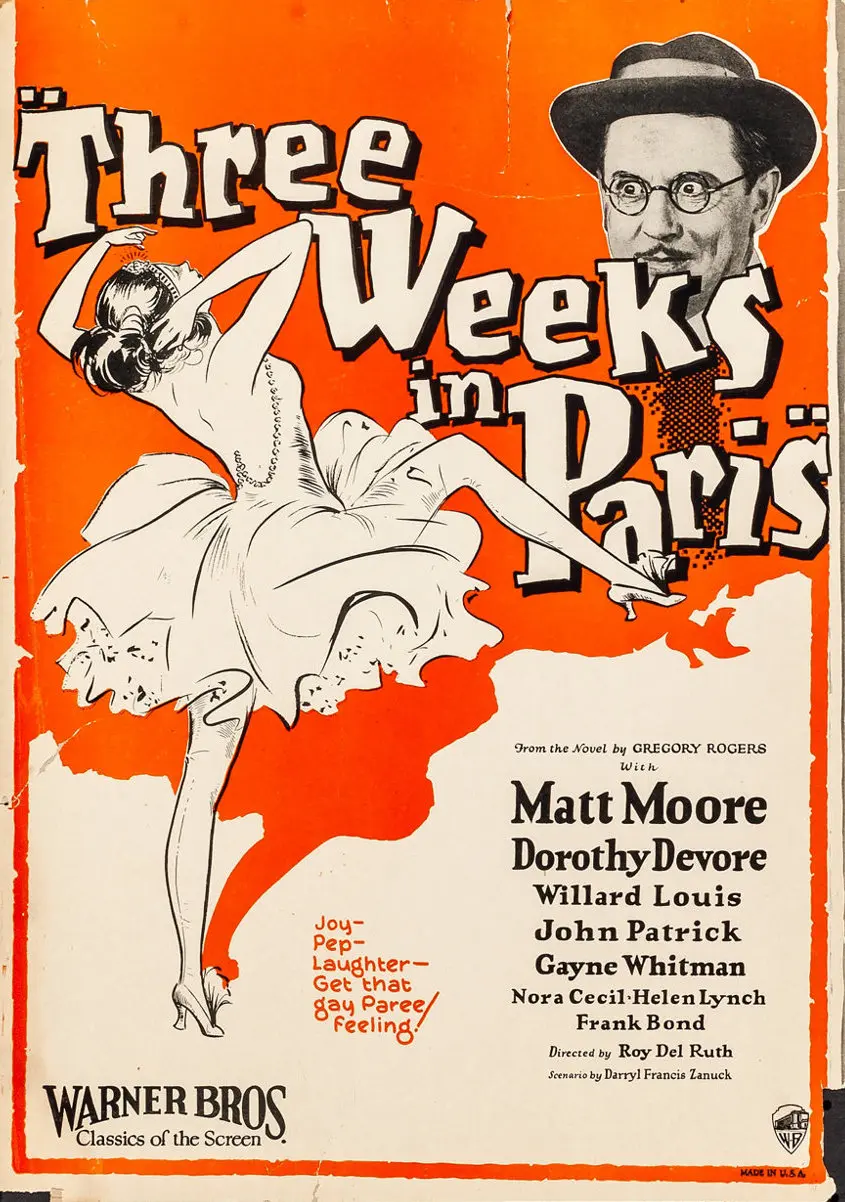
Is Three Weeks in Paris worth watching today? Short answer: yes, but with a significant caveat. This early silent film offers a fascinating glimpse into the nascent stages of comedic storytelling and a particularly inventive narrative structure that still manages to surprise, even a century later.
This film is absolutely for cinephiles, historians of early cinema, and those with an appreciation for the foundational elements of screen comedy and dream logic. It is decidedly NOT for viewers seeking modern pacing, sophisticated character development, or high-fidelity visuals. Approach it as a historical artifact with a clever twist, and you’ll find considerable enjoyment.
The Early Days of Narrative Innovation
Darryl F. Zanuck, even in his nascent writing career, demonstrated a flair for narrative trickery that elevates Three Weeks in Paris beyond a mere slapstick romp. The film, released in an era still experimenting with the grammar of cinema, doesn't just tell a story; it plays with the very concept of storytelling.
The central conceit—a sprawling, escalating farce that ultimately resolves as a pre-marital daydream—is a bold stroke. It allows the filmmakers to indulge in a level of absurdity that would otherwise strain credulity, even for a silent comedy. This structural choice is, in my opinion, the film's most enduring legacy.
This film works because of its audacious narrative twist and the committed, if broad, performances that sell the escalating chaos of Oswald's Parisian misadventures. It fails because its pacing can feel sluggish by contemporary standards, and some of the comedic beats rely on tropes that have long since lost their bite. You should watch it if you appreciate the historical evolution of film, enjoy a good plot twist, and have a soft spot for the earnest charm of early silent comedies.
A Deeper Dive into the Parisian Fantasy
Directing and Pacing: A Product of its Time
The direction, while competent for the era, leans heavily on theatrical blocking and broad gestures, typical of silent cinema. The camera is largely static, serving primarily to capture the action rather than to interpret it dynamically. This is not a criticism, but an observation of the film's historical context.
Pacing is another element that requires adjustment from a modern viewer. The build-up to Oswald's Parisian escapade, and the subsequent unfolding of his imagined misfortunes, takes its time. There are moments where a contemporary audience might grow impatient, particularly during the more drawn-out sequences of physical comedy or melodramatic despair.
For example, the scene detailing Oswald's jailing and the subsequent news of his 'death' is stretched out, emphasizing the emotional weight (or comedic exaggeration) of each beat. While effective for its time, it lacks the rapid-fire editing we've come to expect from comedies.
Performances: Charm and Exaggeration
The cast, led by Dorothy Devore as Mary Brown and Matt Moore as Oswald Bates, delivers performances perfectly suited to the silent era's demands. Devore, as the bride, primarily serves as the emotional anchor, her anxieties subtly conveyed through expressions that are both earnest and slightly exaggerated.
Matt Moore, however, is the engine of the film's comedic energy. His Oswald is a whirlwind of youthful exuberance and escalating panic. From his initial flirtation with Dolly Withers to his desperate attempts to evade a duel, Moore commits fully to the physical comedy. His transformation into a disguised count, complete with a ludicrous accent (implied by title cards), is particularly amusing.
Frank Bond as Gus Billikins, Oswald's inept friend, provides much of the incidental comedic relief. His character's blunders are predictable but executed with a charming clumsiness that fits the overall tone. The supporting cast, including Rosa Gore as Mary's mother, adds to the film's tapestry of early cinematic archetypes.
One could argue that the film’s reliance on broad physical comedy, common in its era, is both its strength and its weakness. It’s accessible, but occasionally simplistic.
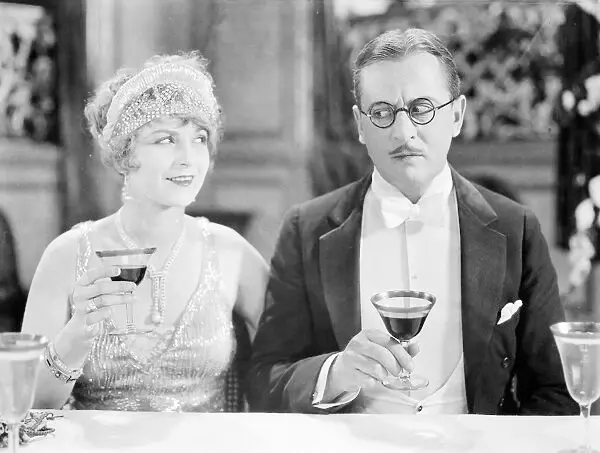
Scene from Three Weeks in Paris
Cinematic perspective: Exploring the visual vocabulary of Three Weeks in Paris (1925) through its definitive frames.
Cinematography and Visuals: Simple Elegance
The cinematography of Three Weeks in Paris is functional, prioritizing clarity and storytelling over stylistic flourish. Shots are generally well-composed, ensuring that the audience can follow the narrative even without spoken dialogue. The sets, while not elaborate, effectively convey the different environments, from the cozy domesticity of the Brown household to the bustling (and somewhat caricatured) streets of Paris.
There are no groundbreaking camera movements or intricate lighting schemes. Instead, the film relies on clear, well-lit frames to tell its story. This simplicity, however, has its own charm. It allows the performances and the narrative to take center stage, unburdened by excessive visual complexity.
Consider the scene where Oswald is jailed; the starkness of the cell, contrasted with his frenzied expressions, effectively communicates his despair without needing complex shot composition. It’s efficient filmmaking.
Tone and Thematic Resonance
The tone of Three Weeks in Paris shifts dramatically throughout its runtime, a testament to its dream-like structure. It begins with lighthearted romance, quickly transitions into a farcical comedy of errors, flirts with melodrama during Oswald's supposed death, and ultimately settles into a whimsical resolution. This tonal elasticity is one of its more interesting aspects.
The thematic resonance, though perhaps unintentional in its depth, touches upon marital anxieties, the fear of the unknown, and the power of imagination. Oswald's elaborate daydream can be interpreted as a manifestation of pre-marital jitters, a subconscious working through of all the potential pitfalls and temptations that a new marriage might face, especially one involving a solo trip to a city famed for romance.
It’s a surprisingly sophisticated psychological underpinning for what appears, on the surface, to be a straightforward comedy. This makes it more than just a historical curiosity; it’s a commentary on the human mind.
Is This Film Worth Watching? (Revisited)
Absolutely, yes, but with the right mindset. Three Weeks in Paris is a delightful, if dated, piece of early cinematic history. Its narrative audacity alone makes it a worthwhile watch for anyone interested in the evolution of film storytelling.
It’s not a film that will redefine your perception of cinema, nor will it likely become a personal favorite for most casual viewers. But it offers a charming escape into a bygone era, proving that clever writing could shine even through the limitations of silent film technology.
For those who appreciate the foundational elements of comedy and the sheer ingenuity required to craft engaging stories without dialogue, this film is a quiet revelation. It works. But it’s flawed.
Key Takeaways
Best for: Silent film enthusiasts, students of early screenwriting, and those who enjoy unique narrative structures.
Not for: Viewers seeking fast-paced action, modern humor, or high-fidelity production values.
Standout element: The ingenious ‘it was all a dream’ twist, which elevates the entire narrative.
Biggest flaw: Pacing that can feel slow by contemporary standards, and some overly broad comedic moments.
Pros and Cons
Pros:
Innovative Narrative Structure: The daydream conceit is genuinely clever and ahead of its time, allowing for a freedom of plot that few films dared to explore then. It provides a satisfying, if somewhat convenient, resolution.
Charming Performances: Matt Moore's energetic portrayal of Oswald is particularly engaging, carrying much of the film's comedic weight. Dorothy Devore provides a sweet, grounding presence.
Historical Significance: Offers valuable insight into the comedic sensibilities and storytelling techniques of the early silent era, with a script from a future titan of Hollywood, Darryl F. Zanuck.
Surprisingly Thematic: Beneath the surface farce, there's a subtle exploration of pre-marital anxieties and the power of the subconscious mind to conjure elaborate scenarios.
Accessible Entry Point: For those curious about silent film, its relatively straightforward plot and comedic elements make it an easier watch than some more dramatic or experimental contemporaries, such as Christus or even Over the Hill.
Cons:
Dated Pacing: The film's rhythm is distinctly of its era, leading to stretches that can feel protracted to a modern audience accustomed to quicker cuts and faster plot progression.
Broad Comedy: While charming, some of the physical humor and characterizations are very broad, occasionally tipping into caricature rather than nuanced comedy. It’s less subtle than something like Why Worry?.
Limited Visual Sophistication: Cinematography is functional rather than artistic, lacking the visual dynamism seen in later silent masterpieces. There are no breathtaking shots that linger in the memory.
Predictable Tropes: Beyond the central twist, many of the comedic setups and character types adhere to well-worn tropes that even in the 1920s were becoming somewhat familiar.
Sound Design Absence: As a silent film, the lack of an original score or modern sound design can be a barrier for some viewers, requiring a greater imaginative leap.
Verdict
In the grand tapestry of early cinema, Three Weeks in Paris emerges as a quirky, endearing, and surprisingly insightful piece of work. It’s not a film that will be universally adored, nor does it possess the iconic status of its more famous silent brethren. However, its unique narrative structure—a grand, escalating farce revealed to be a pre-marital daydream—is a testament to the inventive spirit of its era and the nascent talent of Darryl F. Zanuck.
While its pacing may test the patience of modern audiences, and its comedic beats are undeniably broad, there’s an undeniable charm and intelligence at its core. It's a film that asks you to lean in, to appreciate its historical context, and to marvel at its narrative audacity. For those willing to do so, it offers a rewarding, if quaint, journey into the imaginative landscape of early Hollywood.
Don't approach it expecting a modern comedy, but as a fascinating artifact that showcases how filmmakers were already pushing boundaries. It’s a solid recommend for the discerning cinephile, offering more than just historical value; it offers a clever, if fantastical, look at the anxieties lurking beneath the surface of a seemingly simple wedding.