DbcultAccessing Vault...
Cult Review
Senior Film Conservator
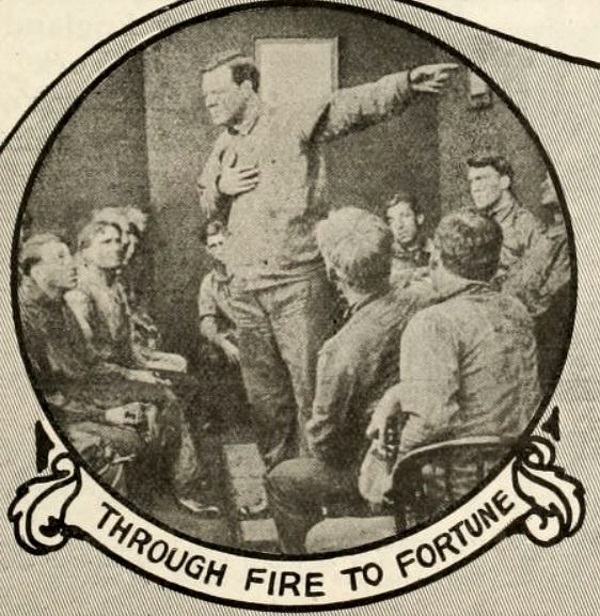
In the flicker of nitrate and carbon arc, Through Fire to Fortune arrives like a sulphur match struck in a mausoleum: sudden, acrid, weirdly illuminating. The film is a palimpsest of early-twentieth-century anxieties—speculative capital, masculine redemption, labor solidarity, petro-apocalypse—stitched together with the earnest melodrama that made audiences of 1914 dab handkerchiefs against their cheekbones. Yet beneath the lacework of intertitles and orchestral pit, the picture throbs with a modern pulse.
The Barretts begin in Gatsby territory: a yacht bobbing like a champagne cork, deck chairs angled toward eternity. One cut later, creditors swarm like carrion, and the yacht is auctioned for scrap. Director Clay M. Greene—pulling double duty as scenarist—refuses to linger on the fall; he hammers the moment of impact and leaps to the aftermath, trusting viewers to supply their own memories of humiliation. The husband’s plummet from a high window is shown only in silhouette against a billowing curtain, a visual haiku that anticipates Hitchcock’s fondness for defenestration.
What follows is a picaresque of wage labor. Tom’s descent into the mine is shot with documentary hunger: the cage rattling past timber frames, the reek of mule sweat, the glint of pick points in lamplight. Greene intercuts Tom’s initiation with Helen’s riding-party idyll, letting the two worlds clang against each other like iron and china. When a child tumbles from a bridge, the camera dollies with the ripple of water—an astonishing mobility for 1914—then halts as Tom arcs in a shallow dive. The rescue is not heroic slow-motion but frantic, limbs akimbo, water slapping lens. Bravery here is clumsy, mammalian, real.
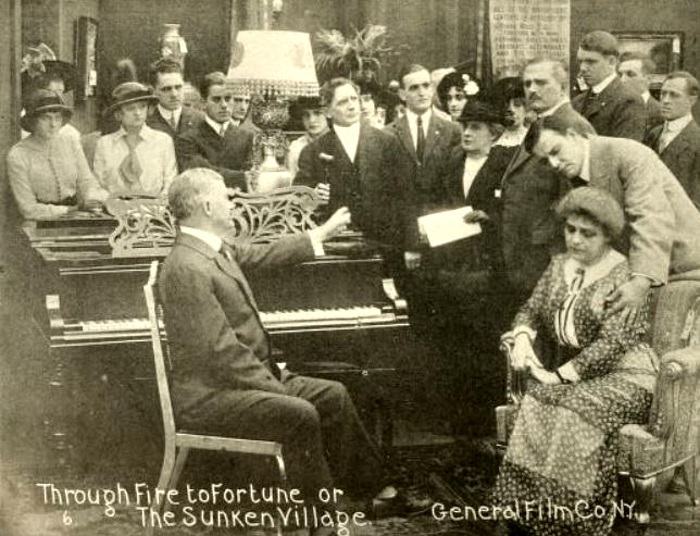
Edward Peil Sr.’s Tom carries the weight of silent-era sincerity: eyes widened to saucers, jaw locked in rectitude, yet capable of a half-smile that flickers like a faulty lamp. Opposite him, Ormi Hawley’s Helen pivots from porcelain flirt to steel-boned confidante without the aid of a single spoken syllable. Watch her gloved hand retract from Phil Blair’s sleeve after the bridge incident—one finger at a time, a semaphore of disgust so subtle it could teach Method acting a masterclass.
Florence McLaughlin, as Jane, is the film’s moral gyroscope. She wears ruin like ermine: spine erect even while bargaining for day-old bread. In the union-hall sequence, her close-up fills three-quarters of the frame, smoke from coal stoves swirling about her bonnet like a Renaissance halo. She doesn’t speechify; she simply is the bereaved who refuses bereavement.
When Tom rechristens Mayflower as a worker-owned venture, the film steps from melodrama into manifesto. Shares are distributed like communion wafers; cashbooks replace prayer books. Greene stages the first payday in a sun-dappled meadow, coins clinking into calloused palms while a fiddle scratches out “Sweet Adeline.” For a brief reel, we glimpse an alternative America—one that might have softened the robber-baron century into something humane.
Of course, utopias exist to be incinerated. The oil conflagration is shot with pyromaniac splendor: towers of flame lick the night sky, wooden shanties implode into sparks, a horse gallops past the camera with mane ablaze. The imagery prefigures the burning of Atlanta, yet its emotional register is closer to Pompeii—a whole way of life entombed in glowing strata.
Modern disaster cinema fetishizes destruction; Greene weaponizes it. The mine fire is not merely spectacle but interrogation: of speculation, of extraction, of the very myth of self-help. When the earth swallows Mayflower, the camera tilts downward as if in prayer, watching timbers snap like matchsticks. A superimposed shot of Blair’s face—eyes glowing demonically—hovers over the conflagration, literalizing the moral causality silent film loved so dearly.
Yet the film refuses nihilism. From the caldera rises a gusher of crude, black against saffron sky, a capitalist phoenix promising fresh lucre. Tom’s vow to rebuild is delivered in medium-shot, soot striping his cheeks like war-paint. The moment is triumphant yet unsettling: we sense the cycle of boom and bust beginning anew, the serpent devouring its own tail.
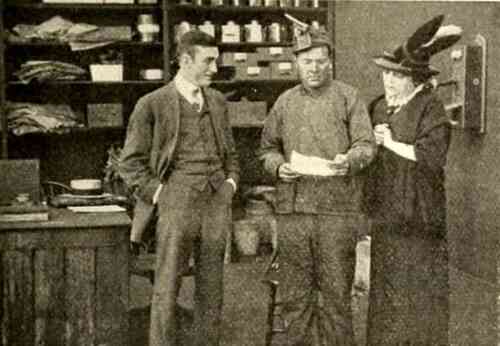
Helen’s transfer of affection from Blair to Tom is less romantic whim than economic calculation. Blair’s cowardice at the bridge costs him not only honor but future dividends—Helen’s dowry, her father’s mines, hereditary social capital. The film quietly applauds her ruthlessness, framing it as evolutionary necessity. In contrast, Jane’s activism is maternal yet cunning: she weaponizes domestic rhetoric—“my boy,” “our hearth,”—to rally burly miners who would sooner chew iron than heed a suffragette.
Viewers weaned on Hamlet, Prince of Denmark will detect a ghost-father motif—Plunger Barrett’s absence haunts every frame like a revenant in top-hat. The workers’ uprising nods toward the collectivist spirit later crystallized in The Crime of the Camora, while the oil-fire recalls the volcanic fury of Obryv.
Curiously, the film also anticipates the eco-horror of contemporary pipeline documentaries: the same black ooze that promises prosperity vomits forth the inferno that razes the village. One can almost hear the modern viewer murmur “fracking” under her breath.
Nitrate prints of Through Fire to Fortune are rumored to smolder in a Kansas archive, awaiting the kiss of a 4K scanner. Should it resurface, the film will likely baffle viewers bred on three-act orthodoxy: its tonal lurches from drawing-room satire to labor-propaganda to eschatological spectacle feel closer to post-modern pastiche than to Victorian morality play. Yet that erratic heartbeat is precisely its allure. In an age when algorithmic scripts flatten risk into data points, Greene’s reckless narrative gambles feel like oxygen.
Watch it for the bridge rescue, for the miners’ torch-lit vigil, for the final image of a man framing fresh oil derricks against a sunrise that looks suspiciously like blood. Watch it because history, like coal, compresses its dead into fuel, and sometimes—if the seam is right—the strike ignites a flame hot enough to scorch the present.
Until then, we sift the ashes of synopses, imagining the heat. And the heat, even imagined, still warms.
IMDb 5.1
1929
Community
Log in to comment.