DbcultAccessing Vault...
Cult Review
Senior Film Conservator
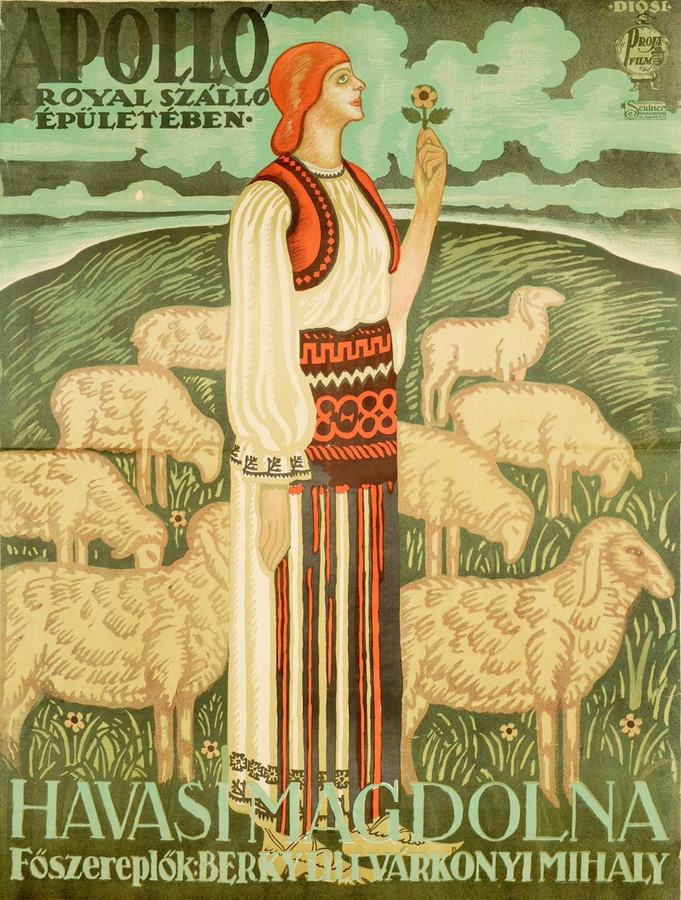
Stepping back in time to the nascent days of Hungarian cinema, one encounters a cinematic artifact of profound emotional resonance and societal critique: Jenö Janovics’s Havasi Magdolna. This film, a testament to the power of early silent storytelling, transcends its historical context to deliver a narrative that remains remarkably potent even today. It’s a journey into the heart of human resilience, a searing indictment of class hypocrisy, and a beautifully rendered portrait of a woman’s arduous path from innocence to hard-won wisdom. Janovics, a pivotal figure in Hungarian film history, crafts a melodrama that is both expansive in its thematic scope and intimate in its character study, utilizing the then-burgeoning medium to explore the very fabric of society.
The film opens in the bucolic, snow-dusted peaks of the Hungarian mountains, a landscape that immediately establishes a sense of pristine purity and rustic simplicity. Here, we meet Magdolna, brought to life with an almost ethereal grace by the exceptional Lili K. Hegyi. Her portrayal is a masterclass in silent acting, conveying a spectrum of emotions – from wide-eyed wonder to profound sorrow – with subtle gestures and expressive eyes. Magdolna is a figure of unblemished virtue, a young woman whose existence is intertwined with the rhythms of nature, untainted by the moral complexities of the urban world. Her dreams, though nascent, hint at a yearning for something beyond her humble village, a desire that will ultimately prove both her undoing and her catalyst for transformation.
The tranquility of Magdolna's world is shattered by the arrival of Baron István Károlyi, played with a captivating blend of charm and aristocratic arrogance by Victor Varconi. Varconi, a name that would soon gain international recognition, imbues István with an alluring yet ultimately sinister quality. He is the quintessential urban predator, a man accustomed to having his desires met, viewing the simple mountain folk, and especially Magdolna, as mere diversions. His seduction is not overtly malicious, but rather a careless exercise of power, a fleeting fancy that he expects to discard without consequence. The contrast between Magdolna’s genuine affection and István’s transient infatuation forms the tragic core of their ill-fated romance. This narrative thread, while a staple of early melodrama, is handled by Janovics with an understated realism that elevates it beyond mere cliché. The film subtly critiques the moral laxity of the aristocracy, juxtaposing it with the earnest, albeit vulnerable, morality of the working class.
As István returns to his opulent Budapest life, leaving Magdolna with a broken heart and a burgeoning secret, the film transitions from the pastoral to the urban, mirroring Magdolna's journey from innocence to harsh reality. The devastating revelation of her pregnancy, and István's subsequent callous rejection – offering mere hush money as recompense for her ruined life – marks a pivotal turning point. This act of betrayal is not just personal; it is a profound societal commentary on the vulnerability of women in a patriarchal society, especially those without means or status. The film, in its silent eloquence, condemns the double standards that allowed men of privilege to escape accountability while women bore the full weight of societal scorn. One might draw parallels to the stark social commentary found in films like A Woman's Fight, which similarly grappled with gender inequality and societal judgment.
Disgraced and desperate, Magdolna flees to Budapest, a city presented as a sprawling, indifferent entity, a stark visual and thematic contrast to her mountain home. Janovics expertly uses the urban landscape to reflect Magdolna’s internal turmoil and external struggles. The crowded streets, the towering buildings, the anonymity – all contribute to her sense of isolation and vulnerability. Her struggle to survive, to find work, and to conceal her condition is depicted with a raw, unflinching honesty. Lili K. Hegyi conveys the physical and emotional toll of her ordeal with heartbreaking conviction, making Magdolna’s plight deeply resonant. The birth of her child in secret, and the agonizing decision to place the infant in a kindly orphanage, are moments of profound emotional weight, highlighting the sacrifices forced upon women in her position. This segment of the film resonates with the tragic choices faced by characters in other period melodramas, such as elements seen in A Sister to Carmen, where societal pressures dictate desperate measures.
The supporting cast, though often silent, contribute significantly to this tableau of urban struggle. Mihály Fekete as the ruthless moneylender embodies the exploitative side of city life, preying on the vulnerable, while Aranka Laczkó, perhaps as the empathetic village elder or a kind city stranger, offers fleeting moments of human connection and compassion. These interactions, brief as they might be, serve to underscore the vast chasm between Magdolna’s initial innocence and the harsh realities she now navigates. The film’s depiction of poverty is not merely a backdrop; it is an active force, shaping destinies and forcing impossible choices. This keen observation of social stratification is a hallmark of Janovics's nuanced direction, elevating Havasi Magdolna beyond a simple tale of woe.
A poignant counterpoint to István's perfidy is the character of János Kovács, the village forester, portrayed with quiet dignity and unwavering devotion by Elemér Hetényi. János represents the steadfast, moral core that István so conspicuously lacks. His love for Magdolna is pure and selfless, a constant beacon in her darkest hours. Though initially unable to compete with the Baron's worldly allure, János's presence throughout Magdolna's ordeal, his silent suffering, and his eventual pursuit of her to the city, underscore the enduring power of true affection. He is the moral anchor, a reminder of the simple virtues that stand in stark contrast to the corrupting influences of wealth and status. His journey mirrors Magdolna's in its own way, transforming him from a humble admirer to a protector and eventual partner in her quest for justice. The narrative arc of János provides a glimmer of hope amidst the pervasive sorrow, suggesting that genuine goodness can, in the end, prevail.
The years that follow Magdolna's initial struggles are conveyed with a sense of passage, allowing the audience to witness her gradual transformation. She doesn't just survive; she hardens, her spirit tempered by adversity, but never broken. This period of quiet resilience is crucial, as it builds towards her eventual confrontation with István. The film avoids depicting her as a mere victim; instead, she emerges as an agent of her own destiny, determined to reclaim her dignity and secure a future for her child. This evolution of character is one of Havasi Magdolna's most compelling aspects, showcasing a depth that was not always common in films of its era. This nuanced character development is reminiscent of the emotional complexities explored in films like The Steel King's Last Wish, where characters navigate moral quandaries with palpable inner conflict.
The climax of Havasi Magdolna is a masterclass in silent film drama. Magdolna, now a woman of quiet resolve, learns of István's impending marriage to the sophisticated Countess Erzsébet (Lili Berky), a woman of equal social standing who harbors her own suspicions about her fiancé's character. The confrontation, set against the backdrop of a glittering high-society event, is fraught with tension. Magdolna’s appearance is not one of overt vengeance, but of a quiet, undeniable demand for truth. Her revelation of István’s past transgressions, particularly the existence of their child, shatters the façade of his respectable life. Countess Erzsébet’s reaction, one of shock and disgust, is crucial, as it symbolizes the moral awakening of a society that has long tolerated such hypocrisy. Varconi’s portrayal of István during this sequence is particularly effective, transitioning from arrogant confidence to panicked desperation as his carefully constructed world crumbles around him.
The scene unfolds with a powerful visual language, Janovics employing close-ups and dramatic staging to heighten the emotional stakes. The arrival of János, who has followed Magdolna, adds another layer of emotional complexity, as he stands ready to protect her, a silent testament to his enduring love. The exact nature of István's downfall – whether it be public disgrace, an accidental death, or a profound moral reckoning – is delivered with a dramatic flourish that leaves a lasting impact. The film, true to its melodramatic roots, ensures that justice, in some form, is served, affirming the moral order that was so cruelly disrupted. This climactic confrontation, where personal injustice collides with societal hypocrisy, echoes the dramatic revelations found in films such as The Haunted Manor, where secrets are unearthed with devastating consequences.
Havasi Magdolna is more than just a period piece; it is a timeless exploration of themes that continue to resonate: class disparity, the vulnerability of the innocent, the corrupting influence of power, and the enduring strength of the human spirit. Jenö Janovics, as both writer and likely director, demonstrates a profound understanding of human nature and societal dynamics. His narrative choices, particularly the stark contrast between the rural idyll and the urban jungle, serve to amplify the film's central messages. The visual storytelling, characteristic of the silent era, relies heavily on symbolic imagery and exaggerated performances, yet Janovics manages to infuse it with a surprising degree of realism and psychological depth.
The performances across the board are commendable, with Lili K. Hegyi and Victor Varconi delivering particularly memorable turns that anchor the film’s emotional core. The supporting cast, including Lili Poór, Aladár Ihász, Andor Szakács, Flóra Fáy, Rezsö Harsányi, Elza Báthory, Ilonka Nagy, József Berky, Hugó Kozma, Dezsõ Bánóczi, and Miklós Várady, flesh out a rich tapestry of characters, each contributing to the film’s vivid portrayal of Hungarian society. While specific details of their roles might be lost to time, their collective presence undoubtedly added authenticity and depth to Janovics's vision.
Compared to other films of the period, Havasi Magdolna holds its own with remarkable thematic sophistication. While perhaps not as grand in scope as an epic like Atlantis, or as overtly comedic as A kölcsönkért csecsemök, its strength lies in its profound humanism and its unflinching look at social injustice. The film's ability to evoke deep empathy for its protagonist, and its courageous critique of societal norms, places it firmly among the significant works of early cinema. One can see echoes of its melodramatic intensity in films like Die Tangokönigin, which also explored themes of social standing and romantic entanglement, albeit with a different cultural flavor.
The enduring appeal of Havasi Magdolna lies in its universal narrative of struggle and triumph. It reminds us that even in the most challenging circumstances, the human spirit possesses an incredible capacity for endurance and hope. Jenö Janovics’s masterful storytelling, coupled with the compelling performances of his ensemble cast, ensures that this Hungarian silent film remains a powerful and relevant piece of cinematic history. It is a film that speaks not just of its time, but to the timeless human condition, urging us to reflect on justice, compassion, and the true cost of societal indifference. For those interested in the rich tapestry of early European cinema, and particularly Hungarian contributions, Havasi Magdolna is an essential viewing, a beacon of artistic and social consciousness from a bygone era that still shines brightly today.
The film’s resolution, whether leading to a return to the mountains with János and her child, or a new life forged in the crucible of urban experience, ultimately celebrates Magdolna’s resilience. It's a conclusion that prioritizes dignity and self-determination over conventional happy endings, offering a more profound sense of closure. This nuanced approach to resolution is a hallmark of Janovics’s artistry, demonstrating a willingness to explore the complexities of life without resorting to simplistic moralizing. The journey of Magdolna is not just a personal one; it is a microcosm of broader societal shifts and a testament to the enduring power of the individual spirit against overwhelming odds. Her story, though silent, speaks volumes, echoing across decades to remind us of the perpetual human quest for justice and belonging. It stands as a powerful argument for the preservation and study of early cinema, revealing layers of artistic innovation and social commentary that are as relevant now as they were over a century ago. Its exploration of moral failings within the elite, juxtaposed with the unwavering integrity of characters like János, resonates with the thematic depth found in works like An American Gentleman, which also delved into class distinctions and personal integrity.
IMDb 5.5
1935
Community
Log in to comment.