DbcultAccessing Vault...
Cult Review
Senior Film Conservator
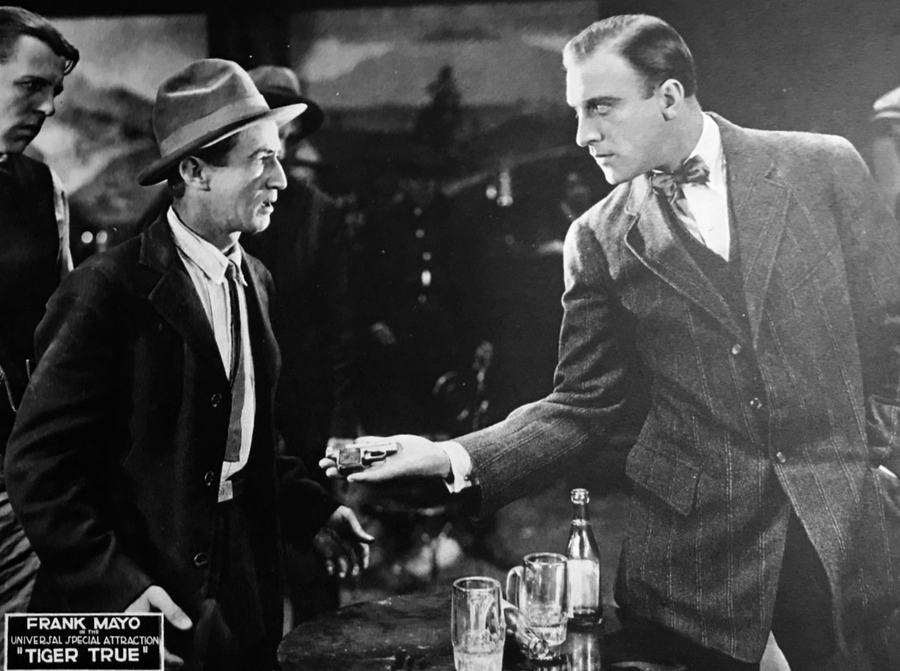
Tiger True, George C. Hull’s 1930 urban-noir experiment, is a film that thrives in contradictions. It marries the raw, unapologetic violence of jungle exploitation films with the claustrophobic tension of pre-Code melodrama, creating a narrative that feels simultaneously primal and precocious. At its core lies the paradox of Jack Lodge (Herbert Bethew), a character whose transition from hunter to hunted is as much about societal reintegration as it is about personal redemption. This is a film that wears its era on its sleeve—both in its overtly macho posturing and its subtextual critiques of patriarchal power structures.
Jack’s journey begins in the dense, shadowy jungles of the opening reel, where his father’s wealth has afforded him the luxury of killing for sport. But the camera lingers too long on the aftermath of his trophies—the bloodied antlers, the lifeless eyes of the beasts—to suggest this is a man at peace with his role. His decision to leave the jungle for the city is less an escape than a recalibration; the metropolis becomes his new hunting ground. The contrast between the two environments is stark: where the jungle is alive with unpredictable danger, the city pulsates with calculated menace. Here, the rules of engagement shift from physical combat to psychological warfare, and Jack’s initial confidence is quickly eroded by the labyrinthine codes of underworld society.
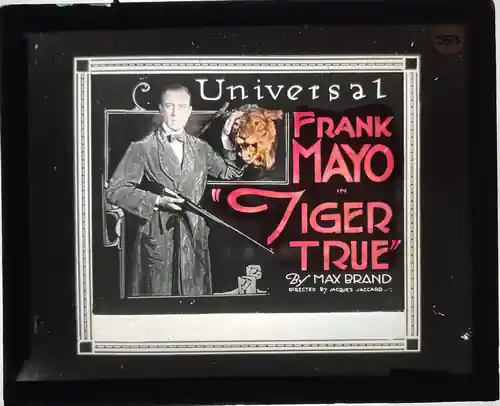
Mary Dover (Fritzi Brunette), the saloon owner, is a figure of contradictions as well. Her establishment is both a sanctuary and a battleground, its neon glow casting an artificial warmth that cannot mask the rot beneath. When Jack defeats the bouncer in a brutal, almost ceremonial fight, Mary’s gratitude is tinged with transactional pragmatism. Their relationship is framed not as romance but as a mutual recognition of survival—a dance of interdependence where neither party fully trusts the other. The saloon becomes a stage for power plays, with The Baboon (Frank Mayo) as the unseen puppetmaster. His dual identity as Old Whitey and Mary’s half-brother is not a mere twist but a structural inevitability, exposing the film’s thesis about the inescapability of inherited systems of control.
The Baboon’s character is a masterclass in understated menace. Mayo portrays him with a slow-burning intensity, his voice a gravelly whisper that carries the weight of unspoken threats. His authority over Mary is not enforced through overt violence but through economic leverage and emotional manipulation. This dynamic echoes the saloon’s physical architecture: a space where every door leads to another layer of entrapment. When Jack uncovers the truth about The Baboon’s identity, the revelation is less a climax than a confirmation of the film’s central conflict—how systems of power reproduce themselves across generations, even in the most intimate of relationships.
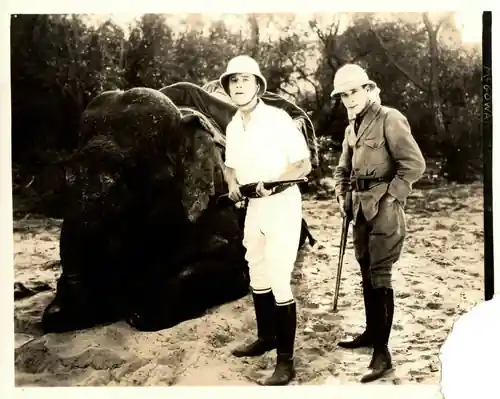
Visually, Tiger True is a study in chiaroscuro contrasts. The jungle sequences are drenched in greens and browns, their textures rough and naturalistic, while the city scenes adopt a colder palette of grays and metallics. This visual duality is mirrored in the performances: Bethew’s Jack is all sharp edges and restless energy, while Brunette’s Mary embodies a more restrained form of volatility. Their chemistry is not electrifying but tense, like the friction between two tectonic plates waiting to collide. The film’s pacing is deliberate, with long takes that let the tension simmer before erupting into action. This methodical rhythm is occasionally disrupted by jarring tonal shifts—moments where the melodrama veers into camp or the dialogue becomes overtly moralistic—but these flaws only highlight the film’s ambition to balance high drama with social critique.
Thematically, Tiger True is a product of its time, yet its exploration of autonomy and subjugation remains unsettlingly relevant. The saloon, as a microcosm of society, is a space where roles are assigned and enforced with ruthless efficiency. Jack’s eventual triumph over The Baboon is not presented as a moral victory but as a pragmatic solution to a stalemate. Mary’s decision to follow Jack is ambiguous—does she seek freedom or merely a new master? The film refuses to answer directly, leaving the audience to grapple with the implications of her choice. This ambiguity is its greatest strength; it transforms Tiger True from a genre exercise into a meditation on the cyclical nature of power.
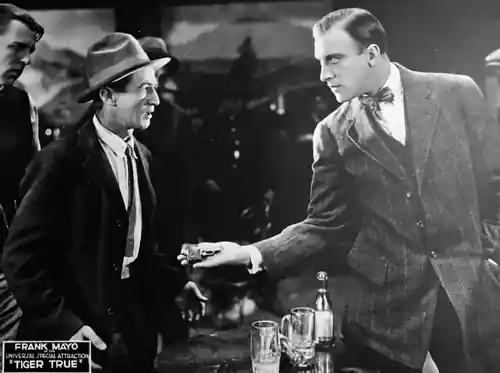
Comparisons to other pre-Code films like Bound in Morocco or The Man Above the Law are inevitable, but Tiger True distinguishes itself through its focus on urban decay. Where those films often center on exotic locales or legal battles, this one grounds its conflict in the intimate spaces of a saloon and its surrounding district. The city here is not just a backdrop but a character in its own right, with its neon signs and shadowy alleyways forming a maze that traps its inhabitants. The score, though sparse, reinforces this atmosphere with discordant strings that mirror the characters’ internal struggles.
Technically, the film is a mixed bag. The editing is occasionally clunky, with abrupt transitions that disrupt the narrative flow. Yet these moments are often redeemed by the performances, particularly Mayo’s quiet menace and Brunette’s nuanced portrayal of a woman caught between obligation and desire. The set design deserves special mention—Mary’s saloon is a marvel of Art Deco minimalism, its mirrored surfaces reflecting the characters’ fractured psyches. Even the jungle scenes, shot on a backlot, are imbued with a sense of claustrophobic grandeur that belies their modest budget.
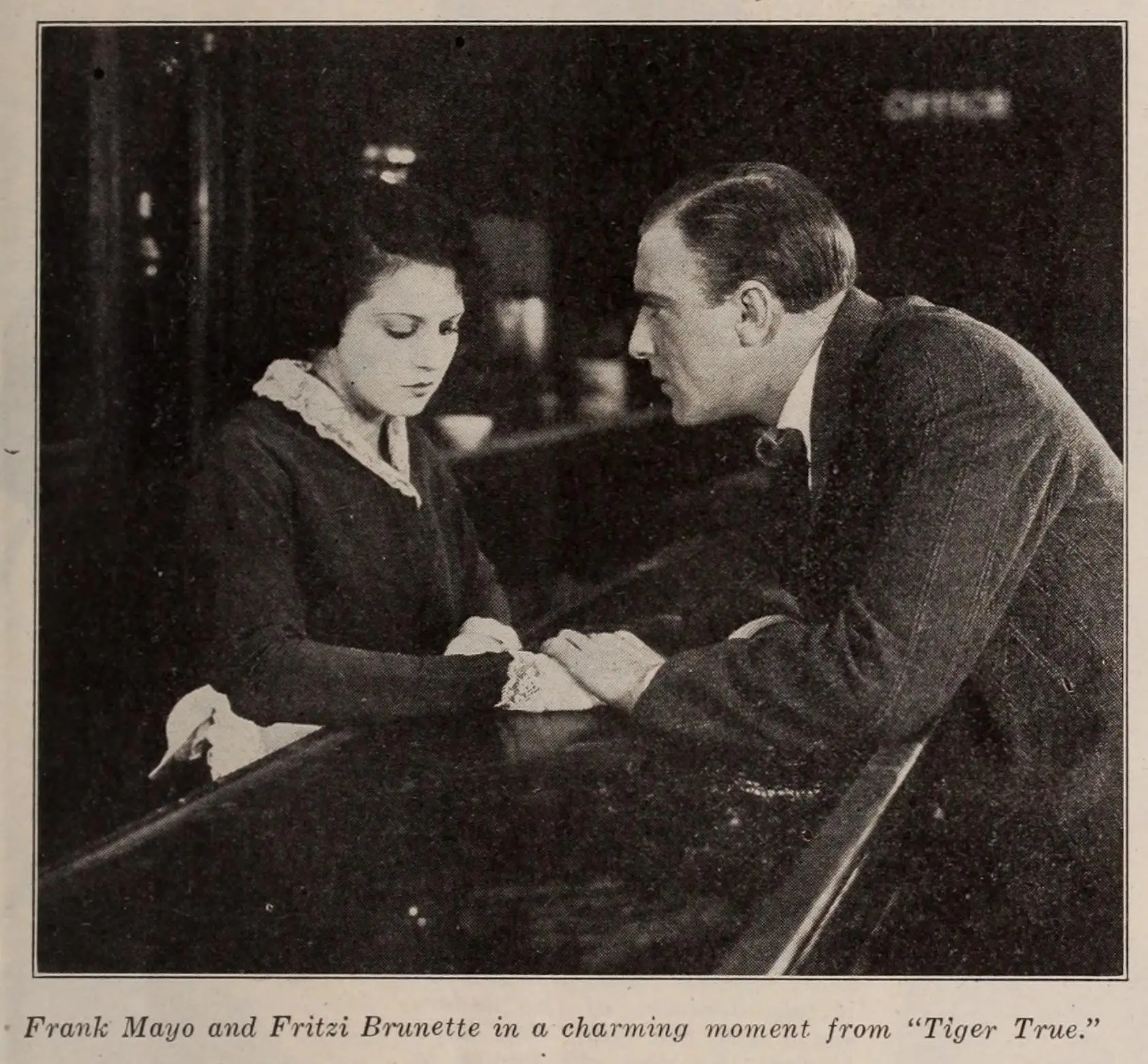
In the pantheon of 1930s cinema, Tiger True occupies a curious space. It is neither a classic in the traditional sense nor a complete failure; rather, it is a flawed but fascinating artifact of a transitional era in film history. Its themes of power and autonomy resonate beyond its time, offering a prescient commentary on the systems that bind us. For modern audiences, it serves as a reminder of the genre’s formative years—when filmmakers were still experimenting with the possibilities of the medium and the boundaries of narrative.
Ultimately, Tiger True is a film that demands multiple viewings. Its surface-level action and melodrama may initially draw viewers in, but it is the subtextual layers that linger in the mind. The saloon’s neon glow may fade, but the questions it raises about autonomy, control, and the cost of survival remain as urgent as ever. Whether one views it as a noir precursor or a social thriller, there is no denying its place in the lineage of American cinema’s darker impulses.
“In the jungle, the hunter knows the rules. In the city, the hunted sets the terms.”
For those interested in similar narratives, The Strangler’s Grip and The Deadlier Sex explore comparable themes of power and subjugation, though with differing tonal approaches. However, Tiger True’s unique blend of urban and primal elements ensures its place as a distinct entry in the pre-Code canon.
IMDb —
1919
Community
Log in to comment.