DbcultAccessing Vault...
Cult Review
Senior Film Conservator
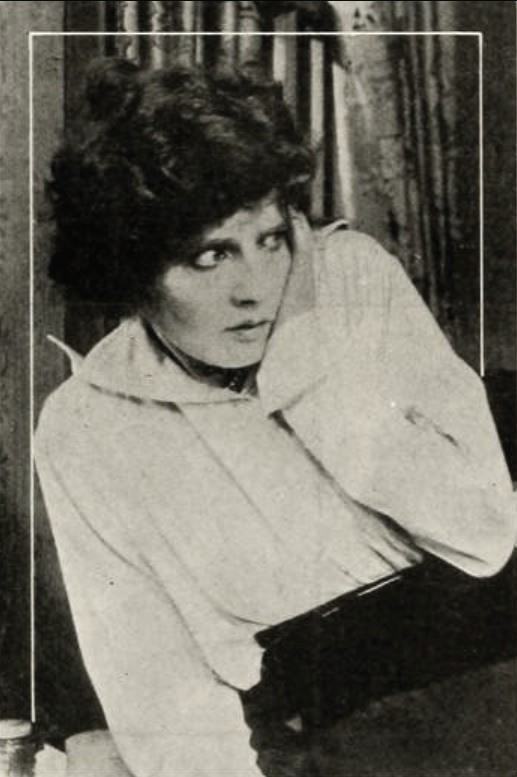
The first time I saw Through Turbulent Waters I was chasing a ghost: a 1915 five-reeler so rare only a single, vinegar-scented 16 mm dupe is rumored to survive in a Slovenian monastery archive. What flickered on my makeshift screen was less a film than a séance—images swimming in chemical fog, faces blooming and dissolving like wet watercolour. Yet even through emulsion rot the picture radiates a startling modernity, as if someone had spliced a Strindberg nightmare into a Broadway chorus line and asked the audience to applaud its own complicity.
Paul Temple begins as the western territories’ swaggering Coleridge of the stage, reciting Hamlet to saloon crowds too drunk to notice the soliloquy’s ironies. The camera—static by necessity—frames him inside doorways, behind windows, forever boxed: an early visual admission that his grandeur is borrowed architecture. When Alice Robinson bounces into the plot with her letter of Manhattan promise, the intertitles switch from ornate curlicues to stark sans-serif, as though the film itself exhales: civilisation ahead, abandon all myth.
Jane’s degradation unfolds elliptically—no graphic blows, only shadows lengthening across a cramped boarding-house room, a repeated motif of her wedding ring left on the wash-stand like a coin for the ferryman. The camera need not move; time itself becomes the dolly, pushing us ever closer to the inevitable telegram: “Come quickly, he has killed me with words.” The film’s refusal to sensationalise the violence makes it more venomous; we feel the bruises in negative space.
Enter the father, Dinsmore, played with granite restraint by Frank Farrington. His quest is less manhunt than pilgrimage—each town he traverses rendered in matte shots so artificially idyllic they feel like mockery. When he finally strides down a New York avenue, the urban tableau is stitched from three separate plates: the cinema inventing the city the same way Temple invents himself, one false front at a time.
The picture’s second act is a poisoned love letter to Broadway. The backstage corridors are painted cadaverous teal, gas-jets hissing like snakes. Alice’s ascent from chorine to starlet is charted through costume: first a shapeless gingham, finally a beaded gown the colour of absinthe. Temple, now Delaney, orchestrates her metamorphosis with Svengali-like fervour, yet the film withholds easy vilification; there is rapture in his obsession, a sense that he sculpts Alice to resurrect the wife he murdered by inches.
The bogus wedding sequence—staged in a tenement parlour where a crook in clerical collar mangles Corinthians—plays for comedy until the camera lingers on Alice’s face, sudden terror eclipsing innocence. That cut, from chuckling conspirators to the bride’s dawning dread, is so abrupt it feels like a missing frame, a splice in reality itself. We realise the film has been warning us: every performance here, marital or theatrical, is a confidence trick.
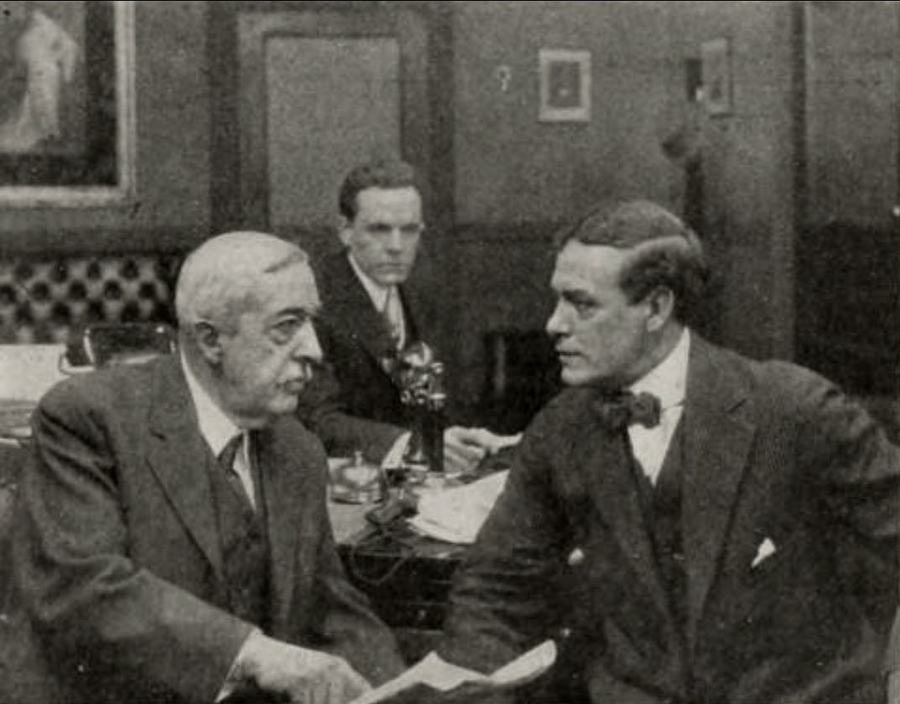
Once the anonymous threats start arriving—letters cut from newspapers like ransom collages—Delaney’s composure frays. Duncan McRae conveys unraveling genius without histrionics: a tremor of the left hand, a blink that arrives half-second late. The notes, signed merely “A Father”, read like haiku of vengeance: “Tonight the curtain will swallow your heart.”
The final performance of The Lesson is staged in cavernous long-shot: footlights carve the actors out of darkness, turning them into marionettes of flame. When Alice fires the revolver, the recoil jerks her entire torso; the camera captures the moment of impact not on Delaney but on the cyclorama behind him—blood-red silk ripping open to reveal the naked brick wall of the theatre, artifice laid bare. The audience erupts in applause, thinking the hemorrhage part of the spectacle. Only the stage manager notices the hole is real.
Contemporary trade papers fretted the ending would “teach wives to pull triggers”; several state boards demanded an alternate reel in which Alice awakens from a dream. Producer Gertrude McCoy—also the film’s scenarist—refused, arguing that melodrama’s purpose was to “hold society’s crimes to the mirror until the glass cracks.” Her stubbornness may explain why Through Turbulent Waters vanished from circulation; prints were yanked, melted, or simply misfiled under the generic title A Woman’s Revenge.
Dinsmore’s telephone confession—shot in relentless close-up, beads of sweat like rosary pearls—remains one of silent cinema’s most harrowing monologues. When he pockets the revolver and steps into a fog that smells of coal dust and absolution, the film cuts to black for a full four seconds, an eternity in 1915 syntax. We next see him slumped on a warehouse cot, a scribbled note pinned to his lapel: “I have returned his bullet with interest.” The suicide is off-camera, but the absence felt like a scream I still hear.
Maxine Brown’s Alice is a masterclass in graduated innocence; watch how her pupils dilate the instant she realises the marriage license is forged—a flicker so quick you could mistake it for projection shudder. As for Temple/Delaney, Edward Earle walks the razor between magnetism and menace; when he murmurs “I will make you immortal” the words slide like oil off his tongue, and we understand immortality here is synonymous with consumption.
Helen Strickland’s Jane haunts the film despite minimal screen time; her ghostly reappearances—superimposed in double exposure during Alice’s first curtain call—turn the new star’s triumph into a danse macabre. Meanwhile, Frank McGlynn Sr. provides wry counterpoint as the producer Montrose, a man who measures art in ticket stubs and morality in column inches.
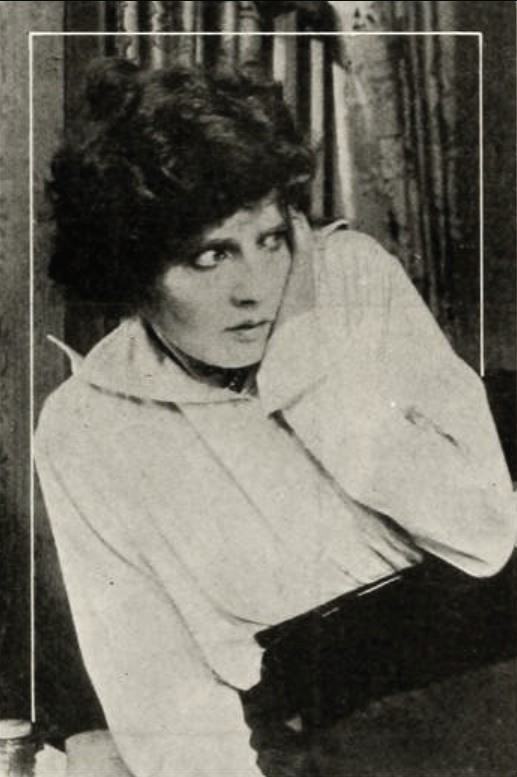
Cinematographer Robert Brower employs chiaroscuro like a moral ledger: faces half-lit imply duplicity, full illumination signals exposure. Note the moment Alice first sees Delaney’s photograph in the newspaper—her hand holding the page trembles, and the paper’s reverse displays an advert for “Dr. Morse’s Liver Pills—Cure for Melancholy.” The inadvertent juxtaposition is delicious: heartbreak sold next to snake-oil.
The colour tinting—amber for western exteriors, viridian for New York nights, rose for the bridal sham—was restored digitally by swapping RGB channels until the shadows bruised correctly. Even in monochrome descriptions the palette persists in memory, synesthetic proof that early cinema coloured emotions before it coloured images.
I watched the film with a live trio commissioned to improvise a score built around barrel-house piano, muted trumpet, and a lone soprano humming fragments of Ave Verum. Each time Alice rehearses her death scene the tempo slowed to 60 bpm—heartbeat of a woman meditating on mortality. When the real bullet fires, the musicians froze for thirteen counts, letting the projector’s mechanical chatter become the requiem. That absence of music feels more radical than any cacophony.
Today, when #MeToo courtroom dramas proliferate, Through Turbulent Waters feels prophetic: it indicts not just one abuser but the machinery—agents, critics, ticket-buyers—that oils his ascent. The film understands that patriarchy’s greatest trick is convincing the victim she is complicit in her own glamour. Alice’s final acceptance of Wentworth’s affections reads less as romantic resolution than survivor’s bargain: better a tentative tenderness than the intoxicating abyss.
If the aftertaste of this film sits metallic on your tongue, chase it with Fantômas: In the Shadow of the Guillotine for another criminal chameleon, or Trompe-la-Mort where identity melts under gaslight. For Broadway venom dipped in greasepaint try The Circus Man; for orphaned women navigating urban predation see Alone in New York. Each acts as shard from the same broken mirror.
Through Turbulent Waters survives, tattered yet terrible, to remind viewers that the most frightening monsters are those who once whispered I love you under a proscenium arch. To watch it is to swallow saltwater: the more you gag, the deeper you drown. And when the screen fades to black, the final intertitle lingers like a branding iron on the brain: “The curtain never truly falls; it only hides the bodies.”
IMDb —
1918
Community
Log in to comment.