DbcultAccessing Vault...
Cult Review
Senior Film Conservator

The silent film era, a vibrant tapestry of melodrama and moral quandaries, often presented narratives brimming with sensational twists and profound human drama. Among these cinematic gems, "Outwitted" emerges as a particularly compelling example, a film that masterfully weaves a tale of desperate choices, calculated revenge, and the startling revelations that can unravel the most meticulously laid plans. From its very inception, the picture thrusts its protagonist, Nan Kennedy, into an unenviable predicament, a vortex of familial loyalty and imminent danger. Her brother, a fugitive from the law, finds his precarious freedom threatened by the machinations of Ben Farraday, a man whose malevolent intent hangs heavy over their lives. To safeguard her sibling's liberty, Nan is compelled to undertake a perilous mission: the theft of vital documents from John Lawson, Farraday's own formidable adversary. This initial setup is a classic noir-esque plunge into a world where moral lines blur, and survival often demands a descent into morally ambiguous actions. The stakes are immediately palpable, drawing the viewer into Nan’s fraught emotional landscape. She is not merely a thief; she is a sister driven by a primal urge to protect her own, a figure whose vulnerability is matched only by her burgeoning resilience. This early struggle sets the tone for a narrative that will continually test the boundaries of right and wrong, challenging the audience to empathize with characters forced into impossible situations. The intricate dance of power and desperation that defines Nan’s initial encounter with Lawson is a testament to the period’s storytelling prowess, where exposition was often conveyed through a delicate balance of visual cues and intertitles, demanding a nuanced performance from its lead actors. The weight of her brother's fate rests squarely on her shoulders, a burden that shapes her every decision and propels her into the heart of a conflict far grander and more personal than she could have ever anticipated.
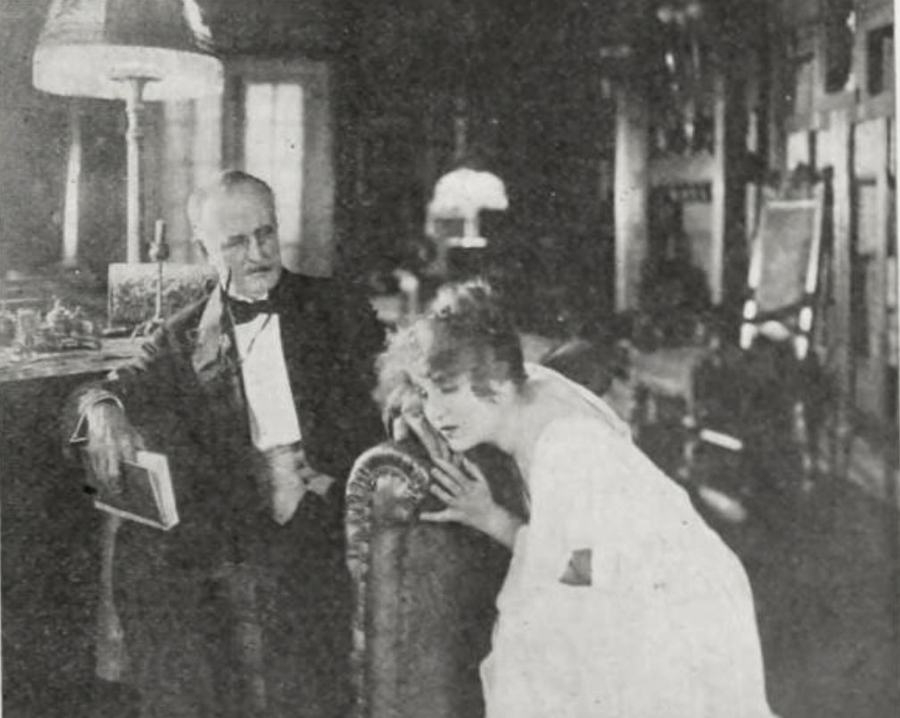
Nan's ill-fated attempt at espionage, predictably, does not go as planned. Apprehended by Lawson, a man whose calculating demeanor betrays a deep-seated vindictiveness, she finds herself ensnared in a new, equally treacherous trap. Lawson, rather than simply handing her over to the authorities, sees an opportunity for a more elaborate, crueler form of retribution. His offer of freedom comes with a chilling caveat: a year of servitude, a year during which Nan must bend to his every whim. This pivotal moment establishes Lawson not merely as an antagonist but as a puppet master, a figure whose grievances run so deep they manifest in a desire to control and humiliate. His grand scheme, born of a festering resentment towards a man he blames for the ruin of his marriage, culminates in the forced arrangement of a wedding between Nan and Billy Bond. Billy, an innocent pawn in Lawson's elaborate game of revenge, enters the narrative as a symbol of thwarted potential and unwitting tragedy. The spectacle of their union, orchestrated under duress, is a masterclass in silent film melodrama, where the forced smiles and underlying tension speak volumes. For Nan, this forced marriage is a profound degradation, a public testament to her lack of agency, a stark reminder of the chains Lawson has placed upon her. The dramatic irony is thick; a union meant to be joyous becomes a crucible of despair, a prelude to further pain. This section of the film could draw parallels with the intricate social traps seen in films like The Fatal Card, where characters are often entangled in webs of deceit and obligation far beyond their control, or even The Reed Case, which might similarly explore legal or personal entanglements that leave individuals vulnerable. Lawson's meticulous planning and cruel execution of his revenge plan against the elder Bond, using Nan and Billy as his instruments, highlights a darker side of human nature, a chilling portrayal of how personal vendettas can consume and destroy. The audience is left to ponder the depths of his bitterness and the sheer audacity of his psychological warfare.
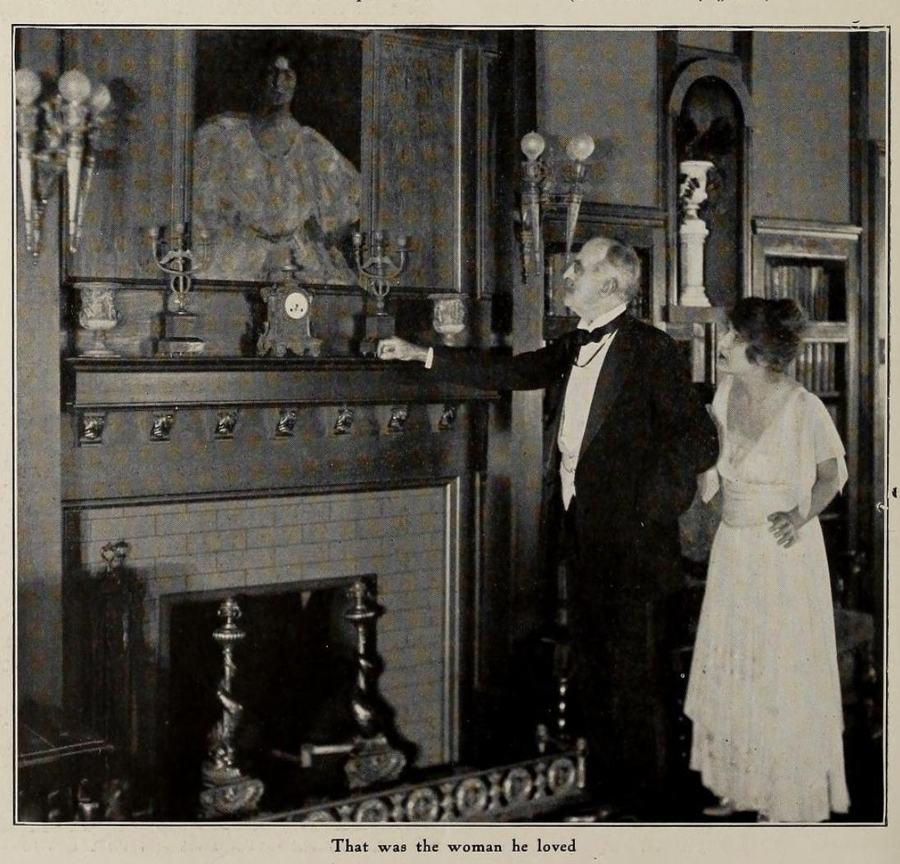
The wedding reception, meant to be a celebration, devolves into a scene of devastating public humiliation, a moment etched with profound cruelty. Lawson, relishing his moment of triumph, shatters the fragile façade of happiness by exposing Nan as a thief to all present. This act of calculated malice is the catalyst for the story's true emotional pivot. Billy, reeling from the shock and betrayal, flees the scene, his world irrevocably shattered, plunging into a self-destructive spiral of drink. His immediate reaction underscores the societal stigma attached to such accusations in that era, where a woman's reputation could be irrevocably tarnished by a single revelation. Nan, stripped of her dignity and now abandoned, finds herself at a crossroads. Her initial desperation to protect her brother has morphed into a burning, singular desire for vengeance against Lawson. This transition from victim to avenger is a powerful narrative device, transforming her from a passive object of Lawson's schemes into an active agent of her own destiny. Her path to retribution, however, is not one of brute force but of cunning intellect. She recognizes Lawson's Achilles' heel: a fervent, almost superstitious belief in spiritualism. This weakness becomes her weapon, a subtle yet devastating instrument for his downfall. Posing as a medium, Nan begins to manipulate Lawson, advising him on financial decisions that lead him to divest from certain stocks. The subsequent day brings the inevitable: Lawson finds himself financially ruined, a victim of his own credulity and Nan’s ingenious deception. This intricate scheme speaks volumes about Nan's intelligence and resourcefulness, echoing the themes of masked identities and strategic deception found in films like The Masked Motive or the complex double lives portrayed in Her Double Life, where protagonists navigate perilous situations by concealing their true intentions. Her transformation is complete; the desperate sister has become the calculating avenger, turning the tables on her tormentor with a precision that is both chilling and deeply satisfying.
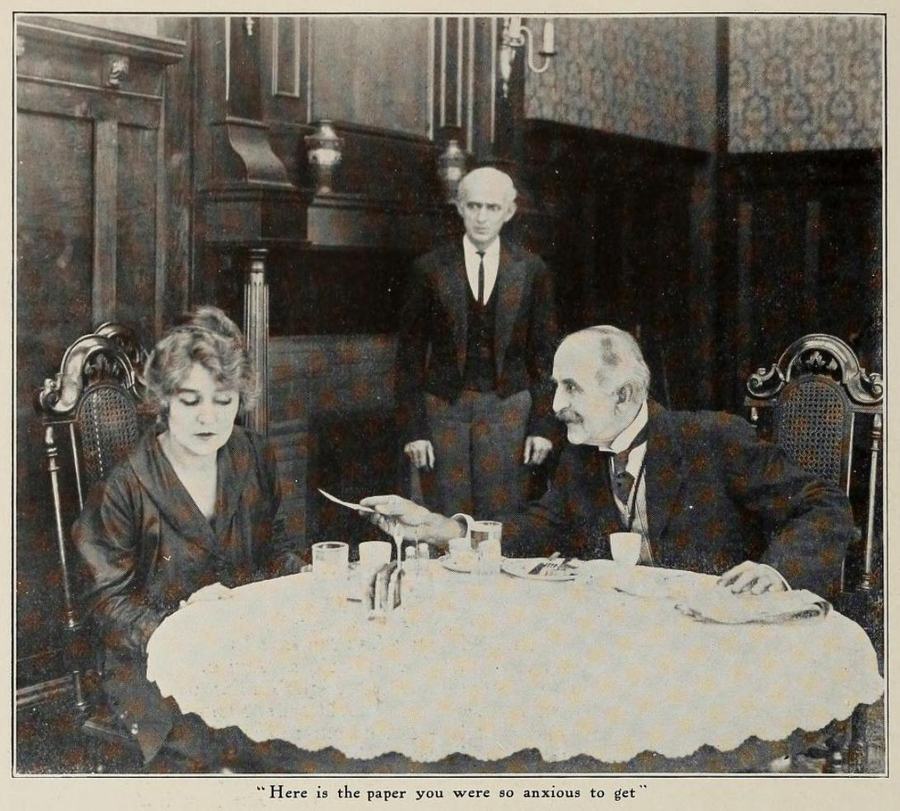
While Nan meticulously orchestrates Lawson's financial ruin, Billy Bond's journey plunges him further into the depths of despair. Consumed by the shame and perceived betrayal, he vows a more visceral form of revenge: Lawson's death. This desperate pledge is documented in a note left for his father, a missive that, unbeknownst to Billy, holds the key to unlocking a truth far more profound and devastating than any of them could imagine. The discovery of this note by the elder Bond propels the narrative towards its climactic revelation. Rushing to Lawson's house, the elder Bond unleashes a bombshell that shatters the foundation of their intertwined lives: Billy is not his son, but in fact, Lawson's own flesh and blood. This extraordinary twist, a hallmark of melodramatic storytelling, recontextualizes every preceding event. Lawson's elaborate revenge scheme against the elder Bond, his cruel manipulation of Nan and Billy, is suddenly imbued with a tragic, self-destructive irony. He has, in essence, tormented his own son and driven him to the brink. This revelation is a seismic event, akin to the profound familial secrets unearthed in films like The Seed of the Fathers, where hidden parentage and ancestral burdens often dictate the fates of the characters. The weight of this truth is too much for Billy. Overcome, his nerves break, and in his profound emotional collapse, his subconscious cries out for the one person who, despite everything, represents a flicker of hope and connection: Nan. His raw, unbridled plea for her name signifies a desperate longing for solace and understanding, a testament to the enduring, albeit fractured, bond between them. The elder Bond's revelation serves as the ultimate "outwitting," not by cunning plot, but by the sheer, unyielding force of truth, turning the tables on Lawson in a way he could never have foreseen.
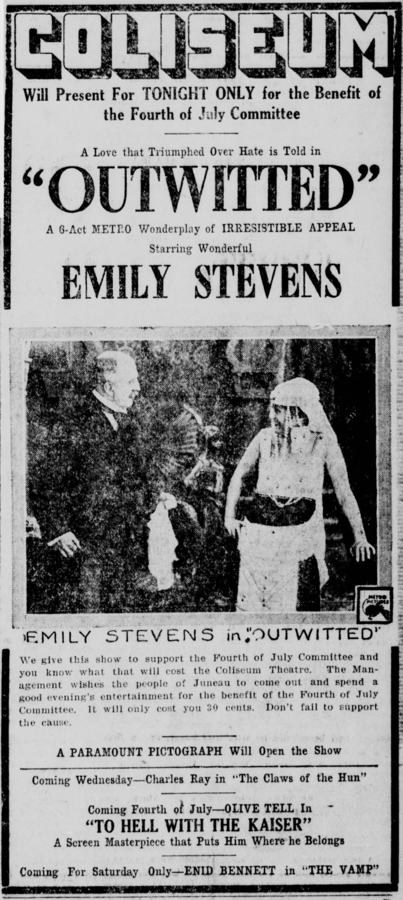
The impact of the elder Bond's revelation is immediate and transformative. Lawson, confronted with the devastating truth of his paternity and the catastrophic consequences of his own vengeful machinations, experiences a profound moment of repentance. Stripped of his pride and the illusion of control, he is overwhelmed by the realization of the suffering he has inflicted, particularly upon his own son. This dramatic shift from antagonist to a figure seeking atonement is a classic arc, offering a glimmer of hope amidst the preceding darkness. His journey to find Nan is not merely a search for a wronged woman but a quest for his own redemption, a desperate attempt to mend the shattered lives he has so carelessly broken. The eventual reunion between Nan and Billy, facilitated by a repentant Lawson, is portrayed as a moment of poignant reconciliation. It’s a testament to the enduring power of forgiveness and the possibility of healing, even after profound betrayal and suffering. The film, in its resolution, suggests that while vengeance can be a potent motivator, ultimate solace often lies in understanding and empathy. The title "Outwitted" takes on multiple layers of meaning by the film's conclusion. Initially, it refers to Nan's clever scheme against Lawson. However, by the end, Lawson himself is "outwitted" by fate, by the truth of his own paternity, and by the unforeseen consequences of his relentless pursuit of revenge. This complex layering of narrative irony elevates the film beyond a simple melodrama, inviting deeper contemplation on themes of justice, fate, and the intricate web of human relationships. The narrative subtly echoes the idea of consequences inherent in films such as Sowers and Reapers, where the actions of individuals inevitably lead to their own harvest, good or ill. The film concludes not just with a happy ending, but with a sense of karmic balance, where the scales of justice, though dramatically tilted for much of the runtime, ultimately find a precarious equilibrium.
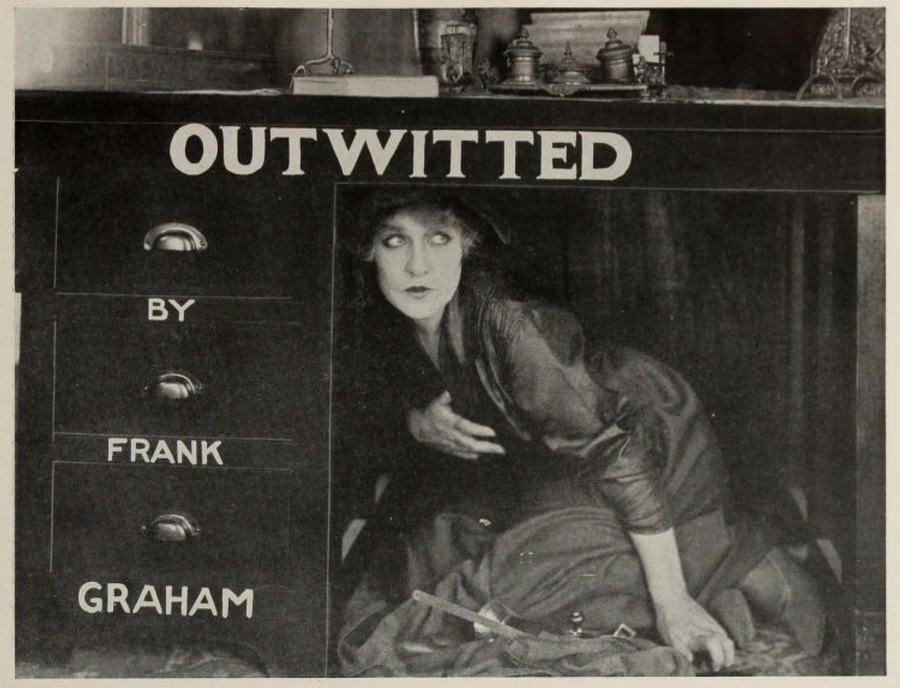
Beyond its compelling narrative, "Outwitted" offers a fascinating glimpse into the filmmaking sensibilities of its era. Directed with a keen eye for dramatic staging, the film relies heavily on the expressive power of its actors, a hallmark of silent cinema. Emily Stevens, as Nan Kennedy, delivers a performance that navigates the complex emotional landscape of her character with remarkable depth, transitioning from a desperate sister to a cunning avenger and finally to a figure seeking peace. Her nuanced portrayal, often conveyed through subtle facial expressions and gestures, would have captivated audiences. Joseph Burke, as Lawson, embodies the archetypal villain of the period, his calculating demeanor and ultimate repentance forming a potent character arc. The script, co-written by Charles Logue and Mary Murillo, showcases a mastery of dramatic pacing, building tension through a series of escalating conflicts and shocking revelations. The use of intertitles, while necessary for conveying dialogue and crucial plot points, never overshadows the visual storytelling, allowing the narrative to unfold with a fluid, almost balletic grace. The production values, typical of early 20th-century cinema, would have aimed for a certain realism in sets and costumes, grounding the fantastical elements of the plot in a believable, if heightened, reality. Placing "Outwitted" within the broader context of silent film reveals its place as a robust example of popular entertainment, a film designed to engage, thrill, and provoke thought. It stands as a testament to the era's capacity for intricate storytelling and character development, proving that complex narratives and profound emotional journeys were not exclusive to later periods of cinematic evolution. The film's enduring appeal lies in its exploration of universal human themes: the desire for justice, the destructive nature of revenge, and the redemptive power of truth and forgiveness. While perhaps not as grand in scale as a historical epic like Napoleon, its intimate, character-driven drama holds its own, demonstrating the varied storytelling capabilities of early cinema. It reminds us that the fundamental elements of compelling narrative—conflict, character, and resolution—transcend technological advancements, remaining the bedrock of cinematic art.
IMDb —
1926
Community
Log in to comment.