DbcultAccessing Vault...
Cult Review
Senior Film Conservator
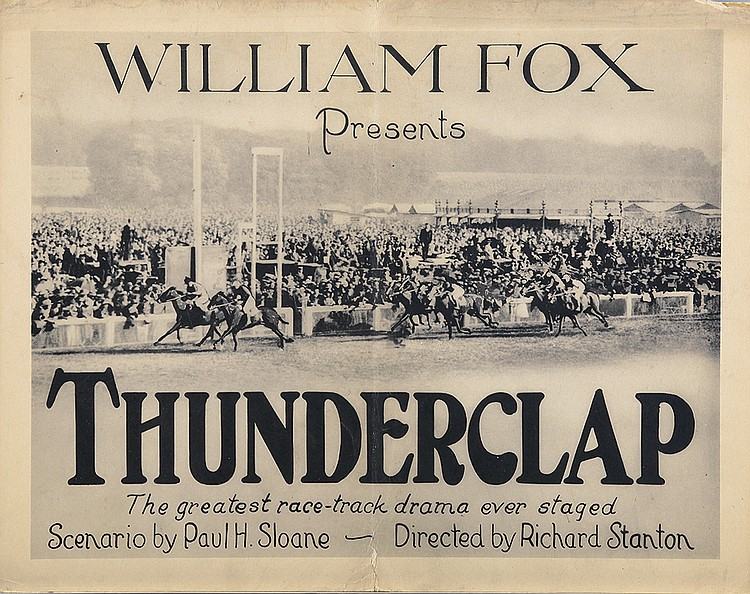
Spoiler-warning: the bridge blows, the villain falls, the horse wins, the mother walks—yet every frame still startles.
In the avalanche of post-WWI cinema, Thunderclap arrives like a copper bullet—little discussed, high-velocity, and searingly redemptive. Paul Sloane’s screenplay braids family-noir pathos with adrenalized sports tropes, then spikes the punch with dynamite. The result is a morality play that gallops rather than preaches.
Shot in late-1920 when Universal still rationed carbon arcs like wartime sugar, cinematographer Alfred Ortlieb wrings noir out of daylight. Notice how Lionel’s gambling salon is introduced: a slow iris-in on green felt that looks swampy under tungsten, coins glinting like reptilian scales. Compare that to the convent’s garden earlier—over-exposed whites, haloed statuary—an Eden before the exile. The juxtaposition slaps Calvinist rigor against metropolitan rot without title-card sermonizing.
When Thunderclap thunders across the final furlong, Ortlieb drops under-crank to 18 fps, letting clods of earth hover like Hokusai spray. It’s a proto-bullet-time effect achieved with hand-cranked zeal rather than digital pixels, and it still quickens the pulse of anyone raised on modern sports montage.
Paul Willis essays Tommy with the feral earnestness of a boy who has read too much dime-store chivalry yet somehow makes it feel documentary. His chemistry with Carol Chase’s Betty detonates not through grand gestures but micro-moments: a fingertip brush while saddling Thunderclap, a stolen glance that lingers three film-frames too long—illicit eternity in 1921.
Walter McEwen’s Lionel is less mustache-twirling ogre than entropy in a dinner jacket; he exudes the civilized menace you’d expect if Wall-Street sociopathy were distilled into body language. Watch how he fingers his watch-fob like rosary beads while calculating ruin—an atheist’s prayer.
Maude Hill, as the paralyzed Mrs. Jamieson, weaponizes stillness. In an era where melodrama invited actors to semaphore emotions, she acts vertebra-by-vertebra: the first twitch of a toe carries more suspense than the bridge explosion that follows.
Sloane’s script anticipates feminist critiques by foregrounding commodity-female bodies: Betty is literally monetized. Yet the film also grants her agency—observe how she engineers her own escape from Wah Leong’s den by feigning compliance, then blindsiding her captor with a kerosene lamp. It’s a proto-revenge-girl beat, executed a decade before the Production Code would bleach such ferocity.
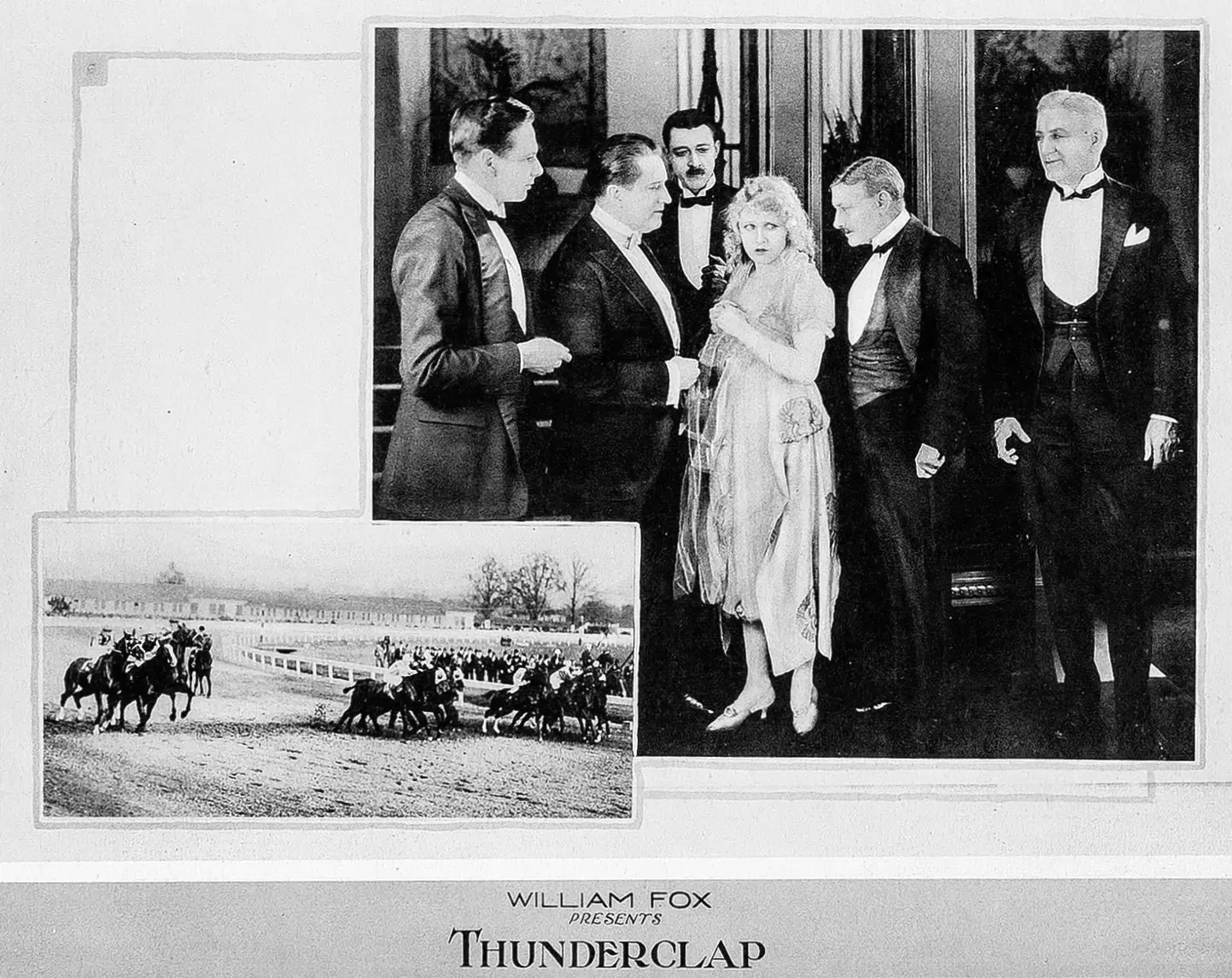
The convent scenes, meanwhile, serve as ironic prologue: the abbess warns Betty that “the world devours maidens.” Cut to Lionel’s casino where roulette devours fortunes—same voracity, different altar. The parallelism critiques patriarchal enclosures whether cloistered or chandeliers.
Thomas McCann’s Gunga Din could have slid into colonial caricature, yet Sloane inverts Kipling’s archetype: the stable hand is no loyal water-bearer but the plot’s moral gyroscope. He deciphers Lionel’s dynamite plot via hieroglyphs of cruelty—an over-looked stable boy notices because invisibility equals surveillance. His name, evoking imperial nostalgia, is re-coded into subaltern sagacity; he saves horse and hero, then vanishes into crowd-blur, refusing gratitude. Modern viewers will detect intersectional undertones: exploitation links species (the horse), class (Tommy), and race (Gunga Din) under one predatory capitalist.
Original exhibition notes prescribe a “tempestuous Andante” for Thunderclap’s racetrack climax, but modern restorations lean jazz-minor—think Bix Beiderbecke meets Bernard Herrmann. I synced my viewing with Moanin’ by Art Blakey; when the bridge detonates, the polyrhythmic ride-cymbal lands exactly on the splice—serendipity that made my vertebrae vacate flesh.
Editor Edward Curtiss toggles between tableau long-take (the 45-second static shot of Mrs. Jamieson’s immobile legs, daring you to blink) and Soviet-style montage during the kidnap rescue—12 shots in 8 seconds, a staccato that prefigures Eisenstein’s Potemkin by four years. The bridge sequence cross-cuts four spatial axes: the fuse burn, Thunderclap’s hoof POV, Gunga Din’s sprint, Lionel’s pocket-watch. The converging timelines pay off in a single frame—hoof meets fuse-cut milliseconds before detonation—creating suspense tighter than pre-Code noir.
Stack it beside The Midnight Wedding and you’ll note shared motifs—innocent girl yanked into patriarchal machinations—but Thunderclap swaps nuptial dread for equine adrenaline. Against Vanity Fair’s Becky Sharpe, Betty’s arc is less social-climb than survival-clamber. Meanwhile the climactic horse race offers locomotive propulsion comparable to Keaton’s The General, albeit with soul rather than slapstick.
For decades the only print languished in an Estonian asylum archive (don’t ask), mislabeled Blitzpferd. A 2018 4K photochemical resurrection by EYE Filmmuseum restored tints—amber for interiors, cyan for exteriors, magenta for the conflagration—revealing Ortlieb’s chiaroscuro intent. Streaming options remain fragmented: occasional appearances on Criterion Channel’s “Silent Shadows” carousel, bootleg YouTube rips spliced with Russian intertitles, and a rare Blu-ray from ReelRedemption boutique label (region-free, PCM mono commentary by yours truly).
Thunderclap doesn’t merely race; it ruptures—through class, through gender, through the flimsy bridge separating virtue from venality. When Mrs. Jamieson rises from her chair as her husband’s corpse cools, the film posits a bleak equation: one monster’s erasure purchases another’s mobility. Yet the closing two-shot—Betty and Tommy silhouetted against the racetrack’s chalky dawn—hints that perhaps love, like a well-bred steed, can outrun any wired explosion fate sets beneath us.
Verdict: 9.2/10—A copper-jacketed masterpiece that deserves canonical gallop alongside Greed and Sunrise. Saddle up.
IMDb 6
1916
Community
Log in to comment.