DbcultAccessing Vault...
Cult Review
Senior Film Conservator
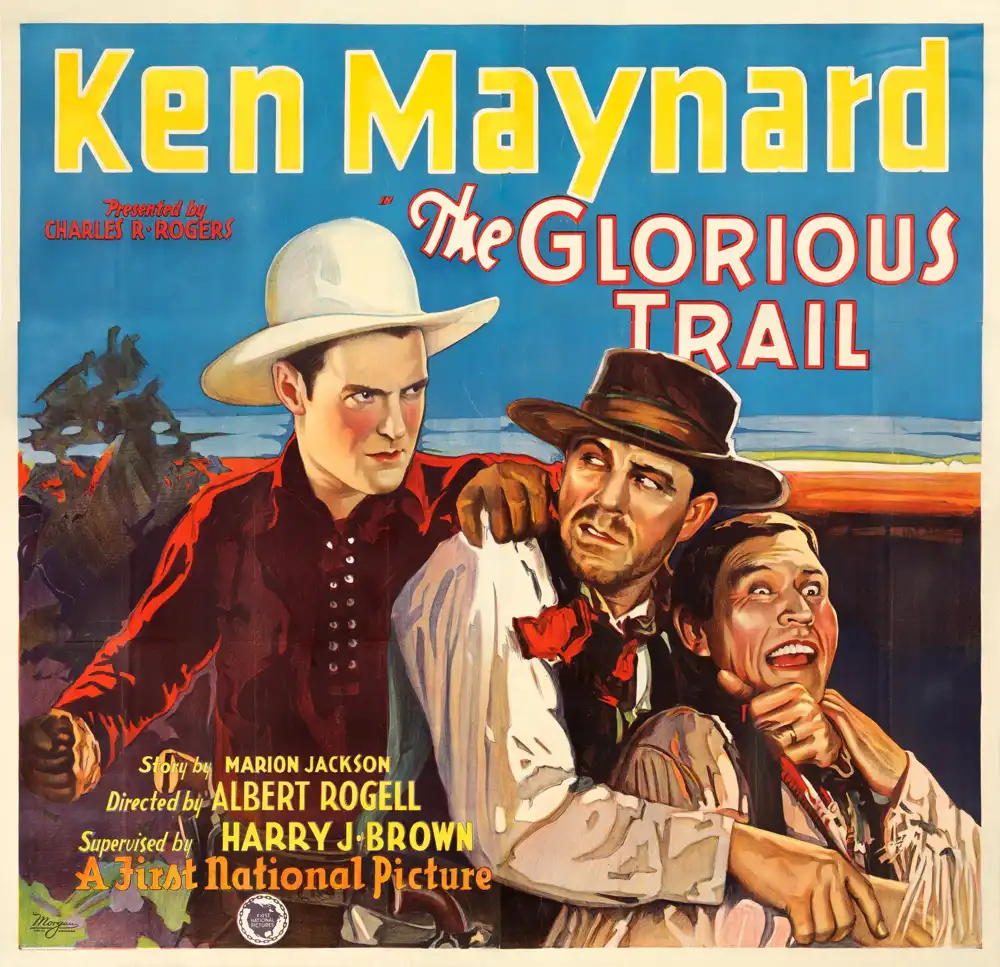
If you have a high tolerance for silent Westerns where the plot is basically 'guys standing near poles,' you might get something out of The Glorious Trail. It’s mostly for people who like watching Ken Maynard do things on a horse that seem physically impossible. If you want a story with actual depth or characters who do more than scowl at the horizon, you’re going to be bored out of your mind within ten minutes.
The whole movie is about building a telegraph line. It sounds dry, and honestly, it frequently is. There are long stretches where you’re just watching men haul wood. But then Ken Maynard shows up on Tarzan—the horse—and the movie suddenly remembers it’s supposed to be an entertainment. Tarzan is arguably the best actor in the film. He has this way of looking more alert than the actual human leads.
Ken Maynard’s outfit is the first thing you notice. His hat is enormous. It’s one of those hats that feels like it has its own zip code. He plays Pat O’Leary with this very specific kind of silent-era sincerity where every gesture is just a little bit too wide. When he’s supervising the construction, he looks less like a foreman and more like a man trying to remember if he left the stove on.
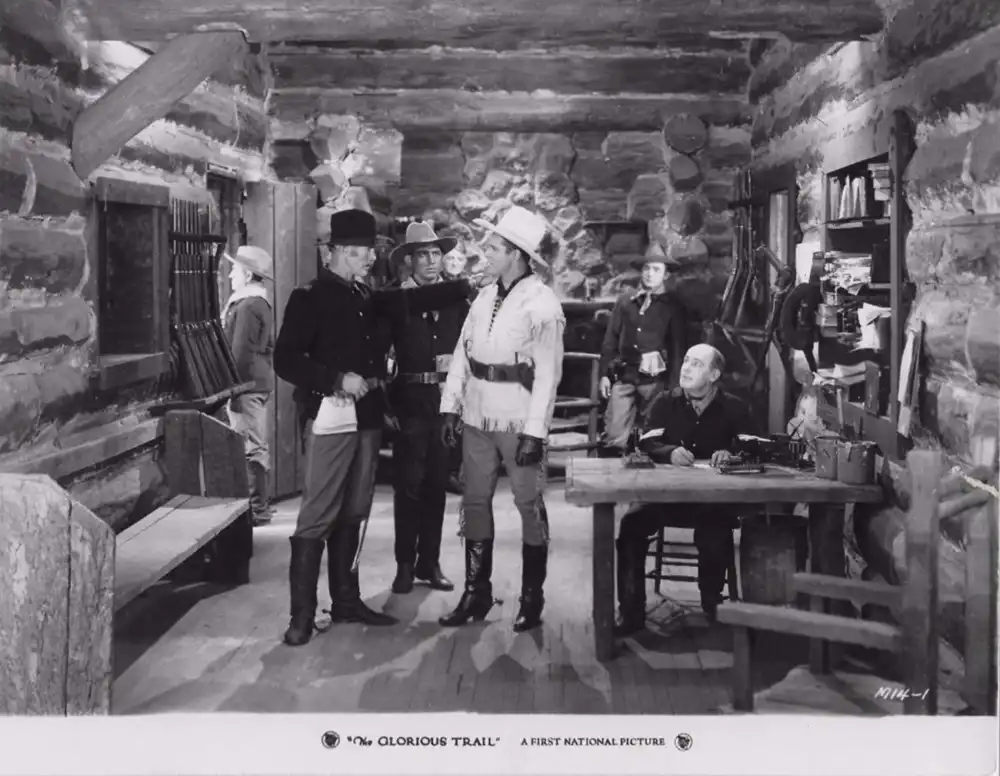
Frank Hagney plays the villain, Gus Lynch, and he has a great face for it. He’s got this heavy, looming presence. There’s a scene in the trading post where he’s just leaning against a counter, and you can tell he’s the bad guy simply because of how much space he takes up. He doesn’t need the 'motley henchmen' mentioned in the script, though they are there, mostly milling around in the background looking like they aren't sure where the craft services table is.
The pacing is… weird. It’ll be incredibly slow, focusing on the minutiae of wire-stringing, and then suddenly there’s an uprising. The transitions are jarring. One moment it’s a quiet day in the dirt, and the next, there’s a flurry of action that feels like it was edited by someone in a massive hurry. It reminds me a bit of the frantic energy in Square Shooter, but with less focus on the actual shooting and more on the logistics of 19th-century communication.
There is a shot midway through where the telegraph poles stretch off into the distance, and they look incredibly flimsy. Like, if a stiff breeze came through, the whole movie would be over because the 'trail' would be gone. It makes the high stakes of the sabotage feel a little ridiculous. Gus Lynch is out here orchestrating entire raids just to knock over some sticks.
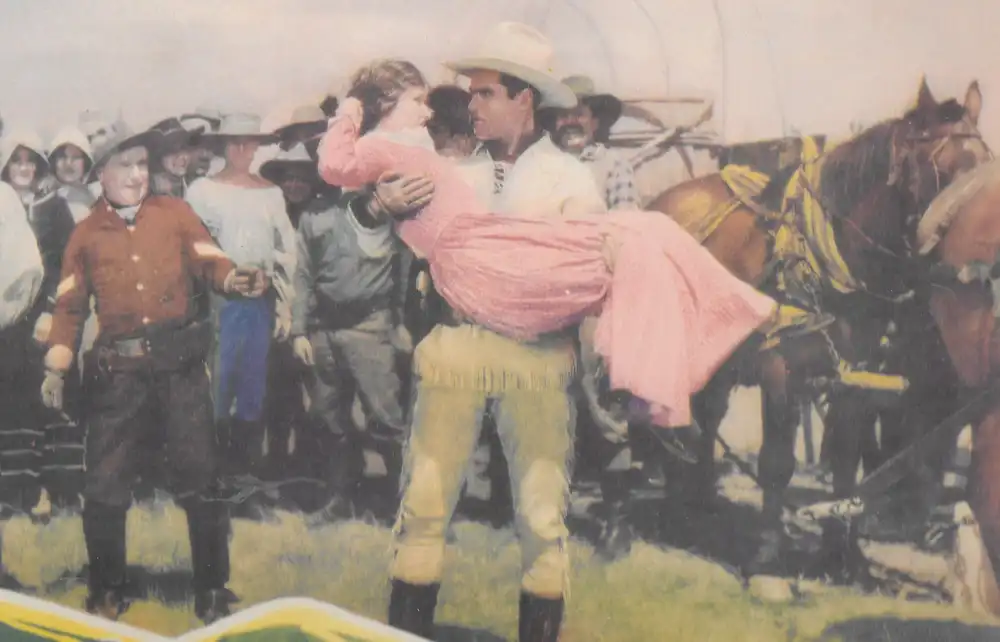
The chemistry between Maynard and Gladys McConnell is almost non-existent. They stand near each other and go through the motions, but you never really buy it. You get the sense Maynard would rather be back with the horse. Whenever Tarzan isn't on screen, the energy level of the film drops by about 40 percent.
I found myself looking at the background extras a lot. In the crowd scenes, there’s always one guy who clearly doesn't know where to look. It gives the film this raw, unpolished feeling that I actually prefer over the hyper-synchronized Westerns that came later. It feels like they just went out into the desert with a camera and some horses and hoped for the best.
If you’ve seen Riddle Gawne, you know how these things usually go, but this one feels more industrial. It’s about the 'progress' of the telegraph, which isn't exactly the most cinematic concept. There’s a scene where they’re celebrating the completion of a section, and the joy on the actors' faces feels like they were actually happy to be done with that day of filming.
The action sequences are the saving grace. The stunt work is genuinely dangerous-looking. No safety nets, no CGI, just Ken Maynard throwing himself off things. There’s a specific fall he takes near a rocky outcrop that made me wince. It’s those moments—the ones that feel unscripted and slightly chaotic—that make it worth a look if you’re a completionist of the genre.
Otherwise, it’s a lot of staring at wires. Some of the title cards are unintentionally funny because they try to make the act of digging a hole sound like a monumental achievement in human history.
IMDb 4.5
1917
Community
Log in to comment.