DbcultAccessing Vault...
Cult Review
Senior Film Conservator
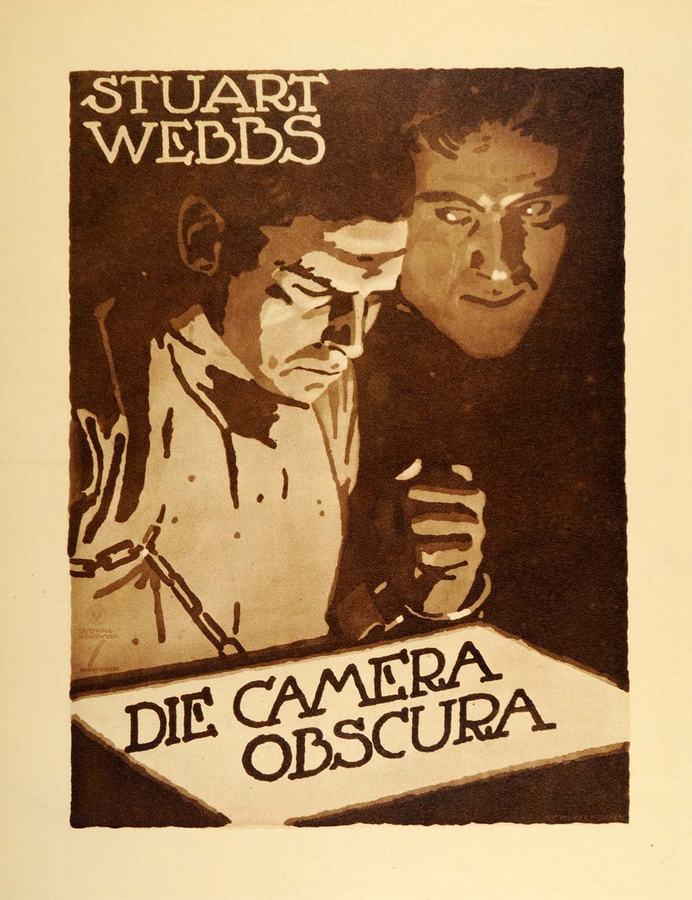
Camera Obscura
is a forgotten gem from 1930 that glows like a candle in the crypt of pre-war cinema. Directed with a surgeon’s precision and a poet’s melancholy, this film is not merely a narrative exercise but a philosophical inquiry into the nature of reality itself. Set against the crumbling opulence of Weimar Berlin, it tells the story of Dr. Leopold Kramer (Alexander Granach), an optician whose obsession with ocular science spirals into a metaphysical crisis. When a mysterious client commissions him to restore a 17th-century camera obscura, Kramer uncovers a trove of photographs that expose a network of corruption, love, and betrayal. The device becomes both literal and metaphorical: a tool to see the world’s hidden layers and a mirror for Kramer’s fractured psyche.The film’s brilliance lies in its visual alchemy. Every frame is a study in contrasts—black and white, clarity and distortion. The camera obscura, depicted with almost religious reverence, functions as a narrative device and thematic anchor. When Kramer peers through its lens, the world outside his studio is projected upside-down onto his walls, a visual metaphor for the film’s interrogation of perspective. Director Ernst Reicher (who also stars in a haunting supporting role) employs tilted angles and stark shadows to evoke the disorientation of a man caught between rationality and madness. One particularly harrowing scene in a dimly lit optician’s office, where Kramer’s trembling hands adjust a patient’s specs while the camera obscura reveals their soul’s true shape, is a masterclass in silent storytelling.
Alexander Granach’s performance is a tour de force. He embodies Kramer with the weary dignity of a man who has seen too much and understood even more. His eyes, often framed in close-up, become portals to his inner turmoil. Walter Dysing, as the smug industrialist von Ritter, contrasts sharply with Granach’s vulnerability—his clipped enunciation and calculated gestures scream power, yet his character’s moral rot simmers just beneath the surface. Martha Maria Newes, as the enigmatic Lisette, is a revelation; her gaze lingers in the memory like a faded photograph, her presence a question mark that lingers long after the credits roll.
The script, co-written by Reicher and Alfred Schirokauer, is a labyrinth of double entendres and existential questions. Dialogues are sparse but loaded, each word a pebble in the viewer’s shoe, nudging them toward the film’s central thesis: that truth is always filtered through perception. When Kramer declares, What if the eye is not a window but a prison?
—a line delivered with icy resolve during a stormy night—he articulates the film’s existential core. This is not the cozy crime-solving of Held in Trust or the romantic scheming of The Misleading Lady, but a far darker, more cerebral affair. The narrative’s twist in the final act—a revelation that recontextualizes every prior scene—is as shocking as it is inevitable, a testament to the film’s meticulous construction.
Technically, Camera Obscura is a marvel. The use of light and shadow is reminiscent of Castles for Two, but with a more somber tone. The set design, particularly Kramer’s cluttered studio filled with vintage optical instruments, is a character in itself. A rotating prop camera obscura, with its brass gears and velvet curtains, becomes a symbol of the film’s obsession with seeing and being seen. The score, a haunting blend of piano and violin, underscores the tension between the film’s intellectual rigor and emotional rawness.
Comparisons are inevitable. The film’s preoccupation with surveillance and identity echoes The Devil’s Pay Day, but where that film leans into Gothic melodrama, Camera Obscura maintains a clinical detachment. Its philosophical heft recalls the works of Het Geheim van Delft, yet it diverges in its focus on personal rather than political corruption. For those who appreciate the cerebral edge of Should a Woman Tell?, this film is a must-watch. Even modern viewers will recognize its themes in contemporary works like Deliverance, though Camera Obscura’s period setting and formal restraint make it a timeless artifact.
The film’s pacing is deliberate, almost glacial at times, but this allows the audience to savor its visual and thematic richness. A mid-film sequence in which Kramer traces the history of the camera obscura through a montage of historical documents and modern film clips is a technical and conceptual triumph. The editing here is seamless, the transition from 17th-century sketches to Kramer’s studio a masterstroke of temporal fluidity. Such sequences elevate the film beyond mere mystery into the realm of philosophical cinema.
What lingers most, however, is the film’s ambiguity. Like the camera obscura itself, it presents a world that is both familiar and alien. Is Kramer a hero, a victim, or a manipulator? Are the photographs he discovers evidence of a conspiracy or a personal confession? The film resists easy answers, instead inviting viewers to engage with its questions. This ambiguity is both its strength and its potential weakness—those seeking a straightforward whodunit may find it frustrating. But for those who embrace its existential challenges, Camera Obscura is a revelation.
In the context of early 20th-century cinema, Camera Obscura stands as a bridge between the Expressionist excesses of the 1920s and the more grounded realism of the 1930s. Its exploration of perception as a barrier to truth anticipates later works like Snobs and Kids Is Kids, which grapple with similar themes of identity and societal illusion. Yet Camera Obscura’s unique contribution lies in its visual language, which turns the camera obscura into a metaphor for the entire cinematic medium—projecting illusions onto the audience while claiming to reveal the truth.
The film’s legacy has been largely overlooked, perhaps due to the political chaos of the era and its director’s later exile. But for film scholars and enthusiasts, it remains an essential watch. Its technical innovations in cinematography, particularly in the use of light to create mood and meaning, are ahead of their time. The scenes of Kramer adjusting lenses and mirrors in his studio are not just plot points but visual symphonies, each shot meticulously composed to reflect the character’s psychological state.
For modern audiences, Camera Obscura may require some contextual understanding of Weimar Germany’s socio-political climate. The film’s undercurrents of capitalism’s moral decay and individual alienation are more potent when viewed through that lens. However, its themes of truth, perception, and identity are universally resonant. In an age of digital manipulation and information overload, Kramer’s struggle to distinguish reality from illusion feels eerily prescient.
In conclusion, Camera Obscura is a film that rewards patience and rewards multiple viewings. It is a work of art that demands to be seen not just with the eyes, but with the mind and soul. For those willing to engage with its complexities, it offers a hauntingly beautiful exploration of what it means to see—and to be seen—in a world obsessed with appearances. As Kramer’s final act of destruction of the camera obscura leaves him in darkness, the film’s central question remains: in a universe where perception is reality, can we ever truly see ourselves?
IMDb —
1918
Community
Log in to comment.