DbcultAccessing Vault...
2.8/10
Senior Film Conservator
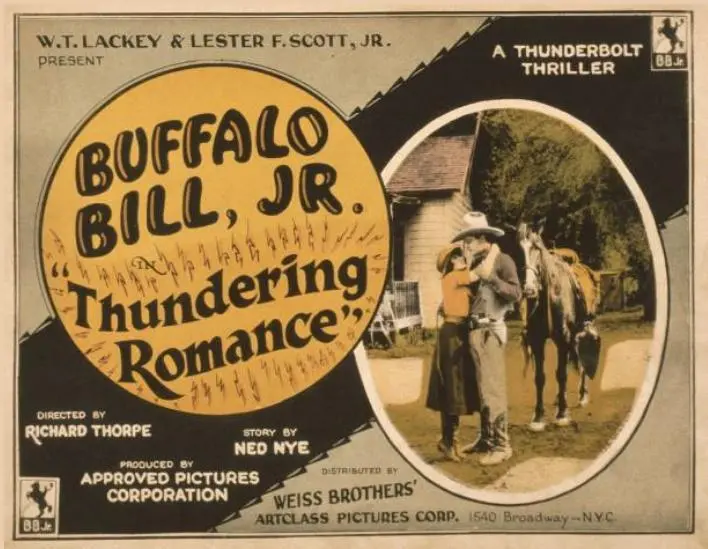
A definitive 2.8/10 rating for a film that redefined the boundaries of cult cinema. Thundering Romance remains a cornerstone of transgressive art.
The year 1924 represented a fascinating pivot point in American cinema, a time when the Western genre was beginning to shed its primitive skin and embrace a more sophisticated, albeit still rugged, narrative architecture. Thundering Romance, directed with a utilitarian yet effective hand, serves as a remarkable case study in this evolution. While often relegated to the footnotes of film history as a 'Buffalo Bill Jr.' vehicle, the film demands a more nuanced interrogation, particularly through the lens of its female lead, a young Jean Arthur, and its depiction of the precarious nature of frontier economics.
In the vast, unyielding topography of the silent Western, the struggle for land is rarely just about soil; it is about the soul's survival against the encroaching machinery of modern greed.
To understand the resonance of this film, one must first acknowledge the screen presence of Jay Wilsey, performing under the moniker Buffalo Bill Jr. Unlike the more polished icons of later decades, Wilsey possessed a raw, kinetic energy that felt authentic to the dirt and sweat of the trail. In Thundering Romance, he embodies the archetype of the wandering protector, a man whose moral compass is as unswerving as the horizon. His task is Herculean: to save a ranch from the predatory machinations of crooks who view the landscape not as a home, but as a ledger to be balanced in their favor. This theme of the 'vulture capitalist' in the Old West is a recurring motif, one seen with varying degrees of cynicism in contemporary works like The Bargain.
The plot centers on a mortgage crisis—a surprisingly modern anxiety for a film nearing its centenary. The heroine, played by Arthur, is facing foreclosure. The villains are not mere cattle rustlers; they are white-collar criminals in dusty boots, using the law as a bludgeon. This shift from lawless violence to legalistic villainy adds a layer of sophistication to the conflict. The solution, a grueling cattle drive to raise the necessary funds, is a classic trope, yet here it is executed with a sense of genuine peril. The cattle drive functions as a microcosm of the American experience: a collective effort against the elements, where survival is predicated on grit and the integrity of one's word.
For many modern cinephiles, the primary allure of Thundering Romance is the presence of Jean Arthur. Long before she became the quintessential screwball comedy star or the voice of conscience in Frank Capra’s masterpieces, she was honing her craft in the trenches of silent Westerns. Here, she lacks the trademark husky voice that would later define her, yet her expressive physicality is undeniable. She manages to elevate a standard 'damsel in distress' role into something more resilient. There is a flickering intelligence in her eyes that suggests a woman who is not just waiting for a savior, but is actively participating in her own salvation. Her chemistry with Wilsey is grounded in a mutual respect for the labor required to keep the ranch afloat, a dynamic that feels more grounded than the melodramatic romances of the era, such as those found in Her First Kiss.
Technically, the film is a testament to the resourcefulness of mid-1920s production. The cinematography captures the stark, unadorned beauty of the landscape, eschewing the romanticized vistas of John Ford for something more tactile and unforgiving. The lighting, often reliant on the harsh California sun, creates a high-contrast world where shadows are deep and the dust feels omnipresent. This visual grit mirrors the narrative's stakes. When the crooks hatch their plan to stampede the herd, the film transitions into a masterclass of silent action. The stampede is not merely a plot point; it is a visceral eruption of chaos. The editing during this sequence is surprisingly brisk, creating a sense of mounting dread as the thundering hooves threaten to pulverize the protagonist's last hope for financial redemption.
The supporting cast, featuring stalwarts like J.P. Lockney and Harry Todd, provides a sturdy framework for the leads. These character actors were the backbone of the industry, bringing a sense of lived-in history to every frame. Their performances remind us that the West was populated by more than just heroes and villains; it was filled with eccentrics, failures, and survivors. This richness of character is something often missing from more streamlined modern interpretations of the genre. It invites comparison to the character-driven narratives of The Whistle, where the human element is prioritized over spectacle.
The stampede sequence remains the film's aesthetic zenith. It is a terrifying display of raw animal power, captured with a bravery that would make modern safety coordinators faint.
As we dissect the mechanics of the plot, we find a fascinating intersection between the Western and the burgeoning melodrama genre. The threat of foreclosure provides a domestic tension that balances the outdoor action. This blend of genres was common at the time, as seen in films like The Little Fool or Her Five-Foot Highness, which sought to appeal to a broad demographic by mixing thrills with emotional stakes. In Thundering Romance, this balance is handled with surprising dexterity. The film never loses sight of its central economic conflict, even as it indulges in the requisite gunfights and chases.
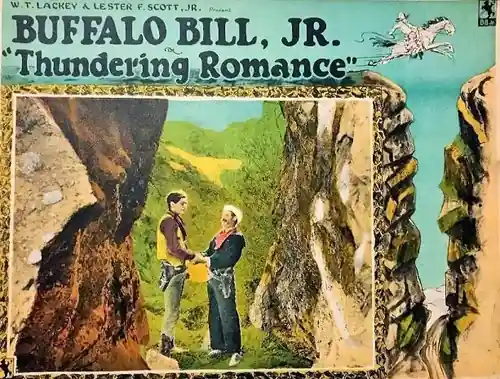
Ned Nye’s writing deserves credit for its lean efficiency. There is very little fat on this narrative bone. Every scene serves to either heighten the stakes or deepen our connection to the characters’ struggle. The dialogue, delivered via intertitles, is devoid of the flowery prose that plagued many silent films, opting instead for a directness that suits the rugged setting. This economy of language allows the physical performances to take center stage, a necessity in a medium where the visual is paramount. The influence of such tight storytelling can be observed in other successful silents of the period, such as The Alaskan.
The villainy in Thundering Romance is particularly noteworthy for its lack of nuance. Lew Meehan and his cohort play their roles with a sneering delight that makes their eventual comeuppance all the more satisfying. In an era before the 'anti-hero' or the 'sympathetic villain' became fashionable, these characters served as pure obstacles to be overcome, much like the harsh winters or the stampeding cattle. This clarity of conflict is one of the reasons silent Westerns remain so accessible today; the moral lines are drawn in the sand with a heavy hand.
Reflecting on the film’s legacy, one cannot ignore the historical context of its production. This was a time when the myth of the West was being codified by Hollywood even as the actual frontier was vanishing. Films like Thundering Romance played a crucial role in shaping the global imagination's perception of the American spirit. They portrayed a world where justice was possible through individual effort and communal support, a comforting narrative in the wake of the First World War. This optimism, though perhaps naive, is infectious. It is the same spirit found in Devil McCare, where the protagonist triumphs over seemingly insurmountable odds through sheer force of will.
Furthermore, the film’s exploration of property rights and the vulnerability of the small-scale rancher echoes themes found in Nan of Music Mountain and The Halfbreed. These films often grappled with the displacement of individuals by larger, more impersonal forces—be they corporate interests, corrupt lawmen, or social prejudice. In Thundering Romance, the cattle drive is a defiant act of reclamation, a way for the protagonist to assert her right to exist in a world that is increasingly trying to price her out of it.
In terms of pacing, the film is a marvel. It moves with a relentless momentum that mirrors the cattle drive itself. From the initial discovery of the crooks' plan to the final showdown, there is a sense of urgency that keeps the viewer engaged. This is no slow-burn character study; it is a race against time, a narrative structure that would become a staple of the genre. The tension is palpable, particularly during the scenes where the crooks attempt to infiltrate the drive. The paranoia of the trail—knowing that an enemy could be lurking behind any rock or within the ranks of one's own men—adds a psychological layer to the physical danger.
The film also touches upon the theme of redemption, albeit subtly. The cowboy protagonist is a man of few words and a mysterious past, a figure who finds purpose in helping someone more vulnerable than himself. This selfless act serves as a form of purification, a way to transcend the aimless wandering of his previous life. This motif of the 'redeemed wanderer' is a cornerstone of the Western, explored with more overt religious undertones in films like Blind Man's Holiday, but here it is handled with a secular, pragmatic grace.
As the film reaches its climax, the resolution is both explosive and emotionally resonant. The defeat of the crooks is not just a victory for the heroine, but a triumph for the community that supported the drive. It reinforces the idea that while the West was won by individuals, it was sustained by the bonds of mutual aid. This sentiment is a far cry from the cynical isolationism of later 'revisionist' Westerns, and it provides Thundering Romance with a heart that beats strongly even after a hundred years.
Ultimately, Thundering Romance is more than just a relic; it is a vibrant, breathing piece of cinema that captures a specific moment in time with clarity and passion. It showcases the early brilliance of Jean Arthur, the rugged charisma of Jay Wilsey, and a storytelling sensibility that prioritized action, emotion, and moral clarity. Whether compared to the social dramas of A Gentleman from Mississippi or the adventurous spirit of Robinson Crusoe Hours, this film stands as a testament to the enduring power of the Western mythos. It is a thundering reminder of why we fell in love with the movies in the first place: for the heroes, the landscapes, and the eternal struggle between the right and the greedy.
For those interested in the broader career trajectories of the era's stars, one might look at The Career of Katherine Bush or Golden Dreams to see how the industry was experimenting with different archetypes. Yet, few films of the period manage to capture the sheer kinetic joy of the Western as effectively as this one. It remains a cornerstone of the silent era, a film that deserves to be watched, discussed, and celebrated by anyone who values the history of the moving image. It is, quite simply, a classic of the trail.
IMDb 5.6
1936
Community
Log in to comment.