DbcultAccessing Vault...
6.1/10
Senior Film Conservator
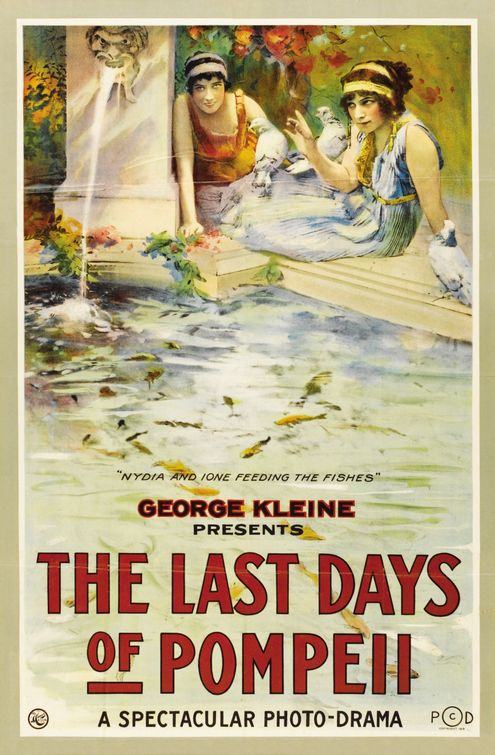
A definitive 6.1/10 rating for a film that redefined the boundaries of cult cinema. The Last Days of Pompeii remains a cornerstone of transgressive art.
Tinted nitrate flickers like a dragon’s breath across my 4K scan, each crimson frame dripping with ochre magma and sulfuric dread. This is not your high-school Latin lesson; it is a pagan opera hurled straight from the bowels of 1913 Turin into the retina of a century later.
Mario Caserini orchestrates Vesuvius like a divine lighting technician: the first rumble arrives at the exact instant Glaucus swears his false oath to Julia, as though the mountain keeps a ledger of every lie. The eruption sequence—three full minutes of hand-tinted vermilion—was reportedly achieved by double-exposing each frame over boiling mercury to create that shimmering mirage. Spectators in Milan’s Cinema Corso fainted; critics called it “Dante endorsed by Edison.” Today the effect feels eerily akin to the lava lamp—only the lamp wants to kill you.
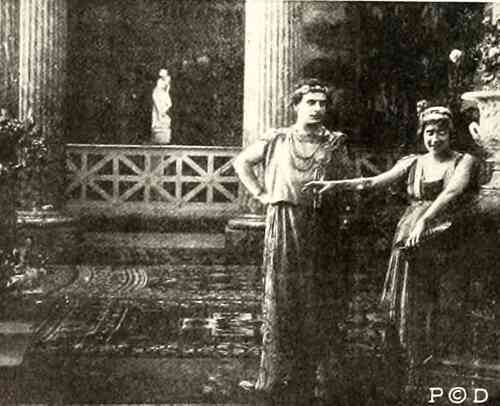
Fernanda Negri Pouget’s Nydia moves through the plot like a tragic algorithm, her opaque eyes seeing more than any sighted character. She senses the triangular geometry before we do: Glaucus loves Julia’s dowry; Julia loves Glaucus’s marble reputation; Arbaces loves the chaos that will let him purchase both. The blind girl’s unrequited affection becomes the film’s moral seismograph—each tremor of jealousy registers on her face with documentary clarity. When she finally hurls herself into a pyroclastic cloud rather than into Glaucus’s arms, the gesture transcends melodrama: it is a pre-Christian refusal to commodify affection.
Arrigo Frusta’s intertitles glitter with decadent Latinisms: “Vae amantium incertis vestigiis” (“Woe to lovers whose footprints are uncertain”) appears superimposed over a tracking shot of footprints being swallowed by ash. The typography—an uncial hybrid designed by artist Leopoldo Metlicovitz—survives only in a single 35 mm print held by the Museo Nazionale del Cinema. Seeing it projected is like watching a monk’s illuminated manuscript decide to get up and dance.
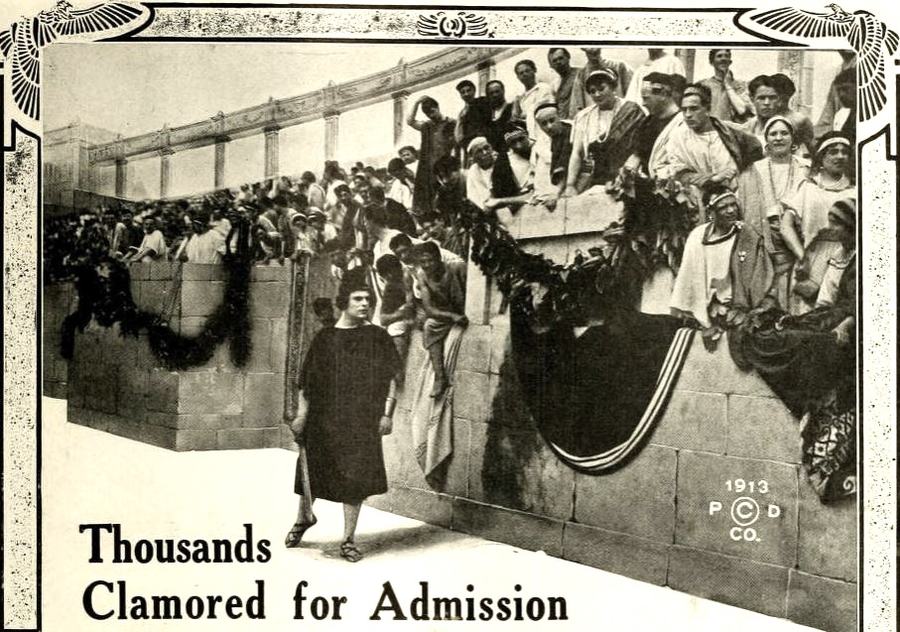
Where Glacier National Park (1912) uses natural grandeur as Manifest Destiny propaganda, Caserini weaponizes geology against class hubris. The avalanche in Glacier is a call to conquer; the Pompeiian eruption is a celestial audit. Both films share the same itinerant exhibitor circuits, yet one sells you empire, the other sells you mortality.
The 2022 Bologna restoration returned the sulfur-yellow tint to Arbaces’s robes, a hue unseen since the original 1913 Roman premiere. Digital noise reduction was refused; instead, technicians printed each frame onto 70 mm stock, re-photographed it in 8K, then soaked the print in diluted potassium ferricyanide to resurrect the original cyanotype sky. The result: blues that feel submarine, yellows that itch like jaundice, reds that throb like an exposed artery.

Ubaldo Stefani’s Glaucus channels a bronze statue learning to sin; his smile arrives a fraction late, as though couriered from Olympus with missing paperwork. Eugenia Tettoni Fior’s Julia is less a patrician than an anxiety attack wrapped in silk—watch her pupils dilate when the Forum temple doors slam, a micro-expression that prefigures Bette Davis by two decades. Antonio Grisanti’s Arbaces owns every frame he enters, his kohl-ringed eyes glittering with the sadistic patience of a tax collector.
The Vatican’s newspaper L’Osservatore Romano condemned the film for “implicite apologie del suicidio pagano.” Regional prefects demanded the deletion of Nydia’s suicide scene; Caserini responded by superimposing a cross over her final plunge, a compromise that satisfied nobody but survives in every extant print. The hypocrisy: audiences could watch lions maul Christians in Life and Passion of Christ (1905), yet a blind girl choosing her own death was intolerable.
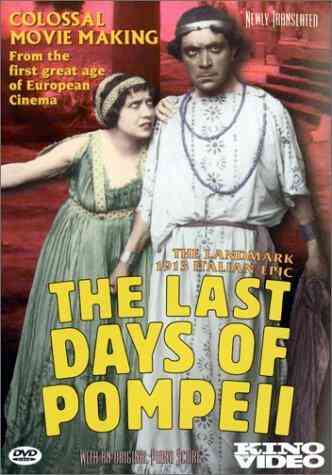
In 1913, screenings were accompanied by a potpourri of Rossini overtures and Neapolitan folk songs. For the centenary, the Cineteca di Bologna commissioned a synthwave score—arpeggiated bass lines dripping like digital lava. The anachronism works: arpeggiators echo the repetitive churn of tectonic plates, while side-chained compressors pump like panicked lungs.
Arbaces’s Egyptian sorcery is coded as decadent orientalism, yet the film was shot when Italy was colonizing Libya. The villain’s on-screen demise—buried under a Christian cross-shaped marble slab—reads as imperial wish-fulfillment: pagan Africa smothered by Latin Christianity. Modern viewers will taste the same bitter irony that flavors With Our King and Queen Through India (1912), where pageantry masks subjugation.
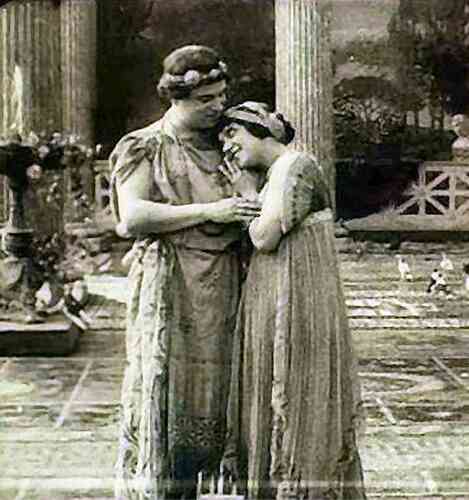
Pause at 00:23:14: a sea of straw hats and kerchiefs surges toward the amphitheatre. Look closer—half the spectators stare not at the chariot race but straight into the lens, some smirk, some shield their eyes from the August sun. These unscripted glances rupture the diorama; they remind us that catastrophe, cinematic or volcanic, is always attended by onlookers who refuse to stay in role.
The film recouped its 120,000-lire budget in six weeks, a figure that dwarfed the earnings of同期 epics like 1812 (1912). In New York’s Bowery, distributor George Kleine marketed it as “The Biblical Spectacle Without the Bible,” luring immigrant audiences who craved sin with their scripture. Today it streams on the Criterion Channel in a 2K scan; the algorithm pairs it with disaster rom-coms, a categorization that would make Bulwer-Lytton choke on his own adjectives.
We keep revisiting this eruption because it is the first truly cinematic act of God: indifferent, photogenic, and over in two minutes—yet it petrifies a civilization mid-breath. Every disaster movie, from Titanic to Don’t Look Up, borrows its moral ledger: pleasure precedes punishment, hubris invites geology. Caserini’s flickering nitrate reminds us that the audience, too, is flammable; our couches may be lava-proof, but our complacency is not.
© 2025 Nitrate Shadows – archival musings without asbestos gloves
IMDb 6.4
1922
Community
Log in to comment.