DbcultAccessing Vault...
Cult Review
Senior Film Conservator
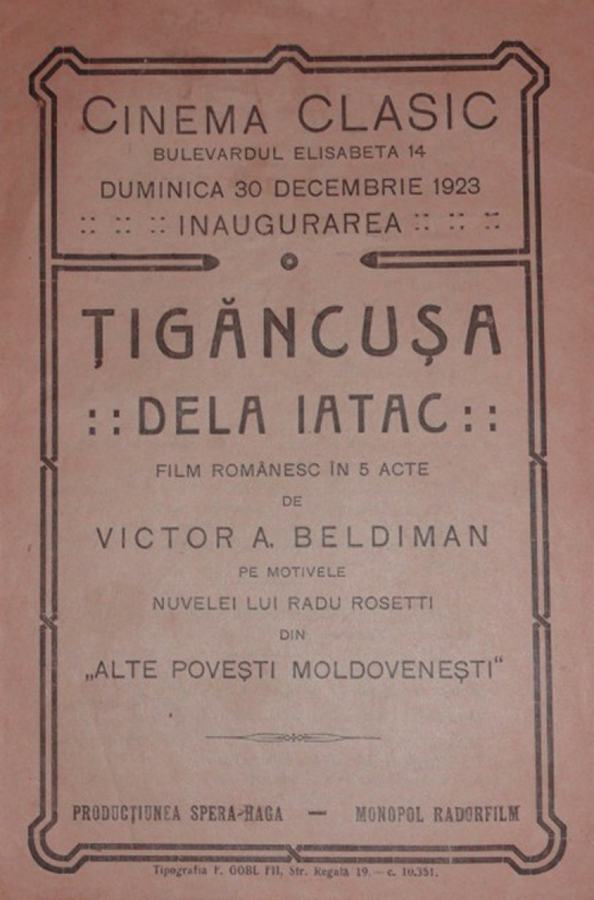
From the opening frame, director Victor Beldima (co‑writer with Radu Rosetti) establishes a visual lexicon that feels simultaneously austere and lyrical. The muted palette of ash‑gray skies and soot‑stained streets is punctuated by bursts of dark orange (#C2410C) in the flickering lanterns that guide Lya Olteanu’s path through the night‑cloaked alleys. This chromatic choice not only signals moments of narrative tension but also metaphorically underscores the ember of resistance that refuses to be smothered.
The film’s mise‑en‑scene recalls the stark realism of Andrzej Wajda’s Monsieur Lecoq, yet it diverges by embracing a more poetic rhythm reminiscent of the Romanian New Wave. The camera lingers on the frost‑kissed windows of the abandoned monastery, allowing the audience to taste the cold air, hear the distant howl of wolves, and feel the weight of centuries pressing upon the present.
Lya Olteanu delivers a performance that is both restrained and volcanic. Her eyes, often half‑closed, convey a storm of unspoken grief, while her measured gestures hint at a disciplined mind forged in the archives of forgotten histories. In contrast, Stelian Crutescu’s commander exudes a rigid composure that cracks subtly when he encounters the tender verses of Ion Fintesteanu’s poet, a character whose lyrical soliloquies serve as a counterpoint to the film’s visual austerity.
Elvire Popesco, as the matriarch of the decaying manor, brings a theatrical gravitas that recalls the grandeur of classic European cinema. Her scenes, bathed in a soft sea‑blue glow (#0E7490), evoke a melancholy nostalgia, especially during the sequence where she reads a faded diary to a group of orphaned children—an homage to the tender humanity found in Little Church Around the Corner.
The screenplay eschews linear progression in favor of a mosaic structure. Each chapter—be it the clandestine rendezvous in the crumbling chapel or the feverish night at the makeshift infirmary—functions as a self‑contained tableau while simultaneously contributing to the overarching theme of collective memory. This approach mirrors the fragmented storytelling of The Restless Three, yet Tigancusa de la iatac retains a cohesive emotional through‑line through its meticulous character development.
The film’s climax, set amidst the skeletal ruins of the manor, is a masterclass in visual symbolism. As the protagonists confront the lingering specter of the past, the camera pans slowly across shattered stained‑glass windows, each fragment reflecting a different facet of the characters’ inner turmoil. The final shot—a lingering close‑up of Lya’s hand clutching a weathered manuscript—leaves the audience suspended between hope and uncertainty, a narrative choice that invites endless interpretation.
Cinematographer Jacques Chapier employs chiaroscuro lighting to accentuate the dichotomy between oppression and defiance. The interplay of shadows and the occasional flare of yellow (#EAB308) from a distant fire creates a visual rhythm that feels almost musical. The sound design, curated by composer Charles Chamel, weaves a tapestry of ambient noises—howling wind, creaking timbers, distant artillery—that punctuate the silence, allowing moments of quiet to resonate more profoundly.
The film’s strategic use of silence is reminiscent of the stark minimalism in The Black Stork. In scenes where dialogue is sparse, the audience is compelled to engage with the visual storytelling, interpreting the weight of a lingering glance or the tremor of a hand.
At its core, Tigancusa de la iatac is an exploration of how personal memory collides with collective history. The archivist’s obsession with preserving documents becomes a metaphor for the human desire to anchor identity amidst chaos. This theme finds echoes in Good Night, Paul, where the protagonist grapples with the erasure of personal narratives.
The film also interrogates the politics of silence. Characters often choose muteness over speech, a decision that reflects the oppressive regime’s ability to render dissent invisible. Yet, the poet’s verses, whispered in the darkness, become acts of rebellion, illustrating the power of art to transcend censorship.
When juxtaposed with Patria nueva, Tigancusa de la iatac shares a similar preoccupation with post‑colonial identity, yet it diverges in its aesthetic execution, favoring a more restrained, almost ascetic visual language. In contrast to the kinetic energy of Hard Boiled, Beldima’s film opts for deliberate pacing, allowing each frame to breathe.
The ensemble cast, featuring talents like Dimitriscu Morfeu and Maria Vecera, delivers performances that are both nuanced and resonant, reminiscent of the collaborative spirit seen in Loot. Their chemistry is palpable, especially in the scene where the poet and the commander share a clandestine drink, their dialogue a dance of ideological opposition and personal longing.
The production design team, led by Ion Iancovescu, meticulously reconstructed the dilapidated manor and surrounding village, employing authentic period props that lend credibility to the setting. The attention to detail—cracked porcelain, soot‑stained walls, and the ever‑present ash heap—immerses the viewer in a world where every object bears the imprint of history.
The use of practical lighting, especially the warm glow of oil lamps, enhances the tactile realism of scenes, drawing a stark contrast to the cold, artificial illumination of the regime’s offices. This dichotomy reinforces the film’s central tension between organic humanity and mechanized oppression.
Costume designer Gheorghe Pagu employs a restrained color scheme, with characters in muted earth tones, punctuated occasionally by the dark orange of the resistance’s insignia. This visual cue serves as a subtle reminder of the ever‑present undercurrent of rebellion.
The recurring motif of the tattered marionette, handled by the children in the market square, symbolizes the manipulation of individuals by larger political forces, a theme explored in depth in Big Little Person.
Tigancusa de la iatac stands as a testament to the power of cinema to fuse visual poetry with stark realism. Its deliberate pacing, combined with stellar performances and a meticulously crafted aesthetic, invites viewers to contemplate the fragility of memory and the enduring spirit of defiance. While its fragmented narrative may challenge those accustomed to conventional storytelling, the film rewards patience with a richly layered experience that lingers long after the credits roll.
In the pantheon of contemporary Eastern European cinema, this work secures a place alongside the most introspective and visually arresting pieces of the decade. It is a film that demands repeated viewings, each time revealing new nuances in its intricate tapestry of sound, light, and human emotion.
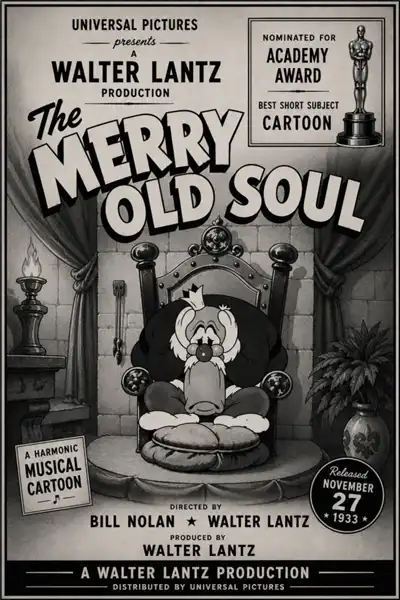
IMDb 5.8
1933
Community
Log in to comment.