DbcultAccessing Vault...
Cult Review
Senior Film Conservator
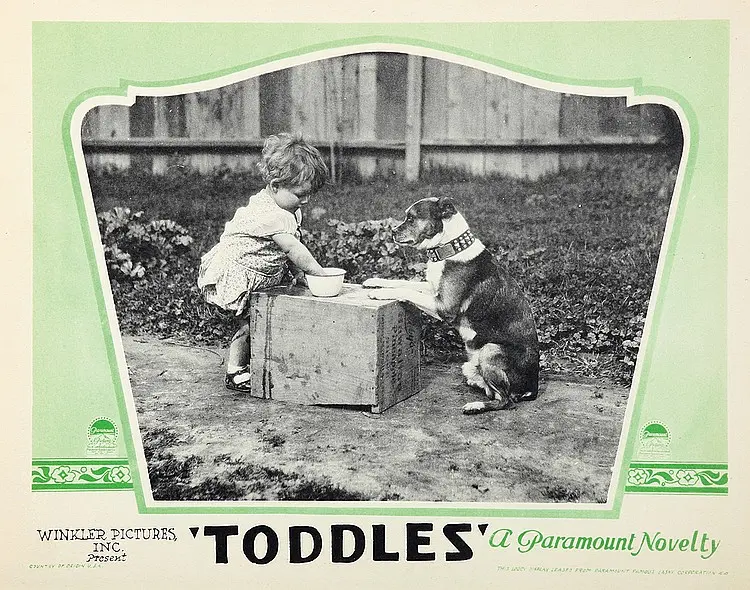
Is Toddles a film worth unearthing from the archives today? Short answer: yes, but with the caveat that its charm is specific, rather than universal. This is a film for those who appreciate the simpler, more earnest storytelling of early cinema, particularly narratives where an animal companion takes center stage. It is decidedly not for viewers seeking complex psychological drama, breakneck pacing, or cutting-edge special effects.
At its core, Toddles is a heartwarming testament to the bond between humans and animals, a sentiment that, thankfully, never truly goes out of style. Its narrative, while straightforward, carries an emotional resonance that transcends its vintage. The film works. But it’s flawed.
This film works because of the undeniable charisma of Buddy the Dog and the genuine, understated performance from Arlene Rock, which together create a believable and affecting central relationship.
This film fails because its pacing can feel languid by modern standards, and some of the supporting characterizations border on caricature, detracting slightly from the central emotional core.
You should watch it if you are a fan of classic Hollywood, animal-centric stories, or simply need a dose of pure, unadulterated cinematic comfort.
At the heart of Toddles lies the story of Arlene Rock, a young woman striving for a foothold in the cutthroat world of performing arts. Her only consistent solace and companion is Buddy, a small, scruffy terrier whose intelligence and loyalty are boundless. Their life together is one of quiet struggle and shared dreams, punctuated by the harsh realities of urban anonymity.
The turning point arrives through a sequence of accidental encounters, largely instigated by Buddy's playful antics and curious nature. These incidents, initially perceived as hindrances, ironically lead Arlene into the path of a prominent, if somewhat world-weary, theatrical producer. This figure, initially dismissive of Arlene and outright annoyed by Buddy, slowly begins to see the genuine spirit in both.
As Arlene navigates the demanding rehearsals and the intricate social dynamics of the theater world, Buddy remains her steadfast shadow. He's more than a pet; he's an emotional anchor, a silent confidante, and, in several key moments, an unwitting hero. The narrative builds towards a pivotal performance or event where Buddy's timely intervention, whether by accident or instinct, solidifies Arlene's position and, more importantly, proves the irreplaceable value of their bond. It’s a simple story, elegantly told, about loyalty finding its reward.
It's easy to dismiss animal performances as mere novelty, but Buddy the Dog in Toddles delivers a masterclass in canine acting. His expressions, his timing, his very presence on screen are nothing short of captivating. There’s a particular scene where Buddy, sensing Arlene’s despair after a failed audition, nudges her hand with his nose and then gently rests his head on her lap. This small, unforced gesture conveys more emotional weight than pages of dialogue ever could.
Buddy isn't just reacting; he's an active participant in the narrative. His eyes, full of intelligence and devotion, often serve as a mirror to Arlene's own emotions, amplifying her struggles and triumphs. It’s a performance that reminds one of Rin Tin Tin or Lassie, yet Buddy possesses a unique, almost melancholic charm that sets him apart. He feels less like a trained animal and more like a true character.
Arlene Rock, as the human anchor of this story, complements Buddy's naturalistic performance with a subtle grace. Her acting style is refreshingly understated for the era, avoiding the theatrical excesses common in many contemporary films like The Devil's Circus. Rock’s chemistry with Buddy is palpable; their interactions feel organic and lived-in. When she cradles Buddy, or whispers to him during a moment of crisis, there's an authenticity that grounds the entire film.
One standout moment is Arlene’s reaction when Buddy performs an unexpected trick during a stage try-out, inadvertently saving her from a flubbed line. Her mix of surprise, relief, and sheer adoration is perfectly calibrated, a testament to her ability to play off her non-human co-star with genuine emotion. This isn't just an actress sharing the screen with a dog; it's a partnership, a duet that carries the film's emotional melody.
The direction in Toddles, while not overtly flashy, is remarkably effective in centering Buddy as a character rather than a mere prop. The unnamed director (a common occurrence in early cinema, where the studio often took precedence) understands the power of the close-up on Buddy’s expressive face. These shots are used judiciously, highlighting key emotional beats and allowing the audience to feel a direct connection with the dog’s internal world.
Consider the sequence where Buddy is lost in the city. The camera work, employing low-angle shots from Buddy’s perspective and quick pans to convey his frantic search, creates a genuine sense of peril and vulnerability. It’s a simple technique, but highly effective in immersing the viewer in his struggle. This approach stands in stark contrast to the more static, proscenium-arch framing often seen in films like Felix Gets the Can, demonstrating a nascent understanding of cinematic empathy.
The cinematography, too, plays a crucial role in establishing the film's tone. The use of natural light in many of the outdoor scenes lends an authentic grit to Arlene and Buddy’s struggling existence. Conversely, the stage sequences are often bathed in dramatic, almost ethereal lighting, hinting at the dreams and illusions of show business. There's a particular shot of Arlene and Buddy silhouetted against a grand stage curtain, bathed in a single spotlight, that is both visually striking and deeply symbolic of their shared journey into the limelight.
The visual storytelling is surprisingly sophisticated for its time, managing to convey complex emotions and narrative developments without relying heavily on intertitles. It’s a testament to the director’s skill in eliciting performances and composing shots that speak volumes, even in silence. This deliberate visual communication elevates Toddles above many of its contemporaries, ensuring its narrative clarity remains intact even for modern audiences.
The pacing of Toddles is, by contemporary standards, leisurely. This isn't a criticism, but an observation of its period. The film takes its time to establish Arlene’s circumstances, to build the bond between her and Buddy, and to let the emotional beats resonate. There are no sudden shifts or jarring cuts; the narrative unfolds with a gentle, deliberate rhythm, much like a steady wagging tail.
This unhurried approach allows moments of quiet introspection and subtle character development to breathe. For instance, the sequence detailing Arlene’s daily routine of odd jobs and small acts of kindness towards Buddy establishes their unbreakable connection with genuine warmth, rather than rushing to the next plot point. It might test the patience of viewers accustomed to the rapid-fire editing of modern blockbusters, but those willing to settle into its rhythm will find it rewarding.
The tone of Toddles is predominantly heartwarming and optimistic, even when depicting hardship. There’s an underlying sense of hope that permeates every scene, largely thanks to Buddy’s unwavering spirit. Moments of potential melodrama are often tempered by Buddy’s innocent charm or a well-placed comedic beat, preventing the film from descending into saccharine sentimentality.
However, there are also moments of genuine tension, particularly during Buddy's aforementioned misadventures. These darker stretches are handled with a light touch, ensuring they serve the narrative without overwhelming the film's overall feel-good ethos. It's a delicate balance, one that the film largely maintains with admirable consistency. The emotional arc is clear, and the journey, though slow, is consistently engaging.
Yes, Toddles absolutely holds up for certain audiences. It offers a charming look at early cinematic storytelling. The film is a delightful escape for those who appreciate classic animal narratives. Its emotional core remains potent. The performances are genuinely endearing. It’s a good choice for a relaxed viewing experience.
For anyone with an affinity for film history, or a soft spot for stories centered around the profound bond between humans and their canine companions, Toddles is more than just a historical curiosity. It’s a genuinely affecting piece of cinema that proves the timeless appeal of simple, heartfelt narratives. Its ability to evoke genuine emotion through the actions of a dog and the subtle expressions of its human lead is a testament to its enduring quality.
However, it would be disingenuous to claim it's for everyone. Viewers accustomed to modern storytelling conventions, with their faster pace and often more cynical outlook, might find Toddles a slow burn, perhaps even a bit simplistic. It demands a certain patience and a willingness to engage with its particular brand of earnestness. But for those who meet it on its own terms, the rewards are considerable.
What truly sets Toddles apart isn't its groundbreaking narrative or revolutionary cinematography — though both are competently handled for the era. It’s the film's audacious reliance on the emotional weight of an animal performance. This was a bold choice, even for a time when animal stars were popular, because Buddy isn't merely a trick pony; he's the emotional linchpin. His unspoken communication carries more narrative power than many human characters in other films of the period, like the often verbose The Violinist of Florence.
I would argue that Buddy the Dog delivers one of the most naturalistic performances of any silent film actor, human or otherwise. There's a raw honesty in his reactions that bypasses the often exaggerated gestures of early cinema. This makes the film feel surprisingly modern in its emotional core, despite its age. It’s an observation that might seem hyperbolic, but watch Buddy's nuanced reactions in the scene where Arlene is unfairly reprimanded by the producer – his slight head tilt, the worried twitch of his ear – it’s pure, unadulterated acting.
Furthermore, the film’s subtle critique of the impersonal nature of show business is surprisingly sharp. While not overtly cynical, it highlights the stark contrast between the genuine affection shared by Arlene and Buddy, and the often superficial relationships found in the pursuit of fame. It suggests that true success isn't just about accolades, but about the bonds that sustain us. This understated social commentary gives Toddles a layer of depth often missed by casual viewers, elevating it beyond a simple animal story.
Toddles is more than just a relic from a bygone era; it's a tender, heartfelt film that speaks to the enduring power of companionship and loyalty. While its pacing might require a slight adjustment for modern viewers, the emotional authenticity of Buddy the Dog's performance, ably supported by Arlene Rock, transcends its age.
It's a film that reminds us of the simple joys of cinema: a compelling story, characters we root for, and a powerful, unspoken bond at its core. It won't set the world on fire with its innovation, but it will undoubtedly warm your heart. For those willing to embrace its gentle rhythm, Toddles offers a delightful and surprisingly moving experience. It’s a quiet triumph, a film that deserves to be rediscovered and appreciated for its earnest charm and the unforgettable presence of its four-legged star. Highly recommended for its target audience.
IMDb —
1919
Community
Log in to comment.