DbcultAccessing Vault...
Cult Review
Senior Film Conservator
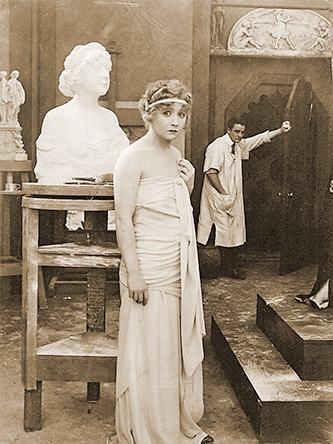
Imagine a daguerreotype that bleeds. Director Robert Z. Leonard and scenarists James Montgomery & C. Gardner Sullivan lace their 1916 one-reeler with such perverse alchemy, turning celluloid into a slow drip of arsenic. The film’s very title—Not My Sister—is a serrated whisper: a denial, a plea, a curse. It is less a narrative than a stain that spreads from one sibling’s marrow to the next, a testament that in the economy of early cinema virtue is the first commodity to be liquidated.
We open on a loft where skylights gash the charcoal sky. Alice Terry’s Grace, famine-thin yet statuesque, disrobes behind a moth-eaten screen. The camera—static yet rapacious—watches her step into the role of muse as though stepping into quicksand. The painter, Franklin Ritchie’s Michael Arnold, circles like a carrion aesthete. His palette knife is not merely for mixing paint; it is a promise of violence deferred. One remembers Beatrice Cenci where art and atrocity share the same flickering torch. Here, the act of portraiture is a seduction in which every brushstroke is also a fingerprint on Grace’s throat.
Cut—three winters later. Grace, now sheathed in mink, glides through mahogany corridors that smell of coal fire and marital detachment. William Desmond’s John Marshall is money incarnate: courteous, oblivious, already suspecting creaks in the floorboards of his domestic stage. The film’s middle reel is a masterclass in chiaroscuro psychology: faces half-lit by parlor gaslight, secrets fermenting behind ferns and piano legs. When Ruth (Louise Brownell, equal parts nymph and naïf) arrives, her curls bounce with the same fatal elasticity her sister once owned. The cyclical structure feels Greek, yet the texture is distinctly American nickelodeon: speed, scandal, salvation inside twenty minutes.
Michael’s reappearance is staged like a resurrection nobody asked for. He lounges in his studio, a cigarette ember mapping crimson Morse across the gloom. The script flips the power dynamic: the kept woman has become the keeper of a name that can be shattered at will. Blackmail scenes in silent cinema often tilt toward mime-hysterics; here the intertitles give us "Your husband’s respectability is my capital." Sullivan’s dialogue cards are razors wrapped in lace.
Then the triangle combusts. John, cuckolded by history itself, storms the atelier. The camera finally moves—an unchained surge that predates European expressionism by half a decade. In the scuffle, a palette knife finds Michael’s abdomen. Blood blooms on his smock, a gory impasto that outdoes any canvas he ever finished. Leonard lingers on the dying artist’s eyes: not remorse, but chagrin that the final composition eludes him.
The courtroom coda arrives with locomotive speed—justice served in the time most features spend on end credits. Ruth’s confession, delivered in a single intertitle, pivots the film from noir to proto-feminist parable. That the jury acquits her "for defense of honor" is both narrative coup de grâce and cultural indictment. Compare this to Going Straight, where penitence is masculine and punitive; here, a woman’s lethal resistance is ruled righteous.
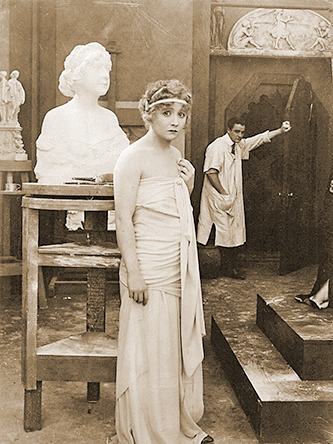
Leonard, trained under D.W. Griffith, grafts tableau elegance onto brisk melodrama. Note the recurrent motif of hands: Grace’s as she folds laundry for pennies, later gloved in kidskin; Michael’s paint-flecked claws; Ruth’s unadorned fingers clutching a single daisy. The hand becomes synecdoche for agency, or its foreclosure. Equally striking is the use of doorframes: characters are perpetually watched or curtailed, a visual pre-echo of The Secret Orchard’s voyeuristic tension.
Alice Terry operates in micro-gestures: a nostril flare, a jawline taut as wire. She understood that in close-up the slightest twitch bellows. Opposite her, Franklin Ritchie channels pre-Code sleaze without sound’s timbral crutch—eyelids half-mast, carnal arrogance billowing like turpentine fumes. William Desmond has the thankless role of cuckolded industrialist, yet he bestows John with a wounded dignity that keeps the triangle morally polyphonic.
Beneath the salacious surface churns a treatise on class fluidity in Gilded Age America. Grace’s trajectory from tenement to mansion is achieved via marriage, not merit—a transactional ascent the film neither celebrates nor condemns. Michael’s bohemian poverty, by contrast, is painted as affectation: he wears deprivation like a silk cravat. The final acquittal of Ruth underscores how juridical mercy is rationed along gendered and economic lines—compare with Bought and Paid For, where restitution is purely financial.
Most extant prints circulate with a 1992 piano score by Joan Fair, all rumbling arpeggios and unresolved ninths. The recent 4K restoration by EYE Filmmuseum adds tinting faithful to 1916 exhibition standards: amber interiors, viridian night exteriors, a cyan flash during the stabbing that feels eerily modern. Seek this version; torrents of the public-domain dupe are murky as soup.
Histories of cinema often overlook shorts like this, yet Not My Sister prefigures the femme-fatale cycle of the twenties and the social-issue noirs of the forties. Its DNA snakes through The Road o' Strife’s moral binaries and even into Her Maternal Right’s courtroom theatrics. Pauline Kael once called silent melodrama "the id of American film, repressed but pulsing"; this is Exhibit A.
Is the film perfect? Hardly. Its denouement is rushed, its psychology painted in broad swaths. Yet its imperfections are themselves revealing: the seams show the stitches of an art form learning to walk while sprinting. At a brisk twenty-three minutes, Not My Sister offers more to chew on than many three-hour prestige sagas. It is a sliver of nitrate that crackles with erotic dread, a parlor lamp illuminating the moth holes in America’s moral upholstery.
Watch it for the performances that teach what silence can articulate. Watch it for the proto-feminist jolt that still tingles. Watch it because, a century on, we still barter flesh for security, secrets for silence, and call the transaction love. Then, when the lights rise, ask yourself whose portrait you might be posing for—and what hue the final stain will take.
IMDb —
1936
Community
Log in to comment.