DbcultAccessing Vault...
7.1/10
Senior Film Conservator
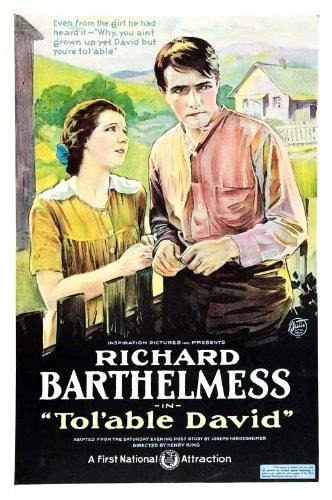
A definitive 7.1/10 rating for a film that redefined the boundaries of cult cinema. Tol'able David remains a cornerstone of transgressive art.
The first time you see Richard Barthelmess’s David, he is vaulting a split-rail fence with the heedless grace of a colt, sunlight ricocheting off the blade of his scythe—an image so alive it seems to inhale. Seconds later the camera retreats to long-shot, and the Shenandoah itself exhales: fog pooling like liquid chalk in the furrows, cicadas stitching the hush. Within this dialectic of shimmer and shadow, Henry King erects a morality play that feels carved rather than filmed, as though each frame were whittled from mountain birch and still smelled of sap.
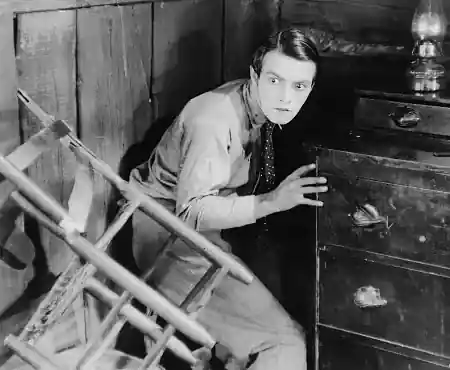
King, ever the pictorialist, lets geography dictate tempo. The Kinemon farm sits cupped inside a bowl of limestone, so every gallop, every wagon lurch, returns as echo—sound design before sound, achieved by the mere physics of celluloid and silence. When the Hatburns thunder downhill on their soot-blacked stallions, the valley’s walls throw back hoof-beats like thrown stones; later, when David drags his mauled dog across the footbridge, the same hills absorb the scrape of boots into a hush so absolute you swear you can hear sap crack inside the pines. The effect is ontological: violence here is never an event but an environment, a weather front you inhale.
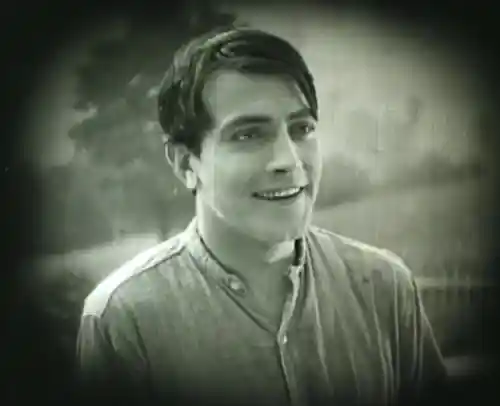
Barthelmess, twenty-four at the time yet porous enough to pass for sixteen, plays David with a tremor that sits half-way between erotic curiosity and Old-Testament wrath. Watch the way his pupils dilate when neighbor girl Esther (Patterson Dial) offers him a gingersnap—hunger refracted through a prism of shame because the family flour has been stolen by the same brigands who crippled his brother. The performance is silent but synaptic; micro-muscles flicker at the corners of his mouth like moth wings, and you realize you are witnessing not acting but alchemy: pride distilled into a single freckle.
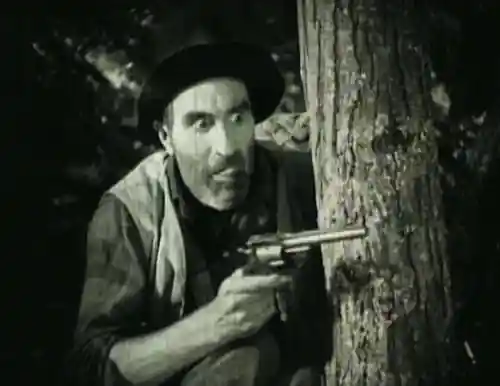
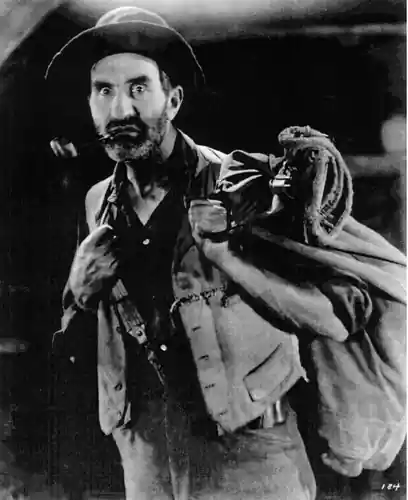
Ernest Torrence’s Luke Hatburn is a monolith of sinew and spit, a man whose beard seems grown not for fashion but for storage—hiding plugs of tobacco and the occasional secret. Yet King refuses caricature; in one chiaroscuro close-up, Luke kneels to shoe his horse, humming a lullaby his own mother once sang. The moment lasts three seconds but perforates the membrane of villainy, letting pathos leak through. Later, when David finally has the outlaw at gunpoint, the audience confronts the unbearable intimacy of rural violence: these men share the same postmaster, the same moonshine still, the same gravitational pull of soil.
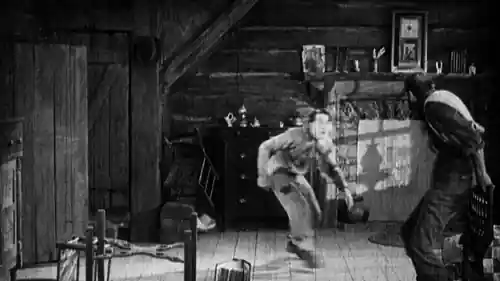
Silent cinema lives or dies on the staccato of intertitles, and Joseph Hergesheimer’s captions here are haiku etched on birch bark: "He learned that a man’s heart can break before it ever learns to beat." More radical still is the absence of text during the millrace showdown—three full minutes without a single card, only the orchestral score (in restored prints) weaving a skein of strings that tighten around your ribcage like baling wire. The result is a pure cinema of gesture: David’s fingers whitening on the trigger, Luke’s eyes clouding with the recognition of mutual damnation, water foaming around their shins like some primordial baptism.
Patterson Dial’s Esther is no mere foil; she is the film’s moral seismograph. In a scene often clipped by exhibitors, she tears strips from her petticoat to bind the flanks of David’s wounded colt, whispering "Easy, easy," while the animal’s pulse drums against her palm. The gesture is wordless but seismic: a rejection of frontier machismo, a whisper matriarchy that will, by film’s end, re-knit the torn sinew of the valley. Marion Abbott as David’s mother, meanwhile, spends half the film shot from behind, a compositional choice that turns her apron into a canvas of grief—flour smears, blood specks, candle grease—an abstract painting of subsistence.
The 2022 4K restoration by the Library of Congress mines nitrate crystals for hidden wavelengths: the umber of a ploughed field now throbs with infrared undertones; the lamplight on David’s cheek acquires a saffron halo that borders on the numinous. Grain structure is left intact—no waxy DNR—so every frame still breathes like flannel hung on a winter line. If you have only seen the muddy YouTube transfers, prepare for a revelation akin to watching the sun rise inside a cathedral.
Where The Cinderella Man dilutes revenge into a crowd-pleasing arc of comeback capitalism, Tol’able David refuses the anesthesia of catharsis; the scar tissue remains visible, puckered like a badly healed wound. Conversely, Bullet Proof treats rural vendetta as pulp spectacle, whereas King’s film is closer to ecclesiastical liturgy. Only The Penalty shares the same Calvinist dread, though that film’s expressionist sets are a fever dream compared to David’s granular realism.
King, a preacher’s son, lards the narrative with typological echoes: David’s sling becomes a slingshot fashioned from a buggy spring; Goliath’s brow is replaced by Luke’s right eye, crushed not by stone but by the butt of the hero’s empty rifle. Yet the film withholds triumph; grace arrives waterlogged, limping, more Hemingway than Hallelujah. The closing shot—David framed against a sunrise that refuses to bloom fully—suggests redemption as asymptote: always pursued, never possessed.
Dig into the margins and you find wonders: Walter P. Lewis as the mute blacksmith who communicates solely via hammer taps—Morse code of the soul; Ralph Yearsley’s crippled brother emitting a wheeze that syncs with the windmill’s creak, as though the landscape itself were breathing through him. These are not cameos but crystalline miniatures, proof that silent acting at its apex approached the condition of sculpture: every gesture calcified into eternity.
In an age when algorithms flatten human complexity into meme and retweet, Tol’able David reintroduces the radical notion that violence begets not glory but geological aftermath: faultlines through families, aquifers of grief seeping decades. The film’s final intertitle—"He carried his cross up the hill, and came down a man"—reads less like epilogue than prophecy. Stream it on Criterion Channel or snag the Masters of Cinema Blu-ray, but for Anselm’s sake, watch it alone, lights off, volume cranked until the fiddle solo scratches your sternum. Then walk outside, feel the night air, and tell me you don’t hear the echo of that millrace—water gnawing rock, vengeance gnawing bone—long after the credits fade.
IMDb 5
1933
Community
Log in to comment.