DbcultAccessing Vault...
Cult Review
Senior Film Conservator
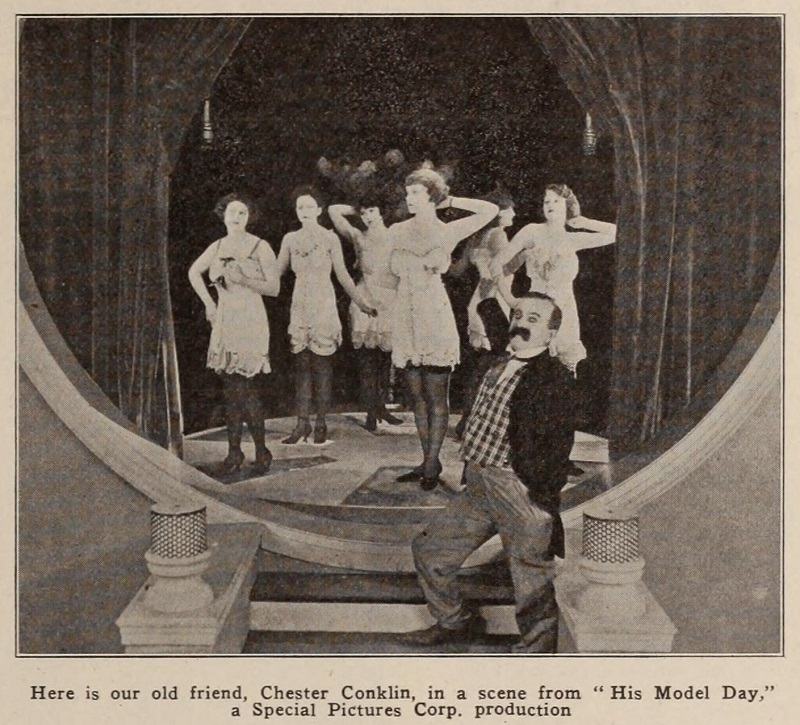
His Model Day emerges as a ghostly echo from the silent film era, a spectral reminder of cinema’s preverbal language. Directed with a painter’s eye for composition and a poet’s restraint, the film transforms mundane interactions into haunting tableaux. Vinnie Burns, in a role that demands more than mere presence, embodies a man caught between his artistic ambitions and the oppressive weight of societal norms. His character’s journey—a series of glances, a palette of colors, a trembling hand reaching for a brush—is rendered with such visceral clarity that one forgets the absence of dialogue. Elsie Bambrick, as the model whose gaze becomes both muse and menace, delivers a performance that is all subtext, her expressions a silent symphony of defiance and vulnerability.
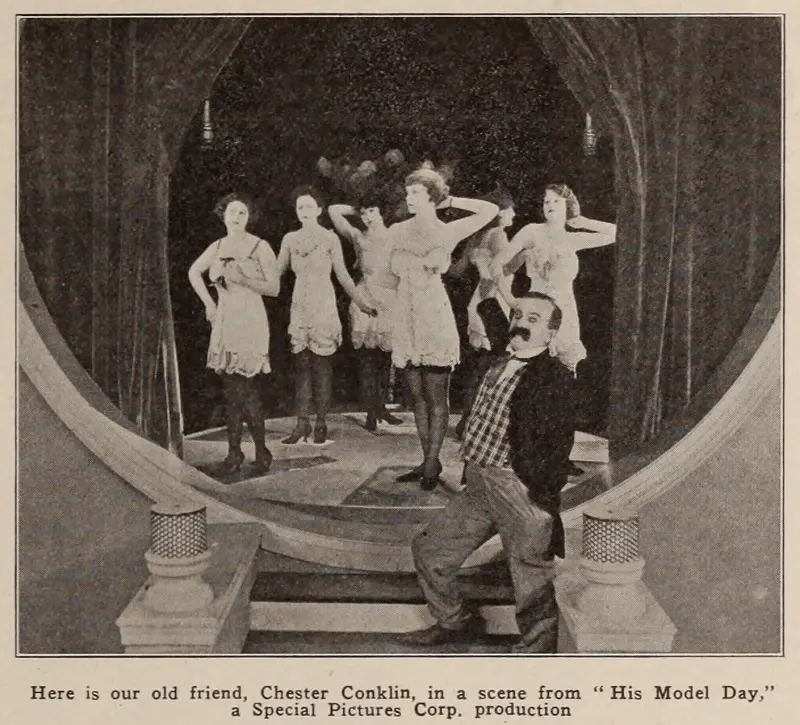
The film’s narrative, though sparse, is a masterclass in visual storytelling. Scenes unfold like pages in a diary, each frame meticulously crafted to evoke a mood. Consider the opening sequence: a painter’s studio bathed in golden-hour light, the model’s silhouette stark against a white curtain, and the sound of rain punctuating the stillness. Here, Maxwell and Terry’s script operates not through exposition but through suggestion, leaving the audience to read between the brushstrokes. The interplay between natural light and shadow becomes a character in itself, a silent commentator on the emotional undercurrents.
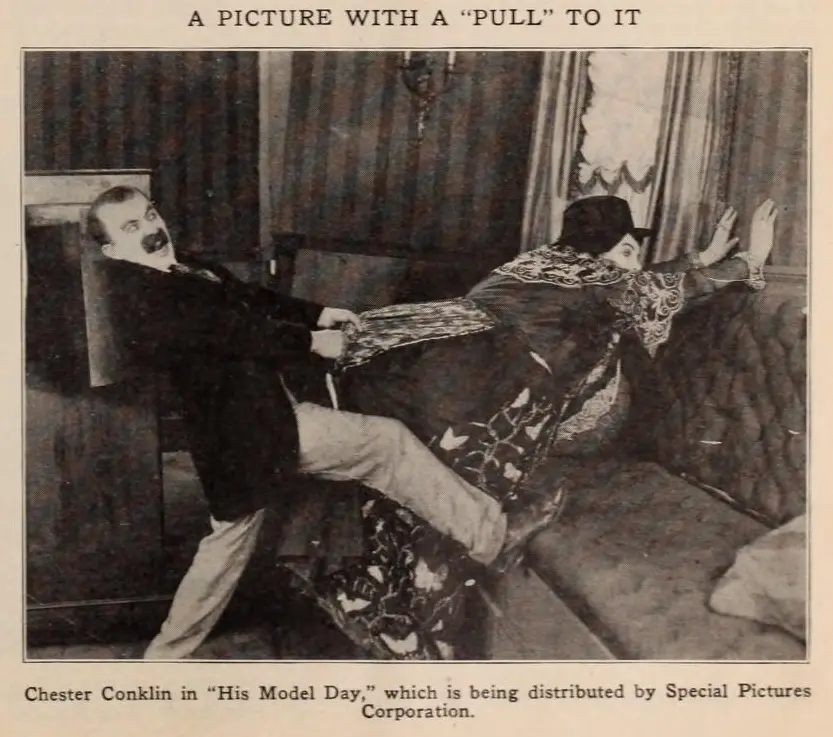
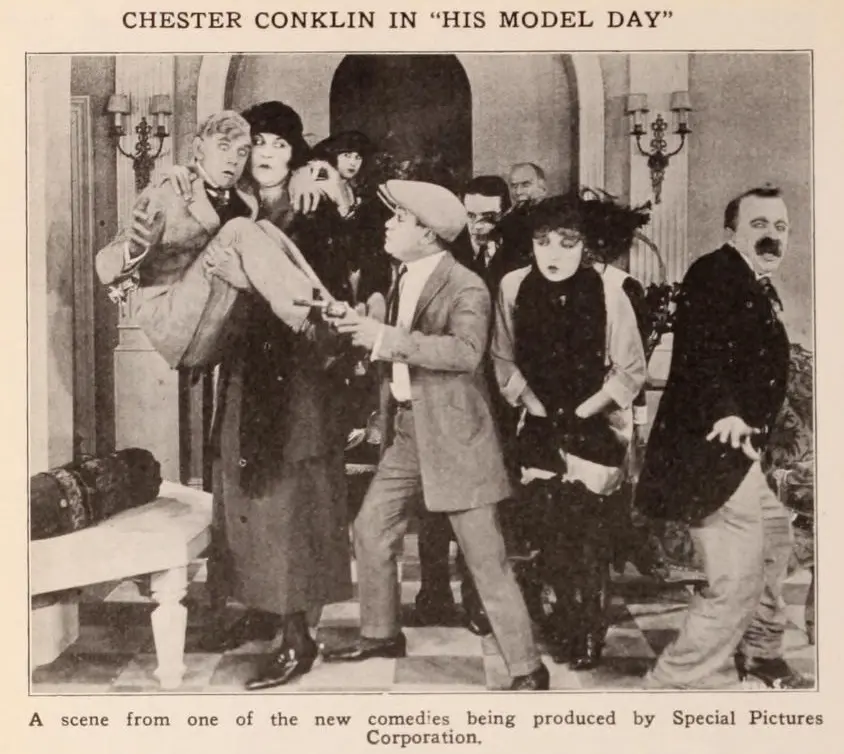
Thelma Hill and Chester Conklin, though relegated to supporting roles, inject the film with a grounded realism that anchors its more abstract moments. Hill’s portrayal of a pragmatic art dealer, her eyes sharp with calculated indifference, contrasts sharply with Conklin’s melancholic financier, whose desperation is etched into the lines of his face. Their interactions with Burns and Bambrick create a tension that simmers beneath the surface, a reminder that art is never created in a vacuum. The film’s climax—a confrontation between the painter and his rival—unfolds not with fireworks but with a quiet, devastating inevitability. A shattered mirror, a spilled palette, a final glance that lingers too long: these are the film’s language, and it speaks volumes.
Comparisons are inevitable. The Eternal Mother (1928) shares this film’s preoccupation with duality, though it leans into melodrama where His Model Day favors restraint. Similarly, the social satire of Piccadilly Jim (1930) employs a more overtly comedic tone, while His Model Day lingers in the shadows of unspoken emotion. The film’s minimalist approach aligns it with the works of Jess (1925) and The Land of Promise (1920), both of which use visual motifs to explore existential themes. Yet His Model Day distinguishes itself through its focus on the intimate, the personal, and the ephemeral.
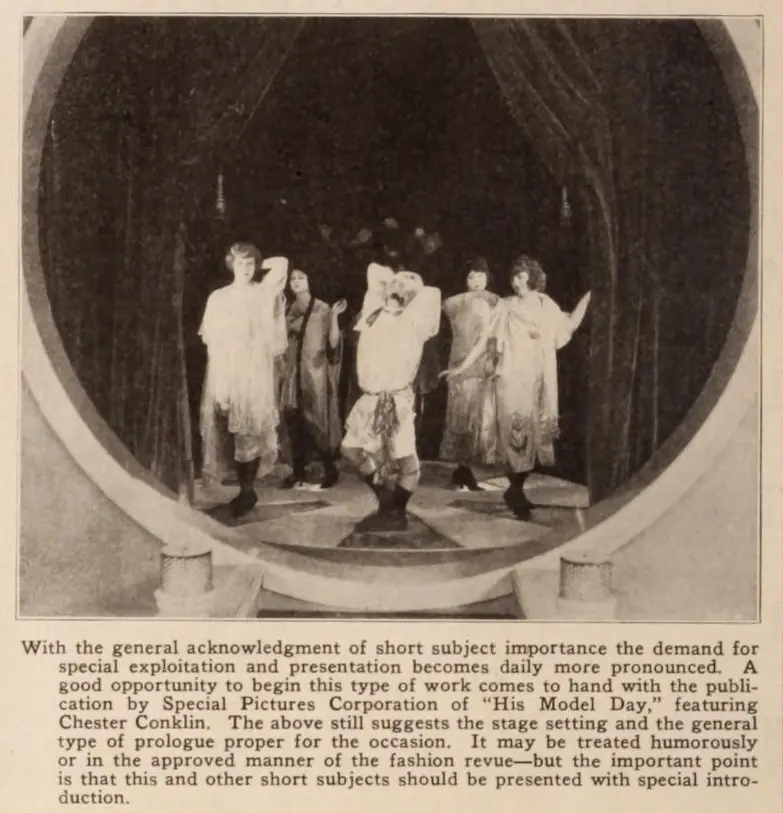
Technically, the film is a marvel. The cinematography, though restrained, is impeccable, with each shot composed to maximize emotional impact. The use of close-ups—particularly of Bambrick’s hands as she adjusts her pose or Burns’ fingers as he mixes paint—adds a layer of intimacy that transcends words. The score, though not a recorded element of silent films, is implied through the timing of cuts and the rhythmic pacing of scenes, creating a sense of auditory presence without sound. This is where the film’s true genius lies: in its ability to evoke music through imagery alone.
One cannot ignore the historical context. Released in 1929, His Model Day arrives in the twilight of the silent film era, a time when the industry was grappling with the transition to talkies. The film’s reliance on visual storytelling is both a tribute to the past and a challenge to the future. It’s a work that demands attention, a challenge that many modern viewers might find disorienting in an age of rapid cuts and audio-driven narratives. Yet those who surrender to its pace will find themselves rewarded with a profound meditation on the nature of art and the human condition.
In the pantheon of silent cinema, His Model Day holds a peculiar charm. It is not a film for the impatient, nor for those seeking clear resolutions. Instead, it offers a series of moments that resonate long after the credits roll. The final scene—a model walking away from the studio, her silhouette merging with the horizon—invites reflection. What does it mean to create, to be created, to exist in the space between? These are questions the film poses without ever answering, leaving viewers in the same state of contemplative unease as its characters.
For further exploration of silent film’s emotional landscapes, consider The Heart of Rachael (1916) or The Terror (1920). Each film, in its own way, grapples with the ineffable. And for those interested in the interplay between art and identity, Lost in Transit (1922) offers a complementary perspective. His Model Day, however, remains a singular achievement—a film that proves that even without words, cinema can articulate the deepest truths.
IMDb 5
1922
Community
Log in to comment.