DbcultAccessing Vault...
Cult Review
Senior Film Conservator
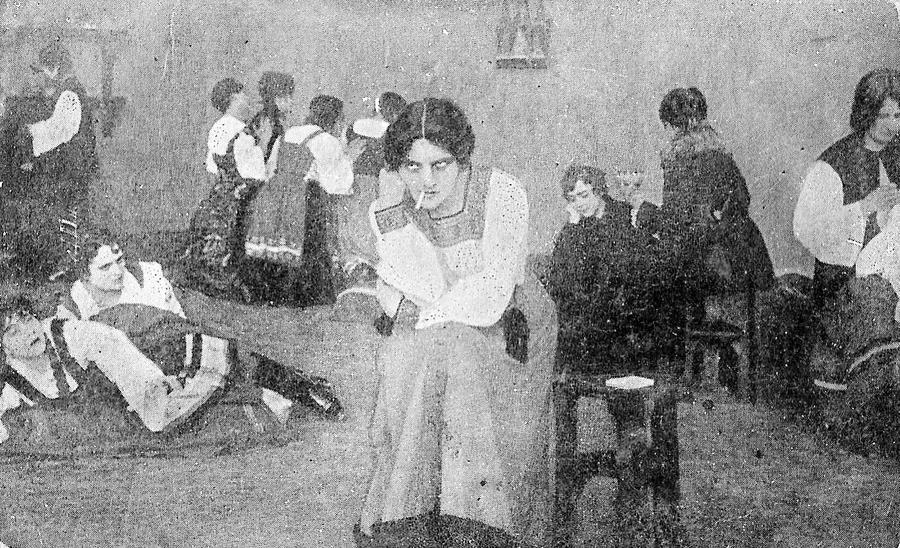
The cinematic landscape of the early 20th century, often characterized by its nascent narrative forms and burgeoning visual language, occasionally yielded works of profound moral gravity and artistic ambition. Among these stands Resurrezione, a 1917 Italian silent film that dares to translate the formidable literary and philosophical weight of Leo Tolstoy's 'Resurrection' to the silver screen. More than a mere adaptation, it is a bold interpretive gesture, drawing additional inspiration from Henry Bataille’s theatrical rendition, forging a cinematic experience that resonates with an almost operatic intensity. This film, starring the compelling Roberto Spiombi, the poignant Pépa Bonafé, and a supporting ensemble including Maria Jacobini, Matilde Di Marzio, and Andrea Habay, is not just a relic of a bygone era; it is a vital exploration of guilt, atonement, and societal hypocrisy that challenges viewers even today.
At its core, Resurrezione confronts the audience with the devastating ripple effects of casual cruelty and unacknowledged privilege. The narrative centers on Prince Dmitri Nekhlyudov, portrayed with a compelling blend of aristocratic ennui and burgeoning spiritual anguish by Roberto Spiombi. His character is a vivid study in the gradual erosion of moral complacency. A youthful dalliance, thoughtlessly discarded, returns years later to haunt him with a vengeance that is both personal and societal. The object of his youthful caprice is Katerina Maslova, brought to life with heartbreaking vulnerability and defiant resilience by Pépa Bonafé. Her performance is a masterclass in silent film acting, conveying a spectrum of emotion – from youthful innocence to hardened cynicism, and ultimately, a glimmer of spiritual fortitude – through subtle gestures and piercing gazes. The film's power largely derives from the stark contrast between their two trajectories: one descending into the inferno of the penal system, the other ascending a tortuous path of self-discovery and redemption.
The pivotal moment arrives when Nekhlyudov, serving on a jury, recognizes Maslova among the accused, facing a murder charge. This recognition shatters his insulated world, compelling him to confront the profound injustice that his past actions indirectly wrought upon her. What follows is not merely a legal battle for Maslova’s freedom but a spiritual odyssey for Nekhlyudov. He embarks on a relentless quest for atonement, a journey that takes him deep into the abyssal depths of the Russian judicial and penal systems. The film unflinchingly depicts the dehumanizing conditions of prisons and the brutal march of prisoners to Siberian exile. Here, the cinematography, though limited by the technology of its time, manages to evoke a palpable sense of claustrophobia and despair, effectively immersing the viewer in Maslova's harrowing reality. The visual language of the film, often relying on stark contrasts and expressive close-ups, amplifies the emotional resonance of these scenes, making the suffering tangible without uttering a single word.
The exploration of social class and its inherent injustices is a dominant theme, handled with a nuanced hand. Nekhlyudov's initial attempts at assistance are tinged with the condescension of his class, a subtle barrier that both characters must overcome. Maslova, hardened by her experiences, initially rejects his overtures, seeing them as a continuation of his earlier exploitation. This dynamic provides a rich psychological landscape for both actors to navigate. Maria Jacobini, Matilde Di Marzio, and Andrea Habay, in their respective roles, contribute significantly to this intricate tapestry of social stratification and moral decay. Their portrayals of various societal archetypes – from the indifferent bureaucrats to the suffering masses – lend a crucial authenticity to the film's broader social commentary. The film doesn't just tell a story; it exposes the systemic flaws that allow personal transgressions to fester into widespread social injustice.
Comparing Resurrezione to other films of its era, one finds certain thematic echoes. While not a direct comparison in plot, the moral awakening and societal critique present here can be seen in films like The Straight Way, which often explored individual struggles against overwhelming social pressures. The portrayal of a woman’s fall and potential redemption, albeit through different circumstances, might also evoke parallels with the thematic undercurrents of A Girl of Yesterday, where societal expectations and personal choices collide. However, Resurrezione distinguishes itself through its sheer ambition and the profound philosophical depth inherited from its literary source. It’s less about individual triumph and more about the agonizing process of collective and individual spiritual cleansing.
The directorial choices in Resurrezione are particularly noteworthy for their time. In an era predating sophisticated sound design and complex editing techniques, the film relies heavily on visual storytelling, symbolic imagery, and the powerful expressiveness of its actors. The use of intertitles is judicious, serving to advance the plot or convey crucial internal monologues, but never overwhelming the visual narrative. The camera work, while static by modern standards, is often framed to maximize dramatic tension and emotional impact, drawing the viewer into the characters' inner turmoil. One can observe moments where the staging of crowds or the starkness of a prison cell speak volumes about the socio-political climate, echoing the biting satire often found in Russian literature. The film's ability to convey complex ethical dilemmas and profound psychological shifts without spoken dialogue is a testament to the artistry of silent cinema and the universal power of visual narrative.
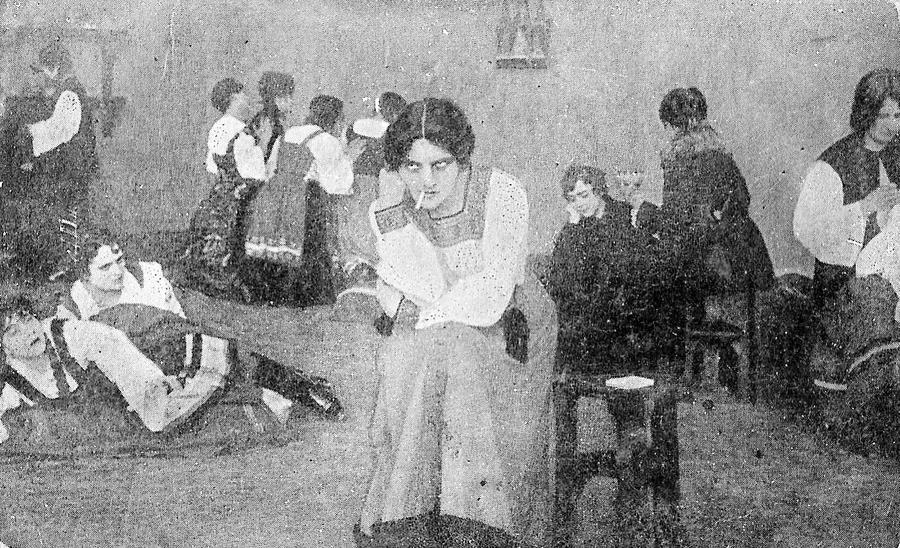
The performances are, without question, the bedrock of Resurrezione's enduring appeal. Roberto Spiombi’s Nekhlyudov undergoes a transformation that is both convincing and deeply moving. His initial aristocratic detachment slowly gives way to a tortured conscience, culminating in a profound spiritual awakening. The physical manifestation of his internal struggle—the furrowed brow, the desperate gestures, the haunted eyes—speaks volumes. Pépa Bonafé’s Maslova is equally compelling. Her character arc is perhaps even more challenging, moving from innocence to degradation, then finding a quiet strength and dignity amidst unimaginable suffering. Her stoicism in the face of injustice, punctuated by moments of raw emotion, creates a truly unforgettable portrayal. These are not merely characters acting out a plot; they are embodiments of universal human struggles, rendered with a remarkable degree of psychological realism for a silent film.
The film’s exploration of faith and morality, central to Tolstoy’s original work, is handled with a delicate yet firm touch. Nekhlyudov’s journey is ultimately one of spiritual rebirth, a shedding of his old, superficial self in favor of a life dedicated to justice and compassion. This theme resonates with a timeless quality, prompting viewers to reflect on their own moral compass and the responsibility inherent in human interactions. The film suggests that true redemption is not an external act but an internal transformation, often achieved through great personal sacrifice and a willingness to confront uncomfortable truths. In this sense, Resurrezione transcends its specific historical and cultural context to offer a universal message about the human capacity for change and the pursuit of righteousness.
While the film's narrative pace might feel deliberate to contemporary audiences accustomed to faster cuts and more frenetic pacing, this measured approach allows for a deeper immersion into the characters' emotional states and the intricate moral dilemmas they face. Each scene is allowed to breathe, permitting the audience to absorb the nuances of the performances and the weight of the unfolding drama. This methodical rhythm is, in fact, one of the film's strengths, fostering a contemplative engagement that modern cinema often foregoes. It demands patience but rewards it with a profound and lasting impact. The film's aesthetic, while simple, is often striking in its stark realism, particularly in its depictions of the harsh realities of the Russian lower classes and the unforgiving landscape of exile.
The enduring legacy of Resurrezione lies not just in its faithful (yet interpretive) adaptation of a literary classic, but in its ability to translate complex philosophical ideas into a compelling visual narrative. It reminds us of the power of silent film to convey profound human experiences through the sheer force of performance and directorial vision. It stands as a testament to the early filmmakers' courage in tackling weighty subjects, proving that cinema, even in its nascent stages, was capable of more than mere spectacle. For those interested in the evolution of cinematic storytelling, the history of adaptations, or simply a powerful human drama, Resurrezione offers an invaluable and deeply moving experience. It is a film that continues to prompt introspection, challenging viewers to consider the implications of their own actions and the pervasive nature of social inequality. Its themes are as relevant today as they were over a century ago, making it a timeless piece of cinematic art that deserves continued rediscovery and appreciation.
The film’s creative team, from writers Henry Bataille and Lev Tolstoy (whose original novel forms the bedrock) to the cast members, collaborated to produce a work of significant artistic merit. While Tolstoy’s original text is famously expansive and deeply philosophical, Bataille’s adaptation for the stage, and subsequently for this film, distills its essence into a dramatic arc suitable for visual interpretation. This is no small feat. Capturing the internal monologues and societal critiques of Tolstoy in a medium without dialogue requires a profound understanding of visual symbolism and character expression. The film succeeds remarkably in this regard, allowing the audience to intuit the characters’ inner turmoil and moral struggles through their expressions and interactions. It’s a powerful example of how silent cinema could transcend its limitations to deliver narratives of immense depth and emotional resonance.
Ultimately, Resurrezione is more than just a historical curiosity; it is a profound artistic statement. It speaks to the universal human condition, the struggle for moral clarity, and the often-painful journey toward redemption. The film leaves an indelible mark, not only for its historical significance as an early adaptation of a literary giant but more importantly, for its enduring capacity to stir the conscience and provoke thought. It reminds us that true cinematic power often resides not in extravagant effects, but in the unvarnished portrayal of the human soul grappling with its own imperfections and the injustices of the world. It is a work that demands reflection and offers rich rewards to those willing to engage with its profound narrative.
IMDb 7.4
1933
Community
Log in to comment.