DbcultAccessing Vault...
Cult Review
Senior Film Conservator
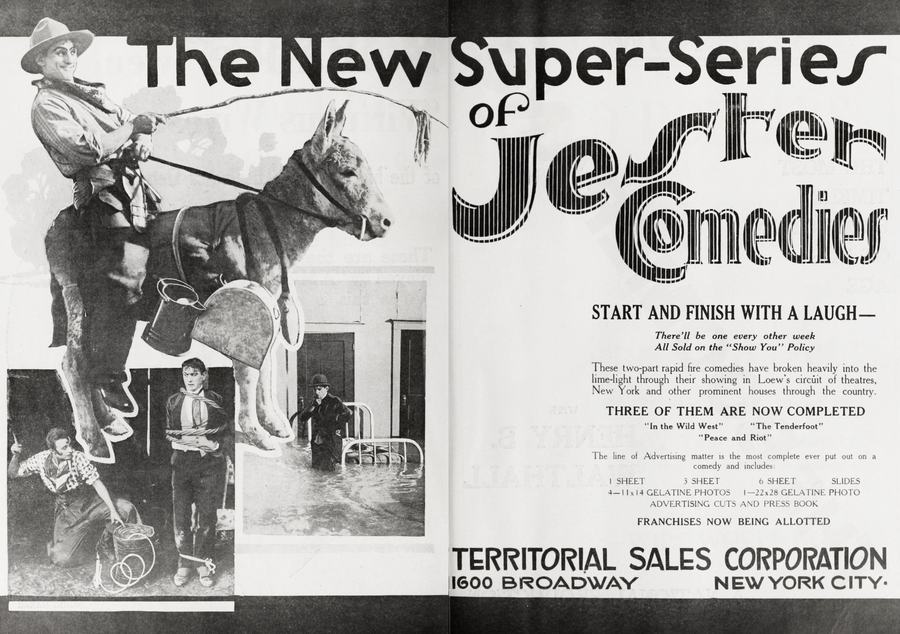
Stepping into the dusty, sun-baked landscape of Marcel Perez’s In the Wild West is akin to unearthing a forgotten cinematic treasure, a vibrant, if silent, testament to the ingenuity and sheer comedic brilliance of early filmmaking. This particular gem, featuring the multi-talented Perez both in front of and behind the camera, alongside the captivating Nilde Baracchi, offers more than just a glimpse into a bygone era; it provides a masterclass in narrative economy and physical humor. The film, a delightful pastiche of frontier tropes, transcends its genre constraints through a clever inversion of expectations, painting a world where heroism is often accidental, and the most formidable challenges are met with an endearing, almost catastrophic, ineptitude.
Perez, an auteur whose contributions to silent cinema are often overshadowed by his more celebrated contemporaries, crafts a universe here that is both familiar and refreshingly novel. His portrayal of the bumbling Easterner, thrust into the unforgiving crucible of the American frontier, is a marvel of comedic timing and subtle characterization. This isn't merely a caricature; it's a deeply sympathetic portrayal of an outsider struggling to adapt, a fish out of water whose every flail and misstep somehow, miraculously, nudges the narrative toward justice. One might draw parallels to the early works of Chaplin or Keaton, yet Perez possesses a distinct sensibility, a unique blend of pathos and absurdity that marks him as an original voice. His directorial choices, particularly in the framing of wide-open spaces against the claustrophobia of human folly, underscore the thematic tension between man and nature, civilization and wilderness.
The narrative, though seemingly straightforward, is imbued with layers of social commentary, subtly critiquing the romanticized notions of the West while simultaneously embracing its inherent drama. We witness the struggle of honest homesteaders against the avarice of Silas 'The Viper' Blackwood, a villain whose menace is rendered with an almost operatic flourish, yet never descends into mere pantomime. It's a testament to Perez's writing prowess that even in a comedic framework, the stakes feel genuinely high. The plight of characters like Lily, brought to life with remarkable spirit by Nilde Baracchi, anchors the film's emotional core. Baracchi, often celebrated for her grace and expressive eyes, imbues Lily with a fierce independence and an unwavering resolve that makes her far more than a mere damsel in distress. She is an active participant in her own destiny, a compelling figure whose strength provides a stark contrast to Marcel’s accidental heroism.
The visual language of In the Wild West is particularly striking. Perez, as director, demonstrates an intuitive understanding of cinematic rhythm, utilizing rapid-fire gags alongside moments of sustained tension. The cinematography, though rudimentary by today's standards, masterfully captures the rugged beauty of the landscape, making it a character in itself. The wide shots of dusty plains and distant mountains evoke a sense of both grandeur and isolation, perfectly complementing the human drama unfolding within them. The use of intertitles is judicious, never overbearing, allowing the actors’ expressions and physical comedy to carry the bulk of the storytelling. This economy of dialogue is a hallmark of silent cinema, and Perez leverages it to its fullest, ensuring that every gesture, every glance, every slapstick fall communicates volumes.
One cannot discuss In the Wild West without singling out Marcel Perez’s incredible physical performance. His ability to convey a gamut of emotions, from utter bewilderment to fleeting moments of misplaced bravado, without uttering a single word, is nothing short of mesmerizing. He moves with a dancer’s grace, even when portraying clumsiness, executing pratfalls and elaborate chases with an athletic precision that belies the apparent chaos. This is particularly evident in the film’s climactic sequence, where a runaway stagecoach transforms into a stage for Perez’s most audacious stunts. It’s a sequence that could easily devolve into mere spectacle, but under Perez’s direction, it remains firmly rooted in character, propelling the plot forward with exhilarating momentum. His comedic genius here is reminiscent of his earlier, equally chaotic performances, perhaps even surpassing the frantic energy seen in works like The Craving, demonstrating a maturity in his comedic craft.
Nilde Baracchi, often a muse and frequent collaborator for Perez, delivers a performance that is both robust and nuanced. Her Lily is not merely an object of affection or a passive victim; she is a woman of agency, possessing a strength of character that shines through the adversity she faces. Baracchi’s expressive face and commanding presence allow her to hold her own against Perez’s larger-than-life comedic persona, providing a vital counterpoint to the film’s more farcical elements. Her interactions with Perez are marked by a delightful chemistry, evolving from initial skepticism to a grudging admiration, and ultimately, affection. This dynamic adds a layer of romantic warmth to the otherwise action-packed narrative, preventing it from becoming a mere string of gags. One might even argue that her independent spirit here foreshadows the strong female characters that would become more prominent in later decades, perhaps even echoing the resilience seen in productions like Red Crossed or the determined protagonists of Ruling Passions, though firmly rooted in her own unique style.
The supporting cast, though given less screen time, contributes significantly to the film’s rich tapestry. The townspeople, with their varied reactions to Marcel’s antics and Blackwood’s tyranny, provide a believable backdrop for the central conflict. Each character, however minor, feels distinct, adding to the authenticity of the frontier setting. This attention to detail in character development, even for periphery roles, elevates In the Wild West beyond a simple comedic romp, imbuing it with a sense of community and collective struggle.
At its core, In the Wild West explores themes of identity, adaptation, and the unexpected nature of heroism. Marcel’s journey from an urbanite out of his depth to a revered (if accidental) savior speaks volumes about the capacity for change and the arbitrary nature of reputation. The film also playfully deconstructs the myth of the rugged individualist, suggesting that sometimes, the greatest good can come from the least likely sources. It’s a timeless message, delivered with a lightness of touch that never feels preachy or didactic. The film’s humor, while undoubtedly a product of its era, remains remarkably fresh, a testament to the universal appeal of well-executed physical comedy and relatable character dilemmas.
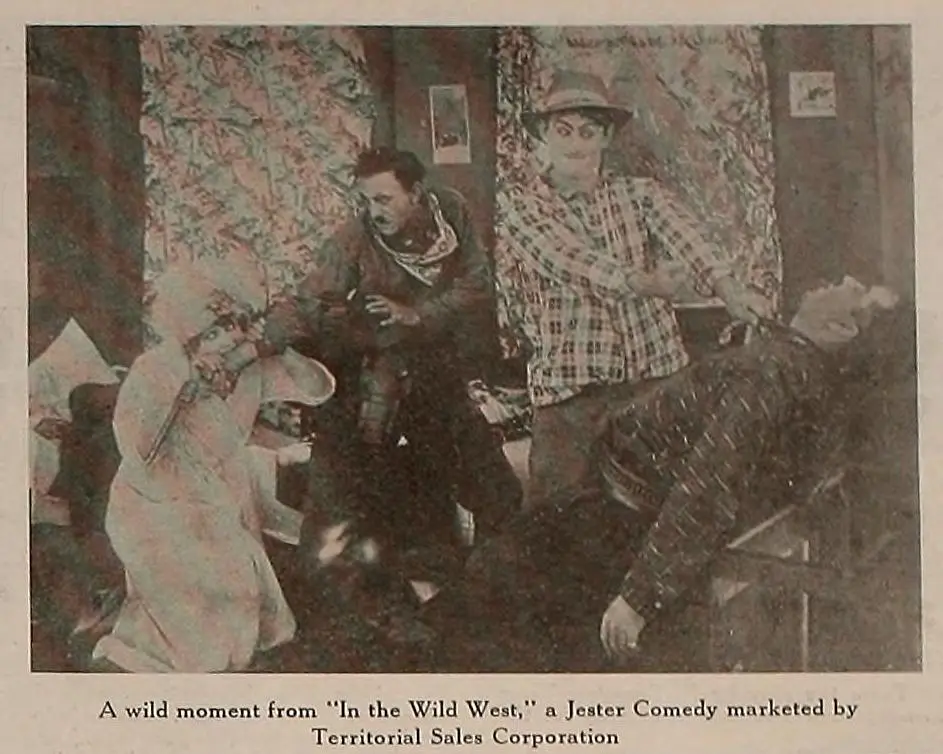
Perez’s writing, which forms the bedrock of this cinematic endeavor, demonstrates a keen understanding of both comedic structure and character arc. He meticulously builds situations that escalate in absurdity, yet always remain logically consistent within the film’s established world. The plot, though driven by external conflict, is ultimately a vehicle for Marcel’s internal transformation, however unwitting it may be. This sophisticated approach to storytelling sets In the Wild West apart from many of its contemporaries, distinguishing it as a work of considerable artistic merit. While other films of the period like Mr. Grex of Monte Carlo focused on grander dramatic narratives, Perez found profundity in the everyday mishaps, elevated to epic proportions.
Placing In the Wild West within the broader context of early 20th-century cinema reveals its unique position. While the Western genre was already taking shape, often with stoic heroes and clear-cut villains, Perez injected a much-needed dose of self-awareness and parody. This film, in its gentle lampooning of Western conventions, can be seen as a precursor to later, more overt parodies, demonstrating a sophisticated understanding of genre mechanics even in its nascent stages. Its influence, though perhaps not immediately obvious in mainstream productions, can be felt in the subtle comedic touches found in a variety of films from the period, from the lighthearted adventures of The Love Trail to the more dramatic yet still character-driven narratives of The City of Illusion.
The meticulous attention to detail in set design and costuming further immerses the viewer in the historical period. From the ramshackle saloon to the dusty main street, every element feels authentic, contributing to the film’s immersive quality. The costumes, while serving the practical needs of the narrative, also subtly inform character, distinguishing the Easterner from the grizzled frontiersmen, and the spirited Lily from more conventional female archetypes. This visual authenticity, combined with the dynamic performances, creates a truly compelling cinematic experience.
In an era where cinema was still finding its voice, Perez’s ability to craft such a cohesive and entertaining narrative speaks volumes about his vision. He understood that storytelling, regardless of the medium, thrives on character, conflict, and resolution, and he delivered all three with an inimitable flair. The film’s lasting appeal lies not just in its historical significance, but in its inherent charm and its ability to evoke genuine laughter and empathy even a century after its creation. Compared to the weighty melodrama of Camille or the epic scope of Les Misérables, Part 1: Jean Valjean, In the Wild West offers a refreshing, unpretentious joy.
The enduring appeal of In the Wild West stems from its universal themes and its masterful execution. It’s a story about finding one’s place in an unfamiliar world, about the triumph of good over evil, and about the unexpected ways in which heroes emerge. Marcel Perez, as both writer and performer, created a character that resonates with audiences across generations – the everyman who, through sheer force of circumstances and a healthy dose of luck, achieves greatness. Nilde Baracchi’s vibrant portrayal of Lily provides the perfect foil, a beacon of strength and common sense in a world teetering on the brink of chaos. Their chemistry is palpable, adding a layer of romantic comedy that sweetens the adventure.
From the meticulously choreographed chase scenes to the subtle character beats, every element of In the Wild West works in concert to create a truly memorable cinematic experience. It stands as a testament to Marcel Perez’s often-underappreciated genius, a film that deserves to be rediscovered and celebrated for its wit, its charm, and its enduring relevance. It's a vibrant reminder that even in the silent era, filmmakers were pushing boundaries, experimenting with genre, and crafting stories that continue to captivate and entertain. While films like Infatuation or Coral explored different facets of human emotion, Perez found his niche in the comedic heart of the American spirit.
The historical significance of In the Wild West cannot be overstated. It represents a crucial moment in the evolution of the Western genre, demonstrating how comedy could be woven into its fabric without diminishing its dramatic impact. It also showcases the incredible versatility of silent film actors, particularly Perez and Baracchi, whose ability to convey complex emotions and execute intricate physical comedy without spoken dialogue is truly remarkable. This film, like a fine vintage, only improves with age, offering new insights and renewed appreciation with each viewing. Its vibrant energy and timeless humor make it a standout example of early American cinema, a delightful journey into a frontier both wild and wonderfully funny. It holds its own against other period pieces, perhaps even offering a more lighthearted alternative to the intense drama of Salainen perintömääräys or the intricate plots of The Purple Dress.
In conclusion, In the Wild West is more than just a historical curiosity; it’s a vibrant, engaging, and profoundly entertaining film that speaks to the enduring power of storytelling. Marcel Perez’s vision, brought to life by his own comedic genius and Nilde Baracchi’s compelling performance, creates a cinematic experience that is both a reflection of its time and a timeless piece of art. It’s a film that reminds us of the magic of early cinema and the boundless creativity of its pioneers. Its energy and spirit are a direct lineage to the lively narratives seen in The Whirl of Life and the heartfelt sincerity of Hearts and Let Us, solidifying its place in the pantheon of influential silent films.
For enthusiasts of silent film, Westerns, or simply exceptional comedy, In the Wild West is an absolute must-see. It’s a film that not only entertains but also enriches, offering a unique perspective on a pivotal period in cinematic history. Marcel Perez’s multifaceted talent shines brightly, making this film an enduring testament to his artistic legacy. Seek it out, and prepare to be charmed, amused, and utterly captivated.
IMDb —
1924
Community
Log in to comment.