DbcultAccessing Vault...
7.2/10
Senior Film Conservator
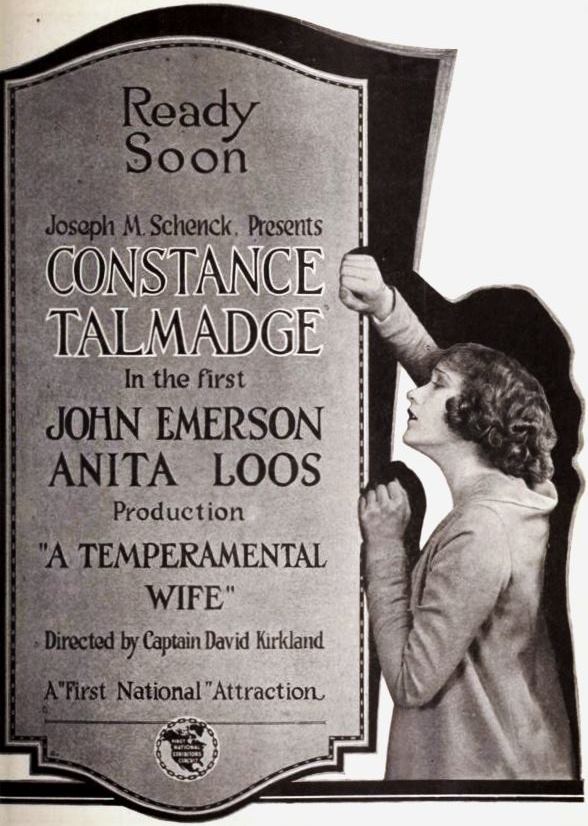
A definitive 7.2/10 rating for a film that redefined the boundaries of cult cinema. A Temperamental Wife remains a cornerstone of transgressive art.
In the vibrant tapestry of early 20th-century cinema, a particular genre emerged that perfectly encapsulated the burgeoning spirit of female independence and the often-comical complexities of modern relationships: the marital comedy. Few films from the silent era capture this essence with as much panache and effervescent charm as John Emerson’s 1919 offering, A Temperamental Wife. This cinematic gem, brought to life by the incomparable Constance Talmadge, is more than just a period piece; it’s a masterclass in physical comedy, nuanced emotional portrayal, and a surprisingly progressive look at gender dynamics for its time. It invites us to delve into a world where misunderstandings fuel high drama and ultimately, heartfelt reconciliation, all delivered with a knowing wink and a delightful smirk.
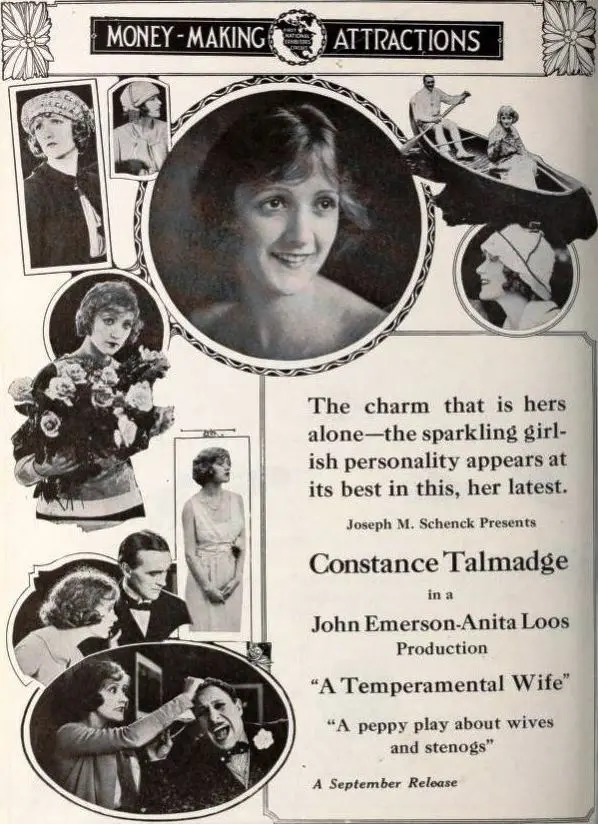
At the heart of A Temperamental Wife lies Billie Billings, a character so vivacious and utterly unpredictable that she commands the screen with every gesture. Constance Talmadge, a star whose comedic brilliance often rivaled her dramatic counterparts, embodies Billie with an infectious energy that is simply captivating. Billie is not merely a 'temperamental' wife; she is a force of nature, a woman who navigates life with an almost childlike impulsiveness that, while occasionally leading to chaos, is ultimately endearing. Her initial determination to ensnare the bashful Senator Newton of Nevada is portrayed not as a cynical ploy, but as an almost sporting challenge, a testament to her adventurous spirit. The film opens with this audacious pursuit, setting a tone of lighthearted mischief that permeates the entire narrative. One might draw a parallel to the spirited heroines found in films like The Spirit of '17, where female characters often defied conventional expectations, though Billie's motivations are distinctly romantic and personal rather than overtly patriotic or societal.
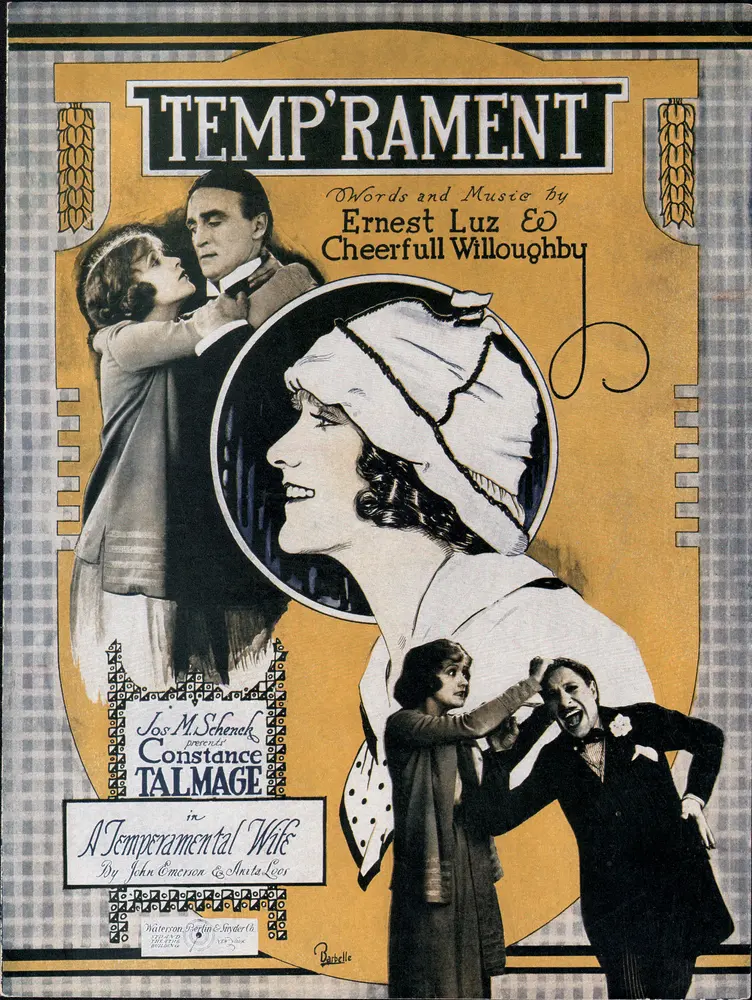
The plot, derived from a stage play by Jane Cowl and Jane Murfin, and adapted for the screen by John Emerson and the brilliant Anita Loos, masterfully constructs a scenario ripe for comedic misunderstanding. The central conflict erupts almost immediately upon the honeymoon, with the revelation that Senator Newton's secretary, known only as 'Smith,' is, in fact, a woman. This seemingly innocuous detail becomes the catalyst for Billie’s spectacular jealousy. The film, in its silent eloquence, conveys the escalating paranoia and indignation of Billie through Talmadge's expressive face and grand gestures. It's a testament to the era's acting prowess that such complex emotions could be so clearly communicated without a single spoken word. The audience is invited to empathize with Billie's irrationality, even as we chuckle at its dramatic scale. This kind of character-driven emotional rollercoaster, while comedic, also subtly explores themes of trust and communication within marriage, themes that would continue to resonate in later films like Wives and Other Wives, albeit often with more overtly dramatic consequences.
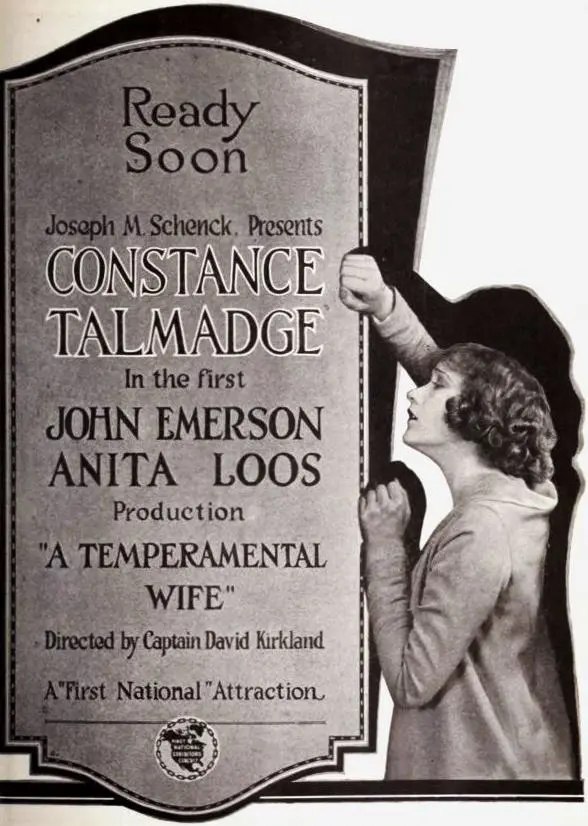
While Talmadge's Billie is undoubtedly the sun around which the film's narrative orbits, the supporting cast provides essential gravitational pull. Eulalie Jensen as 'Smith' delivers a performance that is crucial to the film's comedic and emotional core. Her portrayal of the efficient, unassuming secretary, initially misunderstood, allows the audience to witness the folly of Billie's assumptions. Jensen’s quiet dignity provides a stark, yet effective, contrast to Talmadge’s flamboyant outbursts, making Billie’s eventual realization all the more impactful. Senator Newton, played by Wyndham Standing, is the quintessential bashful bachelor, a man of good intentions but little experience in navigating the tempestuous waters of a 'temperamental wife.' Standing imbues the Senator with a certain bewildered charm, making his character sympathetic even as he struggles to comprehend Billie’s dramatic antics. His understated reactions often amplify the humor of Billie’s over-the-top displays, creating a wonderful comedic dynamic.
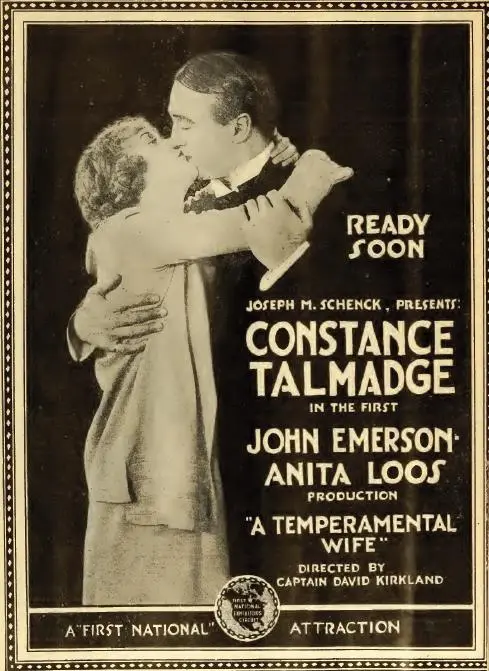
Armand Kaliz, as the French Count, is a delightful caricature of continental charm and opportunistic flirtation. His role is pivotal in driving Billie’s retaliatory escapade, yet the film never casts him as a true villain. Instead, he’s a catalyst for Billie’s actions, and his eventual drunken stupor at the inn serves to highlight Billie’s underlying moral compass. Even in her most rebellious moments, Billie maintains a sense of propriety, insisting on separate rooms, a detail that speaks volumes about her character beyond her impulsiveness. The arrival of Ned Sparks as Dr. Wise, Billie’s sagacious friend, provides a much-needed voice of reason and a practical solution to the escalating domestic crisis. Sparks, known for his deadpan delivery, brings a grounding presence to the comedic chaos, effectively guiding the narrative toward its resolution. The ensemble, under Emerson's direction, works in perfect synchronicity, each actor contributing to the film's overall comedic rhythm and emotional resonance. Their collective effort ensures that the film remains engaging and entertaining throughout its runtime, a testament to the collaborative spirit of silent filmmaking.
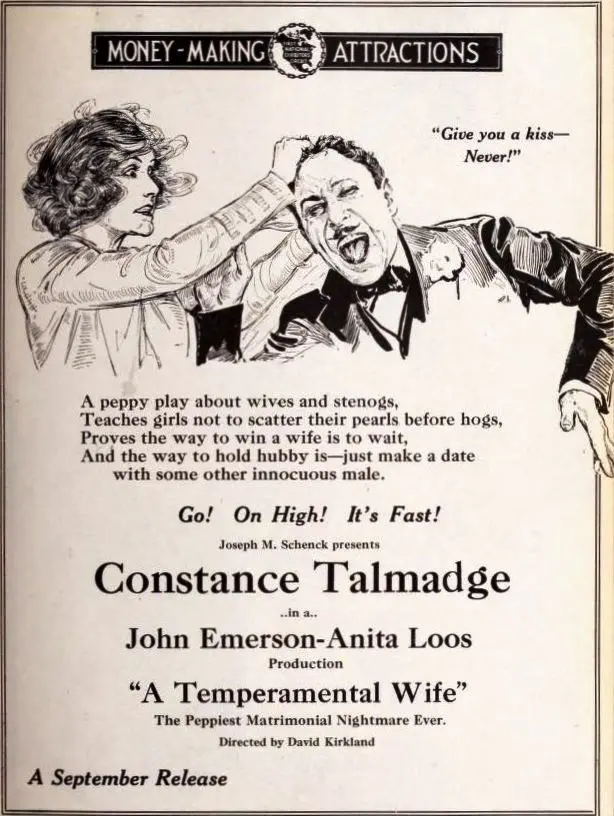
John Emerson’s direction of A Temperamental Wife is marked by a keen understanding of visual storytelling. He allows his actors, particularly Talmadge, the space to develop their characters through gesture, expression, and movement. The pacing is brisk, propelling the narrative forward without sacrificing moments of character development or comedic beats. Emerson’s skill lies in his ability to orchestrate the comedic timing, ensuring that each misunderstanding and dramatic flourish lands with maximum impact. The sequence where Billie flirts with the French Count and subsequently runs away to the country inn is a masterclass in silent film dramatics, building tension and humor simultaneously. The visual gags are subtle yet effective, relying on character reactions rather than overt slapstick, which lends the film a more sophisticated comedic sensibility. This approach is reminiscent of the nuanced character studies seen in films like The Sowers, where intricate human relationships are explored with depth, even if the genre is vastly different.
The screenplay, a collaborative effort by John Emerson, Jane Murfin, Jane Cowl, and the incomparable Anita Loos, is the backbone of the film’s success. Loos, particularly, was a pioneer in developing sharp, witty dialogue (or in this case, intertitles) and crafting strong, independent female characters. Her influence is palpable in Billie’s characterization, imbuing her with a modern sensibility that transcends the era. The writers deftly navigate the delicate balance between comedic farce and genuine emotional conflict. They ensure that Billie’s jealousy, while exaggerated for comedic effect, stems from a relatable human insecurity. The resolution, orchestrated by Dr. Wise and facilitated by Smith herself, feels earned rather than contrived. It’s a testament to the strength of the writing that the characters learn and grow, leading to a satisfying conclusion. This nuanced approach to character development sets A Temperamental Wife apart from simpler comedies of the period, aligning it more with films that explored deeper psychological layers, such as Zhivoy trup, though certainly through a much lighter lens.
A Temperamental Wife offers a fascinating glimpse into the social mores and evolving gender roles of the late 1910s. Billie Billings, with her spirited independence and demand for attention, embodies a nascent form of female agency that was becoming more prevalent in the post-suffrage era. While her actions are driven by personal emotion rather than political agenda, her refusal to be a docile, subservient wife resonates with the broader societal shifts occurring at the time. The film subtly critiques the patriarchal assumptions that might have led Senator Newton to dismiss his wife's feelings about his female secretary, highlighting the importance of open communication and mutual understanding in a marriage. It suggests that even in a comedic context, the seeds of female empowerment were being sown, reflecting a cultural shift also seen in films that tackled more serious issues of women's roles, such as The Plow Woman or The Strength of the Weak, albeit through different narrative prisms.
The film's enduring charm lies not only in its historical significance but also in its timeless appeal. The themes of jealousy, misunderstanding, and the bumpy road to marital harmony are universal. The comedic situations, while rooted in the sensibilities of the silent era, remain genuinely funny. Constance Talmadge's performance, in particular, transcends time. Her ability to convey a complex range of emotions – from petulant rage to genuine vulnerability – with such clarity and charisma is a testament to her star power. She makes Billie Billings a character we root for, even when she's at her most irrational. The film provides a refreshing counterpoint to more dramatic or melodramatic silent films, offering a lighter, yet equally insightful, exploration of human relationships. It reminds us that laughter can be a powerful tool for understanding and connection, a principle that continues to drive successful romantic comedies even today.
In conclusion, A Temperamental Wife stands as a delightful and significant entry in the annals of silent cinema. It is a film that successfully blends sophisticated comedy with genuine emotional depth, all brought to life by a stellar cast and astute direction. The collaboration of writers John Emerson, Jane Murfin, Jane Cowl, and Anita Loos created a narrative that is both entertaining and subtly thought-provoking, showcasing the evolving landscape of marital dynamics in the early 20th century. While it may not delve into the intense psychological drama of something like Shame or the societal critique of The Iron Heart, its strength lies in its ability to explore human foibles with warmth and humor.
For modern audiences, A Temperamental Wife offers a chance to appreciate the artistry of silent film and the enduring appeal of a well-told story. It is a testament to the power of visual storytelling and the timeless appeal of a strong, albeit 'temperamental,' female lead. Billie Billings, through Constance Talmadge's unforgettable performance, remains a vibrant character, a symbol of independence and spirited charm. This film is more than just a historical artifact; it is a living, breathing piece of cinematic history that continues to entertain and enlighten, proving that laughter truly is an eternal language. It reminds us that even in the absence of spoken dialogue, the human heart, with all its complexities and contradictions, can be profoundly and hilariously understood. It's a film that demands rediscovery, a joyous romp that leaves a lasting smile on the viewer's face and a deeper appreciation for the golden age of silent comedy.
IMDb —
1926
Community
Log in to comment.