DbcultAccessing Vault...
Cult Review
Senior Film Conservator
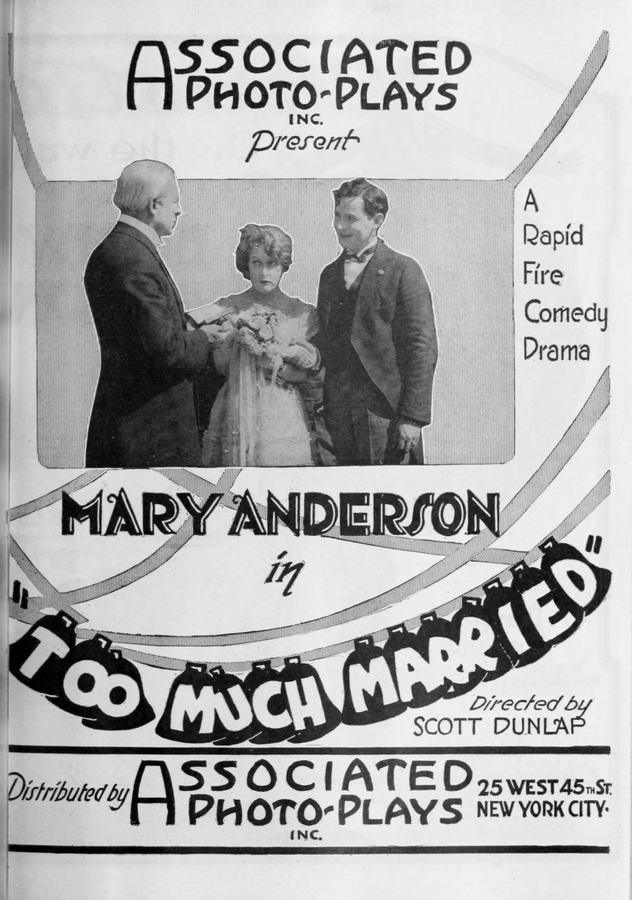
The year 1919 stood as a precipice in cinematic history, a transitional moment where the simplistic gags of the early Nickelodeon era began to coalesce into the sophisticated narrative structures of the Roaring Twenties. In this fertile ground, Too Much Married emerged not merely as a comedy of errors, but as a biting commentary on the frantic nature of modern romance and the fragility of social reputation. Directed with a certain breathless urgency, the film navigates the treacherous waters of high-society expectations and the chaotic reality of human impulse. While many films of the era sought to moralize, this John Grey-penned script chooses instead to revel in the absurdity of the 'best-laid plans.'
At its core, the film utilizes the 'elopement' trope—a staple of the genre also explored in works like His Temporary Wife—but it twists the knife by introducing a criminal element that feels almost Hitchcockian in its execution. The initial setup is a masterclass in economy. We are introduced to Betty (Mary Anderson) and Bob (Ben Lewis) amidst the suffocating grandeur of the De Courcey-Varnay wedding. Their decision to flee is presented as an act of rebellion against the very structure of the event they are attending. However, the film quickly pivots from romance to suspense. The introduction of the stolen necklace serves as the 'MacGuffin' that drives the remainder of the plot, transforming a simple love story into a high-stakes caper.
The sequence involving the detective and the bag is particularly noteworthy for its tension. Unlike the bumbling law enforcement figures found in The Village Sleuth, the investigator here represents a genuine threat to Betty’s social standing. The intervention of Billy Trevor (played with a delightful, shifty charisma by Roscoe Karns) adds a layer of moral ambiguity. Karns, who would later become a stalwart of the screwball comedy era, displays an early mastery of the 'lovable rogue' archetype. His decision to hide the necklace in Betty's bag is a stroke of desperate genius that sets the stage for the film's second-act complications.
One cannot discuss 1910s cinema without acknowledging the role of the automobile as both a symbol of progress and a harbinger of chaos. In Too Much Married, the car accident involving Bob is the pivot point that prevents the elopement from following its intended course. This narrative device isolates Betty, leaving her vulnerable to the machinations of Billy Trevor. The pacing of these middle sequences is relentless. As Billy attempts to regain the necklace, the film leans into its slapstick roots, yet it never loses sight of the character-driven stakes. The inn, serving as a microcosm of the larger world, becomes a stage for a series of near-misses and frantic exchanges that mirror the frantic energy of contemporary urban life.
Comparatively, while a film like Wildfire deals with the intensity of the racetrack, Too Much Married finds its thrills in the domestic and the personal. The stakes are not just financial or physical; they are existential. For Betty, the discovery of the necklace would mean the end of her reputation and her future with Bob. This underlying dread provides the necessary weight to balance the film's lighter comedic moments.
The true standout of the production is undoubtedly Roscoe Karns. His physical performance is a marvel of silent-era timing. Whether he is dropping a handkerchief with feigned innocence or escaping the clutches of a detective, Karns possesses a fluidity that keeps the audience engaged even when the plot becomes overly convoluted. He occupies a space between the villainy of a traditional antagonist and the clumsiness of a comic foil. His eventual confession is not merely a plot resolution; it is a moment of character redemption that feels earned rather than forced. In many ways, his performance elevates the film above the standard fare of the time, such as The Green God, which relied more heavily on atmosphere than on the nuance of its lead actors.
Visually, the film employs a sophisticated use of interior spaces. The De Courcey-Varnay wedding is shot with an eye for the cavernous and the cold, contrasting sharply with the cramped, frantic environment of the inn. This visual dichotomy reinforces the film's themes of social entrapment versus individual freedom. The editing, handled with a precision that was becoming more common toward the end of the decade, ensures that the various plot threads—the elopement, the theft, the hospital stay—are woven together without losing the audience. While it lacks the avant-garde experimentation of Velikiye dni Rossiiskoi revolutsii, its strength lies in its adherence to the principles of classical narrative construction.
The writers, Florence Bolles and John Grey, demonstrate a keen understanding of the 'complication' as a narrative engine. Every time the characters seem close to a resolution, a new obstacle is introduced. This 'snowball effect' is a hallmark of great farce. The use of the bag as a central object of desire recalls the structural purity of early stage comedies, yet it is adapted perfectly for the visual medium of film. The way the camera lingers on the bag, making the audience an accomplice to Billy’s crime, creates a sense of dramatic irony that is essential for the comedy to land.
The title itself, Too Much Married, suggests a preoccupation with the institution of marriage as a source of overwhelm. In the early 20th century, the transition from arranged or socially-sanctioned unions to 'love matches' was a fraught cultural process. By centering the plot on an elopement that goes wrong, the film touches on the anxieties surrounding this new romantic freedom. Is Betty 'too much' married before the ceremony even takes place? The complications she faces act as a sort of trial by fire, testing her resolve and her loyalty to Bob in the face of public scandal.
This thematic depth is what distinguishes the film from more lighthearted romps like Bécassotte à la mer. There is a sense of genuine peril here. The potential for 'humiliation and embarrassment' for the bride is presented as a fate almost worse than death, reflecting the rigid moral codes of the era. Billy’s confession, therefore, is an act of profound social restoration. He doesn't just return a necklace; he returns the characters to their rightful places in the social hierarchy, albeit with the scars of their chaotic journey.
In the grand tapestry of 1919 cinema, Too Much Married deserves a place of honor. It is a film that understands the mechanics of laughter but also the mechanics of the human heart. It navigates the transition between the Victorian past and the modern future with grace, wit, and a healthy dose of cynicism. While it may not have the epic scale of some of its contemporaries, its intimacy is its greatest strength. It captures a specific moment in time—a moment of elopements, fast cars, and the enduring power of a well-timed confession.
For modern viewers, the film offers a fascinating glimpse into the origins of the romantic comedy. We see the DNA of later classics in the way Betty and Bob interact, and in the way the plot uses external chaos to test internal character. It is a reminder that while the technology of filmmaking has changed beyond recognition, the fundamental elements of a good story—desire, obstacle, and resolution—remain eternal. Whether you are a scholar of the silent era or a casual fan of classic comedy, Too Much Married provides a wealth of entertainment and insight. It is a testament to the enduring power of the 'small' story told with big ambition.
Ultimately, the film leaves us with a sense of relief. The necklace is returned, the lovers are reunited, and the social order is preserved. But the memory of the chaos remains, a reminder that even the most carefully planned lives are subject to the whims of fate and the occasional shifty stranger with a stolen necklace. It is a delightful, dizzying, and deeply human experience that proves, once and for all, that there is no such thing as being 'too much' in love, even if you are, indeed, Too Much Married.
IMDb —
1931
Community
Log in to comment.