DbcultAccessing Vault...
Cult Review
Senior Film Conservator
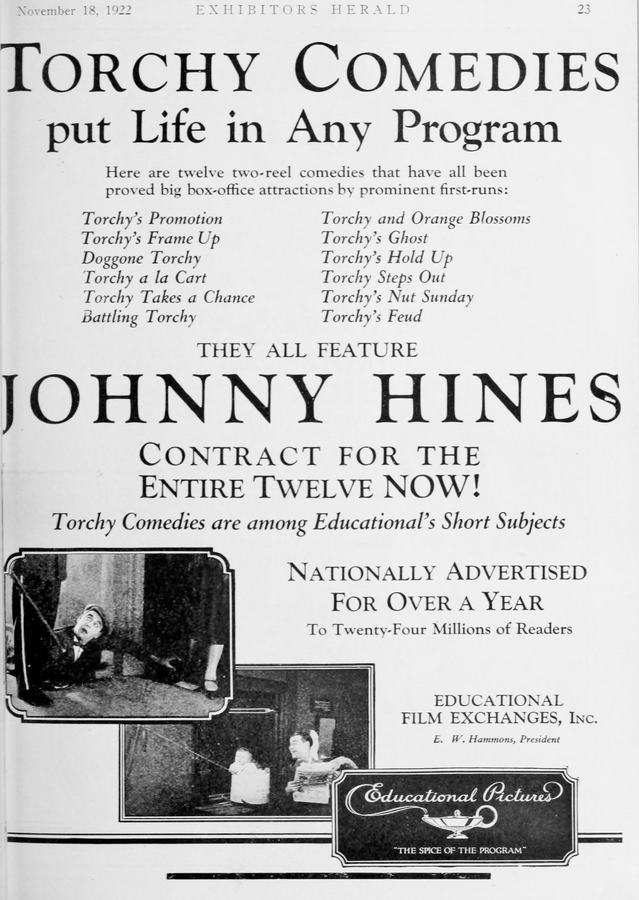
A license to wed disintegrates into a city-wide shakedown; innocence is booked, fingerprinted, and sprinkled with powdered sugar.
Johnny Hines’ Torchy has the metabolism of a hummingbird and the moral radar of a bent weather-vane. When he pockets his buddy’s marriage permit, the scrap is already bleeding ink—an omen that legitimacy itself is about to go on the lam. One gust of wind, one officious cop, and the parchment becomes ticker-tape confetti under bicycle spokes. The cop, mistaking Torchy’s frantic chase for pick-pocketry, slaps on cuffs with the perfunctory cruelty of a bored demigod. Thus begins a domino run through municipal corridors, bakery backrooms, and a jail whose bricks seem mortared with Kafka’s spit.
Sewell Ford’s scenario, originally a breezy magazine serial, here mutates into a kinetic charcoal sketch of civic disorder. Every time the plot appears to re-center, it pirouettes off-balance, like a drunk tracing a straight line for a bemused patrolman.
The bakery sequence is the film’s synesthetic apex. Flour sacks burst, mimicking the earlier confetti of shredded license; dough rises like public outrage; a punch-down becomes a percussive rebuke to the city’s stuffed shirts. Hines, dusted ghost-white, resembles a mime who wandered into a boxing ring. He slaps dough over a wanted poster, creating an instant mask—bread as identity, identity as disposable as a dinner roll. Meanwhile, the real bride and groom cower in a flour barrel, their whispers muffled by yeasty silence. In this moment, romance is not star-crossed but crumb-covered.
Contrast that with Clutch of the Law, where pursuit is grim, linear, almost surgical. Here pursuit is a dervish, a custard pie in the face of linearity itself.
Director Maurice S. Campbell blocks scenes like a jazz band arranges riffs: head-spinning entrances, brassy crescendos, sudden blue silences. Note the jailhouse tableau: bars stencil zebra-stripes across faces; keys dangle like off-tempo cowbells; a stray cat slinks between boots, its tail syncopating the human shuffle. The camera, usually anchored in 1926 propriety, occasionally pirouettes—handheld, almost documentary—sniffing the sweat of panic. Observe the moment Torchy, now wearing an inmate’s too-large stripes, pockets a guard’s cigarette stub. Close-up on his twitching grin; match-cut to the cigarette later, traded for a nail file. Causality is a barter economy; objects shed social scripts, becoming pure leverage.
Compared to the glacial stoicism of Dr. Mawson in the Antarctic, this is nitroglycerin injected into a snowbank.
Johnny Hines operates on a spectrum between Harold Lloyd’s pluck and Harry Langdon’s somnambulism, but his ace is elasticity: face, limbs, even morality stretch like taffy. Watch his eyes when the bride’s ring slips down a sewer grate: pupil dilation registers first as comic disbelief, then as fiduciary horror, finally as existential vertigo—all in twelve frames. Surrounding him, the ensemble plays like a well-tuned rhythm section: the cop whose moustache bristles with self-importance; the baker whose gut precedes him like a heraldic shield; the bride, ostensibly the damsel, who twice engineers jailbreaks with the sangfroid of a safecracker.
The title’s orange-blossom water, initially daubed on love-letters, becomes a forensic breadcrumb. A bloodhound of a jail matron sniffs it on Torchy’s collar, misidentifies him as the bride’s secret paramour, and sics the warden on him. Scent—usually cinema’s forgotten sense—here hijacks narrative like a ghost conductor. By the finale, when the lovers sprint past actual orange groves, the fragrance is no longer symbolic; it is the odor of statutes dissolving, of borders losing their glue.
That citrus reek feels almost radical beside, say, the mineral austerity of The Iron Hand, where every object is forged, immutable.
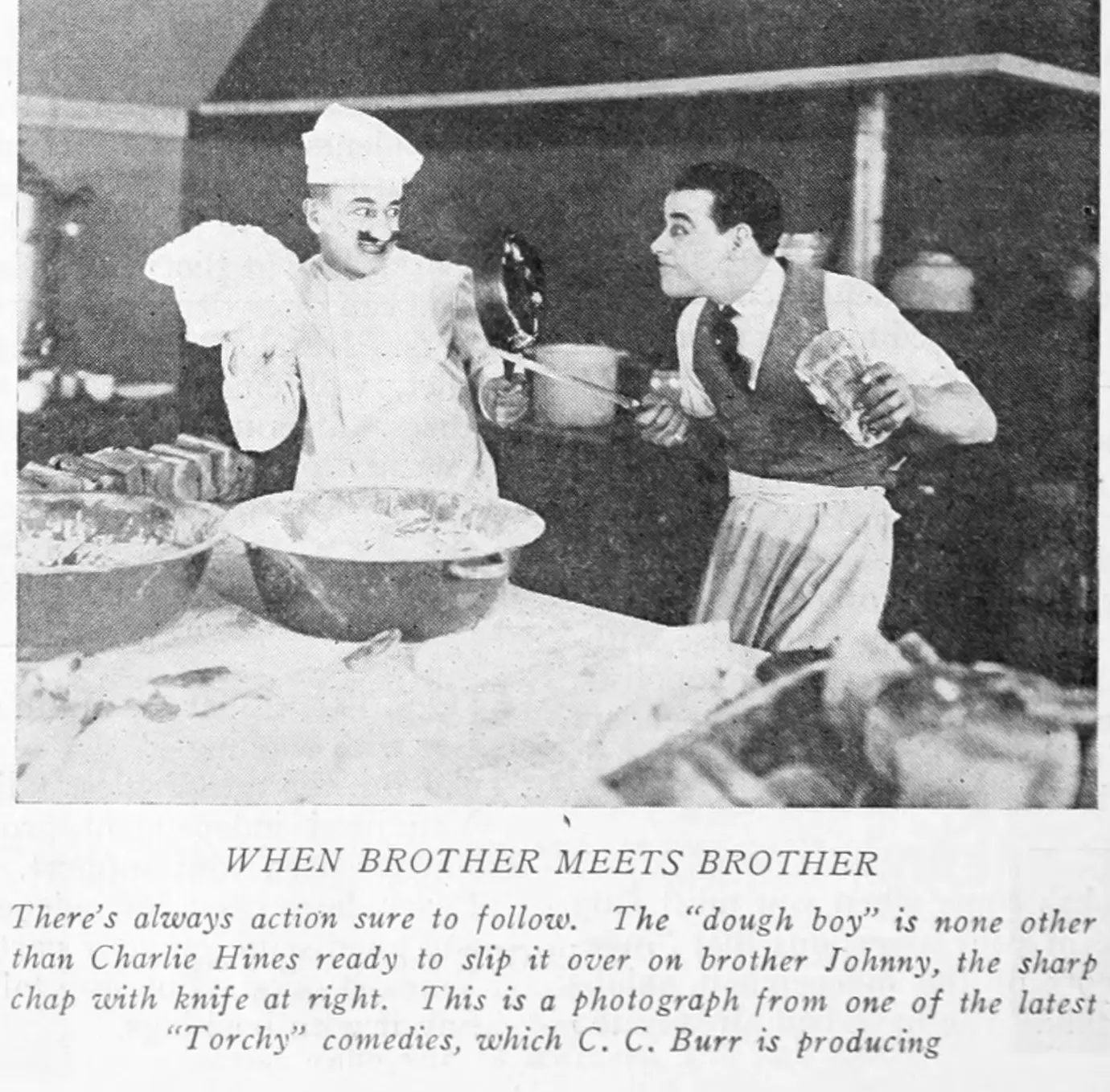
Permits, affidavits, ledgers—the paper cathedral of municipal legitimacy—are here rendered as origami cranes: ornamental, light, easily torched. When the jail’s record book is accidentally swapped with the bakery’s order ledger, charges become confections: "Assault with a cruller," "Extortion by eclair." The gag is more than burlesque; it’s an epistemological prank. If law can be kneaded like brioche, what immutable pillars remain? The answer: only momentum, only the chase.
Campbell squeezes chromatic suggestion from silvery grayscale. The white flour against black guard uniforms creates an inverted yin-yang, hinting that order and chaos are reversible states. Shadows pool so densely they seem varnished; highlights bloom like phosphorus. Restorationists at GammaFilm recently scanned a 35 mm print at 4K, revealing texture down to the starch crystals—each speck a microbe of anarchy.
For 1926, the film’s sexual politics edge toward egalitarian slapstick. The bride engineers not one but two jailbreaks: first by feigning hysterics so baroque the matron unlocks the infirmary; second by short-circuiting the jail’s newfangled electric buzzer with a hairpin dipped in orange-blossom oil. The groom, a sap in spats, mainly wrings his hands. Role reversal? Only partially. Torchy’s final act is to hand the couple a new, forged license—his last gesture of patriarchal arbitration—yet the bride winks at the camera as if to say, "I’ll let him believe he saved the day."
That wink offers more agency than the heroines of A Twilight Baby or Peg of the Pirates, who mostly clutch their pearls while plots happen to them.
Contemporary screenings often commission new scores. I caught a 2019 Brooklyn revival with a four-piece klezmer-jazz hybrid: clarinet ululations underpinned by sousaphone belches, brushed snare mimicking the hiss of dough hitting oil. When the jailhouse door slammed, the drummer detonated a prepared-piano chord using metal salad bowls—sonic flour burst. Silence purists balked, but the anarchy felt doctrinally faithful.
Economic historians note that 1926 sat at the cusp of consumer credit expansion; young lovers, emboldened by installment-plan furniture and cheap Ford coupes, eloped at triple the 1910 rate. The film channels that socio-economic tremor: the license is not mere MacGuffin, but fragile passport to middle-class autonomy. Its destruction stages a conservative backlash—only for the narrative to smuggle autonomy back in through forgery. Rebellion, like yeast, keeps rising.
Stacked beside Back from the Front, whose battle scenes externalize violence, Torchy internalizes warfare—civic, romantic, olfactory. Unlike Jungle Adventures, where wilderness threatens, here civilization itself is thorny jungle. And whereas Empty Pockets wallows in pathos of insolvency, Torchy lampoons bureaucracy as the ultimate empty pocket—endlessly deep, lined with red tape.
The last five minutes exhaust the very concept of resolution: a ladder propped against a courthouse wall becomes a staircase to a honeymoon train; a guard’s misplaced revolver becomes a confetti popper; the orange-blossom vial, hurled skyward, shatters against a streetlamp, releasing a mist that halts pursuers in a reverie of nostalgia. The lovers leap into a boxcar labeled "Florida Fresh," the train lurches, iris-in. Torchy, left on the platform, shrugs, pockets the broken bottle neck—now a jagged tiara—and strolls toward camera, as if to invite the audience into the next caper.
Only two incomplete prints survive: one at MoMA, one in a private Turin archive. Both lack the bakery-arrest bridging intertitle, creating a narrative jump akin to a missing stair in the dark. A crowdfunding campaign (#LicenseToThrive) aims to reconstruct the lost card via AI interpolation guided by Ford’s original novelette. Skeptics call it Frankenfilm; I call it oxygen for a masterpiece suffocating in archival amber.
Torchy and Orange Blossoms is a custard pie hurled at the edifice of legality, a jazz solo played on civic instruments, a love letter scented with citrus and gunpowder. See it whenever the world feels too stapled-down; let its paper cuts bleed laugher.
IMDb 6.2
1921
Community
Log in to comment.