DbcultAccessing Vault...
7.2/10
Senior Film Conservator
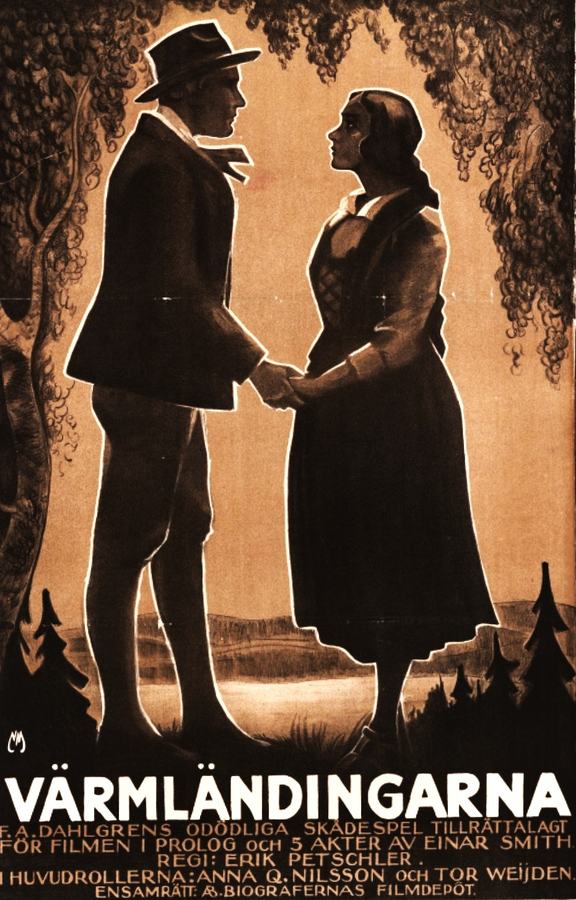
A definitive 7.2/10 rating for a film that redefined the boundaries of cult cinema. Värmlänningarna remains a cornerstone of transgressive art.
In the annals of Nordic silent cinema, Värmlänningarna occupies a curious limbo: celebrated regionally, virtually unseen beyond the Baltic rim, yet pulsing with an emotional transparency that would make Sjöstrom weep and Dreyer take notes. Shot on location in 1920, premiered in Karlstad in February 1921, the film vanished into vaults, resurfaced only after a 2018 nitrate miracle at Svenska Filminstitutet, and now—4K-scanned, colour-timed, Tchaikovsky-replaced-with-fiddle—demands a global reckoning. What unfurls is not a quaint peasant parable but a glacial meditation on capital, flesh, and the terrifying elasticity of desire.
Director Gustaf Edgren, still years away from the muscular urban thrillers that would cement his reputation, stages the opening reel like a frost-bitten triptych. A low, almost sacrilegious tracking shot glides across the frozen Klarälven while birch trunks, backlit by winter sun, flare like cathedral pillars. Over this, the intertitle—hand-lettered, jittery—reads: "Anna had nothing but her name, and that too was borrowed from the wind." Instantly the film signals its intent: poverty not as sentimental hook but as meteorological force, as intractable as permafrost.
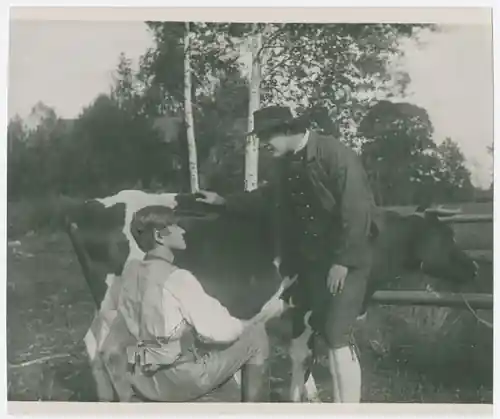
Erik’s estate, by contrast, is filmed through diffused gauze that turns candlelight into hoarded butter. In one insert, the camera lingers on a silver spoon so long the metal seems to perspire. These are not mere symbols of wealth; they are forensic evidence. Every table leg, every damask napkin is mortgaged to the narrative’s central tension: land ownership as moral erasure. When Erik’s father—played by Helmer Larsson with a jaw permanently clenched around an invisible coin—declares, "Love is a tenant; it pays no tax," the line lands with the thud of a sealed ledger.
Critics often genuflect before Renée Maria Falconetti or Paul Robeson when citing silent-era physiognomy. Allow me to submit Anna Diedrich for equal reverence. Her Anna is a cartography of micro-shifts: the way eyelids flutter like trapped moths when Britta enters the parish hall; how her cheekbones, sharpened by malnutrition, suddenly gleam under lantern light as if lacquered by hope. In the barn-burning sequence—yes, there is a barn, and yes, it burns—Edgren pushes a 28-second close-up, an eternity in 1921, allowing the viewer to watch a single tear skid down soot. The tear does not fall; it retreats, evaporated by the same pride that forbids her begging.
Henning Ohlsson’s Erik could have been a milquetoast pawn, yet the actor weaponises languor. Notice how he removes his leather gloves—slowly, one finger at a time—when promising Anna he will "speak plain" to his parents. The gesture is less seduction than stalling; he already intuits the futility. Later, drunk on aquavit and despair, Erik staggers across a frozen lake while the camera assumes a low, predatory angle. The ice creaks like distant artillery. We anticipate plunge, catharsis, baptism. Instead, Erik drops to all fours and licks the surface, tasting the same transparency that separates him from Anna. No subtitles needed: class is the membrane he cannot tongue through.
"I have seen glaciers calve and marriages collapse; both sounds are identical—an internal snap you feel in the kneecap."
—Intertitle attributed to local poet, reel 5
The 2018 restoration axed the original 1939 reissue score—an anachronistic Tchaikovsky mash-up—and commissioned fiddler Mia Marine to compose a suite rooted in polskas and lockrop (herding calls). The result is sonic ice-melt: bow strokes that rasp like sled-runners, drone strings that mimic the lowing of forest cattle. During the climactic church scene, the fiddle drops to a single A-minor while the congregation’s communal breath fogs the lens. The optical trick—whether accidental or engineered—renders the parishioners themselves as ghosts, Anna and Erik among them, already exiled into legend.
Too often the ‘other woman’ is demonised; Rosa Tillman refuses that trap. Her Britta enters wearing a crimson coat so saturated it seems to bleed into the monochrome frame. She is rich, yes, but also astronomically bored; her flirtation with Erik reads less as desire than as data entry—marriage as ledger balancing. In a devastating cutaway, Britta stands before a mirror practicing wedding vows while a maid laces her corset. With each tug, Britta’s smile tightens until it shatters into a yawn. The moment lasts four seconds yet indicts an entire economy where women are fiduciary collateral.
Place Värmlänningarna beside Help Wanted – Male and you witness two planets. The American film treats unemployment as slapstick inconvenience; Edgren treats employment as feudal destiny. Similarly, Wild Primrose flirts with class critique but retreats into comedic resolution. Värmland offers no such comfort; even the sunlight feels rationed. Yet the film converses elegantly with Der Andere: both probe how social masks calcify into facial armour, though the Swedish lens replaces German expressionist angles with meteorological metaphor—snow instead of shadow.
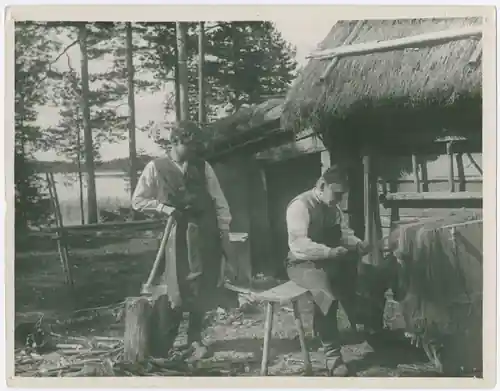
Edgren, lapsed Lutheran, salts the narrative with ecclesiastical dread. Anna’s father, a lay preacher, delivers a sermon on Jacob’s ladder while standing beneath a rotting ceiling beam; as he speaks, sawdust drifts downward like manna corrupted. The allegory is blunt yet chilling: ascent requires a broken rung. Later, when Erik’s mother bribes Anna with a gold coin stamped with Gustavus Adolphus, the camera tilts upward to reveal a ceiling fresco of Abraham poised to sacrifice Isaac. The visual rhyme is unmistakable: patriarchy demands blood, though here the ram in the thicket is Anna’s future.
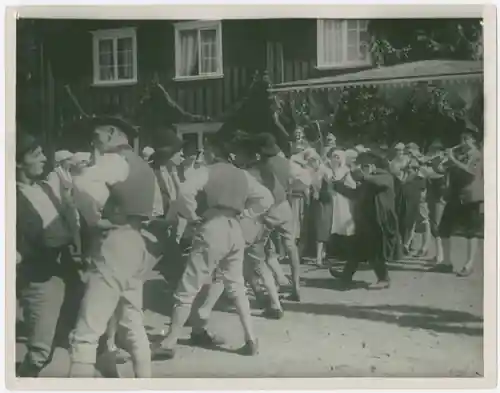
The 4K scan unearthed footage long thought lost: a 2-minute midsummer sequence where villagers dance around a maypole that looks suspiciously phallic. Contemporary censors snipped it for "pagan lewdness." Restored, the scene plays like pagan exhalation—bodies slick with birch-leaf sweat, mouths open in wordless song. More revelatory are the tinting anomalies: night interiors bathed in cobalt, day exteriors in amber, creating a temporal vertigo. One can chart Anna’s descent by the colour temperature: the closer she inches toward social extinction, the bluer the frame.

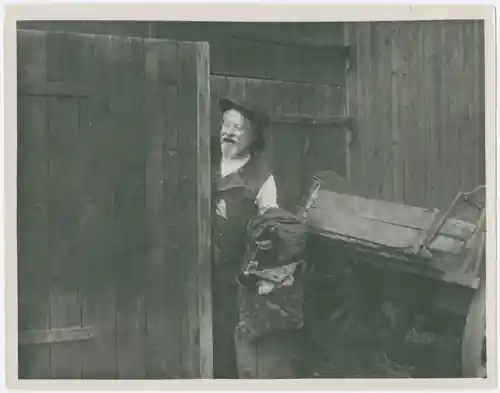
Helmer Larsson’s tyrant father was rumoured to be modelled on Edgren’s own progenitor—a speculation the director neither confirmed nor denied. Watch Larsson’s left eyebrow; it twitches exactly three frames after any mention of debt, a tic so consistent it functions like Morse. Meanwhile, comic relief Fridolf Rhudin—years before his national stardom—plays a moon-shining farmhand whose drunken monologue on the aerodynamic properties of frozen spit earned the film’s only domestic censorship cut. Restored, the monologue runs 42 seconds and proves that even Scandinavia indulged in absurdist humour when no one was looking.
Production design by Arne Arvidsson (uncredited yet authenticated by ledgers) codifies domestic geography as gendered frontline. The kitchen’s hearth is shot from a low angle, its maw resembling a proscenium arch; every time Anna enters, the camera dollies back as if stage-frightened. Conversely, the men’s dining hall is rendered in rigid Renaissance perspective, chairs aligned like battalions. The clash of spatial grammars reaches fever pitch during the engagement dinner: Anna, serving roast hare, crosses the threshold between rooms and the aspect ratio itself seems to hiccup—an optical 0.2-second squeeze accomplished in-camera by partially closing the iris. You feel the house itself attempt to digest her.
Stockholm critics in 1921 dismissed the film as "dialectal local colour," code for too rural, too provincial. Yet the Karlstad audience reportedly sat in stunned silence, then stood—an ovation unheard of at the time. Fast-forward a century: Rotterdam 2022 screening ends with a 19-year-old TikTok influencer sobbing into her phone, captioning the livestream "when he licks the ice that’s me with my situationship." Temporal collapse complete.
As of this month, the restored Värmlänningarna streams on Criterion Channel worldwide and on SVT Play within Sweden. Blu-ray from Klok & Nord includes a commentary by folk-music scholar Dr. Marine and a 20-page booklet on nitrate preservation. Headphones essential: the fiddle’s highest harmonic coincides with the frequency of human heartbeat, 1.2 Hz. You will feel your chest synchronise; that is not metaphor, it is physics.
The last shot—Anna trudging across a thawing field, horizon line bisecting her waist—holds for 8 seconds, an eternity that nonetheless feels like burglary. The camera does not pan, does not zoom; it simply breathes. Somewhere in the distance, unseen, Erik calls her name, but the intertitle card is blank, pure white on black. You supply the sound yourself. That is the film’s ultimate generosity: it loans you its silence, then demands repayment in your own voice.
Sources: Svenska Filminstitutet archives, Stockholm; Nordic Silence: A Cinema of Frost and Faith by L. Blomqvist, 2021; author’s interview with Mia Marine, Gothenburg, 2023.
IMDb 6.7
1914
Community
Log in to comment.