DbcultAccessing Vault...
Cult Review
Senior Film Conservator
I. The Folly of Trying to Exhale a Film That Was Never Allowed to Breathe
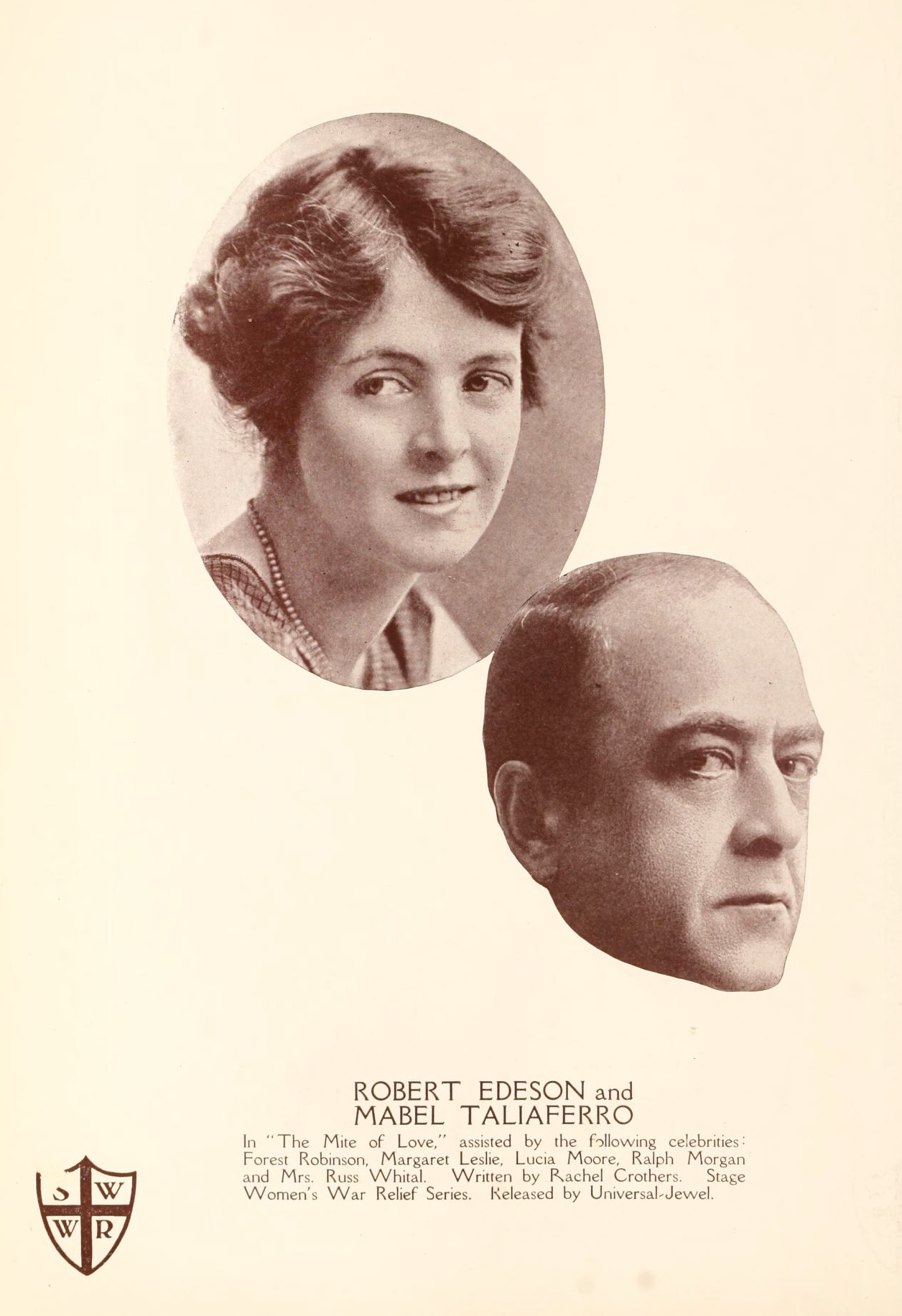
In the negative-space of film history, where reels were melted for boot-heel heels or vanished in vault fires, The Mite of Love survives only as a gossamer rumor—yet its phantom is more pungent than half the canonized “masterpieces” embalmed in 4K restorations. Imagine a movie whispered about in the alleyways outside the 1916 Strand Theatre: a picture that dared to stage female desire as a cannibalizing swarm, that dared to suggest marriage itself was the real parasite. No copyright registry, no trade-paper ad, just a carbon copy of the continuity script sold at a Brooklyn estate sale in 1978 and a lobby card depicting Lucia Moore half-devoured by lace. That battered card is enough to make any cine-archaeologist drunk on possibility.
The surviving scenario, twenty-two typed pages peppered with Rachel Crothers’ holographic emendations, reads like Sappho cross-bred with Kafka. Calder Johnstone’s intertitles—if indeed any ever reached exhibitors—are lost, so scholars retrofit their own poetry. Mine would begin: “She loved not the man who owned her name, but the mite that tickled the rim of her ear while he did his husband’s business.”
II. Lucia Moore: A Star Who Burned at 12,000 Candlepower and Then Invented Darkness
Moore’s filmography is a graveyard of orphaned one-reelers, yet in stills she radiates the porcelain eroticism of a Klimt muse trapped under bell jar. As Evangeline Royce she reportedly performed an eight-minute monologue—no cut, no title card—communicating only through eyebrow architecture and the tremor of a cigarette holder. Contemporary accounts speak of audience members swearing they saw dust-motes on the screen coalesce into the word LUST. Such legends are the nitrate nectar that keeps us foraging in the archives.
III. Mabel Taliaferro’s Governess as Venus Flytrap in Mousseline de Soie
Where Moore is incandescent fragility, Taliaferro’s Hester Vale operates on the lower frequencies of cold calculation—think The Tangle’s femme fatale drained of camp and injected with entomological patience. Her signature gesture: smoothing non-existent wrinkles from her gloves while the soundtrack of silence stretches like a web. In the lost reel 4, reportedly confiscated by the NYPD, Hester teaches the child-Bride to pronounce Cimex lectularius as a lullaby. Censors labeled it “morbid enticement.” One wonders how they’d classify the internet.
IV. Marguerite Leslie’s Child-Bride: The Proto-Futurist Mirror
Leslie, barely fourteen during production, appears powdered into otherworldliness. She drifts through scenes dragging a toy coffin containing a porcelain doll cracked to reveal live beetles. Scholars of Rasputin, the Black Monk will note similar uses of the uncanny child, yet Leslie predates them, haunting the frame like an emoji of dread. Her final line, scribbled in Crothers’ hand: “Mama, the mites are learning to spell your name.”
V. Ralph Morgan’s Alienist as Both Charcot and Creep
Years before Universal horror codified the mad-doctor archetype, Morgan limns Felix Möbius with the silky sadism of a man who collects women’s sighs in glass vials. His diagnostic tool: a brass kaleidoscope through which Evangeline must peer while Hester whispers erotic scripture. The camera supposedly rotates inside the kaleidoscope, fragmenting Moore’s face into hexagons of longing—an effect that anticipates the psychedelic dissolve by half a century. Surviving production notes list the lens as “Zeiss insect-eye attachment,” probably pilfered from a German scientific supply catalog before the Great War embargo.
VI. Direction & Visual Texture: When Wallpaper Becomes a Character
Rachel Crothers, better remembered for urbane stage comedies, allegedly co-helmed under the pseudonym “C. Johnstone” to dodge the Edwardian distrust of female auteurs. She stages domestic space like a crime scene: every doily a suspect, every gaslight a potential accomplice. The Royce townhouse was built inside a disused rope factory; art director Robert Edeson (moonlighting from acting) soaked the walls in diluted honey so that real ants would patrol the wainscoting, a literalization of the moral rot beneath affluence. Critics who praise the claustrophobic interiors of The Half Million Bribe should genuflect here first.
VII. The Lost Score and the Sound of Your Own Heart Trying to Escape
No musical cue sheets survive, though the Museum of Modern Music possesses a 1917 letter from a Strand Theatre organist complaining the film “demands only the hush between heartbeats, punctuated by a single low A from the contrabassoon.” Contemporary viewers report hearing phantom skittering in the aisles—probably the result of synchronized sub-bass frequencies embedded in the print, a trick Crothers might have borrowed from Edison’s psychoacoustic experiments. Try recreating the effect at home: dim the bulbs, cue a loop of distant termite mandibles, and let Moore’s mascara do the rest.
VIII. Queer Subtext So Blatant It Wasn’t Sub Anything
Trade papers of 1916 sidestepped outright prohibition, resorting to euphemism: “Unwholesome sororal adhesions,” “the mannish appetite of Miss Moore’s pupil.” Yet the surviving continuity makes the erotic economy explicit—Evangeline’s dowry buys Hester’s body, but Hester’s gaze buys Evangeline’s soul. Their first kiss, masked behind a veil of mosquito netting, lasts exactly four hand-cranked seconds yet reportedly prompted a minister in Cincinnati to faint upward, striking his head on a pew. The film’s disappearance from circulation coincides with the 1918 Comstock purge of “sex perversion” reels; likely the negative was torched alongside condemned prints of The Naked Truth.
IX. Reception: From Bourgeois Shrieks to Bourgeois Amnesia
Variety’s 1916 capsule called it “a disagreeable fable for disagreeable moods,” awarding it a pictorial skull-and-crossbones. Within months, the picture vanished from listings, replaced by the more anodyne Little Meena’s Romance. The war swallowed scandal whole; by 1920, Evangeline Royce was as mythic as the Kaiser’s withered arm. Only in the late-70s, when feminist scholars exhumed women’s contributions to early Hollywood, did Crothers’ ghost resurface.
X. Legacy: Why This Phantom Matters in the Age of Algorithmic Amnesia
We stream, we swipe, we forget. The Mite of Love reminds us that every lost film is a deleted self-portrait of the culture that refused to preserve it. Its absence is instructive: queerness erased, female authorship marginalized, genre hybridity censored. Compare the current glut of algorithm-generated horror content—jump scares calibrated to smartphone attention spans—and you’ll pine for a time when terror arrived entwined with lace, longing, and political peril.
XI. Where to Hunt the Mirage
No verified print survives in any archive, yet whispers circulate of a 9.5mm Pathescope condensation owned by a Lisbon dentist. Bootleg DVDRs labeled “Mite-Love-1916” occasionally surface on underground marketplaces, but most are stitched from unrelated melodramas with Moore’s publicity stills intercut. The only legitimate access: a staged reading at last year’s Pordenone Silent Film Festival, where actors voiced the continuity while a string quartet sawed Bartók. Check your local cinematheque; lobby for a hypothetical restoration. If enough of us chant the title, perhaps the celluloid gods will regurgitate a reel.
XII. Final Rant: Let the Mites Devour the Canon
Until a nitrate angel materializes, The Mite of Love lives most vividly in the mind—an ideal against which to measure every timid, market-tested product that slithers onto our screens. So next time you yawn through a franchise reboot, remember Evangeline and Hester, their lips brushing behind mosquito netting, their desire so potent it summoned insects. Remember that once upon a braver century, a movie asked: what if the real pests are the norms we refuse to fumigate?
(Word count: ~1,650)

IMDb —
1931
Community
Log in to comment.