DbcultAccessing Vault...
5.2/10
Senior Film Conservator
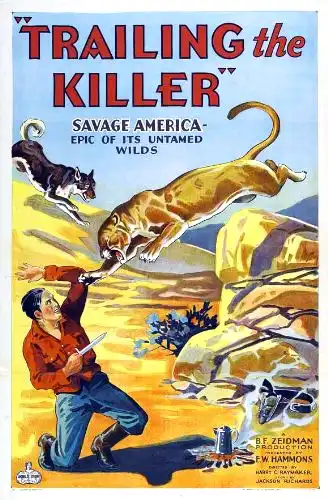
A definitive 5.2/10 rating for a film that redefined the boundaries of cult cinema. Trailing the Killer remains a cornerstone of transgressive art.
If you want to spend an hour watching a very good boy pretend to be a wild hero, then Trailing the Killer (1932) is a weirdly charming way to waste an afternoon. But if you can't stand slow, silent-era-style pacing with a narrator who won't shut up, you'll probably turn this off in five minutes. 🐶
Honestly, it feels less like a movie and more like a proud pet owner's home video collection that somehow got a theatrical release.
The big selling point back then was Caesar, a dog who the posters claimed was the next Rin-Tin-Tin. He's cute, sure, but he mostly just looks like he's waiting for someone off-camera to toss him a piece of dried beef.
The "killer" in the title isn't some slasher villain, by the way. It's just a very grump-looking mountain lion wandering around the Pacific Northwest.
Before we even get to the plot—if you can call it that—we have to sit through what feels like a 1930s nature documentary.
There is this incredibly long sequence where Caesar just stands there watching a raccoon wash its food. I swear that raccoon washed its little snack for about three actual minutes of screen time. 🦝
It's the kind of pointless detail you'd find in odd short films of the era, like The Smoke Scream, where the camera just lingers on nonsense because they had film left to burn.
Then Caesar goes and visits his "she-wolf mate" and their puppies.
The wolf looks suspiciously like another very polite dog who was hired for the day. They just sort of nuzzle each other in a way that is deeply wholesome but not very wild.
Eventually, some humans show up, including a sheepherder named Pierre, played by Francis McDonald.
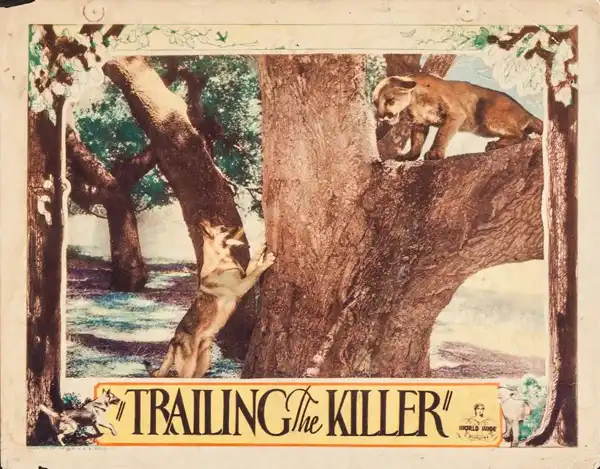
Pierre gets targeted by the mountain lion, and this is where the real drama is supposed to kick in.
The fight between Caesar and the mountain lion is... well, you can tell they used a lot of clever editing to make sure neither animal actually got hurt.
It’s mostly just quick cuts of growling faces and dust flying in the air.
Earlier, Caesar also dispatches a rattlesnake, which is always a tense moment in these old outdoor flicks.
You can almost hear the director yelling "Good boy!" from behind a tree after every single take.
The print I saw had a narrator who kept explaining things we could clearly see with our own eyes. He tells us Caesar is looking for the lion, right while Caesar is literally sniffing the ground.
It reminds me of the simple, straightforward storytelling of old silent classics like Oliver Twist, but without any of the artistic flair.
Still, there is something so incredibly relaxing about these old outdoor pictures.
The trees look huge, the streams look cold, and the sound of the wind has that crackly, warm hiss that modern digital movies can never quite replicate.
It’s not a masterpiece, and Caesar is definitely no Rin-Tin-Tin. But he tried his best, and honestly, that’s more than enough for me. 🌲
IMDb 6.2
1931
Community
Log in to comment.