The Play Girl: A Glimpse into Early Talkie Awkwardness
If you're a casual movie watcher just looking for a good time, honestly, you can probably skip
The Play Girl. But for anyone with a real soft spot for early sound films, for the way they stumbled and learned to walk, there’s something oddly compelling here. This is a film for the curious, for those who want to see how the sausage was made, even if the sausage itself is a bit undercooked. You'll either find its stilted charm endearing or its clunky execution unbearable.
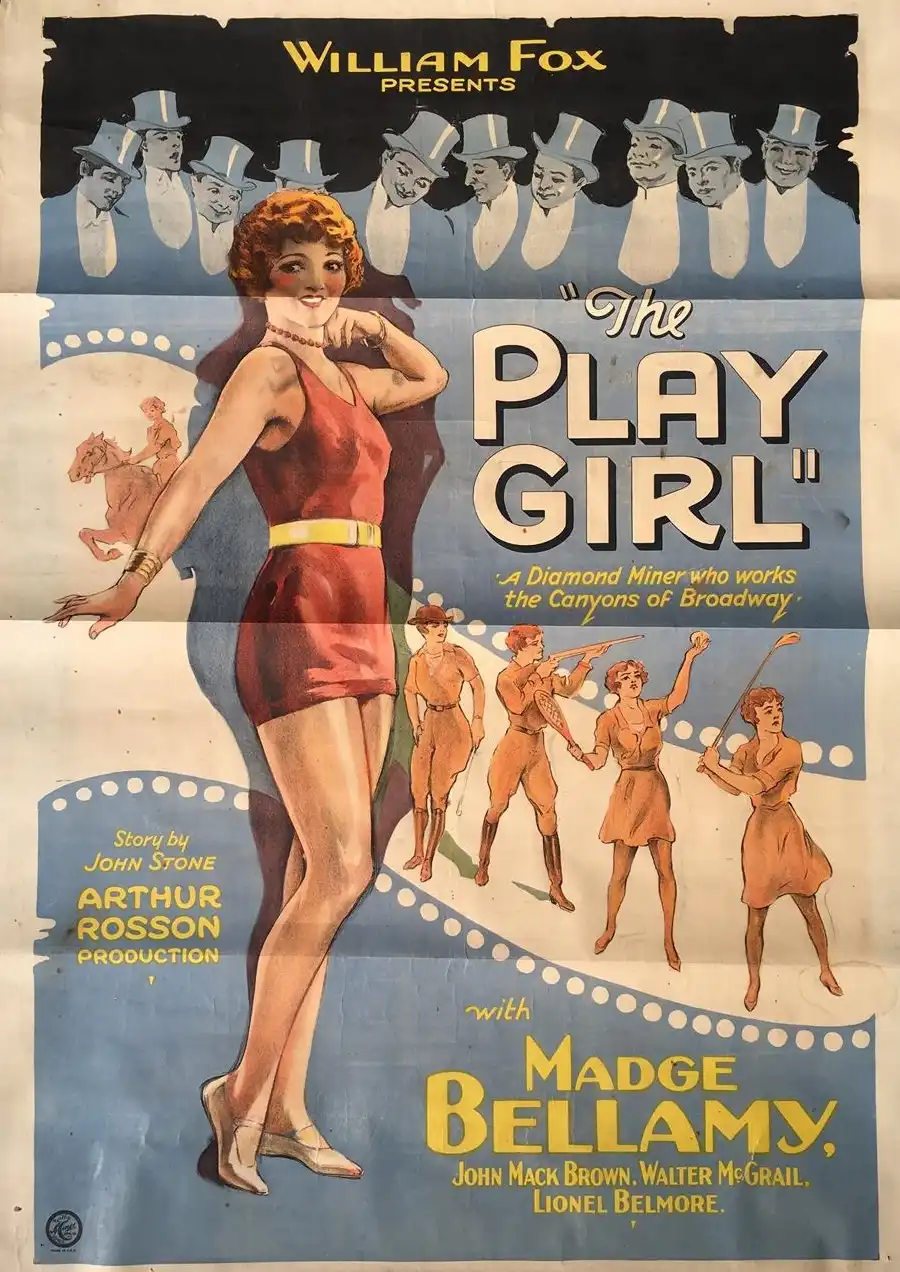
Madge Bellamy, as the titular 'play girl,' Madge, starts out as a flower shop clerk. The whole setup is just so quaint, you can almost smell the cellophane. She gets sent to deliver a bouquet to Bradley Lane’s apartment, and because of some truly baffling miscommunication, walks in on him mid-bath. The film plays this as a massive scandal, which it was, I guess, for the era. Bellamy’s reaction is a mix of wide-eyed innocence and what feels like genuine mortification. It’s a moment that could easily be played for cheap laughs, but the film, at least initially, tries to ground it in Madge’s very real social predicament. She loses her job, naturally, and her reputation is in tatters. This all happens very quickly, almost like a montage of public shaming, which is efficient but lacks any real emotional punch.
Then things get weird. Madge, now unemployed and 'ruined,' decides to embrace the 'playgirl' lifestyle. What does this entail? Mostly, it looks like hanging out with other women in fashionable apartments, wearing chic outfits, and going to parties. It’s less scandalous and more... a bit boring, actually. The film never quite commits to the hedonism it implies. It feels like the writers, Reggie Morris and John Stone and Norman Z. McLeod, knew they needed a 'playgirl' phase for the plot but weren't entirely sure what that meant beyond a change of wardrobe and some sassy quips. Bellamy tries to lean into it, delivering lines with a newfound sharpness, but it often feels like she’s trying on a costume that doesn't quite fit.
Johnny Mack Brown as Bradley Lane, the man in the tub, is… well, he’s handsome. That’s about it. His character is pretty thinly drawn. He feels bad about the scandal, tries to help Madge, but then disappears for a chunk of the movie, only to reappear later as her 'true love.' The chemistry between Bellamy and Brown is, to put it mildly, lacking. Their romantic scenes feel less like two people falling in love and more like two people reading lines at each other, waiting for their cue. One particular shot of them walking together in a park, trying to look smitten, just drags on. You can almost feel the director nudging them, 'Look more in love!'
The pacing is a bit all over the place. Some scenes rush by, like the initial scandal and Madge’s fall from grace. Others, especially the 'playgirl' party scenes, linger a little too long, full of background chatter that doesn't really add much to the plot or character. There’s a scene where Madge is talking to another woman about her new 'freedom,' and the camera just sort of sits there, letting the conversation unfold without much visual interest. It's not a bad conversation, but it doesn't earn its runtime.
One thing that really stands out is the dialogue. It's classic early talkie stuff: a little stilted, very formal in places, and sometimes delivered with a strange, almost theatrical cadence. You can hear the actors grappling with the new medium, trying to figure out how to speak naturally into a hidden microphone. Some lines feel like they belong on a stage, not in a relatively intimate film scene. There are moments of genuine wit, though, particularly from Anita Garvin, who plays one of Madge’s 'playgirl' friends. She has a natural delivery that cuts through some of the stiffness.
The film’s resolution, with Bradley suddenly declaring his love and proposing marriage, feels incredibly rushed and unearned. It’s the kind of ending that existed because that’s what audiences expected, not because the story had organically built to it. Madge’s quick acceptance, after all her talk of independence, is a bit jarring. It makes her 'playgirl' phase feel less like a journey of self-discovery and more like a temporary detour before she gets back on the traditional path. It's a shame, because there was potential there for a more nuanced exploration of a woman trying to make her way in a restrictive society.
Ultimately,
The Play Girl is a curious artifact. It’s not a lost masterpiece, or even a particularly good movie by modern standards. But if you’re interested in the evolution of cinema, in the clunky, charming ways early sound films tried to tell stories, it’s worth a look. Just don't expect profound insights or dazzling performances. Expect a decent snapshot of a bygone era, with all its awkwardness and occasional, accidental delights. You could do worse, especially if you're pairing it with something truly obscure like
Das Geheimnis der Mumie or even
Guns of Loos for a night of cinematic archaeology.