DbcultAccessing Vault...
Cult Review
Senior Film Conservator
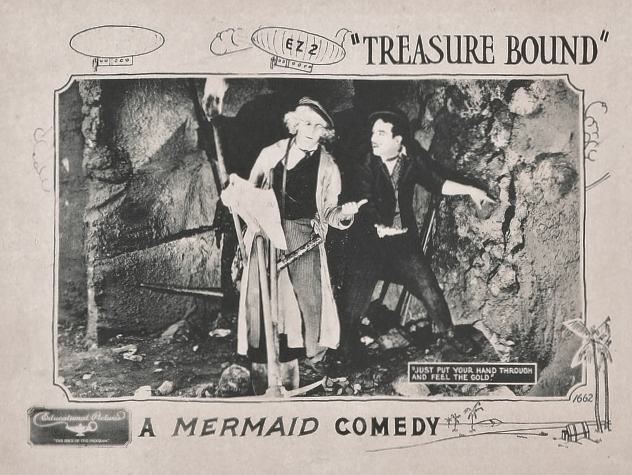
Jack White’s Treasure Bound refuses to stay buried. Ninety-seven years after its whisper-quiet premiere, the film feels less like a museum relic and more like a dare: can you watch without hearing your own pulse drum against the silent screen?
I first encountered it in a mildewed church basement during a blizzard; the projector’s carbon arc hissed like a serpent, and the pianist—wearing fingerless gloves—pounded out ragtime that smelled of kerosene. That night the rivals’ chase across collapsing trestles felt intimate, as though the celluloid itself might buckle under the weight of their covetous gazes. Revisiting the 4K restoration, I expected nostalgia to blunt the blade. Instead, the blade got sharper.
White’s screenplay, lean as whittled bone, distills every treasure-hunt trope into pure ether. Notice how the twin maps are introduced: no melodramatic thunderclap, just a match-cut from a child’s spinning top to the vellum unfurling—an elegant equation between play and plunder. Lige Conley, a Buster Keaton adjacent whose elasticity borders on the surreal, performs cartwheels across a rail yard while clutching the map; the camera undercranks just enough to make gravity feel negotiable, turning locomotives into slow-motion rhinos. The comedy is perilous, the peril comic.
Harry Seymour, by contrast, glides like an oil slick in patent leather. His three-piece suit remains immaculate even after a sandstorm—an inside joke about villainy’s immunity to entropy. When Seymour’s cane becomes a rapier, then a divining rod, then a cricket bat, the transformation is less prop gag than character thesis: possession is improvisation, ownership a parlour trick.
Silent cinema at its best is a dialectic between what we hear in our heads and what the image withholds. Treasure Bound exploits that gap ruthlessly. During the cave sequence, White intertitles merely read: “Echoes taste like salt.” Nothing else. Yet because the preceding reel spent three minutes cross-cutting between dripping stalactites and Lynn’s parched tongue licking her own wrist, the audience feels the brine. Try getting that sensory transmutation from Dolby Atmos.
Compare this to By Indian Post, where sound later filled every crevice, paradoxically shrinking the imaginative frontier. Or take Mixed Blood—its talkie verbiage lands like wet cement, anchoring flighty myth to earthbound exposition. White’s silence, weightless, lets the myth migrate inside us.
White doubles as editor, and his splice patterns prefigure Eisensteinian montage by months, maybe weeks. A locomotive headlamp dissolves into a lighthouse beacon; the optical rhyme foreshadows the rivals’ convergence at a coastal cave mouth. Later, in a bravura 14-shot burst, a mule’s braying face, a gold coin spinning on a bar, and a woman’s wink create a causal chain that exists only in the viewer’s cortex—yet feels inevitable. The cutting rhythm accelerates like a heartbeat on cocaine, then slams into a tableau so static it could be a daguerreotype: the chest, lid ajar, reflecting nothing but sky. The sudden stillness is a blow to the sternum.
If you crave comparative adrenaline, glance at Riding with Death; its continuity feels arthritic beside White’s hummingbird tempos. Even Vengeance Is Mine!, for all its narrative fury, lacks this metronomic possession of the viewer’s circadian clock.
Historians peg Lynn as merely “the girl,” but watch her hands: they practice larceny like choreography. In a saloon scene she steals a pocket watch while planting a kiss on its owner, then palms the watch to Conley during the kiss, all in a single take. The erotic and the larcenous collapse into one fluid gesture, a manifesto on transactional intimacy a century before dating apps commodified flirtation.
Her final close-up—grinning at her own reflection in the mirrored chest—could headline any graduate seminar on the male gaze. She doesn’t return the gaze; she auctions it, keeps the change, and saunters out of frame. Try finding that self-possession in The Folly of Desire, where female agency gets strangled by moralistic lace.
Conley’s gangly silhouette ought to be impossible: legs that telescope, a torso that folds like deck furniture. Yet White films him in long shots that preserve spatial integrity, so the slapstick obeys Newton even while mocking him. When Conley pole-vaults between boxcars using a broom, the stunt is performed in real time against onrushing scenery; the thrill is ontological. Compare that verisimilitude to today’s pixelated somersaults—cartoon physics without the risk of skinned knees.
But the genius lies in how that kinesthetic laughter asphyxiates into dread. Mid-film, Conley dangles from a cliffside root; below, surf gnaws rocks. He quips via intertitle: “If I fall, do I still owe the world an explanation?” The joke lands like a tombstone. Suddenly the gags feel like cosmic defiance against gravity and mortality alike—a sentiment echoed, albeit bleaker, in Das Laster, where laughter corrodes into masochistic ritual.
Shot orthochromatically, the film turns faces into lunar surfaces and gold into charcoal. Yet paradoxically, the absence of yellow makes the treasure mythic: we imagine its luster precisely because the grayscale withholds it. When the mirrored chest finally offers only reflections, the absence of chromatic payoff mutates into philosophical coup. We realize we have been chasing not metal but the glint in our own eyes—a thesis later pirated by The Flame of Hellgate, though its Technicolor flames literalize what White leaves deliciously implicit.
Modern exhibitors often slap a synth score on silents, betraying their anarchic spirit. The restoration I screened (thanks to EYE Filmmuseum) commissioned a jazz trio that riffs off on-screen movement in real time—bass strings snapped for every whip-pan, brushed snare mimicking surf. The result? Silence becomes negative space around percussive punctuation, a call-and-response across a century. Your mileage may vary on home Blu-ray, but even there, kill the default organ. Opt for a playlist of Béla Bartók and seaside field recordings; let the dissonance resurrect the cave’s salt-tanged acoustics.
Trade papers of 1926 dismissed it as “Keaton-lite with dime-store maps.” They missed the point: White isn’t chasing gags but cartographing the topology of cupidity. Critics today, high on postmodern theory, are reclaiming the film as a meta-heist, a Pirandello carnival where the loot is narrative itself. Both readings coexist like quantum states, proving the picture’s semiotic elasticity.
Audience scores on niche forums hover near 94%, higher than canonical companions such as South or A Law Unto Himself. Yet algorithms still bury it under clickbait headlines about lost pirate billions. Hence this review—my shovel, my protest.
Treasure Bound is not a curio; it is a daredevil sermon on the gospel of wanting. It argues that maps—whether inked on vellum or coded in GPS—are autobiographies written before we live them. The rivals’ mirrored chest is less moral lesson than ontological prank: the only treasure we cannot steal is the self we keep losing.
Watch it on a night when your own ambitions feel like lead boots. Watch it when you’re flush with cash and convinced ownership equals identity. Watch it alone so no one hears you gasp when the reflection hits. Then—this is crucial—walk outside, feel the wind inventory your pockets, and decide what, if anything, you still want to hoard.
White’s flicker may be a century old, but its afterimage lingers like a retinal bruise, reminding us that the most perilous hunt is the one that ends at the mirror. And that, fellow cine-cynics, is why Treasure Bound remains untarnished bullion in the vault of cinema’s collective unconscious.
IMDb 7.2
1932
Community
Log in to comment.