DbcultAccessing Vault...
Cult Review
Senior Film Conservator
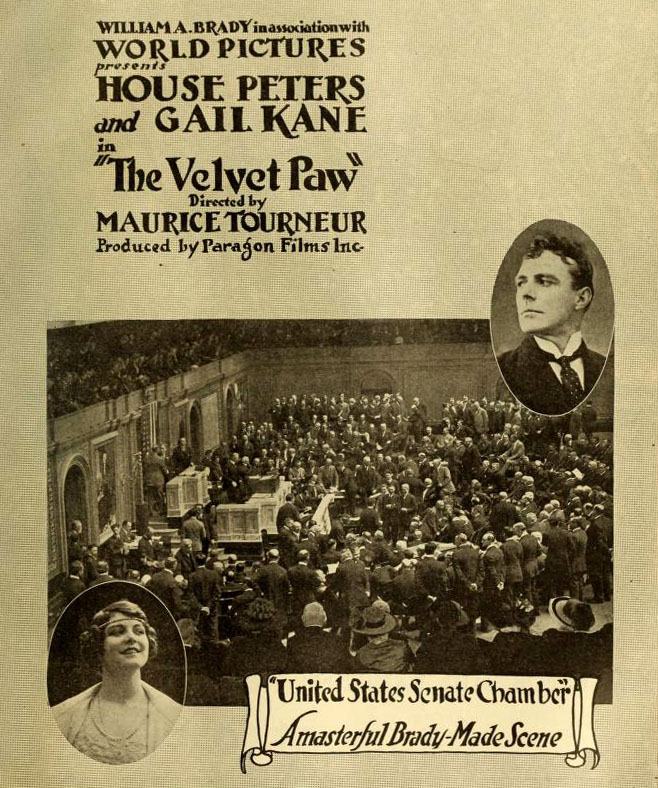
Step back into an era when cinema spoke through grand gestures and evocative intertitles, and you'll find The Velvet Paw, a silent film that, despite its age, resonates with a startlingly contemporary relevance. This isn't merely a historical artifact; it's a potent political drama, a searing indictment of Washington D.C.'s perennial dance with corruption, and a nuanced exploration of a woman's journey through moral compromise to a hard-won redemption. Released at a time when the nation grappled with the burgeoning power of industry and the shadows it cast upon democratic ideals, this film captures a specific zeitgeist, yet its themes of influence, seduction, and the battle for integrity remain eternally compelling.
At the heart of this intricate web of power and deceit is Mary Dexter, portrayed with captivating intensity by Gail Kane. We first encounter Mary as a woman of hopeful purpose, accompanying her husband, Phillip, to the nation's capital. Phillip, an inventor of an appliance for battleships, arrives with the naive belief that the merit of his creation alone will suffice for its adoption. What he confronts, however, is a monolithic wall of graft and entrenched interests, a system where innovation means little without the lubricant of money and the leverage of 'pull.' His subsequent despair and tragic suicide serve as the film's brutal genesis, a stark and unforgiving introduction to the true nature of Washington politics. It's a moment that rips the veil from Mary's eyes, plunging her into a world far more ruthless than she could have ever imagined. This initial tragedy is crucial, as it provides the desperate impetus for Mary's subsequent, morally ambiguous actions. Her initial foray into political maneuvering, a desperate attempt to help Phillip, is born of love, but it quickly morphs into something far more cynical after his death.
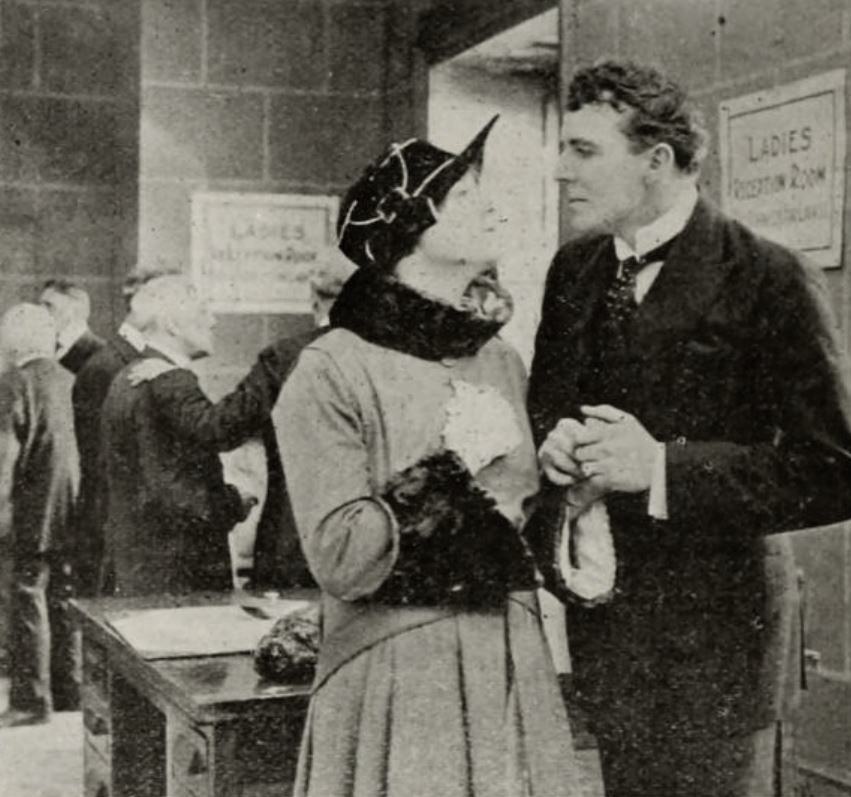
Senator Barring, a character etched with a chilling blend of charm and calculation, recognizes in the newly widowed Mary not just a woman in distress, but a valuable, untapped resource. Under the guise of friendship and paternalistic concern, he draws her into his orbit, offering comfort and a semblance of purpose. But his motives are anything but altruistic. Barring sees Mary as a 'clever tool,' an exquisite instrument to further his own agenda and the 'interests' he represents. Gail Kane's performance here is remarkable; she navigates Mary's transformation from grieving widow to sophisticated political operative with nuanced precision. We witness her initial reluctance give way to a strategic embrace of her power, her beauty and charm becoming weapons in the high-stakes game of legislative manipulation. She learns to wield influence, to sway votes, and to navigate the murky waters of D.C. society with an almost terrifying efficacy. This period of her life, while seemingly successful, is a profound moral compromise, a Faustian bargain struck not for personal gain initially, but for a twisted form of survival and, perhaps, a desperate need to feel powerful in a world that had so cruelly disempowered her.
Mary's first major assignment for Barring brings her into contact with Clifford Drake, a young, earnest congressman who represents everything Phillip once stood for: unyielding principle and an unwavering refusal to be swayed by bribes or threats. Drake is the quintessential 'clean-cut' idealist, a man whose integrity is his most prized possession. Barring, however, knows that every man has a weakness, and he dispatches Mary to exploit Drake's burgeoning infatuation. What ensues is a masterclass in calculated seduction, as Mary, with a chilling detachment, lures Drake into her web. She offers him a vague promise of marriage, a shimmering mirage of domestic bliss and romantic fulfillment, in exchange for his vote with the 'interests.' Drake, blinded by love and perhaps a touch of youthful naiveté, succumbs. His betrayal of his principles is immediate and catastrophic. His party, disgusted by his deflection, casts him out, electing the honest and capable Westerner, Moorehead, in his stead. Drake's fall from grace is swift and brutal, a stark warning of the perils of mixing personal desire with political duty.

The aftermath of Drake's ruin is equally devastating. Maddened by love and a blighted career, he desperately begs Mary to marry him, clinging to the remnants of their fabricated romance. But Mary, having achieved her objective, dismisses his proposal with scornful laughter, revealing the cold, calculating heart beneath the 'velvet paw.' This rejection pushes Drake over the edge, turning his unrequited affection into a festering desire for revenge. His character arc serves as a poignant counterpoint to Mary's. While she descends into moral ambiguity, he falls into a pit of despair and vengeful obsession. The film brilliantly illustrates how easily idealism can be corrupted, and how personal weaknesses can be ruthlessly exploited in the pursuit of power. In some ways, Drake's tragic trajectory reminds one of the cautionary tales in films like The Crimson Dove, where personal integrity is relentlessly tested by societal pressures and moral dilemmas.
The arrival of Moorehead (House Peters), Drake's successor, marks a pivotal turning point in Mary's narrative. Moorehead is a man of a different caliber—strong, capable, and imbued with an unshakeable sense of honesty. He is the antithesis of the corrupting forces Mary has come to embody. Naturally, Mary, still operating under Barring's influence, attempts to weave her usual spell. Like all men before him, Moorehead is captivated by her charms. However, unlike Drake, his infatuation does not blind him to his principles. When Mary, at Barring's behest, requests that he vote against the Child Labor Bill, he steadfastly refuses. This resistance is crucial. It’s the first time her 'velvet paw' fails to achieve its intended political objective, and it forces Mary to confront a different kind of man, one who cannot be easily bought or seduced into moral compromise. This unyielding integrity in Moorehead begins to chip away at the layers of cynicism Mary has accumulated.
The Child Labor Bill, a poignant symbol of social justice and the protection of the vulnerable, becomes the ultimate battleground for Mary's soul. Her initial attempts to sway Moorehead fail, but under Barring's urgent pressure, she extracts a promise from Moorehead: he will be absent when the vote is called, thereby weakening the bill's chances. This compromise, while not a direct vote against, still serves Barring's 'interests.' However, in this moment, something profound shifts within Mary. Her growing attraction to Moorehead, coupled with the stark realization of the infamous role she has played in the political game, awakens her 'true nature.' This is the film's most powerful psychological pivot. The love she feels for Moorehead is not the manipulative affection she feigned for Drake; it is genuine, and it forces her to look inward, to truly see the moral abyss she has skirted. This awakening is a testament to the enduring power of genuine connection and the potential for redemption, even in the most compromised of individuals. It echoes the profound moral dilemmas explored in films like The Honor of His House, where characters are forced to choose between personal loyalty and a higher moral calling.
The film hurtles towards its dramatic climax as the Child Labor Bill comes up for discussion. Barring, furious at Moorehead's absence, demands Mary secure his vote against it. But Mary's transformation is complete. Spurred by her newfound conscience and her love for Moorehead, she embarks on a frantic, desperate pursuit of him, determined to undo her past misdeeds. Moorehead, true to his promise, has remained away from the House, believing Mary is still trying to 'use' him. The scene of Mary's impassioned plea, convincing him that she has seen things in their 'true light' and is now anxious to fight 'with him for the right,' is a powerful moment of emotional catharsis. It’s a testament to Gail Kane's ability to convey profound internal struggle and genuine sincerity through facial expressions and body language alone, a hallmark of silent film acting. Moorehead, convinced by her earnestness, rushes back to the House, arriving just in time to deliver an impassioned address in favor of the Child Labor Bill. His strong arguments carry the day, and the bill is passed, a resounding victory for integrity over corruption.
As congratulations are showered upon Moorehead, Mary, observing from the gallery, rejoices in his victory and, implicitly, in her own redemption. But the narrative isn't quite finished with its twists. From the shadows, Drake, drunk and half-crazed with a burning desire for revenge for his blighted career, appears. A shot rings out, and Mary falls, wounded. This moment of violent retribution, while shocking, serves as a poignant reminder of the indelible scars of her past actions. Drake's desperate act, swiftly quelled by angered members of Congress, underscores the destructive power of unchecked rage and bitterness. Moorehead rushes to Mary, relieved to find her wound slight. Together, they rejoice—not just in the victory of the Child Labor Bill, but in Mary's narrow escape, both physical and moral. It’s a powerful ending, signifying a new beginning for Mary, forged in the crucible of Washington's political furnace, emerging cleansed and ready to stand for what is right. This final scene, while dramatic, offers a hopeful resolution, suggesting that even those who have strayed can find their way back to a path of righteousness.
While The Velvet Paw might not be as widely celebrated as some of its contemporaries, its narrative depth and thematic ambition make it a noteworthy entry in early American cinema. The film masterfully explores the corrupting influence of power, the fragility of idealism in the face of cynical manipulation, and the complex journey of moral awakening. Gail Kane's performance as Mary Dexter is the linchpin, carrying the film's emotional weight and navigating a character arc that is both compelling and deeply human. Her portrayal of a woman forced to adapt to a ruthless world, only to rediscover her inherent goodness, is a testament to the power of silent acting.
The film's exploration of political graft and the behind-the-scenes machinations of Washington D.C. feels remarkably prescient. It reminds us that the struggle between principled governance and self-serving 'interests' is an age-old battle, one that continues to define political landscapes even today. The Child Labor Bill, in particular, anchors the story in a specific historical context while simultaneously elevating it to a universal tale of fighting for social justice. Comparisons can be drawn to other silent era dramas that tackled societal issues, such as The Bride's Silence, which often explored the constraints and expectations placed upon women, or The Silent Witness for its focus on moral dilemmas and their profound consequences. The direction, while adhering to the conventions of the era, effectively builds tension and character through dramatic staging and the judicious use of intertitles, ensuring the audience remains fully invested in Mary’s perilous journey. The Velvet Paw is more than just a period piece; it's a timeless examination of human frailty, the seduction of power, and the enduring hope for redemption in a world that often seems determined to crush it. It’s a film that deserves to be rediscovered, offering both a fascinating historical document and a powerful, resonant story.
IMDb 5.3
1922
Community
Log in to comment.