DbcultAccessing Vault...
Cult Review
Senior Film Conservator
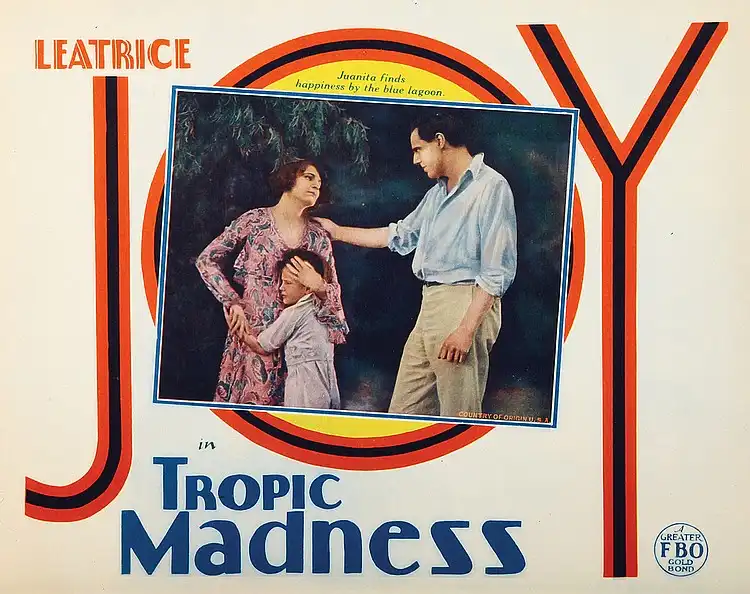
So, is Tropic Madness worth digging up today? Well, if you’re into the quirks of silent cinema, especially melodramas set in “exotic” locales, then yeah, there’s some interesting stuff here. It’s definitely a watch for film history buffs or anyone curious about how these stories played out without sound. But if you're looking for something that holds up perfectly to modern sensibilities, or even just a tight, logical narrative, you might find yourself scratching your head a good bit. 🧐
The whole thing kicks off with Herbert Pomeroy's wife, Juanita, just blowing through money like it’s going out of style. Seriously, the film wants you to know she's a spendthrift, and boy, does it hammer that home. It’s kind of a big leap when this financial ruin drives Herbert to suicide. That's a *dark* start for a movie with 'Madness' and 'Tropic' in its title, feels a bit jarring.
Young Frankie, their son, gets shipped off to a friend named Henderson, a South Seas trader. We don't really see much of Frankie's reaction to this, it's more about Juanita's eventual journey. Years pass, and Juanita, after presumably a long search, just… gives up. I mean, after all that tragedy, to just throw in the towel on finding your kid feels a little fast.
Then she's suddenly on a rich guy's yacht, Jules Lennox, cruising the world. Convenience, right? They eventually land on Henderson’s island, which, surprise, is exactly where Frankie is. What are the odds? Juanita, seeing Frankie grown up but not recognizing her, talks Henderson into letting her be the boy's governess. This is where Leatrice Joy really gets to work, trying to convey a mix of regret and desperation through her expressions. She’s often trying to hold it all together, you can feel her character’s internal struggle even without dialogue.
The island itself is… well, it’s an island from a 1920s movie. Palm trees, straw huts, the whole deal. It’s less about feeling like a real place and more about being a convenient backdrop for all the *drama*.
And boy, does drama ensue! We get a poor physician thrown into the mix, who honestly feels a bit like an afterthought sometimes. Then there’s a jealous island woman. She’s definitely got it in for Juanita, and their confrontations are some of the more energetic moments. It’s all very much about stolen glances and sharp, accusatory gestures. You can almost feel the *heat* between them. 🔥
The witch doctor character is… something else. Sôjin Kamiyama plays him, and he brings a certain intensity, even if the portrayal itself leans heavily into the tropes of the era. He’s menacing in a theatrical way, less a character and more a plot device to stir up trouble. One scene where he’s doing some kind of ritual, all shadowed and flailing, *really* sticks out. It's almost unsettling, but also a little bit goofy, you know? Like, is this supposed to be scary or just exotic background noise?
The movie kinda gets bogged down sometimes in all these side plots. Juanita trying to win Frankie over, the jealous woman’s schemes, the doctor's quiet presence. It doesn't always flow smoothly. You might be focused on one thing, then suddenly we're cutting to the witch doctor doing another ominous gesture for a few seconds. It feels a bit like they had a bunch of ideas and just threw them all in, hoping they’d stick.
Leatrice Joy, as Juanita, is the anchor. She’s expressive, and you can see her trying to convey the emotional weight of a mother who made terrible choices. Her face tells a story even when the plot goes a bit off the rails. There’s a scene where she watches Frankie from a distance, and the longing in her eyes is *palpable*. It's a quiet moment, but it speaks volumes more than some of the more frenetic action around the witch doctor.
The ending, without giving too much away, tries to tie everything up. But it feels a bit forced, like the filmmakers suddenly remembered they had to conclude all these tangled threads. It’s less a natural resolution and more a *convenient* one.
Overall, Tropic Madness is a curio. It has moments that sparkle with genuine silent film emotion, mostly thanks to Joy's performance. But it also has stretches where it feels dated, a bit confused, and sometimes just plain silly. It’s an interesting peek into a particular type of melodramatic storytelling, but don't go in expecting a cohesive, modern classic. It’s messy, but sometimes that's part of the fun of watching older films, seeing how they figured things out on the fly. You know?

IMDb —
1918
Community
Log in to comment.