DbcultAccessing Vault...
Cult Review
Senior Film Conservator
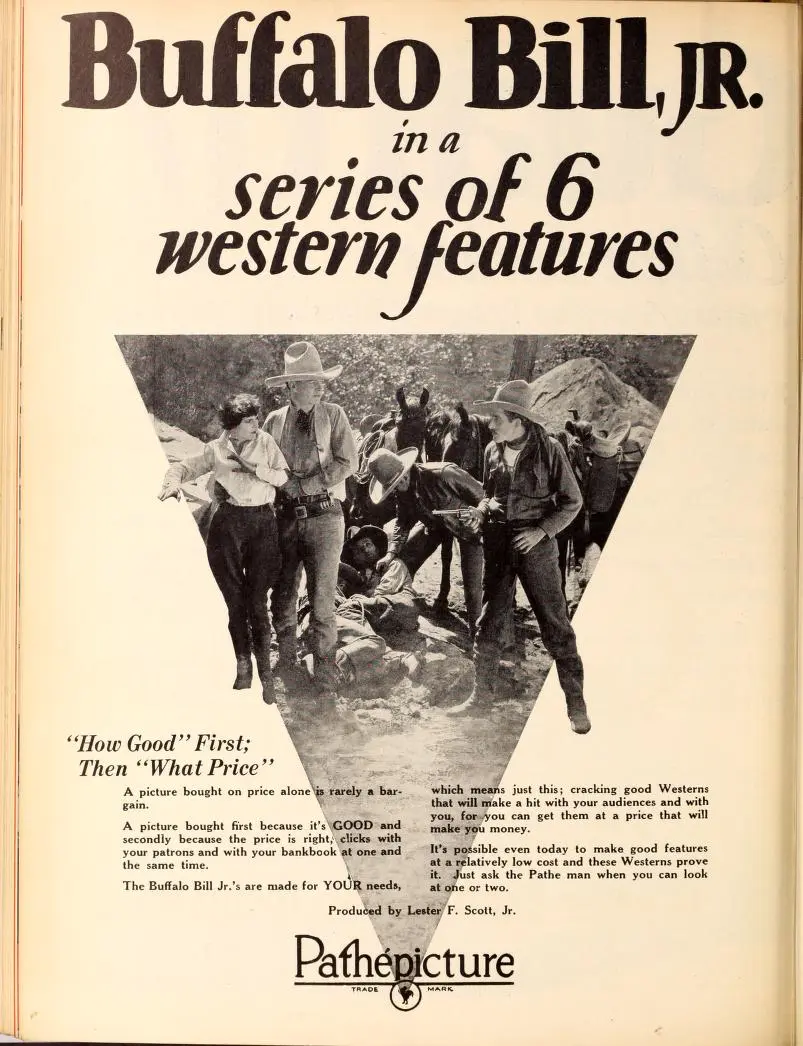
Is Trumpin' Trouble a forgotten gem or a relic best left to the archives? The short answer is: it’s a fascinating window into a bygone era of filmmaking, but one that demands a particular kind of patience from its modern audience.
This film is undeniably worth watching for those with a deep appreciation for the foundational tropes of the Western genre, silent-era cinema, or the early days of character actors like Jay Wilsey. However, it is decidedly not for viewers seeking contemporary pacing, complex narratives, or high-fidelity production values.
In the landscape of early 20th-century cinema, the Western stood as a titan, shaping national identity and offering simple, potent narratives of good versus evil on the rugged frontier. Trumpin' Trouble, with its straightforward premise of a prospector, a villainous gang, and a heroic intervention, encapsulates this era perfectly.
Sergey Sergeyeff, the credited writer, crafted a narrative that, while lean, is rich in archetype. John Lawson, played by Dick Winslow, is the everyman, the pioneer carving out a living, only to be threatened by lawlessness. His struggle is immediately relatable, tapping into universal themes of property, perseverance, and vulnerability.
The introduction of 'Red Star' Dorgan, portrayed by Slim Whitaker, provides a clear antagonist. Whitaker, a prolific character actor known for his villainous roles, would have brought a menace that, even in a silent or early sound film, would have been palpable. His gang represents the wild, untamed elements of the West, the constant threat to order and individual enterprise.
But the true heart of the film, and arguably its main draw, is the appearance of Buffalo Bill, Jr., brought to life by Jay Wilsey. Wilsey, who adopted the iconic moniker, embodied the stoic, capable hero of countless B-Westerns. His timely arrival, spurred by the sounds of distress, is the quintessential deus ex machina of the genre – a lone rider bringing justice where there is none.
It's this distilled purity of narrative that gives Trumpin' Trouble its peculiar charm. There's no moral ambiguity here, no deep character introspection. It's about clear-cut right and wrong, and the satisfaction of seeing justice dispensed swiftly, even if by unconventional means.
Analyzing performances in a film like Trumpin' Trouble requires acknowledging the conventions of its era. Acting in early Westerns often leaned towards broad gestures and clear physical portrayals, as dialogue was either limited or non-existent in the silent and early talkie periods. Dick Winslow, as John Lawson, would have conveyed his plight through a combination of physical struggle and expressions of desperation and relief. His performance, while perhaps lacking the nuanced subtlety of later eras, would have been effective in communicating his character’s journey.
Jay Wilsey, as Buffalo Bill, Jr., was a master of the stoic hero. His presence alone would have commanded attention. Imagine his entrance: a lone figure on horseback, silhouetted against a dusty horizon, riding into the fray. Wilsey’s strength lay in his physicality and his ability to project an aura of quiet competence. He wouldn't need many lines, if any, to establish his character's moral compass and unwavering resolve. This is where the film's power truly lies – in the iconic imagery and the archetypal hero.
Slim Whitaker, a veteran of countless Westerns, was perfectly cast as 'Red Star' Dorgan. His gaunt features and often sinister demeanor made him an ideal villain. His performance, even without extensive dialogue, would have been defined by his scowl, his aggressive posturing, and the way he commanded his gang. Consider a scene where Dorgan, perhaps with a sneering grin, attempts to force Lawson from his claim, his body language conveying pure avarice and intimidation. This kind of raw, visceral portrayal was common and highly effective.
Sergey Sergeyeff, as the writer, provided the blueprint. The direction, while not explicitly detailed in historical records for this particular film, would have focused on clear visual storytelling. The scene of Lawson barricaded in his cabin, for instance, would have been shot to emphasize his isolation and vulnerability, perhaps with wide shots of the gang surrounding the small structure, creating a sense of overwhelming odds.
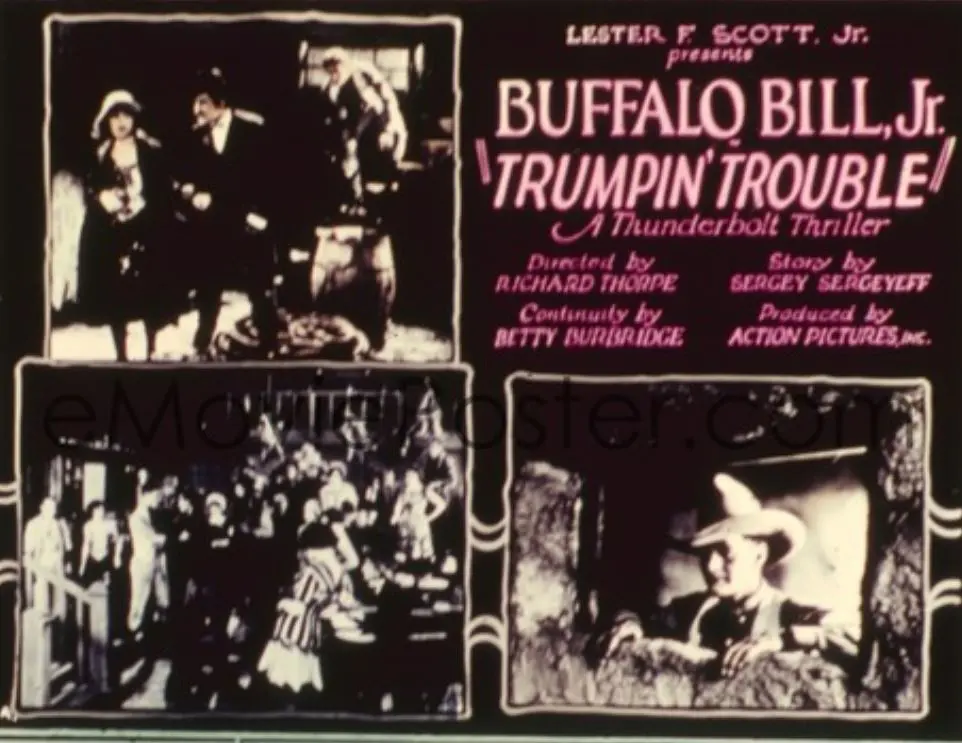
The cinematography, even if rudimentary by today's standards, would have aimed to capture the vastness of the Western landscape. The gold mining claim itself might have been depicted with a sense of both promise and desolation. The action sequences, particularly Buffalo Bill, Jr.'s intervention, would have been straightforward but impactful: horses galloping, quick cuts between hero and villains, and the satisfying visual of the bad guys being driven off. It’s less about artistic flourish and more about narrative clarity and visceral impact.
The pacing of Trumpin' Trouble would undoubtedly feel brisk by contemporary standards, yet deliberate in its unfolding of key events. Early Westerns often moved quickly from setup to conflict, driven by plot rather than character development. The film likely establishes Lawson's claim, introduces Dorgan's threat almost immediately, and then plunges into the siege, culminating in Buffalo Bill, Jr.'s swift arrival and resolution.
This kind of pacing keeps the narrative taut, focusing on the immediate danger and the subsequent rescue. There's little room for extraneous subplots or contemplative moments, which can be both a strength and a weakness. For those who appreciate direct storytelling, it's efficient. For others, it might feel underdeveloped.
The tone is classic Western: an underlying sense of danger, juxtaposed with the inherent optimism that justice will prevail. It's a moralistic tone, where good is clearly defined and ultimately triumphant. There’s a certain rugged poetry to it, a belief in the individual’s right to prosperity and the need for heroes to uphold that right.
Thematic resonance is strong, despite the simple plot. The film speaks to the foundational American myth of the self-reliant individual, the struggle against anarchy, and the romanticized figure of the cowboy hero. It's a snapshot of a time when these themes were not just entertainment but reflections of a national identity still being forged.
One might argue that the film's reliance on a singular, almost miraculous intervention by Buffalo Bill, Jr. undercuts the agency of John Lawson, making him a passive recipient of justice rather than an active participant. This, however, is a common trope of the era, emphasizing the need for the larger-than-life hero to tame the wild. It’s a debatable point, but one that highlights the film's adherence to genre conventions.
Absolutely, for the right audience. If you approach Trumpin' Trouble as a historical document, a foundational piece of the Western genre, or a glimpse into the careers of its actors, it offers considerable value. It’s a raw, unvarnished look at how stories were told on screen nearly a century ago.
It’s a film that doesn't attempt to reinvent the wheel; it simply turns it with earnest conviction. For those interested in the evolution of cinema, observing how basic narrative structures and character archetypes were established is a rewarding experience. It provides context for later, more complex Westerns, from The Light That Failed to even modern interpretations of the genre. Understanding its simplicity helps appreciate the innovations that followed.
However, if your cinematic palate leans towards intricate plots, deep psychological studies, or cutting-edge special effects, this film will likely feel dated and perhaps even tedious. Its charm lies in its earnestness and its historical significance, not in its ability to compete with contemporary blockbusters.
It works. But it’s flawed. Like many films of its vintage, it’s a product of its time, reflecting both the limitations and the innovative spirit of early filmmaking.
Trumpin' Trouble is more than just a dusty old Western; it's a foundational text for understanding the genre's enduring power. While it won't satisfy those seeking modern cinematic thrills or narrative complexity, it offers a compelling glimpse into the roots of American storytelling on screen. Its value lies not in its ability to shock or surprise, but in its earnest portrayal of good versus evil and the timeless appeal of a hero riding in to save the day.
For the discerning cinephile or the dedicated Western enthusiast, this film serves as an important, if unpolished, piece of cinematic history. It's a testament to the power of simple, direct narrative, and the enduring allure of the American frontier myth. Give it a watch, but adjust your expectations to its historical context; you might just find a quiet appreciation for its rustic charm.
IMDb —
1931
Community
Log in to comment.