DbcultAccessing Vault...
Cult Review
Senior Film Conservator
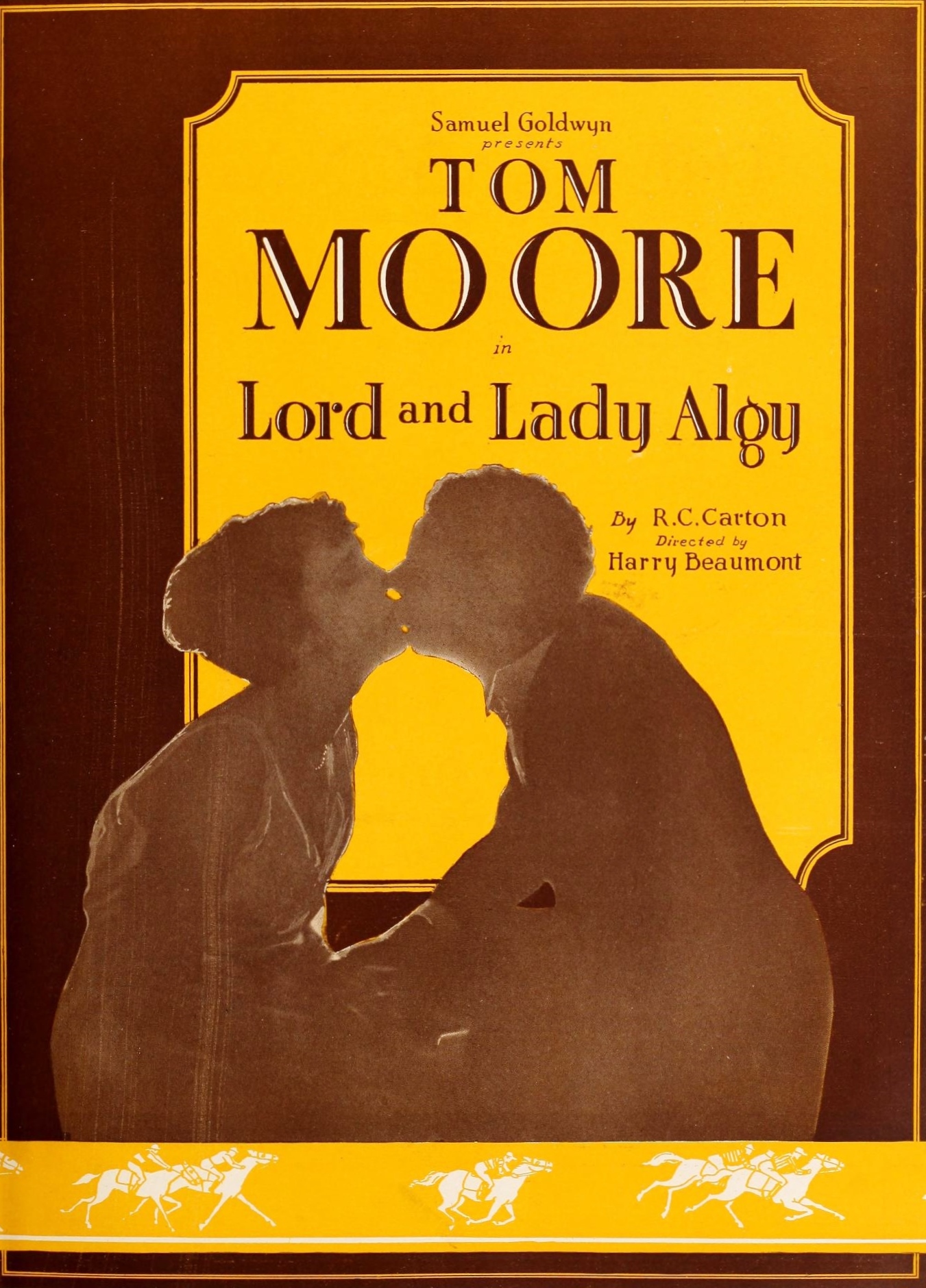
In the annals of early cinema, certain films, even those from the nascent days of the moving picture, possess a peculiar resonance, a way of capturing the zeitgeist of their era while simultaneously touching upon universal human experiences. Such is the case with Lord and Lady Algy, a 1919 dramatic offering that, despite its age, still manages to unfurl a compelling narrative of love, loyalty, and the perennial struggle against personal demons. This isn't merely a historical curiosity; it's a window into the societal anxieties and moral compass of a bygone era, presented through a lens that was, at the time, still discovering its own narrative vocabulary.
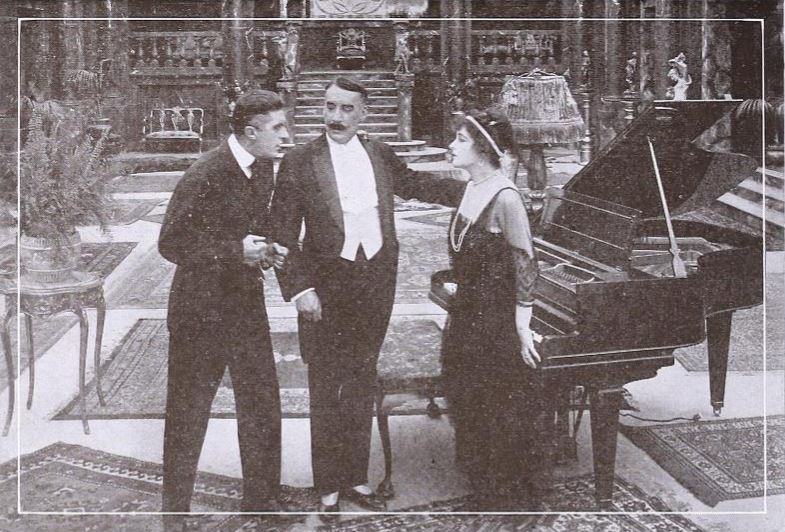
The film opens on a note of domestic discord, yet one handled with a peculiar Edwardian civility. Lord Algy, portrayed with a certain rakish charm by Herbert Standing, finds himself estranged from his devoted wife, Lady Algy, played with understated grace by Naomi Childers. Their separation, we learn, stems from Algy's incorrigible passion for horse racing and the gambling associated with it – a vice he had repeatedly promised to forsake. This isn't a separation born of fiery arguments or dramatic betrayals, but rather a quiet, weary resignation on Lady Algy's part, a testament to her husband's repeated failures to keep his word. It's a nuanced beginning, suggesting a deep love overshadowed by a destructive habit, rather than a lack of affection. The portrayal of a marriage under such a strain, where the emotional chasm widens not from malice but from weakness, offers a more complex psychological landscape than many melodramas of the period.
The screenplay, adapted by Edfrid A. Bingham and R.C. Carton, cleverly sets the stage for a series of escalating complications, each designed to test the limits of loyalty and the resilience of a woman's faith. The initial separation, cordial as it may be, acts as a fragile truce, one that is perpetually threatened by Algy's inherent impulsiveness and the manipulative forces around him. It makes one ponder the societal pressures and expectations placed upon women of that era, who often found themselves navigating their husbands' foibles with a delicate balance of public decorum and private anguish. In this regard, it shares thematic echoes with films like The Other Woman, where marital stability is constantly jeopardized by external temptations and internal weaknesses, though 'Algy' focuses more on financial ruin than outright infidelity as the primary antagonist.
The plot thickens with the introduction of Algy's elder brother, a character embodying the classic 'philanderer' archetype. When this brother finds himself entangled with Mrs. Tudway, the wife of the formidable soap magnate Brabazon Tudway (portrayed with a suitable air of indignation by George Willis), Lord Algy, in a moment of misguided fraternal loyalty, steps in. His attempt to shield his brother from Tudway's wrath leads him to hide Mrs. Tudway in his own apartments. This sequence is a masterclass in early cinematic tension, relying on subtle gestures and the looming threat of social scandal rather than overt action. The stakes are not just personal, but deeply rooted in the rigid social hierarchies of the time; a scandal involving a prominent industrialist's wife and an aristocrat would have been devastating for all involved. Philo McCullough as Algy's brother and Kate Lester as Mrs. Tudway navigate these treacherous social waters with performances that, while perhaps broad by today's standards, effectively convey the illicit thrill and danger of their liaison.
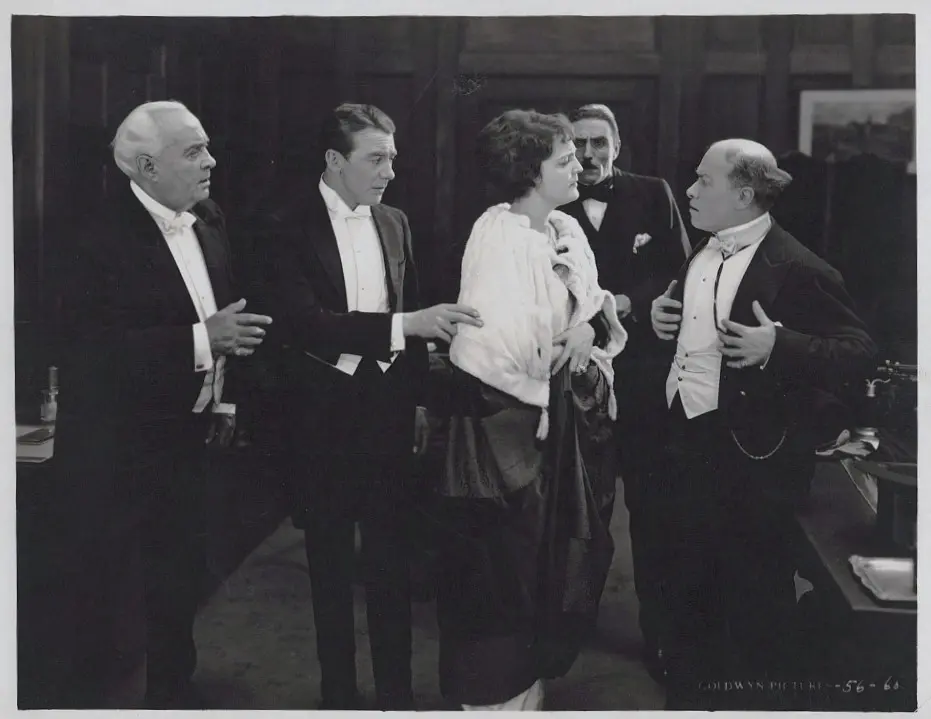
The climax of this particular subplot is exquisitely crafted. Tudway, hot on the trail of his errant wife, discovers her in Algy's residence, poised to unleash a torrent of accusations that would undoubtedly ruin Algy's already fragile reputation. It is at this precise moment that Lady Algy, appearing as if by divine intervention, steps into the breach. Her unwavering belief in her husband's innocence — a belief that, ironically, is entirely misplaced in this specific instance — compels her to concoct an ingenious lie. She informs Tudway that his wife was there to meet *her*, effectively deflecting the scandal and saving Algy from an almost certain social catastrophe. This act of self-sacrificing loyalty and quick thinking is pivotal, highlighting Lady Algy's strength of character and the depth of her devotion. It also underscores a recurring theme in the film: the often-unseen moral fortitude of women in a patriarchal society, much like the resilient female protagonists often depicted in films such as The Eternal Grind, where women navigate challenging circumstances with quiet strength.
The narrative then hurtles towards its climactic event: the Grand Derby. This isn't just a horse race; it's a symbolic crucible where Algy's fate, and indeed his entire fortune, will be decided. The stakes are astronomically high, with Algy having staked everything on his pet racehorse. However, true to his flawed nature, Algy, along with his jockey, succumbs to temptation on the eve of the race, getting disgracefully drunk at a masked ball. This public display of recklessness further tarnishes Lady Algy's reputation, casting a pall over her earlier heroic intervention. It's a moment of profound disappointment, a stark reminder of Algy's inability to control his impulses, even when faced with utter ruin. The masked ball scene, with its inherent anonymity and potential for debauchery, serves as a potent backdrop for this lapse in judgment, a space where societal constraints are momentarily loosened, often with dire consequences. One might draw a parallel to the hidden dangers and moral ambiguities explored in something like Manden med de ni Fingre V, where characters navigate morally grey areas that ultimately lead to their undoing.
Yet, it is in this darkest hour that Lady Algy's quiet strength truly shines. While her husband wallows in his self-inflicted predicament, she acts decisively and intelligently. With her own money, she makes a shrewd, audacious bet on a 'dark horse'—an outsider with long odds, but one she presumably has reason to believe in. This act is not merely about financial recovery; it's a testament to her agency, her resourcefulness, and her unwavering commitment to her husband's well-being, even when he seems intent on sabotaging himself. The tension of the race itself, conveyed through the early cinematic techniques of the era, would have been palpable for contemporary audiences. The triumph of the dark horse is a moment of catharsis, a dramatic reversal of fortune engineered not by luck, but by Lady Algy's foresight and courage.
The success of Lord and Lady Algy hinges significantly on its cast. Herbert Standing as Lord Algy embodies the charming but flawed aristocrat with a nuanced performance that allows the audience to both sympathize with his struggles and deplore his weaknesses. His eventual penitence feels earned because Standing manages to convey the inner turmoil leading up to it. Naomi Childers, as Lady Algy, is the emotional anchor of the film. Her portrayal of quiet dignity, unwavering loyalty, and intelligent resourcefulness elevates the character beyond a mere damsel in distress. She is the moral compass, the quiet hero whose actions ultimately save not just their fortune, but their very marriage. Supporting cast members like George Willis (Brabazon Tudway) and Kate Lester (Mrs. Tudway) provide solid performances that flesh out the social milieu, making the high-stakes drama feel grounded in a believable, if heightened, reality.
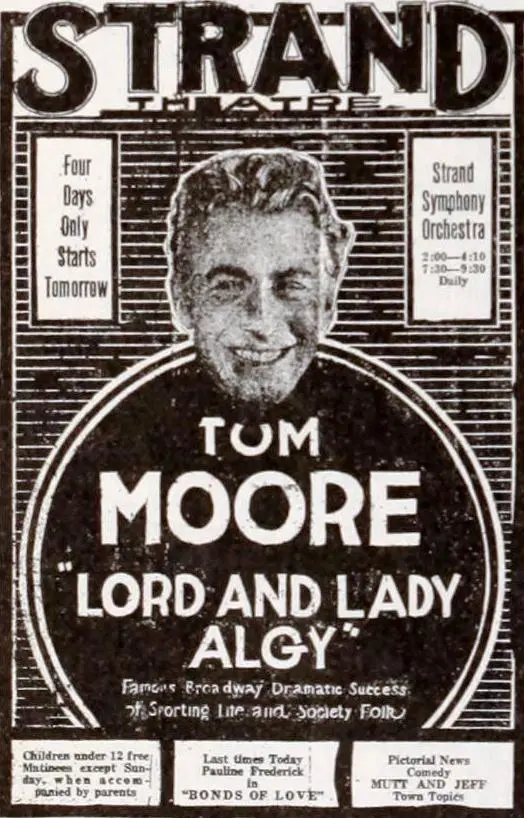
While the director is not explicitly credited in the provided details, the overall pacing and visual storytelling reflect a growing sophistication in filmmaking techniques of the late 1910s. The use of intertitles would have been crucial for conveying the intricate plot points and character motivations, and one can infer a thoughtful approach to editing and scene composition to build suspense and emotional impact. The adaptation of R.C. Carton's play by Edfrid A. Bingham likely retained much of the original's wit and social commentary, translating it effectively for the silent screen medium. The film manages to balance moments of lighthearted social satire with genuine dramatic tension, a hallmark of well-crafted narratives from this period. Considering the constraints of early cinema, the ability to convey such complex character arcs and a multi-layered plot without spoken dialogue is commendable, relying heavily on visual cues, exaggerated expressions, and the interpretive power of the audience.
The central theme of Lord and Lady Algy is undoubtedly redemption and the enduring power of love. Algy's journey from a reckless gambler to a penitent husband is a classic narrative arc, but it is Lady Algy's unwavering faith and proactive intervention that truly defines the film's emotional core. Her character challenges the passive female archetypes sometimes seen in early cinema, presenting instead a woman of agency and profound inner strength. This film, in its own quiet way, hints at the burgeoning feminist sentiments that would slowly begin to permeate popular culture, much like the more overt explorations of female independence in films such as Love Watches or Young Romance.
Beyond the personal drama, the film offers a subtle critique of aristocratic privilege and the destructive nature of unchecked vice. Lord Algy's gambling addiction isn't just a personal failing; it's a symptom of a class that, perhaps, had too much leisure and too little accountability. The contrast between the old money aristocracy and the new money industrialist (Tudway) also provides a fascinating backdrop, hinting at the shifting social landscape of the early 20th century. The film's resolution, with Algy's sincere vow to give up gambling forever, is not just a convenient plot device; it represents a profound character transformation, earned through hardship and the unwavering support of his wife. It speaks to the enduring belief in the transformative power of love and commitment, a timeless message that resonates across generations.
While it may not possess the grand scale or groundbreaking visual effects of later cinematic masterpieces, Lord and Lady Algy stands as a charming and insightful piece of early filmmaking. It reminds us that even in the silent era, filmmakers were adept at crafting intricate plots, developing compelling characters, and exploring profound human emotions. It's a testament to the power of narrative, regardless of the technological limitations of its time. For those interested in the evolution of cinematic storytelling, or simply in a well-told tale of marital strife and ultimate reconciliation, this film offers a delightful and thought-provoking experience. It's a quiet gem, often overlooked, but one that continues to sparkle with the enduring light of human drama and the steadfast spirit of a devoted wife.
The film's exploration of reputation, social standing, and personal integrity also draws parallels with other dramas of the era. One could compare the societal pressures faced by its characters to those in The Hound of the Baskervilles, where family honor and public perception play a crucial role, albeit in a different genre. The moral quandaries and the struggle for redemption are themes that transcend time, making Lord and Lady Algy more than just a period piece; it's a commentary on the human condition itself. The film ultimately champions the idea that genuine love and commitment can overcome even the most deeply ingrained personal flaws, offering a hopeful, albeit hard-won, resolution. It's a narrative that reminds us that beneath the veneer of societal expectations, the fundamental struggles of the human heart remain constant, making this early cinematic endeavor surprisingly resonant even today.
In conclusion, this film, with its detailed character studies and intricate plot, serves as a valuable artifact for understanding the entertainment and moral narratives that captivated audiences over a century ago. It’s a compelling reminder that the foundational elements of compelling storytelling—conflict, character, and resolution—were already well-understood and masterfully employed even in the earliest days of film. The performances, particularly that of Naomi Childers, imbue the story with an emotional depth that transcends the silent medium, making Lady Algy a memorable figure of quiet strength and strategic intellect. Her pivotal role in saving her husband's fortune and, more importantly, their marriage, solidifies her as the true hero of this Edwardian romance. The final scene of reconciliation is not just a happy ending, but a declaration of renewed commitment, forged in the fires of adversity and redeemed by unwavering love.
IMDb 5.4
1916
Community
Log in to comment.