DbcultAccessing Vault...
Cult Review
Senior Film Conservator
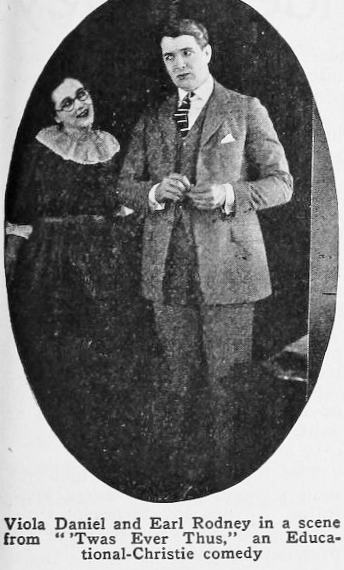
Stepping back into the hallowed halls of silent cinema often feels like unearthing a forgotten treasure, a glimpse into the nascent artistry of filmmaking that shaped the very language of the screen. In this grand archaeological dig, one occasionally stumbles upon a gem that, despite its age, sparkles with undiminished vivacity. Such is the case with 'Twas Ever Thus (1922), a romantic comedy that, even a century later, manages to charm, amuse, and perhaps even surprise with its audacious premise and spirited execution. It’s a testament to the timeless appeal of well-crafted storytelling, even when conveyed through the eloquent silence of the silver screen.
At its core, 'Twas Ever Thus, penned by the inventive minds of Frank Roland Conklin and Robert Hall, is a delightful romp predicated on misunderstanding and the often-comical lengths to which individuals will go to either avoid or attain love. The narrative unfurls with a classic cinematic trope: a will, the dead hand of a patriarch reaching from beyond the grave, dictating the matrimonial fate of a young woman. Our protagonist, an unnamed heiress (portrayed with vivacious versatility by Viora Daniel), finds herself bound by this posthumous decree, compelled to marry a distant cousin she has never met. This preposterous arrangement, a relic of antiquated societal norms, immediately sets the stage for rebellion, a simmering defiance that promises delightful chaos.
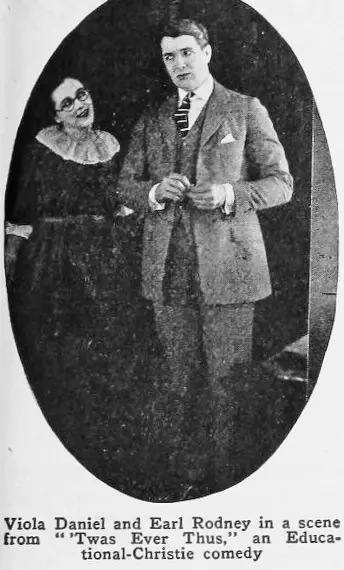
Rather than passively submit to her fate, Daniel’s character, with a mischievous glint in her eye, devises a scheme both ingenious and utterly absurd. She decides to sabotage the impending union by rendering herself utterly unappealing. Her transformation into a dowdy, bespectacled old maid is a masterclass in calculated repulsion. It's a performance within a performance, a deliberate act of self-effacement designed to repel any suitor, no matter how desperate. This initial setup immediately brings to mind films that toy with identity and perception, like the more overtly provocative Ima Vamp, though 'Twas Ever Thus leans into the comedic rather than the dramatic implications of such a disguise.
The irony, of course, is that the very man she intends to drive away, her distant cousin (the dashing Earle Rodney), turns out to be an eminently likable chap. His charm, his genuine good nature, and his sheer magnetic presence utterly dismantle her carefully constructed facade of indifference. This sudden shift in her perception is where the film truly begins to soar. The initial repulsion gives way to an undeniable attraction, transforming the narrative from one of avoidance to one of ardent pursuit. It’s a classic romantic comedy pivot, executed with an endearing earnestness that defines the era.
Rodney's character, naturally, is utterly disgusted by the 'old maid' he encounters. Who wouldn't be? The sheer theatricality of Daniel's disguise is designed for maximum revulsion, and it succeeds admirably. He leaves, convinced he's dodged a matrimonial bullet, unaware that the drab spinster is merely a temporary costume worn by a vibrant, determined woman. This sets the stage for the film's second, even more elaborate, act of deception and pursuit.
Realizing her colossal error, Daniel's character sheds her frumpy disguise and, now in her true, alluring form, embarks on a relentless chase. Her pursuit takes her to Rodney's ranch, a rugged frontier setting that immediately brings to mind other silent Westerns like The Devil's Trail or Lochinvar o' the Line, though 'Twas Ever Thus infuses the landscape with a distinctly comedic energy rather than dramatic tension. Here, the misunderstandings multiply with delightful rapidity.
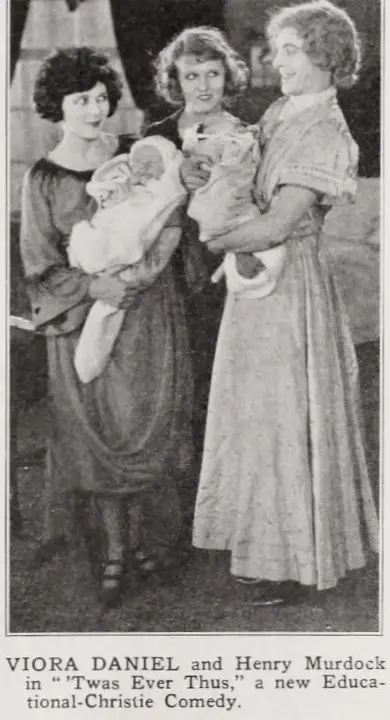
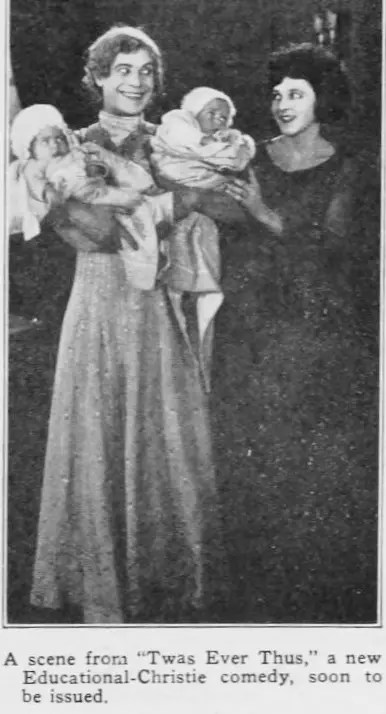
Rodney, haunted by the specter of the 'bespectacled vamp' (as he perceives her), and fearing her persistent pursuit, takes an extraordinary measure for protection: he acquires a 'wife.' And not just any wife, but a burly cowboy from his ranch, played by Henry Murdock, who gamely steps into this most peculiar role. This is where 'Twas Ever Thus truly distinguishes itself, elevating its comedic premise to a level of inspired absurdity. The notion of a man acquiring a male 'wife' for protection against a perceived female threat is a stroke of genius, playing on gender roles and societal expectations with a knowing wink. It’s a bold narrative choice for 1922, hinting at a playful subversion of traditional gender dynamics, even if only for comedic effect.
The dynamic between Rodney, the disguised Daniel, and the 'cowboy wife' creates a fertile ground for escalating comedic scenarios. Rodney, unaware that the captivating woman now pursuing him is the very same person he fled, finds himself falling deeply in love with her. The irony is palpable, and the audience is privy to the delicious dramatic tension of this impending revelation. The cowboys on the ranch, privy to the joke of their comrade playing a 'wife,' milk the situation for all its worth, their good-natured teasing adding another layer of mirth to the proceedings. The film, in this sense, becomes a complex dance of hidden identities, unspoken desires, and the sheer joy of misunderstanding, a theme explored in other comedies of the era, though rarely with such a uniquely Western twist.
Viora Daniel's performance is the undeniable anchor of 'Twas Ever Thus. She navigates the dual roles of the prim, unappealing spinster and the spirited, determined lover with remarkable dexterity. Her physicality, her facial expressions—the very essence of silent film acting—are finely tuned, allowing the audience to understand her character's internal journey without a single spoken word. She embodies the wilfulness of a woman determined to carve her own path, even if it means resorting to elaborate trickery. Her transformation from the initial disguise to her true self is not just a costume change; it's a profound shift in her character's agency and emotional landscape.
Earle Rodney, as her unwitting romantic foil, delivers a performance that perfectly complements Daniel's. He is charming, bewildered, and ultimately earnest in his affections. His reactions to the 'old maid' are genuinely comedic, and his growing love for the 'new' woman is portrayed with a sincerity that grounds the more farcical elements of the plot. Henry Murdock, as the 'cowboy wife,' deserves special mention for his commitment to the bit. His portrayal is a delicate balance of rugged masculinity and comedic submission, making the ongoing joke truly land with the audience.
The film, despite its lighthearted nature, delves into several compelling themes. The most obvious is the enduring power of deception, a narrative device seen in countless stories, from Shakespeare to contemporary cinema. Here, the deception is born of defiance, then perpetuated by misunderstanding, leading to a comedic exploration of how appearances can mislead and how true affection can blossom even amidst elaborate lies. It reminds one of the intricate deceptions found in films like The Four-Flusher, where characters navigate complex webs of pretense, albeit with a more romantic rather than criminal bent.
Furthermore, 'Twas Ever Thus playfully examines the concepts of perception versus reality. Rodney only sees the 'bespectacled vamp' and then, later, a beautiful stranger. The audience, however, is privileged to the full truth, creating a delightful sense of dramatic irony. It's a testament to the script's cleverness that it maintains this tension without frustrating the viewer. The film also subtly touches upon societal expectations, particularly for women, in the early 20th century. The arranged marriage is a clear indicator of a time when women's agency was often curtailed, making Daniel's character's rebellious spirit all the more resonant.
As a product of 1922, 'Twas Ever Thus showcases the distinct visual language of the silent era. The storytelling relies heavily on expressive acting, clear intertitles, and carefully composed shots. The pacing, while perhaps slower than modern audiences are accustomed to, allows for the full development of comedic moments and the nuanced portrayal of emotions. The use of location, particularly the rugged ranch setting, adds an authentic backdrop to the unfolding farce, contrasting the wild, untamed landscape with the very human, very civilized complications of love and marriage.
The writers, Conklin and Hall, demonstrate a keen understanding of comedic structure. They build the initial premise, introduce the inciting incident (the charming cousin), complicate matters with the chase and the 'cowboy wife,' and then meticulously set up the eventual, inevitable revelation. The humor is derived not just from slapstick, though there are elements of it, but from character-driven situations and the escalating absurdity of the plot. This narrative precision is a hallmark of good screenwriting, regardless of the era. The way the plot is constructed, with its layers of mistaken identity, could even draw parallels to the charming, if simpler, romantic entanglements found in films like June Madness, which also relied on the audience's investment in its characters' romantic predicaments.
The film’s climax is a masterstroke of comedic resolution. The ongoing joke about the 'cowboy wife' reaches its zenith, culminating in a fight that finally reveals the 'wife' as undeniably masculine. This moment of truth shatters the illusion, exposing the full extent of Rodney's misunderstanding and, by extension, the true identity of the woman he has come to love. It's a moment of physical comedy that also serves as the ultimate narrative turning point, clearing the path for the real romance to finally flourish without the encumbrance of deception or absurd chaperones.
This revelation isn't just a punchline; it's the catalyst for genuine connection. With all facades stripped away, the characters can finally see each other for who they truly are. The film argues, quite charmingly, that while initial appearances and elaborate schemes might set the stage, true affection ultimately triumphs over all manner of pretense. It’s a satisfying conclusion that delivers both laughter and a heartwarming sense of romantic fulfillment.
'Twas Ever Thus is more than just a historical curiosity; it’s a vibrant piece of early cinematic art that demonstrates the burgeoning sophistication of storytelling in the silent era. Its ability to elicit genuine laughter and tender emotion without a single spoken word is a testament to the power of visual narrative and the expressive capabilities of its cast. It stands as a charming example of how early filmmakers tackled universal themes of love, identity, and societal pressure with creativity and wit.
For those interested in the evolution of romantic comedy, or simply seeking a delightful escape into a bygone era, 'Twas Ever Thus offers a rewarding experience. It reminds us that while the technology of filmmaking has advanced exponentially, the fundamental ingredients of a compelling story—engaging characters, a clever plot, and a touch of heartfelt emotion—remain timeless. It’s a film that, even after a hundred years, continues to prove that some things, indeed, were ever thus: the enduring appeal of a good laugh and the undeniable pull of love.
IMDb 5.9
1932
Community
Log in to comment.