DbcultAccessing Vault...
Cult Review
Senior Film Conservator
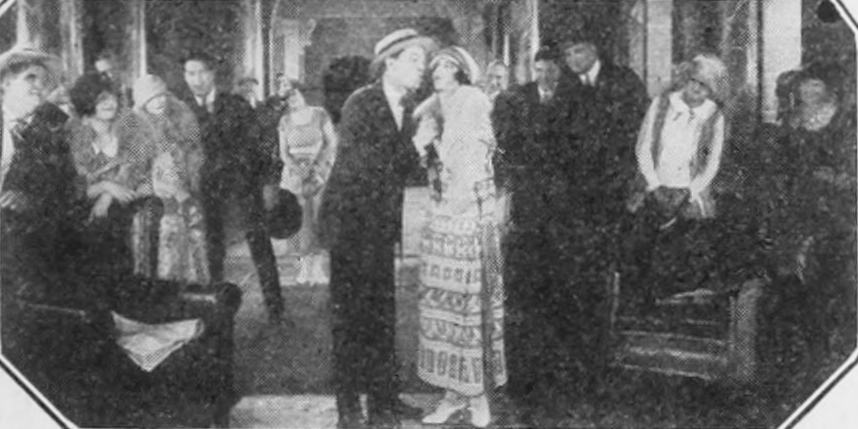
The year 1923 was a peculiar juncture for American cinema, a time when the visual language of comedy was migrating from the raw, unbridled energy of the nickelodeon to the more sophisticated, narrative-driven featurettes. Almost Married, directed by and starring the irrepressible Eddie Lyons, serves as a fascinating specimen of this evolution. It is a film that operates on the logic of a fever dream, trapped within the gilded cage of a fashionable hotel, where the promise of a wedding is constantly undercut by the specter of death and the intrusion of paternal rage.
"The hotel corridor in silent comedy is never just a hallway; it is a circulatory system for chaos, a place where privacy goes to die and farce is born in the slamming of doors."
Eddie Lyons, often overshadowed by the giants like Keaton or Lloyd, brings a specific brand of frantic charm to the screen. His physicality is less about the grand, gravity-defying stunt and more about the kinetic anxiety of the everyman. In Almost Married, he plays the prospective groom with a nervous energy that feels remarkably modern. Unlike the stoic heroes found in The Law of the Yukon, Lyons is a creature of the city, defined by his reactions to a world that refuses to let him settle down. His chemistry with Virginia Warwick is palpable, though Warwick is often relegated to the role of the 'prize' to be won, a common trope of the era that nonetheless allows her to showcase some sharp reactive timing.
The choice of a hotel as the primary setting is a masterstroke of low-budget efficiency. Much like the contained tension seen in The Suburban, the hotel environment in Almost Married acts as a pressure cooker. We have the 'Angry Daddy' (James Donnelly), a character archetype that functions as the personification of social resistance. His rage isn't just a plot device; it’s a rhythmic element that dictates the film's pacing. Every time the couple finds a moment of respite, the father’s intrusion resets the clock, forcing the characters into new, more desperate configurations.
Then there is the porter, played with a delightful sneer by Glen Cavender. The porter represents the internal friction of the hotel—the working class looking upon the romantic aspirations of the guests with a mixture of envy and malice. His jealousy isn't necessarily romantic; it’s systemic. He is the gatekeeper who refuses to open the gates, a trope that was explored with more dramatic weight in The Rogues of London, but here it is played for laughs that have a surprisingly sharp edge.
The most daring narrative choice in Almost Married is the introduction of the undertaker. In a film titled with such optimistic domesticity, the presence of a man whose trade is death creates a jarring, almost Lynchian dissonance. When the couple mistakes him for a minister, the film moves beyond simple slapstick into the realm of dark satire. We see the couple, desperate for the validation of the state and church, willing to accept a man of shadows as their guide to a new life.
This sequence highlights the absurdity of the 'instant marriage' plot, a recurring theme in 1920s cinema. While films like Wanted: A Baby dealt with the fallout of domestic haste, Almost Married looks at the ritual itself as a potential trap. The undertaker’s timid contribution to the complications serves as a reminder that in the world of Eddie Lyons, even the most solemn moments are subject to the indignity of a misunderstanding.
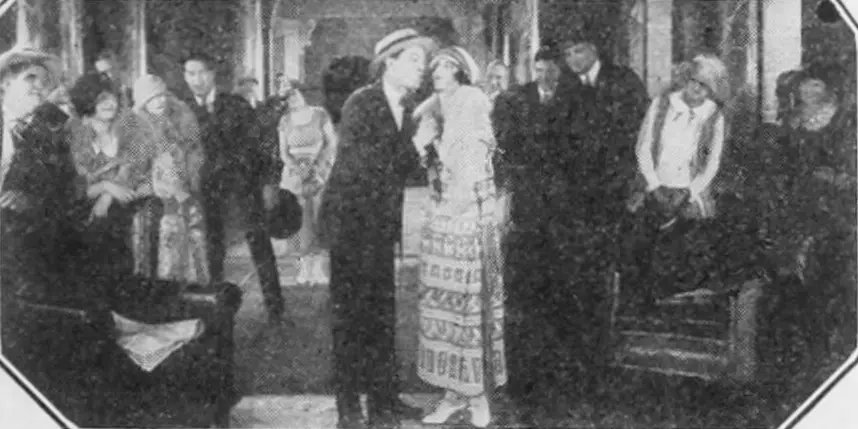
Visually, the film lacks the experimental flair of Mohini Bhasmasur or the sprawling landscapes of The Chechahcos, but it excels in its internal geometry. The way Lyons utilizes the frame—often filling it with multiple bodies moving in opposing directions—creates a sense of claustrophobia that mirrors the characters' mental states. The intertitles are punchy, avoiding the flowery prose of contemporary melodramas like The Strange Case of Mary Page, opting instead for a vernacular that feels grounded in the grit of the early 20s.
Dorothea Wolbert’s performance deserves a special mention. As a character actress, she brings a groundedness to the more histrionic moments of the leads. Her presence often acts as the 'straight man' to the escalating insanity around her. It’s a subtle performance in a film that is anything but subtle. One might compare her utility here to the supporting cast in The Restless Three, where the ensemble work is what truly tethers the narrative to reality.
When we look at Almost Married alongside something like Snappy Cheese, the difference in comedic weight becomes apparent. While both rely on situational irony, Almost Married attempts a more sustained exploration of social anxiety. It isn't just about the 'gag'; it’s about the cumulative exhaustion of the characters. By the time the third act arrives, the humor is derived not just from the mistakes, but from the sheer endurance of the protagonists.
The film also touches upon themes of class and presentation. The 'fashionable hotel' is a character in itself—a symbol of the status the couple aspires to, yet a place where they are treated as intruders. This tension between aspiration and reality is a hallmark of the era, seen in various forms from the mythological struggles in Bhakta Vidur to the identity-swapping in The Prince and the Pauper. In Almost Married, this is distilled into the simple, agonizing quest for a marriage license and a room of one’s own.
Technically, the film is a product of its time—fixed camera positions, natural lighting supplemented by early studio lamps, and a reliance on the 'iris-out' to punctuate jokes. Yet, there is a sophistication in the editing. The cross-cutting between the angry father searching the hotel and the couple hiding with the undertaker creates a genuine sense of suspense. It’s a rudimentary form of the 'thrill-comedy' that Harold Lloyd would perfect, but here it feels more intimate, more desperate.
The film’s legacy is perhaps found in its cynicism. By 1923, the world had seen enough upheaval that the old romantic tropes were starting to feel hollow. Almost Married reflects this by making the path to the altar a gauntlet of humiliations. It suggests that marriage isn't a fairy-tale ending but a hard-won victory against a world designed to keep you single and miserable. This is a far cry from the more sentimental approach of Conn, the Shaughraun, showing a shift toward a more cynical, urbanized humor.
While Almost Married may not be the definitive masterpiece of the silent era, it is a vital, energetic, and surprisingly dark comedy that captures the anxieties of a generation. Eddie Lyons proves himself a capable architect of chaos, and the film’s willingness to dance with the morbid makes it stand out in a crowded field of 1920s shorts. It is a reminder that even in the most 'fashionable' settings, life is often a series of slamming doors and mistaken identities.
For those interested in the evolution of hotel-based comedy, this film serves as a foundational text, predating the more famous 'grand hotel' narratives while maintaining a focus on the individual's struggle against the institution. It remains a frantic, funny, and slightly haunting piece of cinematic history.
IMDb 7.3
1934
Community
Log in to comment.