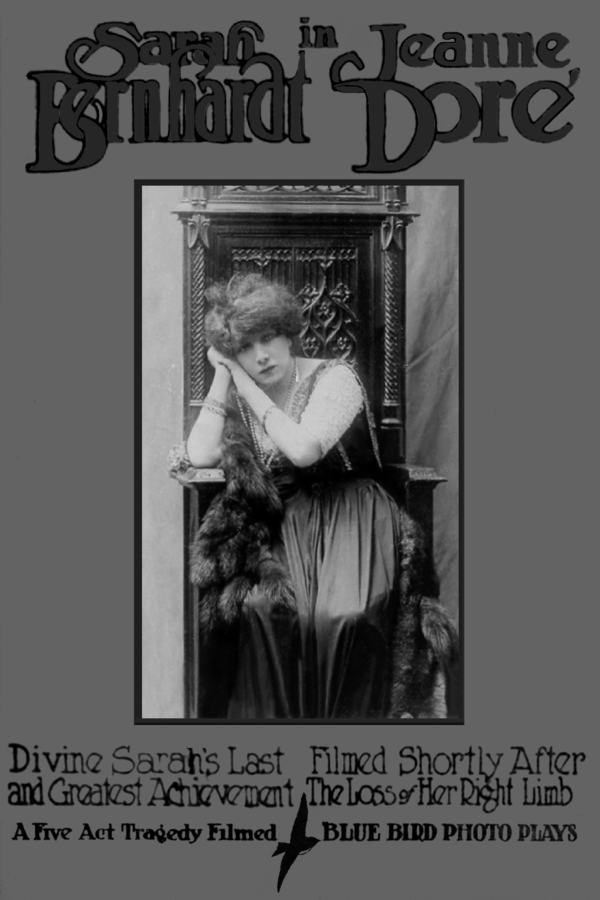
Paris, 1916. The city gaslights flicker like bad conscience while roulette wheels spin inside gilded tombs called clubs. Into this chiaroscuro steps Jeanne’s husband—nameless, faceless, a mere appendix of appetite—clutching promissory notes that smell of lilac and rot. One cut to a close-up of Sarah Bernhardt’s face—ivory, angular, already a death-mask—and you know the film will not forgive anyone.
The first act moves with the inevitability of melting ice: jewels cascade from velvet trays into the croupier’s rake, then into the abyss of Zero. Director Raymond Bernard orchestrates the descent through mirrored corridors; every reflection doubles the debt, every doorway yawns like a creditor. When the husband’s pistol shot rings out off-screen, Bernard denies us the spectacle of blood; instead he cuts to a single white glove floating down the Seine—a macabre ballet, later echoed by the guillotine’s red ribbon.
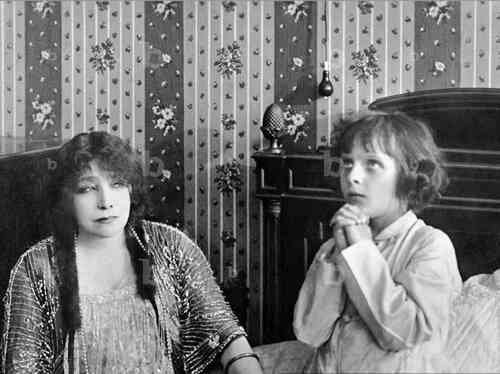
Bernhardt’s transition from pampered spouse to penitent shopkeeper is rendered without sentimental dissolve. One iris-in reveals her sleeves rolled above the elbow, ink smudged on knuckles that once wore diamonds. The stationery store becomes a sanctum of paper prayers: children buy nibs to spell chaste Valentines, bureaucrats order ledgers to tally other people’s sins. Jeanne’s stoic grace infects the celluloid; the camera, once restless, now lingers on her tapered fingers smoothing receipts—quiet sacraments replacing the clamor of baccarat.
Enter the adult son, Jean-Marie, played by a doe-eyed Jean Marais prototype whose cheekbones could slice envelopes. His illicit affair with the unnamed married woman—think Fantômas’ deadly coquette drained of pulp villainy—ignites the second spiral. Tristan Bernard’s intertitles drip acid: “Love, like ink, stains deeper when spilled in haste.” The lovers’ trysts are staged in a shuttered print room, among copper plates depicting ancient maps; every embrace smudges geography, turning continents into bruises.
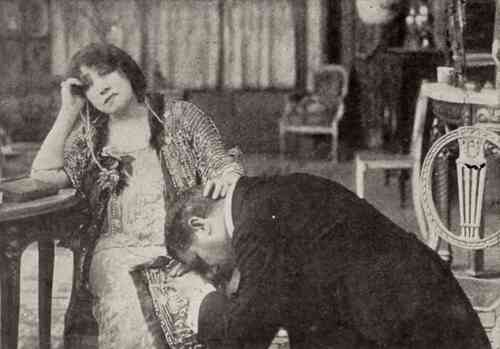
Cinematographer Gaston Brun applies Rembrandt chiaroscuro: faces half-submerged in darkness, bodies haloed by sodium streetlight sneaking through blinds. The murder of the benevolent uncle—shot in a single, unbroken take—unfolds in negative space: we see only the woman’s reflection in a brass inkwell widening as the blade enters, then the tremor of quills scattering like startled birds.
Mother and son’s flight through Montmartre’s fog recalls the desperate carriages in The Reign of Terror, yet Bernard swaps revolutionary mobs with a modern urban predatoriness—police whistles echo like mechanical vultures. When Jean-Marie is finally caged, the film strips away bravado; close-ups reveal pores, stubble, a trembling lip that once recited sonnets to his paramour. The jail cell’s iron grid throws zebra-stripes across his face—an oneiric prefiguration of the guillotine’s fall.
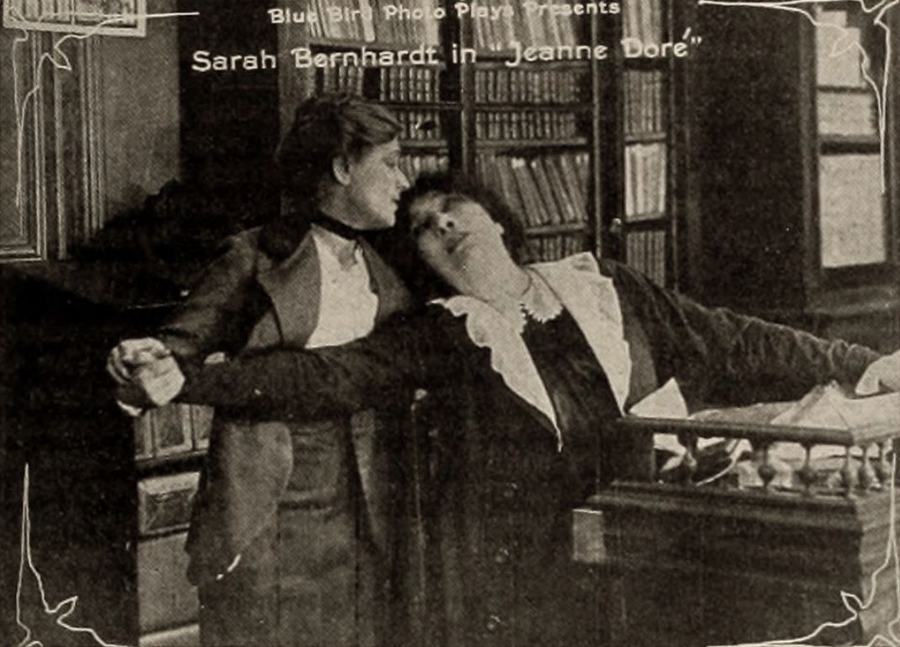
The penultimate deception—Jeanne impersonating the cruel mistress to offer her son a final, counterfeit tenderness—ranks among the most lacerating sequences in silent cinema. Shot day-for-night, the prison corridor swims in cobalt shadows; Bernhardt glides forward, veil trailing like smoke, her iconic stance (torso arched, wrist flexed) both homage and subversion of her stage histrionics. In extreme close-up, the son’s pupils dilate, recognizing something amiss yet clinging to illusion the way drowning fingers grip razors.
Contemporary critics dismissed the finale as Grand-Guignol excess. Yet compare it to the documentary sobriety of Rescue of the Stefansson Arctic Expedition: both films understand that survival often demands a performance, whether on polar ice or death row. Jeanne’s last act is not maternal sacrifice but self-annihilation; she erases herself so her son may die believing love external to him still exists.
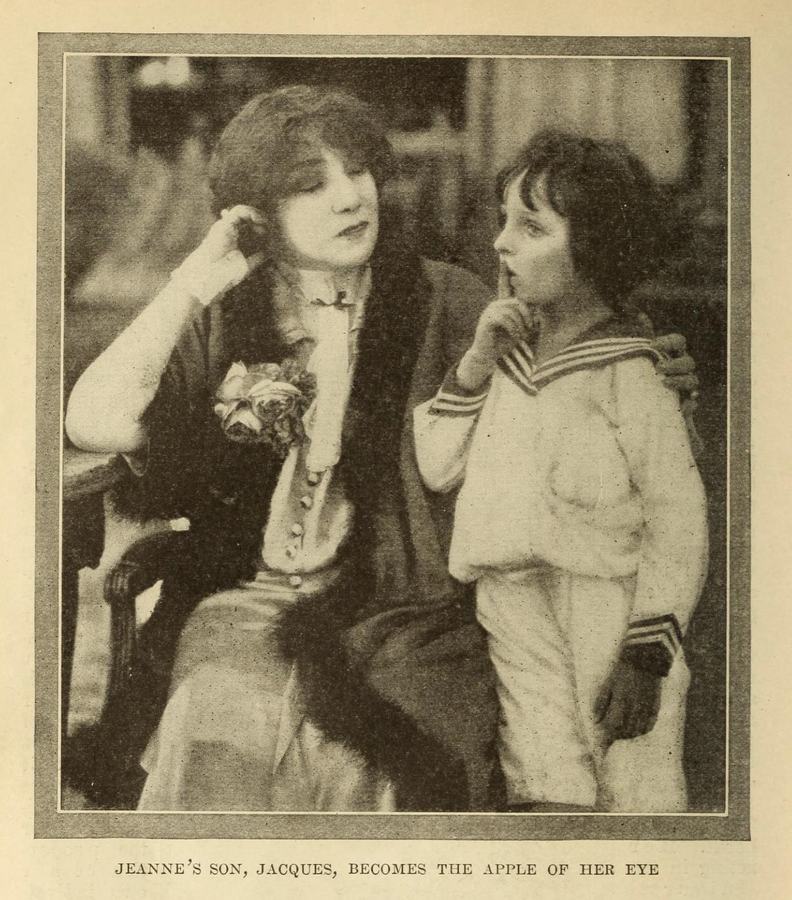
The execution morning is shot from Jeanne’s window vantage: a low, diagonal composition where the scaffold protrudes like a broken bone. Bernard withholds the blade’s impact; instead he cuts to the crowd’s faces—bakers, laundresses, newspaper boys—each a miniature portrait of vicarious hunger. Finally, the camera returns to Jeanne, eyes wide, mouth agape, yet the famous Bernhardt voice (even in silence) seems to scream through the intertitle: “My child, I have murdered you with tenderness.”
Technically, the print survives only in a 1922 Czech tinted nitrate, its amber nocturnes flaking like scabs. Restoration by Cinémathèque française added a sepia pulse to interiors and cyan chill to exteriors, approximating Bernard’s original color score described in Le Cinéma (1919). The accompaniment—originally a live orchestra performing Camille Saint-Saëns’ truncated motifs—has been reconstructed by Maud Nelisse for the 2023 Blu-ray, layering tremolo strings beneath guillotine scenes until the soundtrack itself seems to bleed.
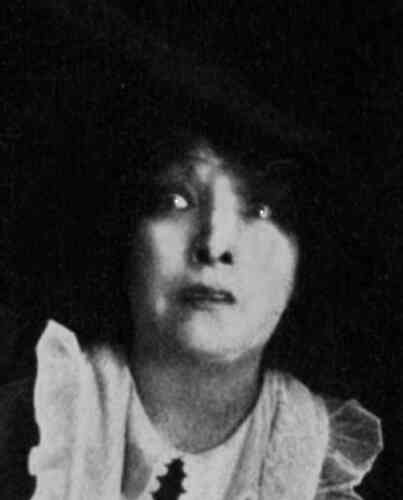
Performances oscillate between tableau vivant and raw nerve. Bernhardt, 72 during production, relies on ocular semaphore: a flutter of lashes conveys bankruptcy of spirit more than pages of dialogue could. Jean-Marie de l’Isle contrasts her minimalist grandeur with feral physicality—his shoulders twitch like a colt’s when the mistress’ note arrives. Madeleine Guitty as the perfumed adulteress smirks through half-moon eyes, channeling a sphinx who already knows the riddle’s answer.
Compared to the moral didacticism of The Better Man or expressionist nihilism of Der letzte Tag, Jeanne Doré forges a third path: Catholic fatalism lacquered with modern psychology, where grace is transactional and damnation negotiable.
Scholars often pigeonhole the film as a melodramatic footnote to Bernhardt’s theatrical immortality. Yet its DNA strands coil through later tragedies of maternal enablement—from Without Hope’s noir matriarch to Hitchcock’s Notorious matriarchal poison. The guillotine’s vertical slash even prefigures the shower curtain rupture in Psycho: both are moments when cinema severs not merely flesh but the umbilical cord of viewer comfort.
For the 21st-century viewer, Jeanne Doré operates as a cautionary palinode to hustle culture: gamble with capital, lose; gamble with affection, lose harder. Jeanne’s shop, a modest enterprise built on ink and rectitude, ultimately profits nothing against the roulette of desire. The film’s final irony—that the mother sustains her son’s illusion at the cost of truth—mirrors our own curated realities, where social media mothers daily sacrifice authenticity on the altar of algorithmic love.
In the closing iris-out, the camera retreats from Jeanne’s window until her figure dissolves into a tessellation of Parisian chimneys. Smoke curls upward, forming ghostly roulette wheels that spin, spin, spin—an eternal recurrence that whispers: tomorrow, someone else will pawn their jewels, someone else will cradle a severed head. The screen goes black, but the wheel never stops.