DbcultAccessing Vault...
5.7/10
Senior Film Conservator
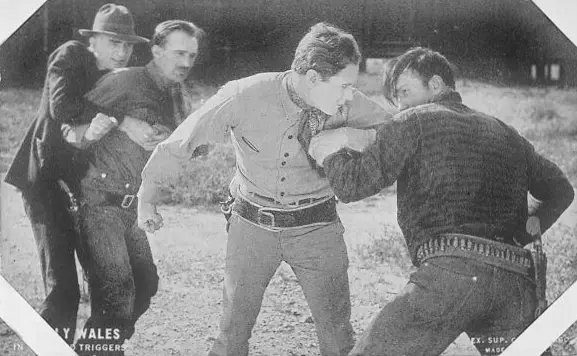
A definitive 5.7/10 rating for a film that redefined the boundaries of cult cinema. Twisted Triggers remains a cornerstone of transgressive art.
Is Twisted Triggers worth watching today? Short answer: yes, but with significant caveats that demand a specific kind of viewer. This 1926 silent Western offers a fascinating, if sometimes frustrating, glimpse into the genre's formative years and early star power, making it a compelling watch for film historians and silent cinema enthusiasts, but likely a challenging endeavor for casual viewers seeking modern narrative conventions.
It's a curious artifact, a film that attempts to weave a complex tapestry of revenge, loyalty, and redemption against the backdrop of the American frontier. While its ambitions are commendable, its execution often falters, leaving behind a viewing experience that oscillates between moments of genuine intrigue and stretches of head-scratching narrative gymnastics. This film is decidedly for those who appreciate the raw, evolving artistry of silent Westerns and possess a certain patience, but it is unequivocally NOT for viewers expecting the slick pacing and subtle characterizations of contemporary cinema.
This film works because of its ambitious, multi-layered plot that attempts to weave together themes of wrongful imprisonment, revenge, and an unexpected camaraderie, a complexity rarely seen with such earnestness in its era.
This film fails because its narrative ambition often outstrips its execution, leading to moments of genuine confusion and a reliance on melodramatic tropes that can feel dated to a contemporary audience.
You should watch it if you appreciate the raw, evolving artistry of silent Westerns, are keen to witness early performances from future stars, and possess the patience for a story told through intertitles and exaggerated gestures.
The narrative core of Twisted Triggers is undeniably ambitious. It begins with Jim Regan’s wrongful framing by Dan Norris, a classic setup for a tale of frontier justice. However, the plot quickly escalates beyond simple revenge, introducing layers of mistaken identity, unexpected alliances, and a spiraling series of events that ensnare almost every character in its web. This isn't just a story about good versus evil; it's an exploration of how one act of malice can ripple through a community, affecting families and forging unlikely bonds.
The initial framing of Regan and his subsequent, ill-fated attempt at violent reprisal sets a dark, almost Shakespearean tone. It immediately positions Norris as a truly despicable antagonist, a necessary contrast to the eventual heroics. The film’s insistence on piling narrative complications — from Regan's second jailing to Hiram's arrest — feels less like intricate storytelling and more like a desperate attempt to pad out run-time, a common pitfall in silent serials where plot often took precedence over character depth. Yet, this very over-complication offers a fascinating insight into the storytelling conventions of the time, where melodrama was king and every twist was amplified for maximum impact.
One of the most compelling aspects is the unexpected partnership between Wally and "Angel-Face." This alliance, born out of shared hunger and mutual respect, injects a much-needed layer of moral ambiguity and character development into the proceedings. Angel-Face, initially a member of Denver Dan's gang, undergoes a genuine transformation, moving from outlaw to an unlikely agent of justice. This arc, while perhaps a touch simplistic, is genuinely affecting and elevates the film beyond a standard Western revenge flick. It posits that even in the harsh, unforgiving landscape of the Old West, loyalty and inherent goodness can triumph over ingrained criminality.
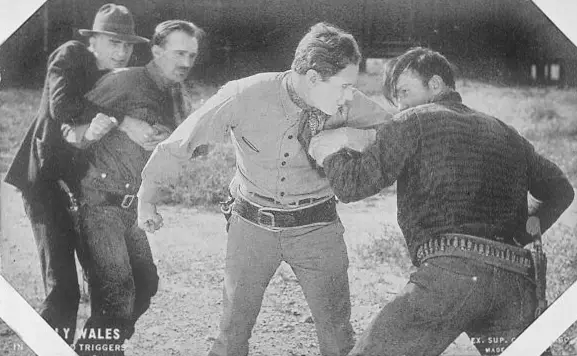
The climax, where Angel-Face overhears Norris's confession and sacrifices himself (temporarily) to expose the truth, is a powerful moment, albeit one steeped in the era's dramatic flair. It underscores the film’s central theme: that the truth, no matter how twisted the path to it, will ultimately prevail. The resolution, with Wally marrying Ruth, Regan’s daughter, ties a neat bow on the narrative, suggesting that from tragedy can emerge new beginnings. It’s a morally satisfying, if slightly saccharine, conclusion that reflects the prevalent cinematic desire for clear-cut justice and happy endings.
In the silent era, acting was a delicate balance of exaggerated gesture and nuanced facial expression, a theatricality that can feel alien to modern sensibilities. Yet, within these constraints, the cast of Twisted Triggers delivers performances that range from the competently stoic to the surprisingly expressive.
Hal Taliaferro, as Wally, embodies the quintessential Western hero: rugged, honorable, and unwavering in his pursuit of justice. His performance relies heavily on his physical presence and a steadfast gaze, conveying determination without uttering a single word. While perhaps lacking the emotional range of later Western stars, Taliaferro’s portrayal is effective for the period, establishing Wally as a reliable moral compass in a chaotic world. His actions, particularly his relentless pursuit of Norris, speak louder than any intertitle could.
Lawrence Underwood’s Dan Norris is a study in unadulterated villainy. He snarls, he schemes, and his every move is designed to elicit disdain from the audience. Underwood leans into the melodramatic requirements of the role, making Norris a clear and present danger throughout the film. It's a performance that doesn't aim for subtlety but rather for clear, unambiguous evil, serving its purpose perfectly within the film's moral framework. He is the archetypal mustache-twirling villain, and he plays it with gusto.
However, the true standout performance might not be from the leads, but from William Bertram as "Angel-Face." Bertram brings a surprising depth to his character, transforming from a hardened gang member to a loyal, self-sacrificing ally. His journey is the most dynamic and emotionally resonant in the film. The moments where he shares food with Wally, or later, risks his life to expose Norris, are conveyed with a sincerity that transcends the typical silent film theatrics. It’s a performance that hints at a more complex understanding of character than many of his contemporaries were offering.
And then there's Jean Arthur, in one of her earliest screen appearances as Ruth. Even in this relatively minor role, she manages to convey a quiet resilience through her expressions, hinting at the star she would become. One can see glimpses of the earnest charm and intelligence that would define her performances in later, iconic films. Her interactions with Wally, though brief, carry a certain understated grace that sets her apart from some of the more overtly dramatic turns around her. It’s a testament to her nascent talent that even in a supporting capacity, she leaves a distinct impression.
Thomas J. Gray, serving as both writer and director, crafts a visually straightforward but functionally effective Western. The cinematography, while not groundbreaking, capably captures the rugged beauty and expansive scale of the Western landscape. Wide shots of riders traversing open plains are plentiful, grounding the story in a tangible sense of place. These sequences, particularly the horse chases across the terrain, showcase a practical beauty that CGI can never quite replicate. The raw energy of Wally's pursuit of Norris, culminating in the final capture, feels genuinely earned, a testament to the stunt work and location shooting.
Gray utilizes close-ups effectively to emphasize emotional beats, particularly during moments of revelation or distress. When Angel-Face overhears Norris's confession, a tight shot on his face communicates his shock and burgeoning resolve far more powerfully than any intertitle could. This judicious use of close-ups helps to bridge the gap between the grand, sweeping vistas and the intimate, personal dramas unfolding within them.
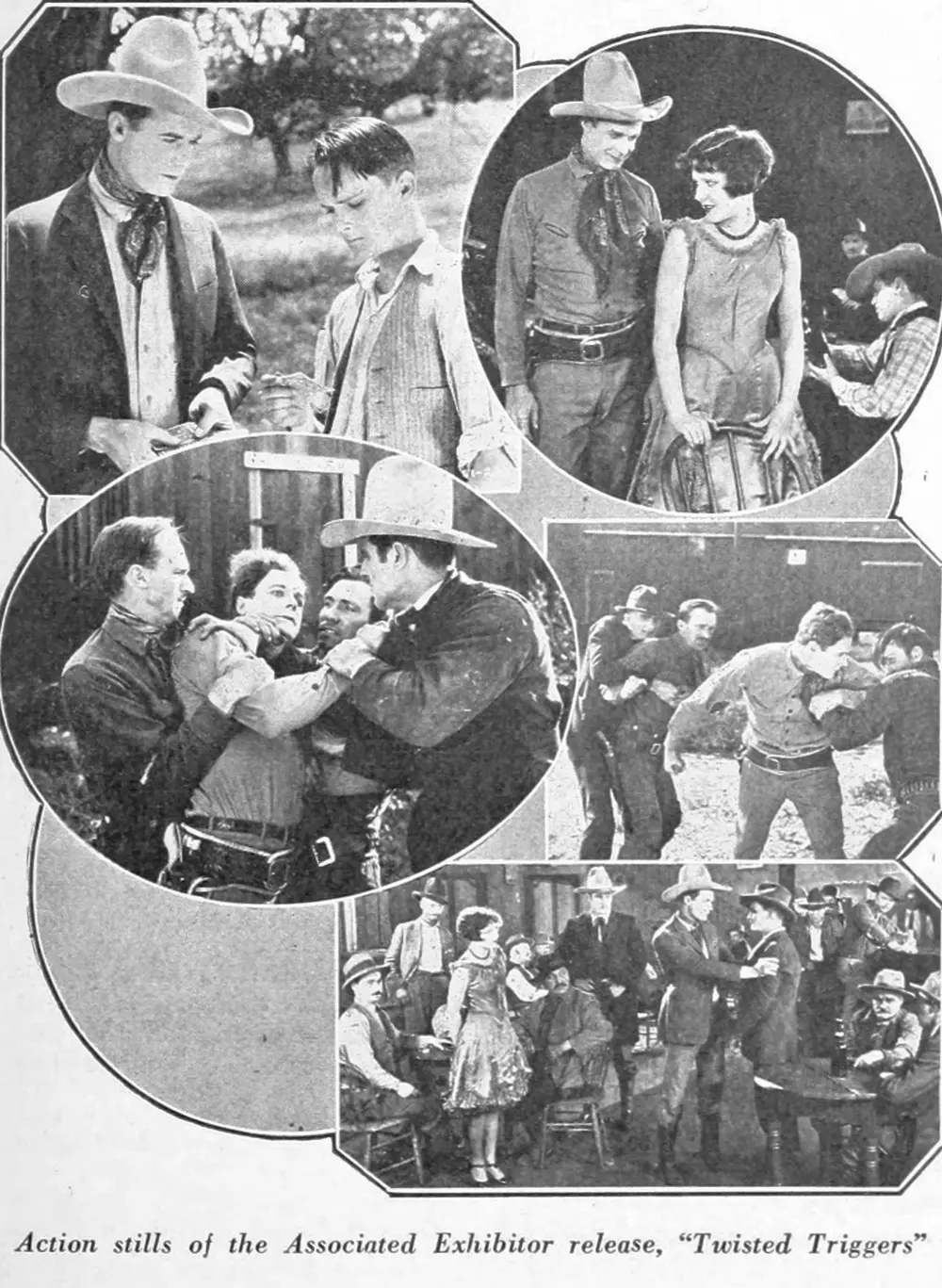
The film's editing, typical of the era, is functional rather than flashy. Sequences are generally cut to maintain narrative clarity, even if the pacing can sometimes feel a little clunky. There are no revolutionary montage sequences or complex visual metaphors; instead, the focus remains on clear storytelling. For instance, the transition between Wally seeking work and encountering Angel-Face is direct and unambiguous, prioritizing plot progression over stylistic flourish. This directness, while occasionally feeling rudimentary, ensures that the audience is never lost, despite the narrative's convolutions. It’s a simple approach, but one that largely succeeds in conveying the story.
Comparing it to other Westerns of the era, such as Breed of the Border or The Pony Express, Twisted Triggers holds its own in terms of capturing the authentic feel of the frontier. The practical effects and on-location shooting lend an undeniable authenticity that resonates even today. The lack of elaborate sets or special effects forces a reliance on the natural environment, which becomes a character in itself, emphasizing the harsh realities faced by its inhabitants.
The pacing of Twisted Triggers is perhaps its most challenging aspect for a modern audience. Silent films operated on a different rhythm, often characterized by deliberate exposition through intertitles interspersed with bursts of frantic action. This film is no exception. There are moments where the narrative feels sluggish, burdened by lengthy text cards explaining intricate plot points or character motivations. These stretches demand patience and a willingness to engage with storytelling that is inherently different from what we are accustomed to.
However, when the action ignites, it does so with surprising intensity. The various chase sequences and confrontations are executed with a raw energy that effectively breaks the narrative’s slower periods. The scene where Angel-Face informs Wally of Norris’s confession, immediately followed by Angel-Face being shot, is a jarring shift, a silent film equivalent of a jump cut that demands the audience piece together information quickly. This unevenness is not necessarily a flaw of this particular film, but rather a characteristic of much silent cinema, reflecting the evolving language of film at the time.
The tone is overwhelmingly melodramatic, a staple of the period. Every emotion is amplified, every villain is unequivocally evil, and every hero is morally pure. This can feel over-the-top to contemporary viewers, but it was the expected mode of storytelling. The moralistic undertones are strong, emphasizing loyalty, justice, and the eventual triumph of good. There’s a distinct lack of ambiguity in character motivations, which, while simplifying the narrative, also limits its psychological depth. The sheer earnestness of it all, however, can be charming in its own way, a window into a less cynical form of entertainment.
One unconventional observation is how the film, despite its title, manages to maintain a certain innocence amidst its violence and deceit. The "triggers" are indeed twisted, leading to multiple injustices, yet the overall feeling is one of unwavering faith in ultimate redemption. It’s a surprising contrast to the darker, more cynical Westerns that would emerge decades later. The film never wallows in despair; rather, it constantly pushes towards a brighter, more just resolution, reflecting a particular worldview prevalent in early Hollywood. This steadfast optimism, even in the face of considerable adversity, is a defining characteristic.
Yes, Twisted Triggers holds value for specific audiences today. It works. But it’s flawed. For silent film aficionados and students of cinematic history, it offers a compelling look at the Western genre in its infancy, showcasing early storytelling techniques and the nascent talents of actors like Jean Arthur. It’s a testament to the enduring appeal of classic Western tropes: the wronged hero, the dastardly villain, and the expansive frontier as a backdrop for epic tales.
However, for the casual viewer accustomed to modern narrative speeds and sophisticated character development, it will likely prove a challenging watch. The deliberate pacing, reliance on intertitles, and broad acting styles require a conscious adjustment of viewing expectations. It's a film that demands engagement on its own terms, not on the terms of contemporary cinema. Its historical significance outweighs its entertainment value for a broad audience.
Twisted Triggers is a fascinating, if imperfect, relic of the silent Western era. It’s a film that bravely attempts a complex narrative, showcasing the genre's formative years and offering early glimpses of future Hollywood talent. While its narrative ambition occasionally outstrips its execution, and its pacing demands a specific kind of patience, its historical value and the earnestness of its storytelling are undeniable. It's not a film for everyone, but for those willing to engage with its unique charms and challenges, it offers a rewarding journey into the cinematic past. It stands as a testament to the enduring appeal of justice on the frontier, however twisted the path to it may be.
IMDb 2.3
1908
Community
Log in to comment.