DbcultAccessing Vault...
Cult Review
Senior Film Conservator
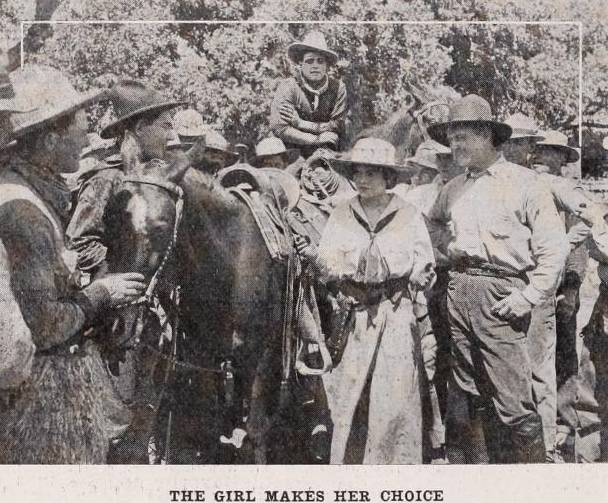
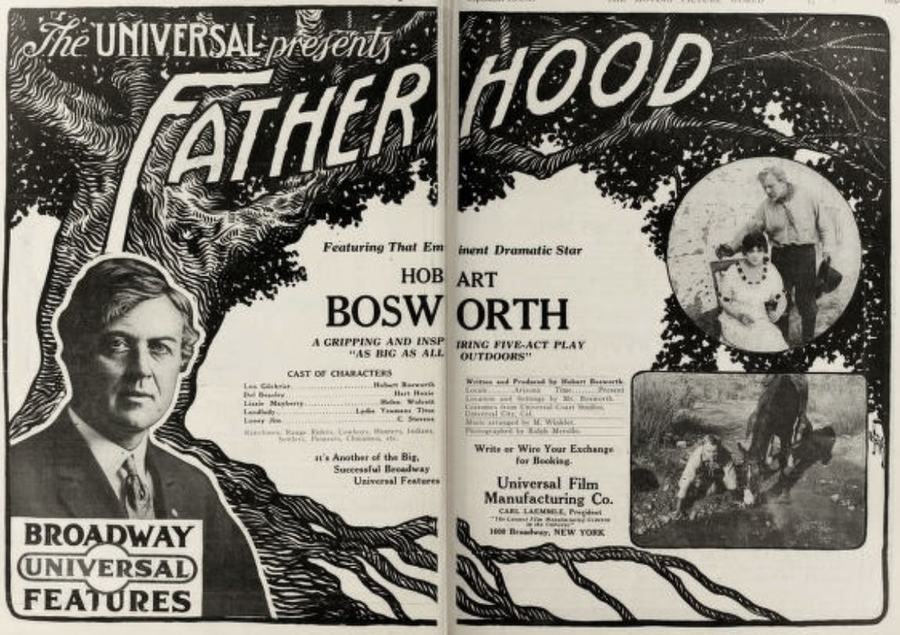
In the nascent years of the feature-length film, few figures loomed as large or as physically imposing as Hobart Bosworth. Often hailed as the 'Dean of Hollywood,' Bosworth brought a theatrical weight to the screen that few of his contemporaries could emulate. In Fatherhood (1915), we witness a fascinating intersection of the rugged Western aesthetic and the sentimental Victorian melodrama, a hybrid that would eventually pave the way for the more nuanced character studies of the 1920s. Unlike the frantic pacing of A Motorcycle Adventure, Fatherhood demands a contemplative engagement with its slow-burn narrative and its preoccupation with the moral weight of the past.
The screenplay, penned by the prolific Julia Crawford Ivers in collaboration with Bosworth himself, functions as a structural marvel of early cinema. Ivers, a pioneer whose contributions to the industry are often overshadowed by her male counterparts, imbues the script with a psychological depth that transcends the 'save-the-maiden' tropes prevalent in 1915. The story is not merely about the rescue of a child; it is an examination of the long-term psychological ramifications of that rescue. It shares a certain thematic gravity with The Vicar of Wakefield, focusing on the preservation of innocence within a landscape that is inherently hostile to it.
The plot’s central conceit—a man falling in love with his unknowingly adopted daughter—is handled with a surprising degree of delicacy, avoiding the salaciousness that might attend such a premise in modern hands. Instead, the film leans into the irony of the situation, utilizing the audience's superior knowledge to generate a simmering suspense. This technique of dramatic irony is as potent here as it is in the classic adaptations of Hamlet, where the weight of unspoken history dictates the characters' inevitable collision.
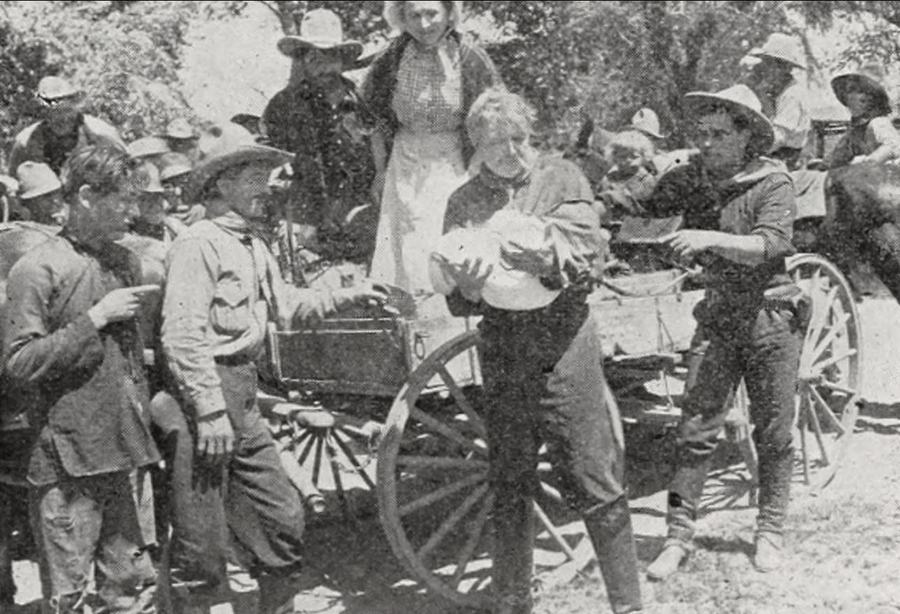
Hobart Bosworth’s portrayal of Silas is a masterclass in the 'rugged-yet-tender' archetype. His physicality is undeniable; he moves with the purpose of a man who has spent decades taming the wilderness. Yet, in his interactions with the infant, and later with the grown woman played by Helen Wolcott, his eyes betray a vulnerability that is the film's true emotional engine. Wolcott, for her part, provides a luminous counterpoint to Bosworth’s granite-hewn features. Her performance avoids the histrionics common in the silent era, opting instead for a grounded realism that makes the eventual revelation of her heritage all the more poignant.
The supporting cast, including Charles Stevens and Jack Hoxie, adds layers of authenticity to the frontier setting. Hoxie, who would later become a Western icon in his own right, shows early flashes of the charisma that would define his career. The chemistry among the ensemble creates a lived-in atmosphere that feels distinct from the stage-bound productions of the era, such as The Bells. There is a sense of space and environment here that is essential to the film's success.
Visually, Fatherhood is a testament to the rapid evolution of cinematography in the mid-1910s. The location shots are sweeping, capturing the desolation and the beauty of the ranch lands with a clarity that belies the primitive equipment of the time. The lighting, particularly in the interior scenes of the ranch house, utilizes shadow to create a sense of intimacy and isolation. This use of light as a narrative tool is far more sophisticated than the flat lighting found in contemporaneous works like The Independence of Romania.
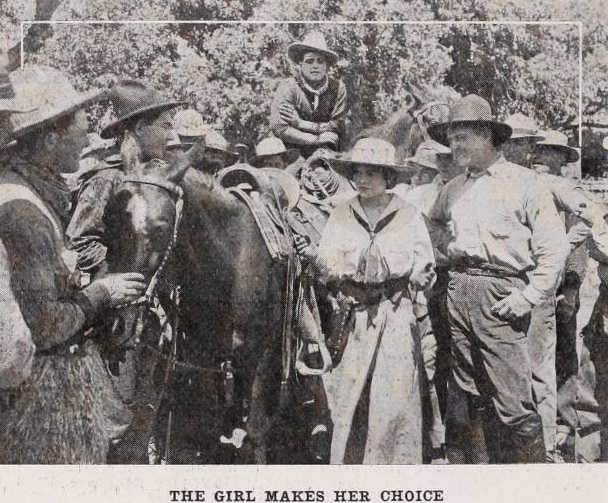
The editing, while rudimentary by modern standards, shows an early understanding of cross-cutting to build tension. The opening sequence involving the Indian raid is particularly well-executed, using a kinetic energy that contrasts sharply with the pastoral tranquility of the later scenes. This rhythmic shift is vital, establishing the trauma that underpins the entire narrative. It evokes the same sense of historical urgency found in Pro Patria, though Fatherhood remains focused on the personal rather than the political.
At its core, Fatherhood is an interrogation of what constitutes a family. Is it blood, or is it the act of nurturing? By placing Silas in a position where he falls in love with the girl he saved, the film forces the audience to grapple with the complexities of his paternal role. The tragedy of his ignorance is the film's greatest strength. We see a man who has lived a life of solitude suddenly finding a reason to hope, only to realize that the source of his joy is rooted in a past he has partially forgotten or suppressed. This thematic depth is reminiscent of the moral ambiguity found in Az aranyásó, where the pursuit of a better life often comes at a staggering personal cost.
The resolution of the film is both heartbreaking and satisfying. It avoids the easy 'happy ending' in favor of something more earned and emotionally honest. The revelation of the girl's identity acts as a catalyst for Silas's final transformation, moving from a man defined by his desires to a man defined by his capacity for selfless love. It is a powerful arc that resonates even a century later, proving that the fundamental questions of the human heart are timeless.
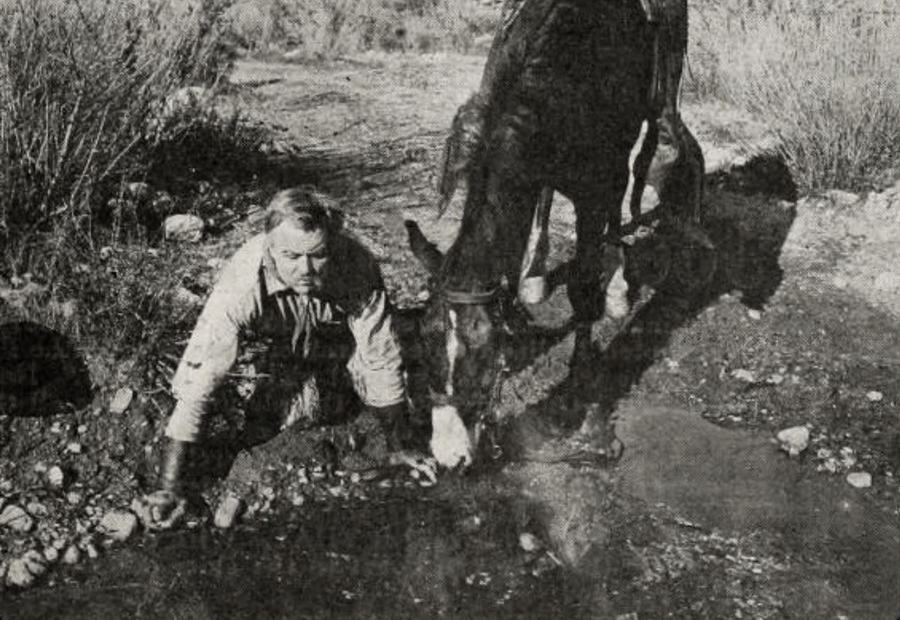
To understand the impact of Fatherhood, one must view it within the context of the 1915 film landscape. This was the year of *The Birth of a Nation*, a time when the medium was discovering its power to tell epic, complicated stories. While Fatherhood is smaller in scale, its influence is arguably more humane. It eschews the grandiosity of Marc'Antonio e Cleopatra for a gritty, localized realism. It reflects the burgeoning interest in 'Western' life as a distinct American mythology, a theme also explored in The Hoosier Schoolmaster, albeit in a different geographic and cultural setting.
The film also highlights the early industry's reliance on versatile creators. Hobart Bosworth was not just an actor; he was a director, a writer, and a producer. His fingerprints are all over this production, from the casting of Lydia Yeamans Titus to the specific choice of locations. This level of creative control allowed for a singular vision that is often missing from more assembly-line productions like Doctor Nicholson and the Blue Diamond. Fatherhood feels personal, a labor of love from a man who understood the frontier better than most.
While many films from this era have been lost to the ravages of nitrate decay, the legacy of Fatherhood survives through its influence on the genre. The technical proficiency displayed—particularly in the integration of natural light and the use of the 'close-up' for emotional emphasis—was cutting edge for 1915. It lacks the whimsical artifice of Das rosa Pantöffelchen, opting instead for a visual grit that would become a staple of the American Western. The film’s ability to tell a coherent, emotionally resonant story without the benefit of sound is a testament to the skill of the performers and the clarity of the direction.
The pacing of the film is deliberate, allowing the characters to inhabit the screen in a way that feels modern. We see them work, we see them rest, and we see them reflect. This 'dead time' is essential for building the world of the ranch, making the eventual eruption of drama all the more impactful. It is a technique that would be perfected by later directors, but its roots are visible here. Even in the more fantastical elements of the era, such as From Dusk to Dawn, we rarely see this level of commitment to character-driven atmosphere.
Ultimately, Fatherhood (1915) stands as a monumental achievement in early narrative cinema. It is a film that demands to be seen not just as a historical curiosity, but as a vibrant, breathing piece of art. The collaboration between Bosworth and Ivers resulted in a story that is as intellectually stimulating as it is emotionally affecting. It navigates the treacherous waters of identity, love, and duty with a sophistication that belies its age. Whether compared to the hagiographic tone of The Life of St. Patrick or the sporting thrills of The Cup Winner, Fatherhood remains a superior example of how film can explore the deepest recesses of the human condition.
For those interested in the evolution of the Western or the history of women in film, this is essential viewing. It is a haunting, beautiful reminder of the power of silent storytelling—a film where a single look from Hobart Bosworth conveys more than a thousand lines of dialogue. It is a masterpiece of the frontier, a story of a man who saved a child, only to have that child eventually save his soul. In the vast library of early cinema, including works like Het geheim van het slot arco, Fatherhood shines as a beacon of narrative clarity and emotional truth.
IMDb —
1915
Community
Log in to comment.