DbcultAccessing Vault...
Cult Review
Senior Film Conservator
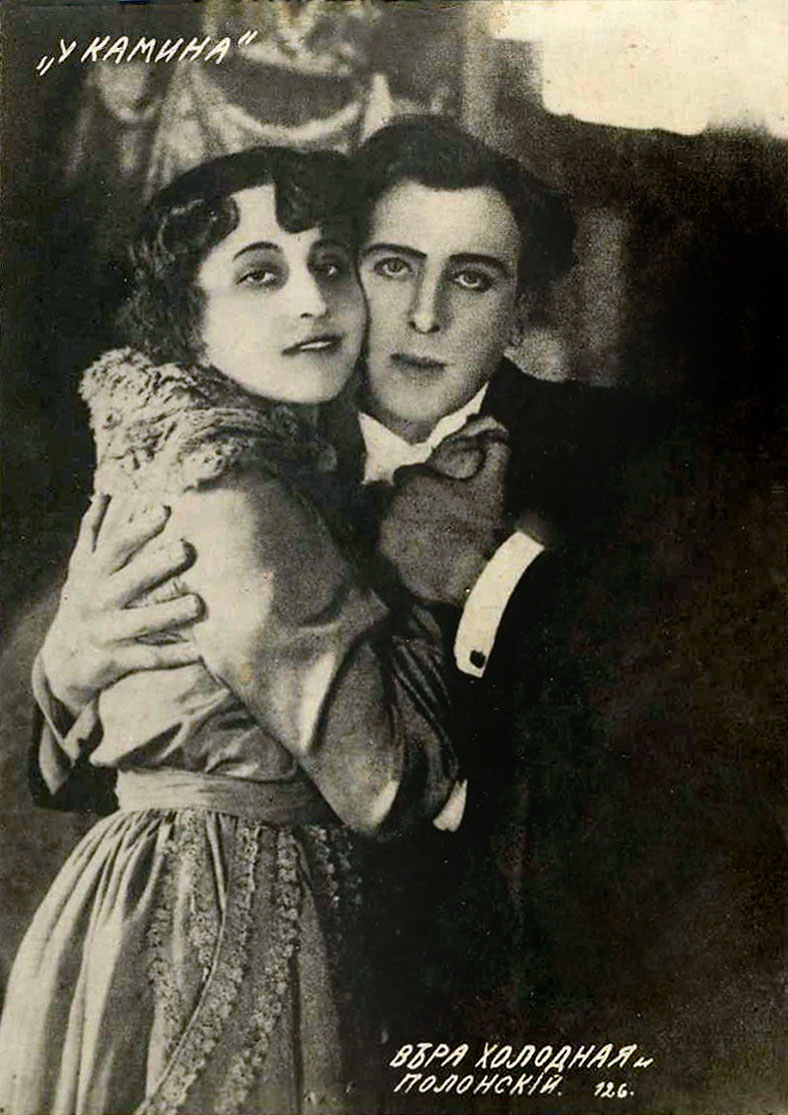
There is a moment, exactly twelve minutes into U kamina, when Vera Kholodnaya turns away from the camera and the entire frame seems to shudder, as though the war outside had cracked the negative itself. The gaslight pools on her cheekbones like molten wax; the shadows swallow the other half of her face. You are not watching an actress—you are watching a nation forget its own reflection.
Silent cinema rarely gets this intimate, this fevered. Director Alexander Uralsky—known only from scattered production diaries—shoots the marital rupture at the heart of U kamina with the close-quarter cruelty of a dental extraction. The husband, engineer Kamina, has been whispered into non-existence: arrested by either the Okhrana or the Bolsheviks, depending on which gossip you trust. His wife, Lidia (Kholodnaya), refuses the void. She combs Petrograd for specters, clutching a mink-trimmed letter that might be a forgery, might be a confession, might be a love note to another woman.
Every interior is overstuffed yet hollow: velvet drapes the color of dried blood, samovars exhaling silver steam, officers adjusting cufflinks while discussing artillery. The camera glides past these artifacts like a burglar casing the joint, finally settling on Kholodnaya’s eyes—two black moons eclipsed by perpetual dusk.
Vladimir Maksimov’s Count Volsky arrives with the languid menace of a man who has already pawned his soul and now haggles over the receipt. He offers Lidia protection, perhaps affection, certainly information—yet each gesture leaves a grease-stain of calculation. Their scenes unfold in chiaroscuro parlors where wallpaper peels like old scabs; the only heat comes from the actress’s darting glances. When Volsky leans in, the edges of the frame vignette, as if the film itself were holding its breath.
In counterpoint, Vitold Polonsky’s Captain Roshchin bursts in from the front, medals dented, eyes ringed with frontline insomnia. He believes in resurrection: of country, of marriage, of himself. His courtship of Lidia is all velocity—snow-drenched gallops, telegrams scrawled in pencil stubs, a piano sonata hammered out on a detuned upright. The film cross-cuts between the two rival males the way a surgeon alternates scalpels: cold steel, hot cauterization.
Uralsky’s cinematographer, rumored to be a defector from the Imperial Corps of Engineers, treats light like a hostile witness. Exterior night scenes are shot through actual frost, the lens breathed upon so halation blooms across streetlamps, turning them into Orthodox icons. Interior day scenes are underexposed two stops, faces swimming up from umber gloom as though developed in coffee. The cumulative effect is a city trapped between exposure and erasure—perfect metaphor for a society discovering that its own reflection has become treasonous.
Compare this to the pastoral fatalism of The Girl from the Marsh Croft or the drawing-room determinism of Anna Karenina. Where those narratives unwind with the inevitability of liturgy, U kamina thrashes like a wounded animal in a snare. History here is not backdrop but antagonist, jabbing its bayonet through every mise-en-scène.
Only twenty-three minutes of the original seven reels survive—housed in Gosfilmfund, water-stitched, nitrate-bubbled. Yet scarcity intensifies perfume. The extant montage jumps from Lidia’s candle-lit vigil to a ballroom where officers waltz with cadaverous glee; from a railway platform sheathed in steam to the climactic duel on a rooftop overlooking the frozen Neva. Intertitles are lost, so contemporary restorers let the images speak raw. The silence becomes accusatory: you supply the dialogue, the politics, the grief.
Sound designers at the 2021 Il Cinema Ritrovato added a spectral layer: gramophone crackle, distant artillery, sleigh bells processed through reverb until they resemble skulls rattling. Whether this enhances or betrays Uralsky’s intent is debatable; what’s undeniable is that the film now exists in two simultaneous centuries—its own, and ours.
Vera Kholodnaya was Russia’s first screen goddess, her popularity so colossal that police had to cordon off railway platforms. Yet in U kamina she weaponizes stillness. Watch her in the greenhouse sequence: Volsky confesses that Kamina may have been executed months earlier. The camera holds in medium-close-up as frost creeps across the glass panes behind her. She never blinks; instead a single tear freezes halfway down her cheek, becoming a prism that fractures the count’s face into cubist shards. No intertitle could sharpen the moment further.
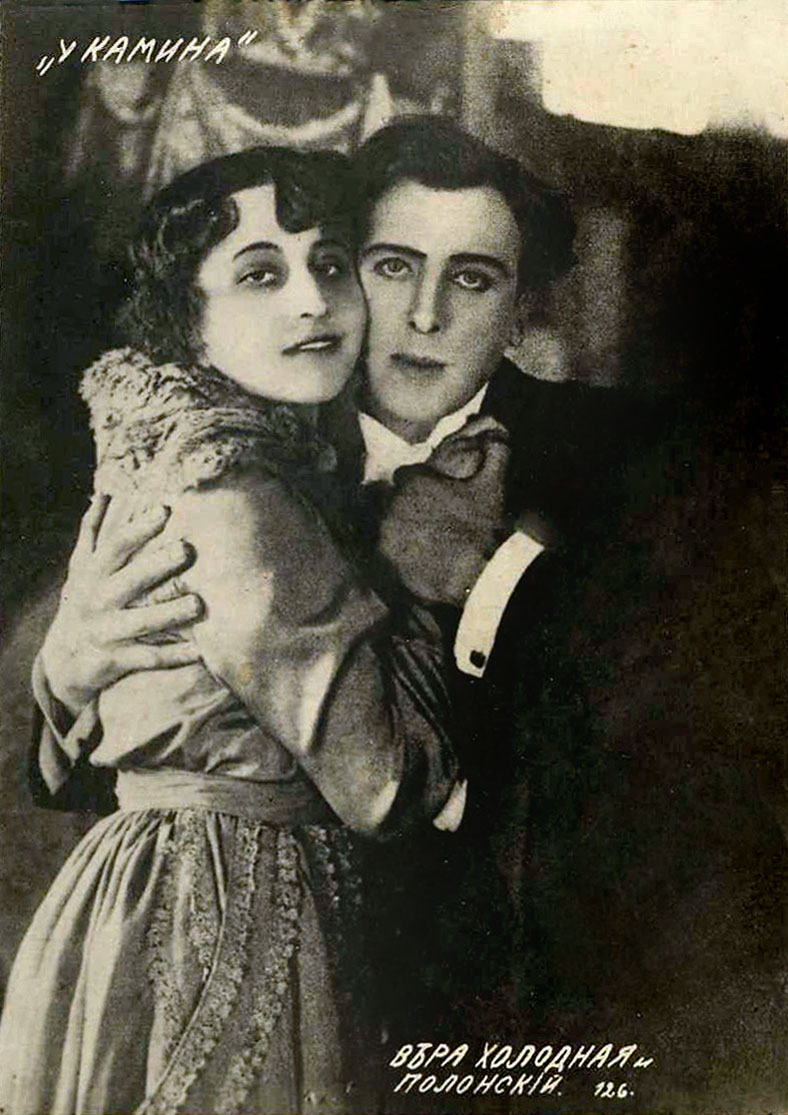
Three months after the premiere she died in Odessa, allegedly of influenza, age 25. Crowds trampled the cemetery gates. Somewhere in the funeral reel—now lost—her husband inserted a shot of the empty balcony seat where she last sat. Life imitated film; the screen went dark.
Maksimov and Polonsky embody two postures of collapsing patriarchy. Volsky clings to decadence the way a drowning man caresses his own chains: silk gloves, French cologne, quotations from Baudelaire amid artillery reports. Roshchin, conversely, seeks redemption through kinetic sacrifice—yet every heroic lunge leaves him more hollowed. Their final duel is less about Lidia than about who gets to narrate the national trauma. When the pistols fire, the camera does not cut to bodies but to the cityscape: smoke stacks, ice floes, a red flag flickering in the distance like a wound that has learned to wave.
Der Andere (The Other) explores split identity through expressionist shadow play, yet its moral universe remains binary—good/evil, sane/insane. U kamina refuses such palliative geometry. Its characters mutate by reel: victim becomes accomplice, savior becomes scavenger. Likewise, The Eye of Envy externalizes jealousy as a stalking doppelgänger; Uralsky internalizes it until the film stock itself appears jaundiced.
Even closer is the toxic celebrity maelstrom of The Price of Fame, yet where that narrative moralizes over fortune’s rot, U kamina watches the rot and shrugs—history will swallow us before we can taste it.
Scholars still debate the provenance of the surviving print’s montage. Some claim Uralsky anticipated Soviet montage by slicing on motion, letting sleigh-runners or raised arms propel the cut. Others insist the negative was re-edited by a Petrograd Soviet committee who found the original too fatalistic. Whatever the truth, the rhythm is spasmodic: two-frame flashes of soldiers’ boots, then a twelve-second held take on Lidia’s eyes. The viewer experiences history as whiplash—moments that should kill you, followed by moments that force you to keep breathing.
Because the intertitles are missing, every viewer becomes co-author. When Lidia confronts Volsky over a desk littered with sealed telegrams, you supply the dialogue. Is she demanding Kamina’s location? Offering herself in exchange? Threatening to expose his wartime profiteering? The film’s silence is a Rorschach blot onto which contemporary anxieties—#MeToo, fake news, imperial collapse—spill and swirl. Critic Viktor Shklovsky claimed the greatest artworks are not finished but abandoned; U kamina was abandoned twice—by its makers and by history—thereby achieving a morbid immortality.
Bootlegs circulate on YouTube, scanned at 480p, smeared with digital artifacts that resemble bullet holes. Russian TikTokers layer the greenhouse tear over synthwave tracks; Ukrainian cinephiles slow the duel to 12 fps until the smoke looks like brushstrokes. Each iteration further erodes the original, yet each also resurrects it—an echo inside an echo, a ghost that rents server space.
The only quasi-legitimate stream is via rarefilms.ru with French subtitles burned in; better to attend a cinematheque print if your city still programs 35mm. Bring gloves—the film radiates cold. You will exit onto a modern street that suddenly feels provisional, as though history might yank the asphalt from under your shoes.
We binge so many pixels that the idea of a film surviving only in shreds should appall us. Yet scarcity kindles reverence. U kamina is a cracked reliquary: touch it and you cut yourself on the jagged edge of a century. The blood that drops is both yours and Vera Kholodnaya’s, both 1917 and 2024, both the Russia that was and the everywhere that still fractures under the weight of its own reflections.
Final note: if you seek narrative closure, look elsewhere. If you seek a mirror that refuses to flatter, step into the kamina—into the furnace—into the frozen flame that refuses to thaw.
IMDb —
1923
Community
Log in to comment.