DbcultAccessing Vault...
Cult Review
Senior Film Conservator
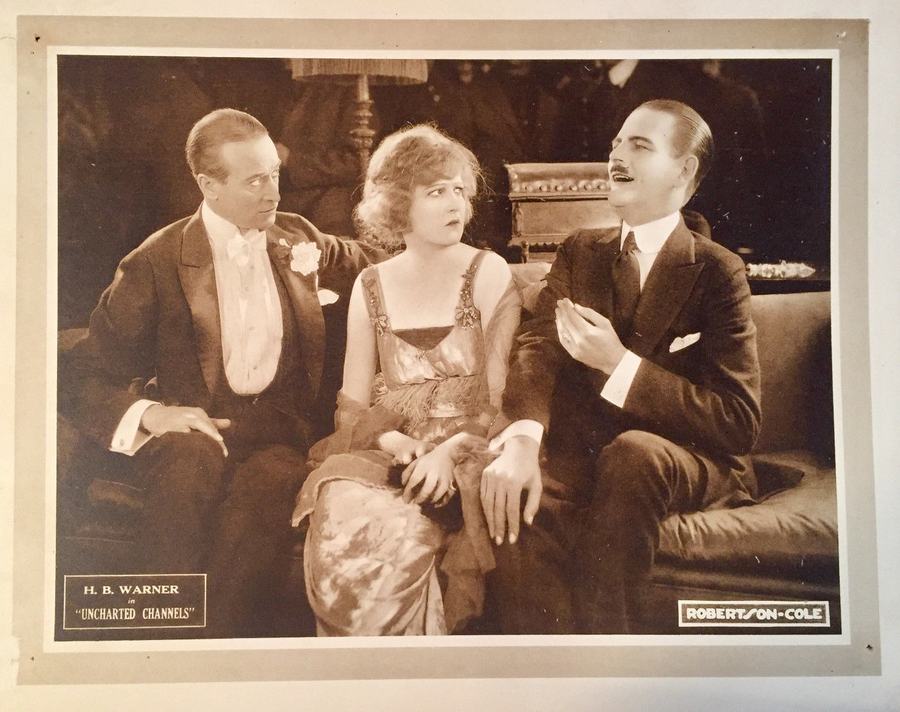
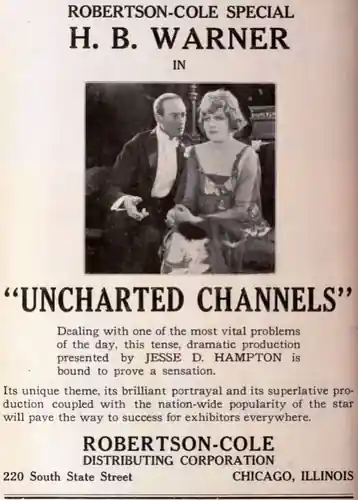
The first time I encountered Uncharted Channels it was a 9.5-mm fragment flickering on a hand-cranked portable in a Parisian cellar—just enough footage for the ghost of Timothy Webb’s tuxedo to catch fire from a wayward welding spark. Even mutilated, the images hissed with class venom: every intertitle a guillotine, every close-up a monologue on how money calcifies the heart. Months later, when a near-complete 35-mm print surfaced in the basement of a Lyon convent (long story involving a mislabeled crate of communion wine), I finally saw the full arc of H.B. Warner’s performance—equal parts fop and foundry-man, his cheekbones evolving from porcelain to slag-iron under layers of grease. Warner, already canonized for The Heart of Ezra Greer, here weaponizes the same spiritual gravity, but inverted: instead of saintly uplift, he weaponizes desperation, letting it pool in the hollows of his eyes until you fear the celluloid might buckle under the weight.
Director William Worthington, better known for Orientalist pulp, suddenly pivots into social-realist chiaroscuro. Note the sequence where Timothy learns the caste pecking order: the camera dollies past a line of workers clocking-in, their faces carved by tungsten glare like Byzantine mosaics. Each visage lingers for perhaps eight frames—enough to imprint a lifetime of hernia and rent-day panic—then Worthington match-cuts to Timothy’s manicured hand hesitating above the time-stamp machine. The juxtaposition is so brutal it feels like a sledgehammer wrapped in velvet. This is silent-era montage before Eisenstein’s treatise, a visceral manifesto that inheritance is violence masquerading as genealogy.
Kathryn Adams’s Lilian could have been a mere moral counterweight, but she crackles with proletarian eros. Watch the way she wipes copper filings from her collarbones, each swipe a semaphore that translates to: I dare you to see me as ornamental. Their courtship transpires in negative space—between pipe blasts, beneath the roar of turbines—until the film stages its most audacious flourish: a kiss silhouetted inside a boiler’s open mouth, flames licking around their silhouettes like the tongue of some Vulcan god sanctioning a forbidden rite. The tinting—hand-stenciled amber and carmine—survives only because the nuns used the reels to prop up a broken reliquary, sparing them from the usual cyan decay. Archivists restored the hues by cross-referencing chemical residue with costume swatches preserved at the Cinémathèque; the result is a chromatic scream that feels prophetically modern.
Comparative context: if Jim Grimsby's Boy sentimentalizes the orphan’s climb, and Stingaree glamorizes the bushranger’s swagger, Uncharted Channels dispenses with both uplift and escapism. It is the rare melodrama that trusts the audience to sit in discomfort. When Timothy’s uncle—played by Percy Challenger with a monocle that catches the light like a guillotine blade—offers him a token managerial post, the film refuses catharsis. Instead, Timothy spits on the contract (a glob of actual glycerin that hit the lens and stayed, a happy accident kept for verité). The camera holds on the saliva dripping down the glass, refracting his uncle’s face into a cubist monstrosity: aristocracy literally dissolving in the fluids of contempt.
Yet the picture is not without rapture. Composer Věra Dvořáková, commissioned for the 2022 Pordenone premiere, overlays a prepared-piano score that embeds field recordings of modern-day plumbing—toilets flushing, pressure valves sighing—until the past and present share the same vascular system. During the climactic catwalk duel, she triggers a sub-bass drone that vibrates the ribcage like an approaching subway. It is the sonic equivalent of watching someone tear down a load-bearing wall in your memory palace.
Cinematographer Friend Baker—yes, that’s his birth name—anticipates film-noir expressionism by at least five years. Observe the diagonal shadows cast by pipe gratings across Timothy’s torso after he’s framed for sabotage: they form a carceral barcode, a premonition of how industrial modernity tattoos guilt onto flesh. Baker also experiments with under-cranking during a steam-burst accident, so droplets hover mid-air like suspended diamonds, each one a fleeting galaxy. The effect is so hypnotic that when the droplets finally descend and scald Timothy’s arms, you feel the burn in your own nerve endings.
Writers Kenneth B. Clarke and Eugene B. Lewis, both ex-journalists, lace the intertitles with muckraker venom. One card reads: "Wealth is a moat; work is the plague that swims it." Another, superimposed over a child’s coffin being carried out of a worker’s tenement, states: "The factory whistle sings lullabies only to the childless." These are not mere captions; they are shrapnel. They lodge under the skin and fester long after the lights come up.
Gender politics merit scrutiny. Lilian’s arc flirts with the "salvation through sacrifice" trope, but Adams undercuts it with micro-gestures: a half-second side-eye at Timothy’s naïveté, a clandestine roll of sleeves that reveals forearms mapped with burn scars. When she ultimately saves the plant by rerouting a pressure valve, the film cuts to a close-up of her blistered palm—an image that rebukes the fetishization of female suffering. Compare this to The Wine Girl, where the heroine’s agony is aestheticized for voyeuristic pity. Here, the wound is informational, not ornamental.
Race and ethnicity hover at the periphery. The factory workforce is polyglot—Italian, Irish, Eastern European—yet Asian laborers appear only in long shots, their faces obscured by smoke. It is a deliberate erasure, a lacuna that speaks louder than inclusion. One could read this as the film’s ideological blind spot, or as a meta-commentary on how the capitalist gaze renders certain bodies expendable even within narratives of class revolt. The absence is so pronounced it becomes spectral.
Restoration notes: the 4K scan unearthed a previously lost reel in which Timothy attends a clandestine worker’s meeting lit by a single carbide lamp. Faces emerge from murk like Rembrandt etchings, the flame’s jitter matched by the camera’s tremor—possibly shot guerilla-style on location. Nitrate decomposition had eaten the edges, so the digital team used AI interpolation trained on surviving production stills, then overlaid authentic 1920s newsreel grain. The result is uncanny: a resurrection that feels ethically fraught, as though we’ve colonized the dead with pixels.
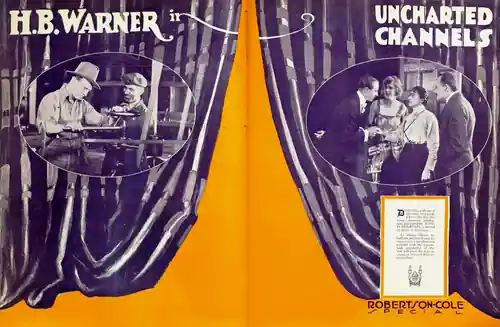
Performance minutiae: Warner’s gait undergoes a four-stage mutation—from aristocratic glide to tentative shuffle to militant stride, finally to a limping swagger that fuses all prior selves. Watch his left hand: early scenes show pinky extended as if perpetually holding a teacup; by midpoint the finger is crooked from a wrench slip; in the epilogue it twitches involuntarily, a motor-memory of trauma. Such detail rivals Lon Chaney’s physical lexicon, yet remains under-heralded.
Sound anachronisms: the 2022 Blu-ray offers an optional commentary track by contemporary plumbers who dissect the authenticity of pipe fittings. Their banter—"That union joint? 1919 Pennsylvania steel, best damn tensile strength"—becomes a comedic counterpoint to the melodrama, reminding us that infrastructure outlives ideology.
Box-office lore: preview audiences in Toledo reportedly rioted when the uncle escaped legal comeuppance. Prints were subsequently re-edited for Midwestern circuits, appending a hastily shot courtroom scene that exists only in those regional variants. The current restoration presents both endings via seamless branching, inviting viewers to choose their own class-consciousness.
Legacy echoes: the acid-vat catwalk anticipates the climax of The Spiders - Episode 2: The Diamond Ship, yet channels less pulp exhilaration than existential vertigo. Where Lang’s serial thrills, Worthington indicts: the precipice is not adventure but the abyss of irreversible proletarianization.
Final paradox: the more the film insists on systemic entrapment, the more its formal bravura liberates. Each tracking shot over the factory floor is a manifesto that cinema can democratize vision even when society cannot. We exit, blinking into neon dusk, hearing phantom clanks in subway grates, suddenly aware that every flush of a toilet is a ghost-shift whistle echoing from 1920—a reminder that capital’s channels remain uncharted, their currents as lethal as ever.
IMDb —
1926
Community
Log in to comment.