DbcultAccessing Vault...
Cult Review
Senior Film Conservator
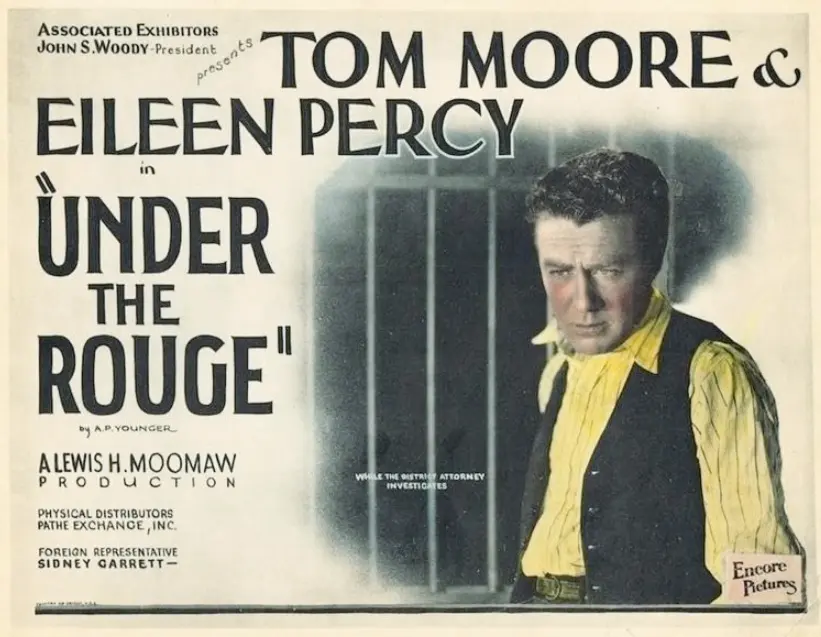
Short answer: Yes, Under the Rouge is a fascinating, if occasionally uneven, relic that bridges the gap between Victorian morality and the hard-boiled cynicism of the 1930s. It is essential viewing for silent film completists and those interested in the 'veteran-turned-criminal' trope, but casual viewers might find its melodramatic coincidences a bit taxing.
This film works because it treats the post-war trauma of its protagonists as a legitimate catalyst for their descent into crime. This film fails because it attempts to resolve a complex moral dilemma with a simplistic embezzlement reveal in the final ten minutes. You should watch it if you want to see how early cinema navigated the tension between urban corruption and the myth of small-town purity.
The 1920s were defined by a peculiar kind of cultural exhaustion, and Under the Rouge captures this perfectly in its opening act. Whitey and Skeeter aren't your typical cinematic thugs; they are decorated soldiers. This detail is crucial. It adds a layer of social commentary that feels surprisingly modern, echoing the sentiments found in later noir classics. When we see them blowing safes, there is a clinical, almost military precision to their movements that suggests they are merely applying their wartime skills to a new, less patriotic theater of operations.
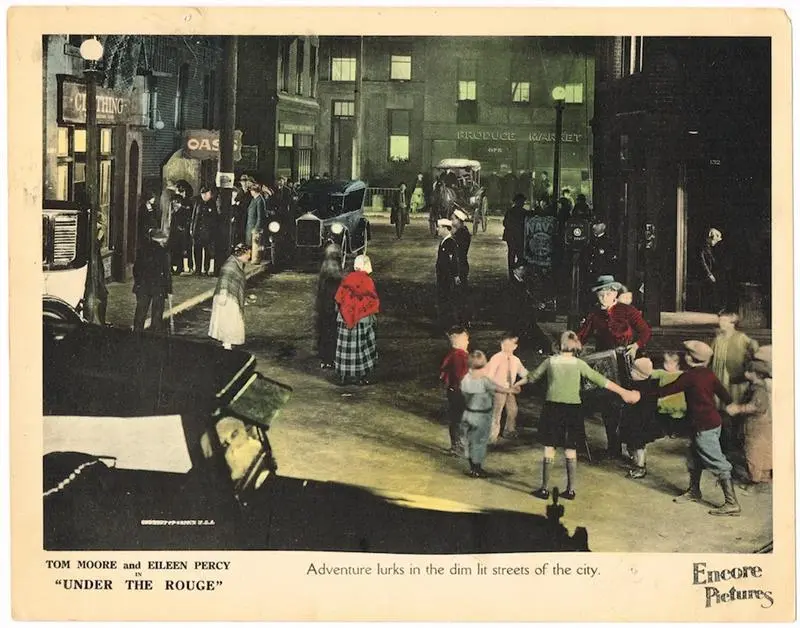
The cinematography in these early sequences leans heavily into the shadows of the urban underworld. Unlike the more fantastical elements of The Phantom Carriage, which uses double exposure to create a spiritual atmosphere, Under the Rouge utilizes stark lighting to ground its stakes in reality. The moment Skeeter is cornered by the police is shot with a frantic energy that highlights the claustrophobia of the criminal life. It sets a high bar for tension that the rest of the film struggles to maintain once it moves to the countryside.
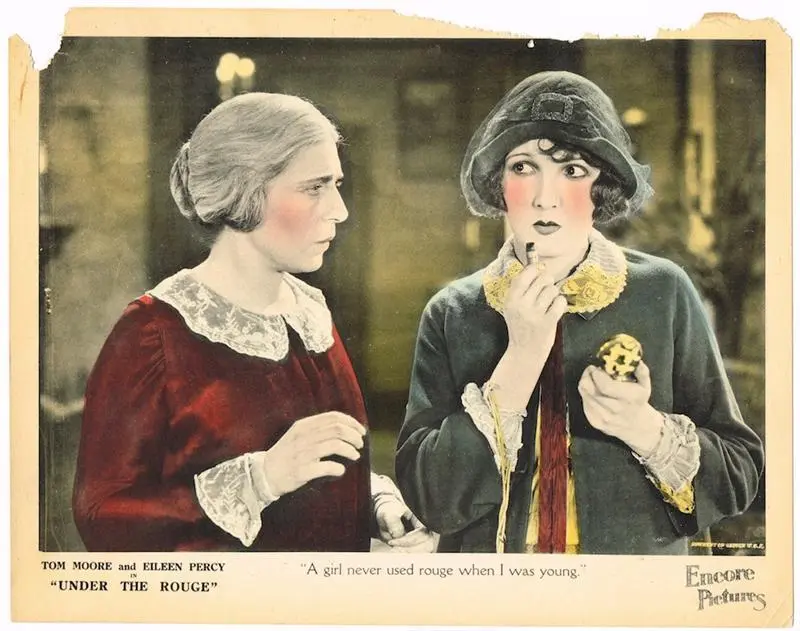
When Whitey travels to the small town to find Kitty, the film undergoes a radical tonal shift. The dark, soot-stained streets are replaced by rolling hills and white picket fences. However, director Lewis H. Moomaw is careful not to paint this as a paradise. The town is populated by characters whose morality is just as flexible as the safe-crackers back in the city. Take Fred Morton, the bank clerk. On the surface, he is the ideal suitor—stable, respected, and clean-cut. But the film suggests that his respectability is a performance, a 'rouge' applied to hide a hollow core.
In one particularly sharp scene, Fred dismisses Kitty the moment her past is revealed. This isn't the reaction of a man in love; it’s the reaction of a man protecting his social capital. It’s a harsh, punchy moment that exposes the transactional nature of small-town relationships. I would argue that Fred is actually a more insidious villain than Mal. While Mal is an overt predator, Fred represents the systemic hypocrisy that allows men like Mal to thrive. This is a bold stance for a 1925 production, and it keeps the narrative from feeling like a standard morality play.
The arrival of Mal as an 'advance man' for a fake evangelist adds a layer of satire that is often overlooked in reviews of this film. By 1925, the American public was becoming increasingly wary of traveling preachers and 'confidence men' who used the pulpit for profit. Mal’s transition from an underworld snitch to a religious huckster is a stroke of writing brilliance by Andrew Percival Younger. It suggests that the 'underworld' isn't just in the dark alleys of the city; it’s right there in the church pews.
The performance by Jim Mason as Mal is deliciously oily. He moves with a predatory grace that contrasts sharply with Whitey’s stiff, soldierly bearing. When he attempts to seduce Evelyn, the sister of the man he essentially murdered, the tension is palpable. The film uses close-ups here to great effect, capturing the flicker of doubt in Evelyn’s eyes and the predatory calculation in Mal’s. It’s a masterclass in silent acting that avoids the over-the-top gesticulation found in earlier works like The Broken Coin.
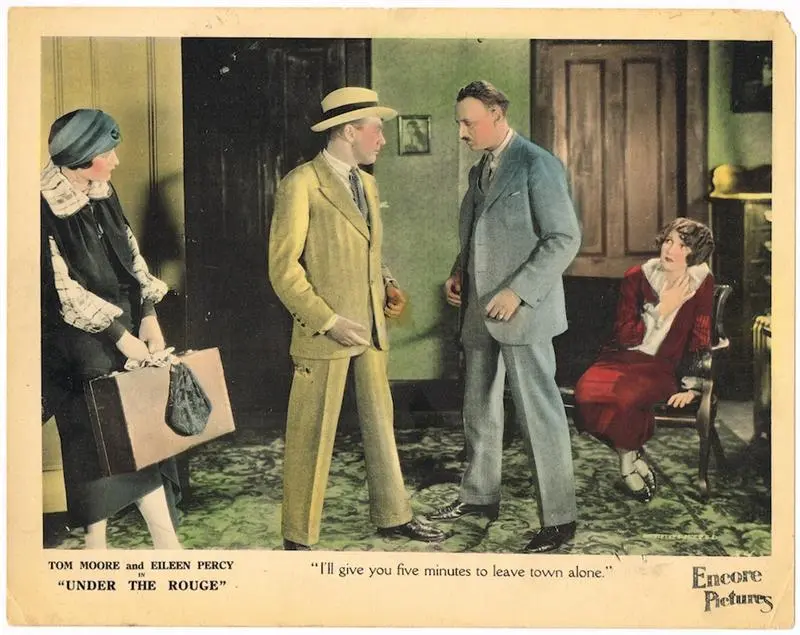
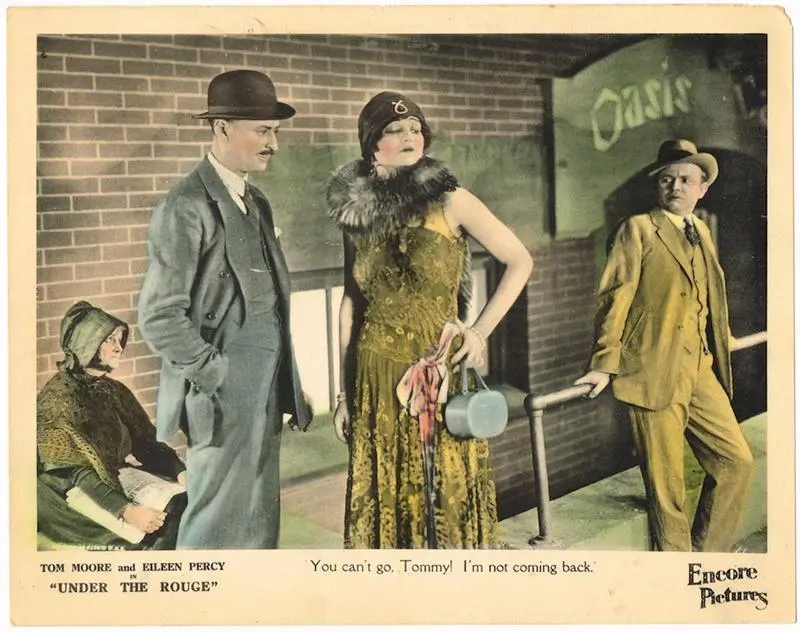
Tom Moore delivers a restrained performance as Whitey. In an era where leading men were often required to be hyper-expressive, Moore’s stoicism is a breath of fresh air. He carries the weight of his character’s history in his posture. Eileen Percy, as Kitty, is the film's emotional heartbeat. Her decision to 'confess' her criminal past to save Evelyn is the film’s most powerful moment. It is a subversion of the 'fallen woman' trope; her past doesn't destroy her—her willingness to own it becomes her weapon.
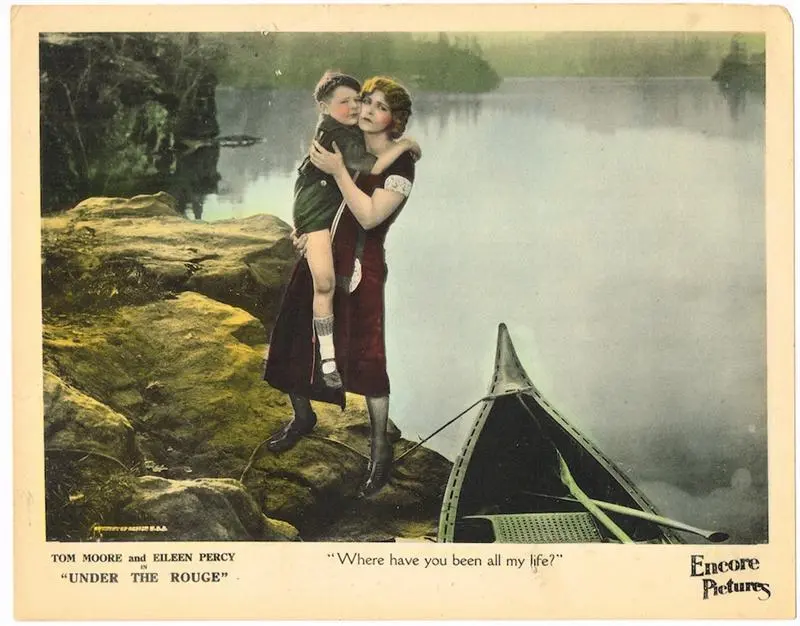
Visually, the film excels in its use of depth. There is a scene at the river where Kitty attempts to drown herself that is framed with haunting beauty. The water is dark and reflective, mirroring her internal despair. The pacing here slows down, allowing the audience to sit with the gravity of her choice. It’s a stark contrast to the brisk, almost comedic pacing of films like Let-'Er-Go Gallagher. Under the Rouge isn't afraid to be bleak, and it’s in these moments of stillness that the film finds its soul.
If you are looking for a complex character study that challenges the conventions of its time, then yes, this is absolutely worth your time. It offers a unique window into the American psyche following World War I, exploring themes of trauma and the difficulty of reintegration. However, if you prefer your silent films to be lighthearted or purely action-oriented, the heavy themes and slow-burn pacing might be a deterrent.
This film is NOT for:
Under the Rouge is a hidden gem that deserves more attention than it currently receives. While it doesn't have the technical wizardry of Whitechapel or the sheer emotional scale of The Heart of a Child, it possesses a grit and a willingness to look at the darker side of human nature that was rare for its time. It’s a film that asks uncomfortable questions about what it means to be 'good' in a world that has already been broken by violence.
"A haunting exploration of the masks we wear, Under the Rouge proves that the most dangerous safes aren't the ones made of steel, but the ones we build around our own hearts."
Ultimately, the film's 'happy' ending feels earned only because of the immense psychological toll paid by the characters. It is a reminder that in the world of 1925, as in today, redemption isn't something you find—it's something you survive. If you can handle the occasional dip into melodrama, you will find a story that is as relevant now as it was a century ago.
IMDb 6.4
1931
Community
Log in to comment.