DbcultAccessing Vault...
Cult Review
Senior Film Conservator
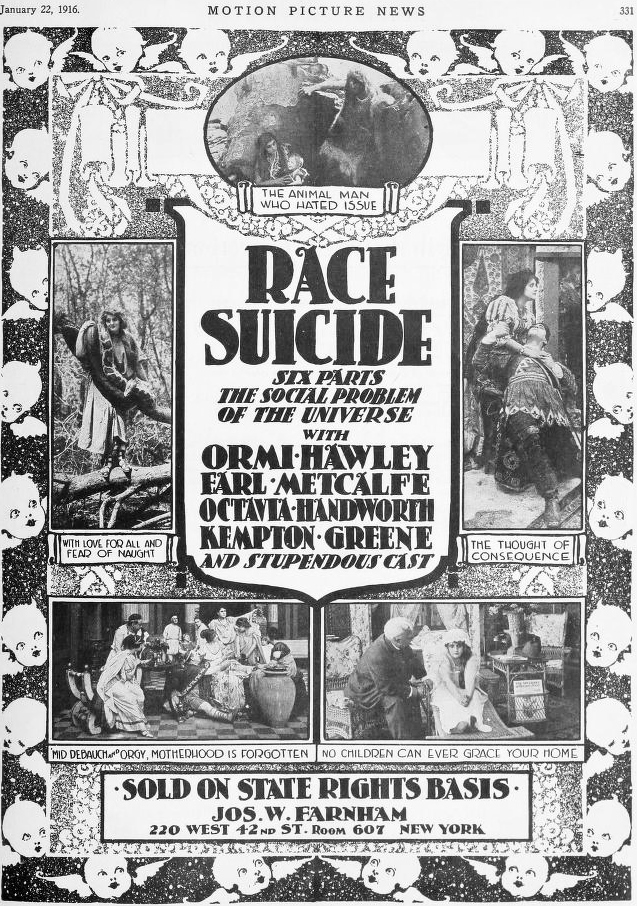
In the vast, undulating landscape of early cinema, few films dared to tackle themes as profound and existentially weighty as George Terwilliger's 1916 opus, Race Suicide. This isn't merely a silent film; it's a multi-era dramatic tapestry, woven with threads of human frailty, societal pressure, and the relentless march of fate, all converging on the unsettling concept of the cessation of lineage. Far from being a didactic polemic on eugenics, as its provocative title might initially suggest, the film instead offers a deeply melancholic, even poetic, meditation on the myriad ways in which the flame of life, particularly within the context of family and heritage, can be extinguished across the annals of time. It's a remarkably ambitious narrative, eschewing a singular storyline for a series of vignettes that, despite their temporal and geographical separation, resonate with a shared, haunting pathos.
The film opens not with human drama, but with a stark, almost documentary-like prologue observing the animal kingdom. This choice is immediately striking, setting a disquieting tone. We witness instances of creatures deserting their young, a brutal, unsentimental cycle of nature that serves as a primal mirror to the human narratives that will unfold. This opening maneuver by Terwilliger is brilliant in its simplicity and profound in its implications, suggesting that the themes of abandonment and the fragility of new life are not merely human constructs but are deeply embedded in the very fabric of existence. It prepares the audience for a journey that transcends specific historical contexts, rooting the ensuing human tragedies in a universal, biological imperative.
From this elemental beginning, we are thrust into a prehistoric tableau, a world governed by raw instinct and unbridled emotion. Here, Kempton Greene, with a visceral intensity that transcends the silent medium, portrays a jilted suitor whose love has curdled into a devastating, vengeful rage. His object of desire has chosen another, and in a chilling act of malevolent possessiveness, he brutally murders the child she bore with his rival. This segment is perhaps the most direct and shocking portrayal of "race suicide" – a deliberate, malicious act of extinguishing a nascent life, not for survival, but out of pure, destructive jealousy. It's a stark reminder of humanity's capacity for darkness, even in its most nascent forms, and the devastating impact of unchecked primal urges. The performances here, particularly Greene's, convey a terrifying blend of heartbroken despair and murderous intent, a testament to the power of silent acting when executed with such conviction.
The narrative then gracefully transitions to the grandeur of the Roman Empire, yet the underlying current of human tragedy persists. Here, we encounter a poignant romance between a Roman soldier (Herbert Fortier) and a simple shepherdess (Octavia Handworth). Their brief affair, a fleeting moment of passion amidst the vastness of the empire, leaves the shepherdess with a child, a living testament to a love that was never meant to endure. When the soldier departs, leaving her to face motherhood alone, her resilience becomes a heartbreaking focal point. Handworth's portrayal of the shepherdess is imbued with a quiet dignity and an indomitable spirit as she embarks on a desperate, solitary quest to find the father of her child. Her journey culminates in a devastating discovery: the soldier has moved on, found another, a cruel twist of fate mirroring the abandonment seen in the opening prologue. Her return, brokenhearted but unwavering in her maternal duty, leads to the segment's tragic climax. In a moment of harrowing heroism, she sacrifices her own life to save her child from a poisonous snake, ensuring the continuation of her line, albeit at the ultimate personal cost. This vignette explores abandonment, the societal vulnerability of women, and the profound, self-sacrificial nature of maternal love, echoing the themes of survival and struggle found in films like The Outcast, where individuals battle against overwhelming odds and societal pressures.
Moving forward to the Elizabethan era, the film presents another facet of 'race suicide,' this time through the lens of self-destruction and misguided idealism. Earl Metcalfe portrays a wayward son, disillusioned with his life, who seeks not procreation or the continuation of his family name, but rather a form of spiritual redemption through the crucible of war. His quest for meaning on the battlefield, however, is a terminal one. He falls in battle, his death a voluntary termination of his own potential lineage. This narrative arc delves into the individual's choice to prioritize an ideal, however noble or misguided, over the biological imperative of perpetuating one's line. It suggests that war, while often glorified, can be a profound agent of 'race suicide,' not just on a societal scale, but on a deeply personal one. The somber reflection here on the futility of certain forms of heroism, particularly when contrasted with the quiet heroism of the Roman shepherdess, adds another layer of complexity to the film's overarching thesis.
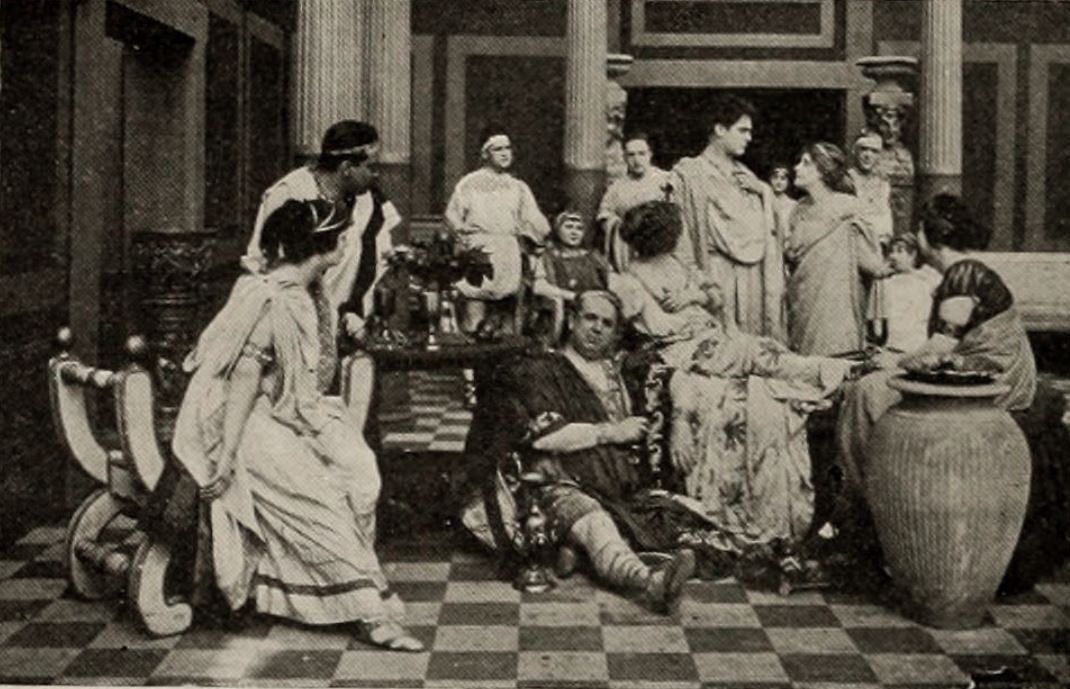
The final, and perhaps most poignant, vignette brings us to modern times, a setting that allows Terwilliger to explore the insidious ways in which societal and economic pressures can conspire against the continuation of family lines. Here, we see a young, impoverished couple, portrayed with understated pathos by Ormi Hawley and another actor, grappling with the harsh realities of their existence. The husband, despite his wife's heartfelt pleadings, steadfastly refuses to start a family, convinced that their financial instability would condemn any child to a life of hardship. This is a form of 'race suicide' driven by pragmatism, a tragic choice born of love and responsibility, yet ultimately leading to the same outcome. The yearning for children, the societal expectation, and the economic constraints are palpable, creating a tension that is deeply relatable even today. Just as their fortunes finally begin to turn, and the husband, now financially secure, embraces the prospect of fatherhood, fate delivers its cruelest blow. His wife suffers a devastating accident that renders her irrevocably infertile. This final act is a heartbreaking culmination of the film's themes: a desire finally realized, only to be snatched away by an uncontrollable, arbitrary twist of fate. It's a stark commentary on the fragility of human plans and the ultimate powerlessness against certain forms of destiny. The emotional weight carried by Hawley in this segment is immense, conveying hope, despair, and profound loss without uttering a single word. This modern tragedy finds kinship with the unyielding grip of fate explored in classics like The Bridge of Sighs, where characters are often trapped by circumstances beyond their control.
The success of Race Suicide hinges significantly on the extraordinary capabilities of its ensemble cast, particularly given the constraints of the silent era. Kempton Greene, with his formidable presence, embodies the raw, primal force of jealousy in the prehistoric segment. His expressions, a volatile cocktail of pain and rage, are unforgettable. Ormi Hawley, a prominent figure of the era, delivers a nuanced and deeply sympathetic performance in the modern vignette, her silent anguish resonating long after the screen fades. Her portrayal of a woman yearning for motherhood, then crushed by its impossibility, is a masterclass in emotional restraint and profound sorrow. Herbert Fortier, as the Roman soldier, projects a compelling blend of charm and casual indifference, making his abandonment of the shepherdess all the more impactful. Octavia Handworth, as the shepherdess, radiates a powerful maternal instinct and quiet strength, culminating in a truly heroic, tragic sacrifice. Earl Metcalfe captures the misguided intensity of the Elizabethan son, while Hazel Hubbard and other supporting players round out the dramatic tapestry. Their collective ability to convey such complex emotions and motivations through gesture, facial expression, and body language underscores the unique artistry of silent film acting. It's a testament to their craft that these disparate stories coalesce into a cohesive emotional journey, each actor contributing a vital thread to Terwilliger's grand design.
George Terwilliger, the film's writer and director, demonstrates an audacious vision for 1916. The episodic structure, traversing vast swathes of human history, was a bold choice, allowing for a multifaceted exploration of a singular, potent theme. This approach prevents the film from becoming repetitive, instead building a cumulative sense of fatalism and the pervasive nature of its central concept. Terwilliger’s direction is marked by a keen understanding of visual storytelling. He masterfully uses mise-en-scène and intertitles to bridge the temporal gaps and drive the narrative forward, ensuring that even the most subtle emotional shifts are communicated effectively. The film’s pacing is deliberate, allowing each vignette to breathe and its emotional weight to fully settle upon the viewer. While some might draw comparisons to the grand scale of contemporary epics, Terwilliger's focus remains intensely intimate, even within the broad historical strokes. His ability to distill complex societal issues into compelling personal tragedies is a hallmark of his craft. The way he frames the various instances of thwarted lineage, from malicious murder to accidental infertility, showcases a nuanced understanding of the human condition and the external forces that shape it.
At its core, Race Suicide is a profound meditation on human legacy and the myriad obstacles to its continuation. It transcends its potentially controversial title to explore universal themes of love, loss, sacrifice, and the relentless struggle for survival and perpetuation. The film posits that the "suicide" of a race—or more accurately, a lineage—is not always a deliberate act, but can be the tragic consequence of external pressures, unforeseen accidents, or even well-intentioned choices. The juxtaposition of the animal prologue with human stories underscores a fundamental biological drive that, in humans, is complicated by emotion, societal structures, and individual agency. The film can be seen in dialogue with other contemporary works exploring human relationships and procreation, such as The Mating, though Terwilliger's approach is far more somber and expansive. The raw, instinctual desires and consequences depicted in the prehistoric segment find a distant echo in films like Blodets röst (Voice of the Blood), where primal urges and familial ties exert an undeniable influence. This film, far from being a simple period piece, offers a timeless reflection on the anxieties surrounding the future, the weight of economic hardship on personal choices, and the arbitrary cruelty of fate.
Race Suicide stands as a remarkably prescient and emotionally resonant work from the early silent era. Its ambitious structure, profound thematic exploration, and compelling performances by actors like Kempton Greene, Ormi Hawley, and Octavia Handworth make it a significant, if often overlooked, piece of cinematic history. George Terwilliger crafted a film that asks uncomfortable questions about human nature, societal responsibility, and the arbitrary hand of fate in shaping our destinies. It avoids easy answers, instead presenting a mosaic of human experience that is both bleak and deeply moving. More than a century after its release, its reflections on the fragility of life, the impact of personal choices, and the enduring human desire for legacy continue to resonate with striking relevance. For those willing to delve into the depths of early cinema's artistic courage, Race Suicide offers a haunting, unforgettable experience, a somber reminder of the delicate balance that governs the continuation of life itself. It is a powerful testament to the fact that cinema, even in its nascent stages, was capable of plumbing the very depths of the human condition with unparalleled artistry and intellectual rigor.
IMDb —
1921
Community
Log in to comment.