DbcultAccessing Vault...
Cult Review
Senior Film Conservator
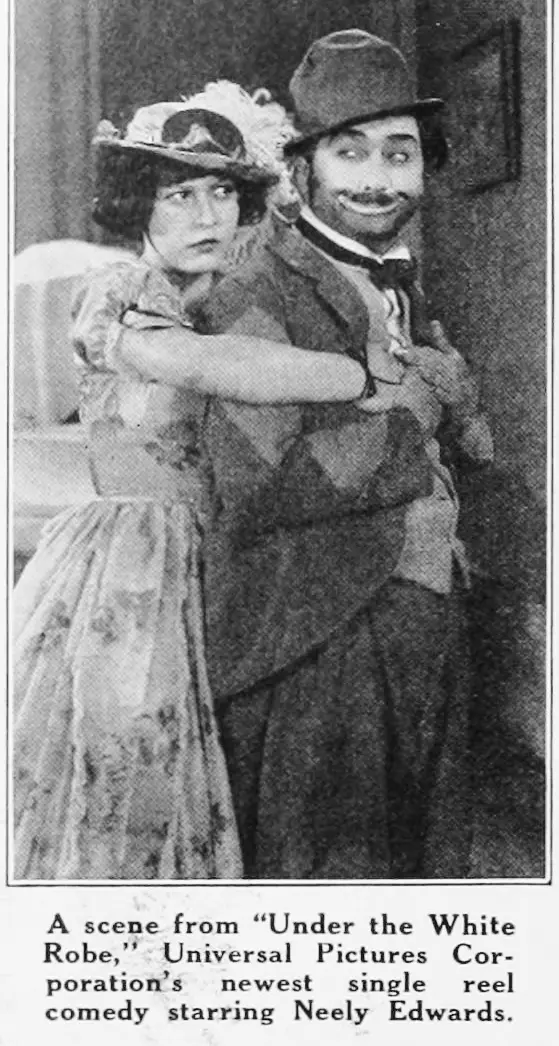
When Under the White Robe unfurls its opening frames, the viewer is thrust into a kaleidoscopic ballroom where decadence collides with desperation. The cinematography, though limited by the era’s static lenses, captures the glittering chandeliers and the jittering shadows of a fugitive who has just evaded the long arm of the law. Bert Roach, embodying the titular Nervy Ned, moves with a frantic grace that feels both comic and tragic, a duality that anchors the film’s tonal oscillations.
The mise‑en‑scene is deliberately exaggerated: aristocrats in feathered masks, a string quartet playing anachronistic waltzes, and a lone figure in tattered garments who, by sheer accident, becomes the night’s avant‑garde muse. This visual irony mirrors the film’s central conceit—mistaken identity as a vehicle for satire.
Ned’s sudden intrusion is more than a plot device; it is a commentary on class fluidity in the roaring twenties. The police, portrayed with caricatured menace, are a foil to the frivolity of the elite, underscoring how law and leisure intersect in absurd ways. As Ned darts through the crowd, the camera lingers on the bewildered faces of the high society guests, whose applause for his “make‑up” is a perfect illustration of the era’s fascination with the exotic "other."
The moment the police breach the ballroom, the film pivots sharply. The frantic exit through a side corridor is shot in a series of rapid cuts, a technique that anticipates later noir chase sequences. Ned’s escape vehicle—a sleek automobile awaiting like a modern chariot—introduces a new character without a line of dialogue: the young girl, a desperate heroine whose own rebellion mirrors Ned’s.
The transition to the haunted house is a masterstroke of atmospheric storytelling. The manor, rendered in stark chiaroscuro, evokes the same dread found in German Expressionist works such as Facing Death on the Blumlisalp. Its creaking doors and flickering lanterns become characters in their own right, amplifying the sense of entrapment.
Here, the rival suitor—played with sly menace by Neely Edwards—introduces a series of contrivances: rope‑bound ministers, hidden speakers that emit ghostly moans, and a labyrinth of corridors rigged to startle. These set‑pieces are not merely for shock; they serve to fragment the narrative, forcing Ned, the girl, and the stoic black chauffeur (a role that, while brief, adds a layer of racial subtext to the film’s otherwise light‑hearted tone) into a shared crucible of fear.
When the lights sputter and the ceremony teeters on the brink of collapse, the film reaches its most audacious moment: Ned is thrust into the groom’s shoes. The substitution is executed with a slapstick elegance reminiscent of Buster Keaton’s physical comedy, yet it also carries an undercurrent of pathos. Ned, a man perpetually on the run, is suddenly bound by the trappings of matrimonial law—a metaphor for the inescapable social contracts that define the era.
The bride’s subsequent divorce of Ned is handled with a surprising degree of emotional nuance. Rather than a mere punchline, the dissolution is portrayed as an act of self‑realization, a reclaiming of agency that aligns with the burgeoning feminist sentiments of the 1920s. Her eventual reunion with her true love, depicted in a tender tableau, restores narrative equilibrium while subtly critiquing the performative nature of societal expectations.
William Watson’s screenplay weaves together disparate genres—comedy, thriller, gothic horror—into a cohesive tapestry. The dialogue, though sparse, is peppered with period‑appropriate slang that grounds the characters in their historical moment. Bert Roach’s physicality is a highlight; his exaggerated gestures echo the pantomime traditions of silent cinema while retaining a modern sensibility.
Neely Edwards, as the scheming rival, delivers a performance that oscillates between sly humor and outright villainy. His timing, especially during the “spook fakes” sequence, showcases a deft understanding of tension and release, a skill also evident in his work on The Beautiful Liar. The supporting cast, though limited, provides sufficient texture to sustain the film’s rapid pacing.
The film’s visual language is a study in contrast. The ballroom’s opulent lighting is juxtaposed against the manor’s shadow‑laden corridors, creating a chiaroscuro effect that heightens emotional stakes. The use of practical effects—smoke machines, hidden wires for the “ghost” apparitions—demonstrates the ingenuity of early 20th‑century filmmakers.
Camera movements remain largely static, a hallmark of the period, yet the director compensates with inventive framing. Close‑ups of Ned’s frantic eyes during the chase, intercut with wide shots of the ballroom’s chaos, generate a kinetic energy that belies the film’s modest budget.
At its core, Under the White Robe interrogates the fluidity of identity. Ned’s accidental elevation to a “tramp‑artist” challenges the rigid class structures of the time, suggesting that perception can eclipse reality. The haunted house episode amplifies this motif, as the characters are forced to confront fabricated specters that mirror their own insecurities.
The film also explores the illusion of freedom. Ned’s flight from law enforcement is not a triumph but a series of increasingly constrained scenarios, culminating in an unwanted marriage. The girl’s ultimate decision to divorce Ned and pursue genuine love underscores the narrative’s advocacy for authentic self‑determination over socially imposed roles.
When placed alongside contemporaneous works such as McVeagh of the South Seas or the melodramatic Her Atonement, Under the White Robe distinguishes itself through its genre‑blending audacity. While many silent films of the era adhered strictly to a single tonal register, Watson’s script dares to intertwine slapstick, suspense, and romance, a precursor to the hybrid narratives seen in later talkies.
The film’s comedic timing can be likened to the farcical misadventures in The Fortune Teller, yet its gothic ambience nods to the atmospheric dread of Gambling in Souls. This intertextuality enriches the viewing experience, offering scholars a fertile ground for comparative analysis.
Though Under the White Robe remains a relatively obscure title in mainstream retrospectives, its influence reverberates in modern independent cinema that embraces genre hybridity. Film festivals dedicated to silent-era revivals often cite the movie’s daring narrative structure as an early example of what would later become “mock‑umentary” and “meta‑comedy” sensibilities.
Contemporary critics praise the film for its bold visual experimentation and its subversive take on class dynamics. The scene where Ned is mistaken for a fashion‑forward vagrant has been referenced in scholarly articles examining early 20th‑century fashion satire. Moreover, the haunted house sequence is frequently highlighted in discussions of early special‑effects craftsmanship.
Under the White Robe is a testament to the creative vigor of silent‑era filmmakers who, constrained by technology, compensated with imagination. Its blend of frantic chase, masquerade mischief, gothic terror, and romantic resolution creates a kaleidoscopic experience that rewards repeated viewings. For cinephiles seeking a film that defies easy categorization, this 1925 oddity offers a rich tapestry of visual wit, thematic depth, and historical intrigue.
Whether you are drawn to the film’s comedic brilliance, its atmospheric set‑pieces, or its subtle social commentary, Under the White Robe invites you to step beyond the polished veneer of the ballroom and into a world where identity is as mutable as the flickering shadows on a wall.
IMDb —
1920
Community
Log in to comment.