DbcultAccessing Vault...
Cult Review
Senior Film Conservator
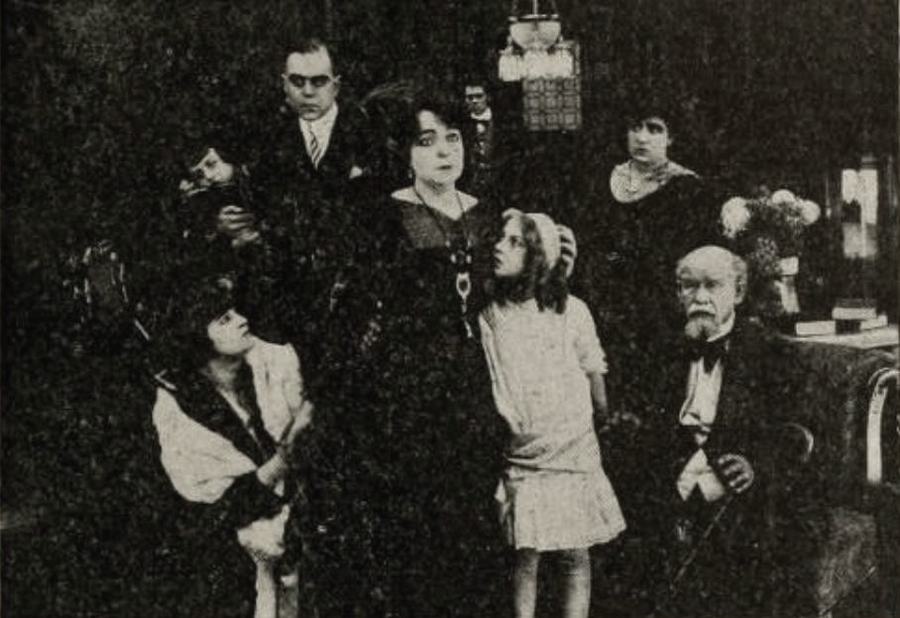
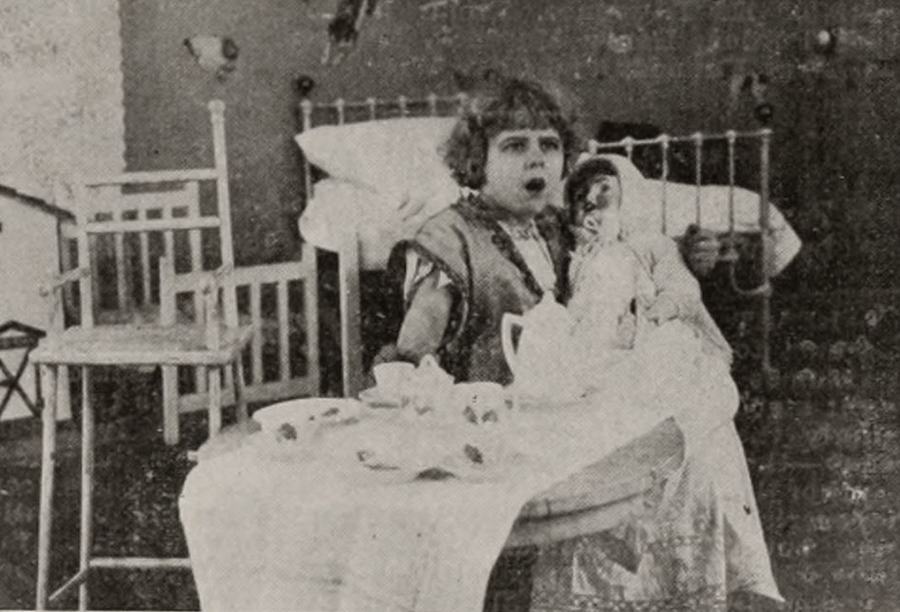
To scrutinize 'Little Miss Nobody' is to engage with the visceral anxieties of the early 20th-century American psyche. John Gorman, acting as both writer and director, constructs a narrative that is less a traditional melodrama and more a searing indictment of the precariousness of identity. In an era where the silent film was often relegated to simple moral binaries, this work dares to explore the murky grey areas of parental culpability and the haunting persistence of the past. The 'Little Orphan' (portrayed with a haunting fragility by Violet Wilkey) is not merely a character; she is a living ghost, a physical manifestation of a sin that her parents—played with varying degrees of neurotic intensity by the cast—thought they had successfully buried. Unlike the more straightforward paternal struggles seen in Fatherhood, Gorman’s film posits that the bond between parent and child is not an innate biological imperative but a social contract that can be shredded by ambition.
The film’s opening sequences are masterclasses in economic storytelling. We see the hand-off of the infant not as a moment of weeping tragedy, but as a transaction of necessity. This coldness sets the tone for the entire first act. The father’s rise to prosperity is juxtaposed against the child’s stagnation within the institutional walls. It is a cynical look at the American Dream, suggesting that the ladders of success are often built upon the discarded bodies of those who remind us of our humbler, perhaps more shameful, origins. This thematic weight reminds one of the social stratification explored in The Great Problem, though Gorman leans further into the personal domestic horror than the broad societal critique.
The introduction of the doctor (Edward Warren) shifts the film’s trajectory from a study in neglect to a study in redemption through the lens of the 'stranger.' The doctor is the only character whose motivations are untainted by the original sin of the child’s abandonment. When the accident occurs—a narrative device that feels less like a cliché and more like a karmic intervention—the doctor’s care for the Little Orphan serves as a rebuke to the biological parents. His decision to adopt her is an act of radical empathy, creating a new family structure that is based on choice rather than blood. This mirrors the subversion of traditional family dynamics found in Just Out of College, albeit with a significantly darker tonal palette.
However, this new-found stability is an illusion. The film brilliantly utilizes the doctor’s home as a stage for the inevitable collision of the past and present. When the biological father discovers the child’s whereabouts, his reaction is not one of paternal awakening but of panicked self-preservation. He views his daughter not as a human being, but as a piece of incriminating evidence that could dismantle his prosperous life. This provides a fascinating psychological depth to the character; he is a man who has successfully commodified his life, and the child is a bad debt he cannot settle. The tension here is palpable, far exceeding the typical emotional beats of 1910s cinema.
The role of the mother is perhaps the most complex and tragic element of the film. Having ascended to the status of a doctor’s wife, she lives in a gilded cage of her own making. Her silence is her currency. When the father approaches her to protect their 'secret,' the audience is forced to witness the total disintegration of her social mask. The doctor’s discovery of her duplicity is handled with a cold, surgical precision. He does not weep; he excises her from his life. This moment is pivotal because it leads to the film’s most controversial narrative choice: the casting out of the child. It suggests that even the 'noble' doctor is susceptible to the same pride and anger that fueled the original abandonment. The child, once again, is treated as an object—a symbol of a lie rather than a victim of it.
"In the world of 'Little Miss Nobody,' the street is the only honest place, for it does not pretend to offer the warmth that the home so readily withdraws."
This sequence of the child being thrown back into the street is filmed with a starkness that echoes the bleakness of The Years of the Locust. The visual language shifts from the soft interiors of the doctor’s mansion to the harsh, high-contrast lighting of the urban landscape. It is a reminder that in the silent era, the environment was often as much a character as the actors themselves. The child’s vulnerability in the face of the city’s indifference is a recurring theme that Gorman handles with a deftness that avoids the saccharine traps of his contemporaries.
The climax of the film is a startling departure from the genteel melodrama of the first two acts. The confrontation between the biological parents descends into a primal violence that feels almost Shakespearian. The father’s 'untimely end' at the hands of his former sweetheart is a shocking burst of kinetic energy. It is as if the years of repressed guilt and social performance have finally boiled over into a murderous rage. This turn toward the macabre aligns the film with the darker sensibilities of The Sons of Satan or the vengeful undertones of The Tiger. The mother’s subsequent 'payment of the penalty'—a euphemism for her own death or legal execution—completes the cycle of destruction.
This leaves the doctor as the sole survivor of the moral wreckage. His search for the Little Orphan in the final reel is imbued with a sense of desperate atonement. He is no longer just a doctor or an adoptive father; he is a man trying to rescue the very concept of innocence from a world that has systematically tried to destroy it. When he finally finds her and brings her back to his home, the ending is not one of simple joy, but of a quiet, somber resolution. The home is no longer a site of secrets, but a sanctuary built on the ruins of two lives.
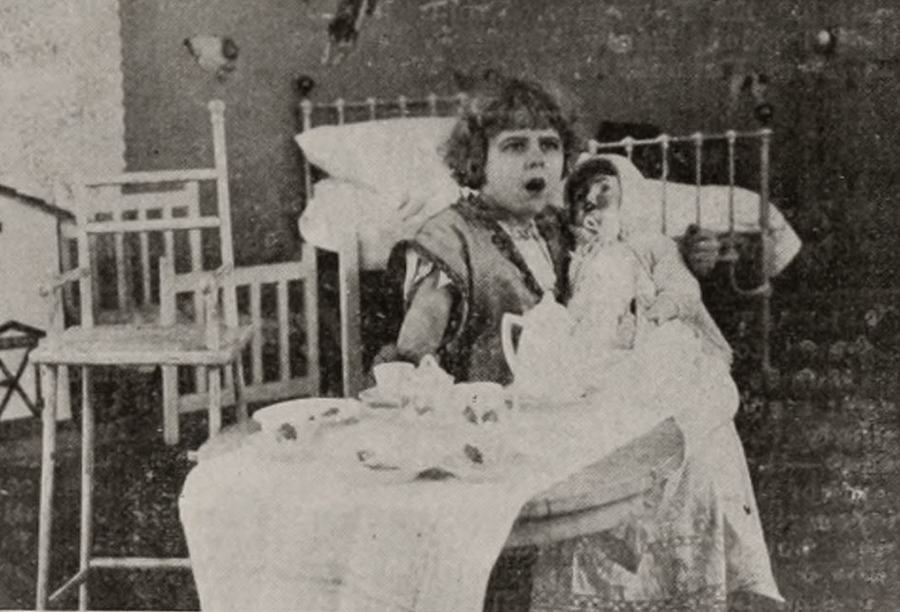
From a technical standpoint, 'Little Miss Nobody' showcases John Gorman’s evolving grasp of visual metaphor. The use of mirrors and doorways to frame the characters’ internal conflicts is particularly effective. The performances, while adhering to some of the theatricality of the time, are surprisingly nuanced. Em Gorman and Edward Warren provide a grounded center to the film, while Violet Wilkey’s portrayal of the orphan remains one of the most affecting child performances of the silent era. Her ability to convey profound isolation through simple gestures is a testament to the power of pure visual storytelling.
When compared to the sprawling epics like The Destruction of Carthage, 'Little Miss Nobody' feels intimate and claustrophobic, which works entirely in its favor. It doesn't need thousands of extras to convey the scale of its tragedy; it only needs the face of a child who has been forgotten. The film’s pacing is deliberate, allowing the tension of the secret to simmer until it inevitably explodes. It avoids the episodic nature of films like Giro d'Italia, focusing instead on a tight, character-driven arc that feels modern in its psychological consistency.
In the broader context of silent cinema, 'Little Miss Nobody' stands as a fascinating bridge between the moralistic fables of the early 1900s and the more complex social dramas of the 1920s. It shares a certain DNA with the gritty realism of Escaped from Siberia or the existential weight of A Pardoned Lifer. It is a film that refuses to offer easy answers. Is the doctor truly a hero, or is his initial rejection of the child a sign of a deeper moral failing? Is the mother a villain, or a victim of a patriarchal society that gave her no choice but to hide her past? These questions linger long after the final frame.
The film also touches upon the themes of fate and the inescapability of one's history, much like The Life Story of John Lee, or The Man They Could Not Hang. However, where that film looks at fate through the lens of the miraculous, 'Little Miss Nobody' looks at it through the lens of the tragic. There are no divine interventions here, only the consequences of human choices. Even the 'accident' that brings the child to the doctor is framed as a logical, if unfortunate, outcome of her living on the streets.
Ultimately, 'Little Miss Nobody' is a vital piece of cinematic history that deserves a modern reassessment. It is a film that understands the weight of a secret and the high cost of social mobility. It doesn't shy away from the darker aspects of the human condition, presenting a world where redemption is possible but only through a crucible of fire and blood. John Gorman’s vision is uncompromising, and the performances bring a haunting life to this tale of the forgotten. It remains as potent today as it was upon its release, a stark reminder that the ghosts of our past are never truly laid to rest; they are merely waiting for the right moment to step back into the light. For those interested in the evolution of the domestic thriller, this is an essential text, standing alongside works like The Spider or The Money Master in its exploration of the rot beneath the surface of respectability. It is a cinematic experience that is both intellectually stimulating and emotionally draining, a rare feat for any era of filmmaking.

IMDb 5.2
1928
Community
Log in to comment.