DbcultAccessing Vault...
Cult Review
Senior Film Conservator
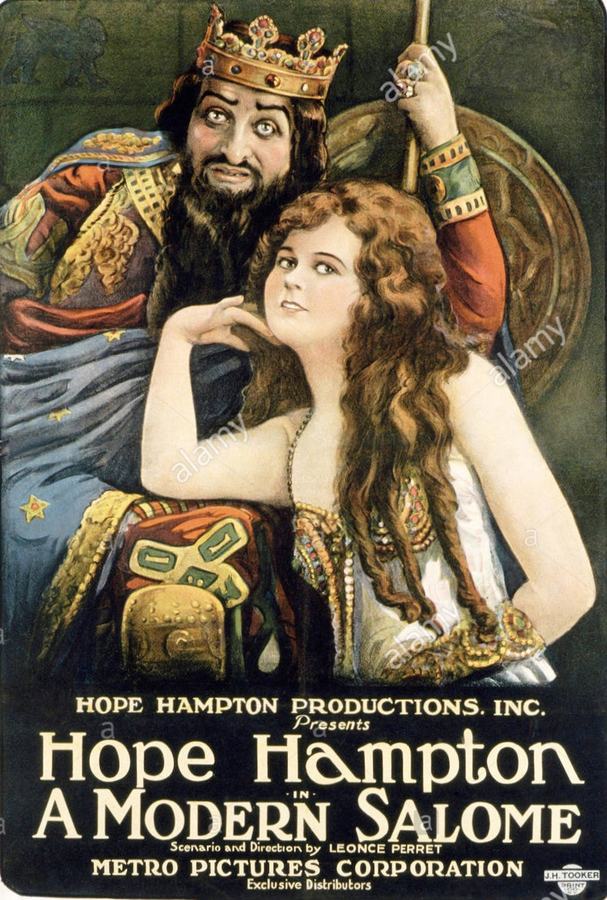
In the annals of silent cinema, where grand gestures and stark moralities often painted the screen, Léonce Perret's A Modern Salome emerges as a fascinating, if sometimes heavy-handed, exploration of human frailty, the corrupting influence of wealth, and the arduous path to atonement. Released in 1920, this film, starring the luminous Hope Hampton, attempts to transpose the ancient allure and destructive power of the biblical Salome into a contemporary narrative, albeit with a decidedly more melodramatic bent than one might expect from an association with Oscar Wilde. While Wilde is credited as a writer, it's crucial to understand that this film is not a direct adaptation of his controversial play. Instead, it seems to draw inspiration from the *idea* of Salome – a woman whose actions lead to a man's ruin – and recontextualizes it within the social mores and anxieties of its time. The result is a film that oscillates between intriguing psychological drama and conventional morality play, offering a rich tapestry for critical dissection.
Our narrative centers on Virginia Hastins, portrayed with a compelling mix of vulnerability and burgeoning ambition by Hope Hampton. Virginia's initial predicament is one that resonated deeply with audiences of the era: the sudden death of her patriarch leaves her teetering on the precipice of destitution. This financial precipice, a common trope in silent films, immediately establishes the stakes. Her engagement to Robert Monti, played by Arthur Donaldson, becomes an immediate casualty of this newfound precarity. Monti, while seemingly devoted, lacks the material means to save Virginia from her impending poverty. This pragmatic, if brutal, choice to break off her engagement for a financially secure marriage to the millionaire James Vandam (Percy Standing) sets the stage for Virginia's moral descent. It's a choice born of desperation, but one that swiftly morphs into a lifestyle of excess, revealing a latent shallowness that wealth readily amplifies.
Virginia's immersion into the world of the ultra-rich is depicted with a certain voyeuristic fascination. Unaccustomed to such extravagance, she embraces it with an almost childlike abandon, entertaining lavishly and indulging in a flurry of flirtations. This period of her life mirrors the superficiality often critiqued in works like Thackeray's Vanity Fair, where social climbing and the pursuit of status trump genuine affection or moral rectitude. Hampton's portrayal here captures the intoxicating allure of this new life, but also hints at the emptiness beneath the glittering surface. Her flirtations, while perhaps initially harmless displays of newfound freedom, gradually reveal a lack of true connection and a growing self-absorption.
Crucially, one figure remains immune to Virginia's charms: Harry Torrence, her husband's secretary, played by Wyndham Standing. Torrence represents an anchor of integrity, a quiet, unassuming man whose moral compass remains steadfast amidst the swirling currents of Virginia's self-indulgence. His stoicism, in fact, seems to irritate Virginia, perhaps because it reflects an unspoken judgment on her own conduct. This dynamic sets up the eventual tragic confrontation, where Virginia's casual disregard for others' feelings escalates into a catastrophic act of betrayal.
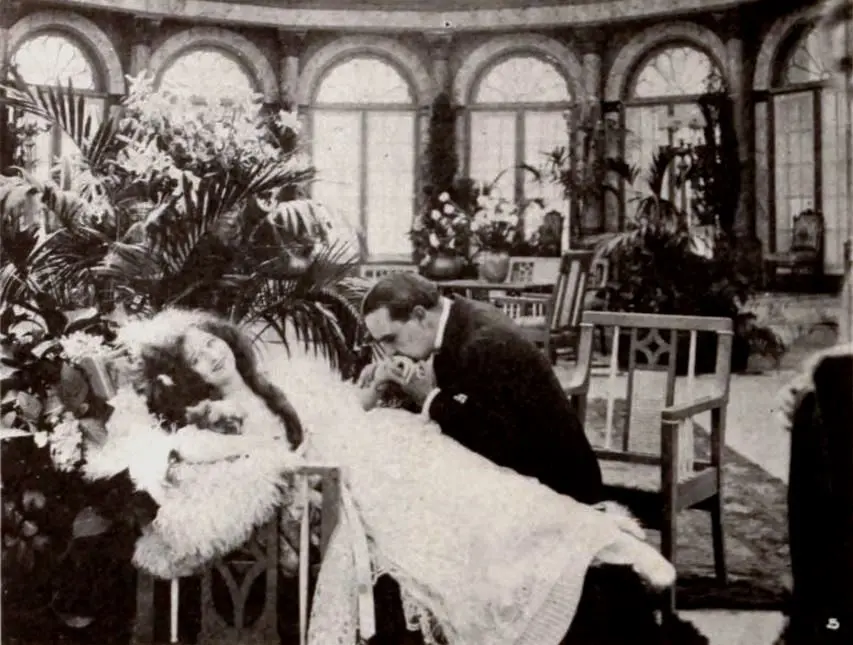
The re-emergence of Robert Monti, Virginia's jilted former fiancé, introduces the element of past sins catching up with present prosperity. Monti's attempt to blackmail Virginia using her old love letters is a desperate, pathetic act, yet it serves as a potent catalyst. The ensuing confrontation, where Monti attacks Virginia, is a pivotal moment. In a shocking display of self-preservation and moral cowardice, Virginia seizes the opportunity to deflect blame, pinning the assault on the innocent Harry Torrence. This act of egregious injustice is the film's central tragedy, a moment where Virginia's character plummets to its lowest point. It’s a stark reminder of how quickly self-interest can override any sense of decency, transforming a privileged woman into a truly destructive force.
The consequences for Torrence are immediate and devastating. Discharged from his position, he faces a rapid, brutal descent into destitution. He loses his wife, his child, and his home, becoming a tramp, a shattered remnant of his former self. This swift and complete ruin of an innocent man is a powerful, if somewhat exaggerated, depiction of societal unforgiveness and the precariousness of life for those without powerful connections. Films like Nine-Tenths of the Law or even Loot, though distinct in their narratives, often explored similar themes of societal injustice and the harsh realities faced by the marginalized. Torrence's plight serves as a stark counterpoint to Virginia's initial prosperity, highlighting the vast chasm between the privileged and the penniless.
The film's title, A Modern Salome, comes into sharp focus when Virginia, upon encountering the wretched figure of the ruined Torrence, is finally confronted with the devastating ramifications of her actions. This moment of recognition, a mirror held up to her own culpability, triggers a profound psychological crisis. What follows is the film's most distinctive and arguably most ambitious sequence: Virginia's dream where she envisions herself as Salome of the Bible. This is where the Oscar Wilde connection truly resonates, not as a direct plot adaptation, but as a thematic echo. Wilde's Salome is a figure of dangerous, obsessive desire and destructive feminine power, leading to the beheading of John the Baptist. In Virginia's dream, she is forced to confront her own destructive agency, her unwitting role as an instrument of ruin, much like the biblical princess. This dream sequence, likely employing expressionistic elements common to the era (think of German expressionism in films like The Head of Janus), serves as a powerful, albeit somewhat abrupt, catalyst for her awakening.
The allegorical dream is a crucial narrative device, allowing Virginia to process her guilt and recognize the profound injustice she has wrought. It's an internal reckoning, a moment of spiritual epiphany that transcends the mundane machinations of the plot. This internal transformation, while perhaps feeling a touch too convenient for modern audiences, was a common dramatic convention in silent cinema, signaling a character's moral pivot. It allows for a dramatic shift from self-serving ambition to genuine remorse, paving the way for her confession.
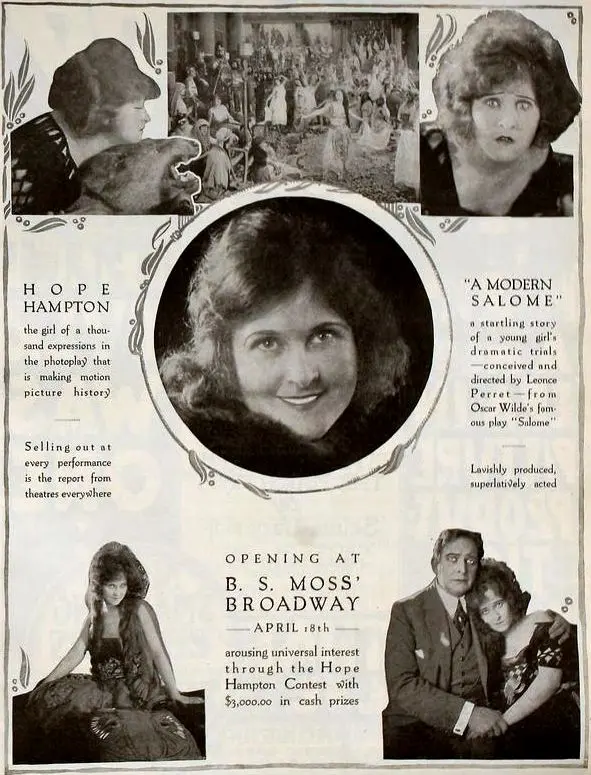
Awakening from her nightmare, Virginia is consumed by remorse. Her confession of the truth is the turning point, a cleansing act that begins the process of healing. This act of candor, while harrowing, is necessary for any semblance of redemption. The immediate result is the reconciliation between Harry Torrence and his wife, a moment of poignant relief after the bleakness of his suffering. This restoration of a family unit underscores the film's underlying moral framework, emphasizing the sanctity of home and family as vital components of a fulfilling life.
James Vandam, Virginia's millionaire husband, reacts with a mixture of shock and decisive action. His violent thrashing of Monti, while perhaps satisfying from a dramatic perspective, also raises questions about the nature of justice presented in the film. Is it a return to a more primitive form of retribution, or simply a wealthy man exerting his power? It certainly provides a swift and definitive end to Monti's villainy. Vandam's subsequent re-hiring of Torrence is a righteous act, correcting the grave injustice, and his forgiveness of Virginia, while perhaps hard-won, completes the cycle of atonement and reconciliation. It suggests that even profound betrayals can be overcome, though not without significant pain and penance.
Hope Hampton's performance as Virginia is the linchpin of the film. She navigates the character's complex arc from a desperate debutante to a frivolous socialite, and finally to a remorseful woman seeking absolution, with commendable range for the silent era. Her expressions, often exaggerated for the camera, effectively convey her internal turmoil. Percy Standing as James Vandam delivers a stoic, authoritative performance, embodying the patriarchal figure whose power can both enable and correct. Wyndham Standing's Harry Torrence is a study in quiet suffering, his transformation into a tramp providing some of the film's most affecting visuals. The cast collectively brings a gravitas to the melodramatic proceedings, ensuring that the emotional stakes feel genuine.
Thematically, A Modern Salome delves into the perennial struggle between material ambition and moral integrity. It critiques the superficiality of high society and exposes the devastating consequences of selfish actions. The film's use of the Salome motif is perhaps its most intriguing aspect, offering a psychological dimension that elevates it beyond a simple tale of betrayal. It invites viewers to consider the destructive potential inherent in human nature, regardless of gender, and the profound impact one individual's choices can have on the lives of others. The film's resolution, while providing a clear moral outcome, leaves room for reflection on the true cost of forgiveness and the long shadow of past transgressions. It's a journey not unlike the tumultuous paths explored in films such as The Great Adventure, where life's twists and turns shape character and destiny.
Léonce Perret's direction is competent, utilizing the visual language of silent film effectively to convey emotion and plot. While perhaps not as experimental as some of his European contemporaries, Perret crafts a visually coherent narrative that keeps the audience engaged. The pacing, typical of the era, allows for moments of dramatic tension and emotional reflection. The film's legacy lies in its attempt to blend a classic biblical allegory with a contemporary social drama, showcasing the enduring power of archetypal narratives. It stands as a testament to the silent era's capacity for exploring complex moral questions, even within the confines of its dramatic conventions. While it may not possess the groundbreaking artistry of some of its peers, A Modern Salome remains a compelling artifact, offering a window into the social anxieties and cinematic storytelling techniques of its time. It invites us to consider how easily good intentions can be corrupted by circumstance and how vital self-awareness is on the path to true redemption, a theme that resonates through cinematic history, even in vastly different contexts like Mutiny or Looking for Trouble, which explore moral quandaries under duress. The film's ability to intertwine themes of ambition, betrayal, and eventual contrition ensures its place as a thought-provoking piece of early 20th-century cinema.
Ultimately, A Modern Salome is more than just a melodramatic silent film; it's a social commentary wrapped in a tale of personal downfall and spiritual awakening. It challenges its audience to look beyond the glittering facades of wealth and confront the moral compromises that often accompany its pursuit. The film's enduring power lies in its portrayal of Virginia's complex journey – a woman who, like the biblical figure she dreams of, causes immense suffering, but ultimately finds a path, however arduous, back to humanity through remorse and honesty. It's a compelling piece of cinematic history that continues to provoke reflection on the timeless themes of guilt, forgiveness, and the search for one's true self amidst life's often-turbulent currents.

IMDb 6.3
1929
Community
Log in to comment.