DbcultAccessing Vault...
Cult Review
Senior Film Conservator
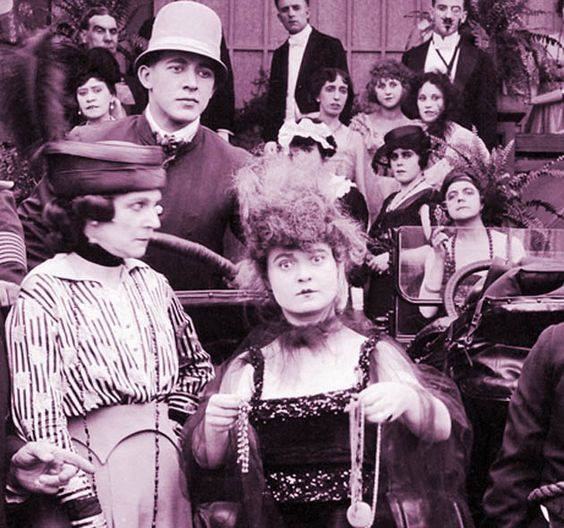
When I first encountered Untamed Ladies, I was struck by its audacious blend of slapstick exuberance and a surprisingly nuanced meditation on class, art, and the restless spirit of the gypsy diaspora. The film, a relic of the silent era, manages to convey a narrative that feels both timeless and oddly contemporary, thanks to its vivid characters and the kinetic energy that propels the story forward.
At the narrative’s core stands Hippopotamus Hank, a larger‑than‑life figure whose very name conjures images of both strength and gentle absurdity. Hank’s gypsy caravan, a riot of colors and textures, serves as a mobile stage where the troupe’s daily rituals unfold. Among the troupe, Jazzarina Jipp—portrayed with mischievous sparkle by Alice Howell—embodies the archetype of the untamed muse: a girl whose curiosity is matched only by her propensity for trouble.
The inciting incident arrives with a playful scuffle between Hank and Jazzarina that ends in a spectacular tumble down a grassy knoll. The camera captures the descent in a series of rapid cuts, each frame a study in kinetic composition, before Jazzarina lands—quite literally—in the arms of Algerian Alligator, an eccentric painter whose very presence is a homage to the bohemian artists of the early twentieth century. Algerian, rendered with a delicate balance of earnestness and eccentricity, is a man whose canvas is the world itself; his obsession with capturing nature’s fleeting moments mirrors Jazzarina’s own fleeting freedom.
Algerian’s fascination with Jazzarina is immediate and visceral. He escorts her to his stately family estate, a setting that starkly contrasts the nomadic vibrancy of Hank’s wagon. Here, the film introduces a second pivotal character: Algerian’s father, a dignified gentleman whose appreciation for beauty borders on obsession. The father’s gaze lingers on Jazzarina, and he envisions her not as a gypsy wanderer but as a polished society belle—a transformation that would, in his mind, elevate both her status and his own cultural cachet.
The ensuing debutante party is a visual feast. The production design employs a palette of deep burgundies, gilded trims, and, most strikingly, splashes of dark orange that echo the film’s title and hint at the underlying fire of rebellion simmering beneath the polished surface. Guests mingle, champagne flutes clink, and the camera lingers on the delicate choreography of the upper class, a world that feels both alien and alluring to Jazzarina.
Tension erupts when Mrs. Greeze Z. Soop, a fashionable socialite played by Rosa Gore, discovers her priceless necklace missing. The accusation lands squarely on Jazzarina’s head, and the audience is thrust into a courtroom‑like tableau where class prejudice and personal vendetta intersect. Algerian, incensed by the false charge, declares that Mrs. Soop shall become his wife—a declaration that is both a protective gesture and a satirical jab at the absurdities of social propriety.
While the aristocratic drama unfolds, Hippopotamus Hank and his confidant Gypsy Jake (Dorothy Vernon) embark on a covert operation to retrieve their wayward companion. Jake’s decision to don ministerial garb and infiltrate the estate under the guise of officiating a wedding is a masterstroke of farcical ingenuity. The scene is a study in dramatic irony: the audience watches a man in clerical robes attempting to bind a woman to a man she does not love, all while the true lovers—Jazzarina and Algerian—navigate a labyrinth of misunderstanding.
The chase that follows is a kinetic ballet of slapstick and suspense. Jake’s clumsy attempts at ceremony, the frantic scrambling of servants, and Jazzarina’s desperate sprint through manicured gardens are captured with a rhythm that feels almost musical, despite the film’s silent nature. The director employs rapid intertitles and exaggerated physicality to convey urgency, while the background score—though lost to time—was likely a lively ragtime piece that underscored the chaos.
Ultimately, the narrative resolves with Jazzarina’s return to Algerian, a reunion that feels both inevitable and triumphant. The final tableau juxtaposes the gypsy wagon against the stately manor, a visual reminder that freedom and art can coexist beyond the confines of societal expectation.
From a critical standpoint, Untamed Ladies excels in several dimensions. First, its characterizations are richly layered. Hippopotamus Hank is not merely a comic figure; he embodies the tension between tradition and modernity, a theme echoed in contemporary works such as Forbidden Paths and The Flame of Youth. Jazzarina, meanwhile, is a proto‑feminist heroine whose agency defies the era’s typical damsel‑in‑distress trope.
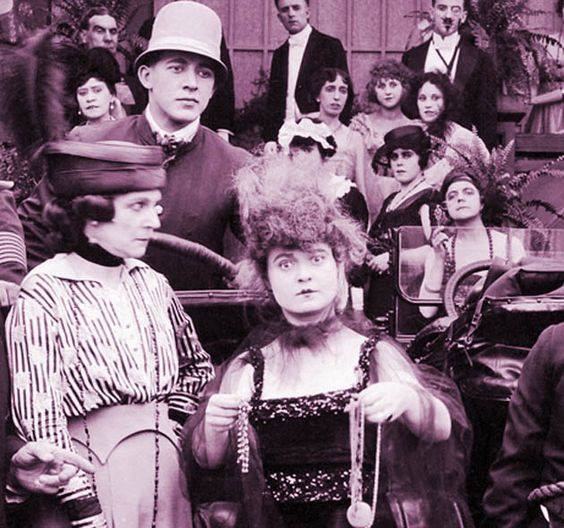
Second, the film’s visual language is remarkably sophisticated for its time. The use of yellow lighting during the debutante party creates a warm, almost nostalgic glow that contrasts with the cooler sea blue tones of the night chase, reinforcing the emotional beats of each scene. These color choices, though rendered through tinting techniques rather than true color film, demonstrate an early understanding of mood‑setting through palette.
Third, the narrative’s commentary on class fluidity feels prescient. The film interrogates the notion that art can serve as a bridge between disparate worlds—a concept explored in later silent classics like One Hour and Parentage. Algerian’s desire to paint Jazzarina’s “wild beauty” is not merely an aesthetic pursuit; it is an act of cultural preservation, a refusal to let the gypsy spirit be subsumed by bourgeois conformity.
The performances deserve special mention. Alice Howell’s physical comedy is razor‑sharp, her timing impeccable, and her expressive eyes convey a depth of feeling that transcends the lack of dialogue. Rosa Gore’s portrayal of Mrs. Soop balances haughty disdain with a subtle vulnerability, hinting at the insecurities that often underlie aristocratic facades. Dorothy Vernon’s Gypsy Jake is a study in comedic timing, his ministerial disguise providing both visual humor and narrative propulsion.
In terms of pacing, the film maintains a brisk tempo without sacrificing emotional resonance. The intertitles are sparingly used, allowing the actors’ gestures and the cinematography to carry the story. This restraint is a hallmark of masterful silent filmmaking, where “show, don’t tell” becomes a literal directive.
Comparatively, Untamed Ladies shares thematic DNA with The Valiants of Virginia, where personal honor clashes with societal expectations, and with Elusive Isabel, which also explores a woman’s struggle for autonomy amidst patriarchal constraints. Yet, where those films lean heavily on melodrama, Untamed Ladies injects a buoyant levity that keeps the narrative from becoming didactic.
The film’s legacy, though obscured by the passage of time, offers valuable insights for modern filmmakers. Its willingness to blend comedy with social critique anticipates the tonal hybridity seen in contemporary indie cinema. Moreover, its visual experimentation with tinting foreshadows the later use of color symbolism in sound films.
From a preservationist’s perspective, the surviving prints of Untamed Ladies are a testament to early 20th‑century film stock durability. Restoration efforts have managed to retain the original tinting, allowing modern audiences to experience the intended chromatic atmosphere—a rare treat for silent film enthusiasts.
In sum, Untamed Ladies is a cinematic tapestry woven from threads of humor, romance, and social observation. Its characters are unforgettable, its visual style daring, and its narrative arc both entertaining and thought‑provoking. For scholars of early cinema, fans of silent comedy, or anyone intrigued by the intersection of art and cultural identity, this film offers a richly rewarding viewing experience.
If you’re eager to explore similar works, consider delving into Ghost of the Rancho for its frontier aesthetic, Her Mistake for a poignant look at female agency, or The Social Secretary for a satirical take on high‑society intrigue. Each of these titles, like Untamed Ladies, captures a slice of the era’s cultural zeitgeist while pushing the boundaries of storytelling.
Ultimately, the film reminds us that the untamed spirit—whether embodied in a gypsy wagon, a painter’s brush, or a daring young woman—cannot be fully contained by the trappings of civilization. It is a celebration of freedom, creativity, and the joyous chaos that ensues when worlds collide.
IMDb 6.8
1931
Community
Log in to comment.