DbcultAccessing Vault...
6.3/10
Senior Film Conservator
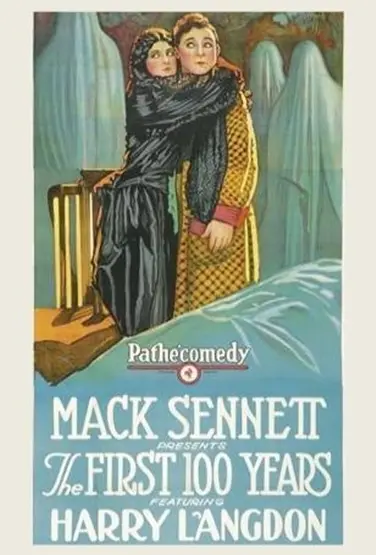
A definitive 6.3/10 rating for a film that redefined the boundaries of cult cinema. The First 100 Years remains a cornerstone of transgressive art.
The year 1924 represents a pivotal meridian in the evolution of the silent comedy, a period where the primitive energy of the chase was being supplanted by the nuanced character studies of the 'Big Four.' While Chaplin and Keaton often monopolize the historical discourse, Harry Langdon remains the enigmatic outlier—the man-child whose comedy was predicated not on athleticism, but on a peculiar, palsied hesitation. In The First 100 Years, we witness the full flowering of this aesthetic. It is a film that begins with the broad strokes of melodrama only to collapse into a claustrophobic, hilariously agonizing examination of domestic stasis. Unlike the overt heroics found in Hearts of the World, Langdon’s heroism is incidental, almost accidental, setting the stage for a marriage that feels less like a union and more like a comedic siege.
The opening sequence, involving the rescue of his lady love (the luminous Alice Day) from the clutches of Black Mike, serves as a brilliant pastiche of the cliffhanger serials of the era. It establishes a false sense of security, a traditional narrative arc that the film immediately subverts once the 'wedded bliss' commences. The transition from the rugged outdoors to the stifling interior of the marital home is jarring and intentional. It mirrors the shift seen in The Mysterious Stranger, where the external world’s dangers are merely a prelude to the psychological complexities of the domestic sphere. Langdon’s performance here is a masterclass in subtlety; his blinking eyes and tentative gestures suggest a man who is perpetually surprised by his own existence.
Enter the first cook, played with terrifying vigor by Louise Carver. In the 1920s, the 'servant problem' was a recurring trope in middle-class comedies, but here it is elevated to the level of the grotesque. Carver’s cook is not merely brusque; she is a domineering force of nature, her cigar-smoking an overt challenge to the gender norms of the household. She occupies the space with a physical authority that dwarfs Langdon’s slight frame. The comedy here arises from the inversion of power. The 'master' of the house is a guest in his own kitchen, a theme that resonates with the social anxieties explored in Congestion. The thick clouds of cigar smoke serve as a visual metaphor for the obfuscation of the husband’s authority, a haze through which he must navigate his own impotence.
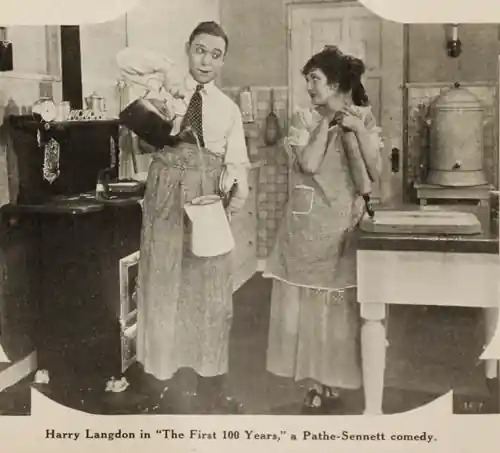
Just as the domestic tension reaches a boiling point, the arrival of Roland Stone (Frank J. Coleman) injects a new flavor of chaos. Stone is 'bluff and portly,' the antithesis of Langdon’s ethereal fragility. His friendship with the wife is immediate and suspiciously deep, creating a triangle of discomfort that feels surprisingly modern. In films like The Belle of Kenosha, the 'old friend' is often a catalyst for jealousy, but Langdon’s reaction is more one of bewildered observation than traditional rage. He is a spectator in his own life, watching as Stone ingratiates himself into the family unit. The chemistry between Coleman and Day provides a grounded counterpoint to Langdon’s absurdist flailing, grounding the film in a recognizable reality even as the situations become increasingly preposterous.
The narrative pivot occurs with the hiring of Miss Gainsborough, played by Madeline Hurlock. If the first cook represented the crushing weight of domestic duty, Miss Gainsborough represents the disruptive potential of desire. Her 'friendly attention' to Langdon is a comedic powder keg. Hurlock plays the role with a shimmering, almost ethereal quality that contrasts sharply with the gritty realism of the earlier scenes. This shift in tone reminds one of the stylistic departures in Mystic Faces. The husband, suddenly the object of affection, is utterly unequipped to handle the situation. His attempts to maintain a professional distance while being physically overwhelmed by Gainsborough’s 'fainting' spells provide some of the film’s most enduring images.
The climax of the film—the midnight prowler sequence—is a masterclass in silent film pacing. The skulking figure in the shadows introduces a touch of the thriller genre, reminiscent of the tension in The Phantom. When Miss Gainsborough faints into the husband’s arms, the resulting tableau is a perfect storm of incriminating evidence. The wife’s entrance at this precise moment is a classic farce trope, yet it is played with a genuine sense of betrayal. The stakes feel real. The question of whether the marriage is over is not merely a plot point; it is the thematic culmination of the film’s exploration of trust and the fragility of the domestic contract. The physical comedy of Langdon trying to extricate himself from the clinging cook is both hilarious and deeply pathetic.
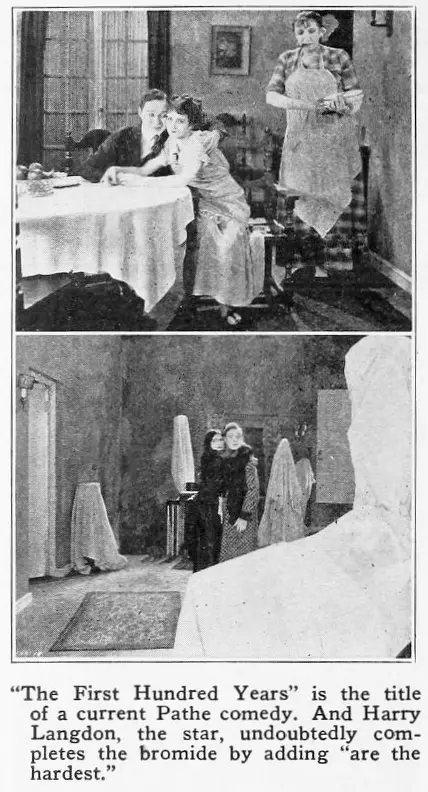
Technically, The First 100 Years showcases the high production values of the Mack Sennett studio during its peak. The lighting in the night scenes is particularly noteworthy, using deep blacks and sharp highlights to create a sense of space that was often lacking in earlier slapstick shorts. This visual sophistication is comparable to Il film rivelatore, where the camera becomes an active participant in the storytelling. The editing, too, is sharp, cutting between the husband’s panic and the wife’s growing suspicion with a rhythmic precision that heightens the comedic timing. The use of close-ups on Langdon’s face allows the audience to inhabit his internal monologue—a cacophony of doubt and confusion that needs no intertitles to be understood.
When placed alongside other works of the era, such as The Guilty Man or Good Riddance, Langdon’s film stands out for its refusal to provide easy moral resolutions. It occupies a liminal space between the broad comedy of Hot Dog and the sentimentalism of Forget Me Not. There is a cynicism beneath the surface—a suggestion that the 'first 100 years' of marriage are indeed the hardest, not because of external threats, but because of the inherent absurdity of two people trying to share a life. The inclusion of Tiny Ward and Leo Sulky in supporting roles rounds out a cast that understands the specific requirements of the Sennett house style: energy, timing, and a total commitment to the bit.
Ultimately, The First 100 Years is more than a relic of a bygone era; it is a vital piece of cinematic history that highlights the unique genius of Harry Langdon. His ability to find pathos in the most ridiculous of circumstances—whether being bullied by a cook or caught in a compromising position with a houseguest—is what sets him apart. The film doesn't just ask 'is the marriage over?'; it asks if we ever truly know the people we share our lives with. It is a domestic odyssey that begins with a rescue and ends with a question mark, wrapped in the gorgeous, flickering silver of the silent screen. For those looking to understand the bridge between the vaudeville past and the narrative future of cinema, this film is an essential text, standing tall alongside contemporaries like Mr. Dolan of New York and Where the North Begins. It remains a testament to the power of a blink, a shrug, and a well-timed cigar.
IMDb —
1919
Community
Log in to comment.