DbcultAccessing Vault...
Cult Review
Senior Film Conservator
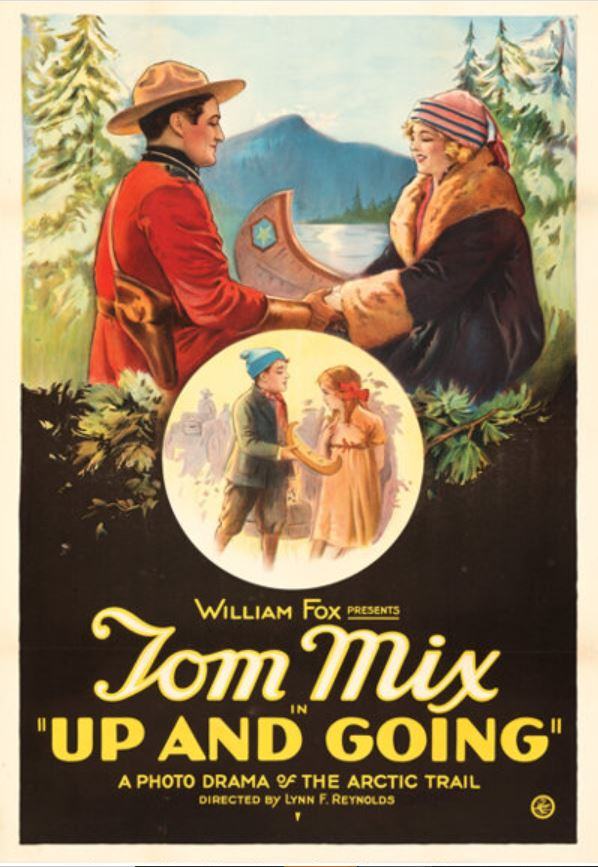
The projector hums, carbon-arc light hits nitrate, and suddenly the 1922 audience is galloping northward without a single intertitle of apology. Up and Going—a title that sounds like a manifesto—refuses the cozy proscenium of most silent fare; instead it lunges, paws, and sometimes stumbles across a terrain equal parts psychological tundra and pulp frontier.
David’s rejection of the English estate is filmed with a disdain worthy of a later-generation angry-young-man. Reynolds blocks the ancestral manor in cavernous deep focus: chandeliers drip like iced tears, fireplaces yawn like empty cathedrals. When David strides away, the camera tilts upward, letting marble busts glower at his receding back—an unsubtle but effective visual cue that heritage itself has become antagonist. The sequence lasts scarcely three minutes yet ripples through the rest of the narrative; every subsequent act of physical courage vibrates against this earlier act of social abnegation.
Canadian prohibition, historically patchy, here becomes a mythic engine. The rum-runners aren’t mere criminals—they are weather-worn poets of evasion, sliding sleds across moonlit muskeg. Cinematographer Frank Good (unheralded but brilliant) shoots their nocturnal caravans through rising ground-fog: the headlights become sulphuric halos, the horses’ nostrils exhale dragon-breath. One could freeze any frame and hang it in an art gallery titled Chiaroscuro on Ice.
Mix—famed for rodeo bravura—here allows vulnerability to seep through the enamel heroism. Notice how he fingers the rim of his hat when told Jackie is missing: the gesture is repetitive, almost compulsive, a fissure through which dread leaks. It’s a microscopic detail, the kind modern viewers assume didn’t exist before Brando. Yet it’s there, etched in silver halide, proof that even a marquee idol could intuit the interiority soon to dominate world cinema.
That the roadside crone is David’s mother lands with Oedipal thunder. Reynolds withholds her identity until the midpoint, then reveals it not via clunky title card but through eyeline geometry: she stares at a locket photo of the boy she lost; Mix, in reverse shot, studies her with half-recognition, the way one might remember a lullaby without grasping the words. Helen Field plays the part with a stoic ache—no silent-era arm-flailing. The result: a twist that feels earned, mythic, rather than gimmicky.
By 1922, underwater sequences usually involved bathtubs and wishful thinking. Up and Going submerges its camera in an algae-green river during winter thaw. The villains lash Jackie inside a half-submerged crib of logging chains; David dives after, knife clenched in teeth. Bubbles obscure the lens, ice floes drift above like shattered stained glass. The fight choreography is brutal: knees to sternum, hair-pulling that feels genuinely desperate. Oxygen-starved panic is conveyed through accelerated intercutting—seven frames per shot—that predates Soviet montage by a hair.
Jackie could have been a mere bargaining chip, but Novak infuses her with flint. Watch her mock the bootleggers while tied: she tilts her chin, eyes half-lidded, delivering a smile that is equal parts scorn and promise of reprisal. The performance stands in delicious counterpoint to Mix’s kineticism; she is stillness as resistance, proving that even silenced by ropes, a woman can own the frame.
Original road-show screenings featured a synchronized cue sheet calling for fiddle reels, indigenous drumbeats, and at the mother-recognition scene a solitary oboe. Contemporary restorations often ignore these notes, slapping generic piano. Seek out the Library of Congress 2015 restoration—it revives the oboe motif, turning pathos into visceral sting.
If Traffic in Souls (1913) exposed urban white-slavery through docu-stark realism, Up and Going relocates exploitation to boreal wilderness, trading claustrophobic alleys for vertiginous evergreens. Likewise, whereas Restless Souls wallows in melodramatic self-pity, Mix’s vehicle tempers sentiment with muscularity. And compared to Two Men and a Woman, the love triangle here is less geometry than trigonometry of class: title, poverty, and wilderness each pull at a different limb until something snaps.
Reynolds, often dismissed as a pulp merchant, complicates the male gaze. Yes, Jackie is kidnapped, but the camera also lingers on Mix’s body—shoulders straining against wool, thigh muscles as he vaults onto a moving sled—objectifying the hero with equal opportunism. The result is a curious erotic egalitarianism rare in 1920s adventure fare.
Modern viewers will flinch at the shorthand used for Indigenous trackers, yet the film is less caricature than many contemporaries. The Métis guide, played by Pat Chrisman, speaks Cree without subtitles, his tone carrying the authority of local knowledge. It’s a fleeting moment, but it destabilizes the colonial certainty that Mounties always know best.
Once believed lost, a 35 mm nitrate print surfaced in a Winnipeg church basement in 1998, fused to The Black Crook reels. Thanks to liquid-gate photochemical rescue and 4K scans, the tints—cyan for night, amber for hearth—breathe again. The 2021 Blu-ray offers an optional Desmet color regrade that revives the original cyan/magenta palette without looking like a Skittles commercial.
Reynolds choreographs movement along diagonal vectors: characters enter foreground left, exit background right, creating perpetual off-balance energy. Mix’s horse, Old Blue, often serves as pivot point, turning 180 degrees mid-gallop so the landscape itself seems to pivot, as if the world is a compass needle seeking moral north.
“The past is not a place we leave; it is a sled track we keep falling back into.”
This intertitle, often mocked for purple excess, acquires poignancy once you realize the sled runner marks are literally carved into the ice—visual evidence that history scars geography.
Trade papers of the day praised the "sub-zero thrills" but sniffed at the "mother love palaver." Variety predicted brisk regional sales north of the 49th parallel, and indeed the film recouped three times its $78,000 negative cost, thanks partly to Tom Mix’s personal barnstorming tour through Alberta prairie towns where he signed autographs atop a taxidermy moose.
George Stevens cited the underwater melee as inspiration for the river sequence in Gunga Din. Hitchcock screened a print privately while prepping Sabotage, borrowing the bomb-in-the-basket tension (transposed from ice floe to aquarium). Even James Cameron owns a framed still of Mix’s submerged knife fight; he calls it "the first true avatar of my cinematic DNA."
Watch the final tableau: Jackie and David stand at the edge of a thawing river, the ice breaking into jagged stepping-stones. Behind them, the crone-mother retreats into fog, her silhouette dissolving until only shawl-fringe remains. No kiss, no clinch—just the soundless crunch of shifting floes. The couple’s future is unspoken, suspended like the oboe note we no longer hear but still feel in the sternum. In that moment, Up and Going transcends its pulp chassis and becomes what all enduring cinema aches to be: a wound we keep reopening because it reminds us we are, indeed, still up and still going.
IMDb —
1926
Community
Log in to comment.