DbcultAccessing Vault...
Cult Review
Senior Film Conservator
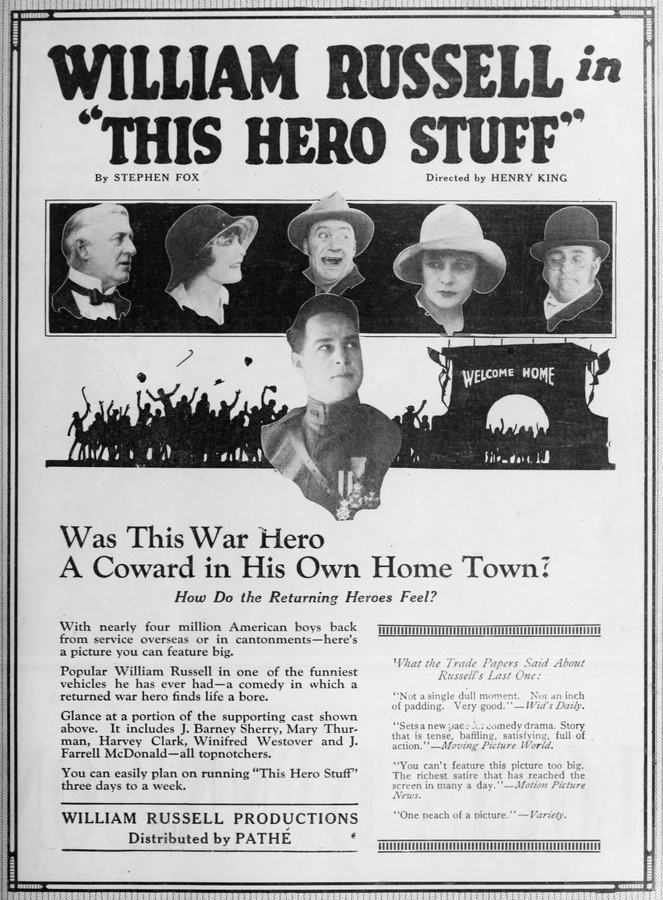
In the annals of early cinema, where the flickering light of the projector carved nascent narratives into the collective consciousness, certain films emerge not just as artifacts of their time, but as prescient explorations of human nature. Among these stands This Hero Stuff, a 1919 production that, despite its seemingly straightforward title, delves into the intricate psychology of heroism, identity, and the societal pressures that shape our perceptions. Penned by the prolific Jules Furthman, whose storytelling prowess would later define eras, the film offers a fascinating glimpse into the post-World War I American psyche, grappling with the concept of the 'hero' and the often-unwanted burdens that accompany such a designation. It's a testament to the silent era's capacity for nuanced storytelling, proving that even without spoken dialogue, the human condition could be dissected with remarkable depth.
At its core, This Hero Stuff presents us with Captain November Jones, portrayed with a compelling blend of gravitas and weariness by William Russell. Jones is no ordinary war hero; he is a man burdened by his accolades, seeking not glory but an escape from its suffocating embrace. His return to Goldcity, Nevada, is marked by a deliberate act of self-effacement: a beard, a disguise, a desperate attempt to melt back into the anonymity of civilian life. This initial premise immediately sets a tone of ironic detachment from traditional heroic narratives. Unlike the unbridled patriotism often celebrated in films of the era, Jones’s internal conflict resonates with a more mature, perhaps even cynical, understanding of what it means to serve and return. This reluctance to embrace public adoration distinguishes him from many protagonists of the period, whose heroism was typically a source of unequivocal pride. The film cleverly positions Jones's desire for a quiet life against the town's eagerness to celebrate him, creating an immediate, palpable tension that drives much of the early narrative.
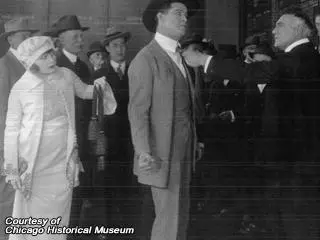
The central irony unfolds swiftly: Jones's carefully constructed anonymity crumbles when instinct overrides his desire for obscurity. A child, oblivious to danger, strays onto train tracks, and Jones, without a moment's hesitation, intervenes. The ensuing rescue, a moment of pure, unadulterated heroism, is precisely what he wished to avoid. The symbolic tearing off of his beard during this act is a brilliant visual metaphor for the forced stripping away of his desired private identity. He is compelled to accept the town's adulation, a hero once more, but this time, the recognition feels less like honor and more like an imposition. This sequence not only propels the plot but also establishes the film's central thematic preoccupation: the often-unwanted spotlight of heroism and the conflict between personal desire and public expectation. It's a theme that, while perhaps not as starkly presented, echoes the internal struggles seen in films like The Reckoning Day, where protagonists often grapple with the consequences of their actions and reputations.
Parallel to Jones's reluctant re-entry into the public eye, a more sinister plot unfolds, adding layers of intrigue to the narrative. Goldcity, beneath its celebratory veneer, harbors its own share of deceit. The unscrupulous stockbroker Samuel Barnes and the cunning adventuress Teddy Craig are engaged in a scheme to wrest control of the lucrative Bluebird Lode from New Yorker Jackson J. Joseph. This subplot injects a dose of classic Western-style villainy and corporate greed, a stark contrast to Jones’s more noble, albeit reluctant, character. The film thus paints a vivid picture of a frontier town where genuine acts of courage coexist with calculated treachery, a dichotomy that enriches its world-building. Joseph's arrival, primarily motivated by a desire to reconnect with his daughter, Nedra, further intertwines these disparate narrative threads, setting the stage for romantic entanglements and dramatic confrontations.
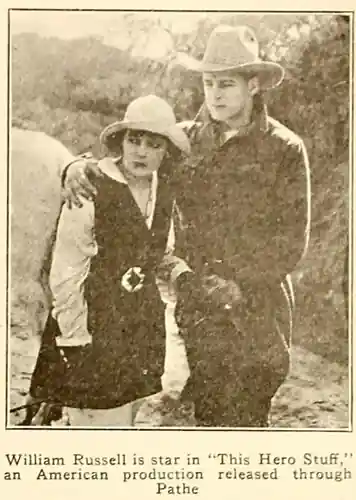
The intersection of these two plotlines is masterfully orchestrated. Jones's second accidental rescue, this time saving Teddy Craig from a runaway horse, provides her with an opportunity to manipulate him. She attempts to enlist his aid in her fabricated battle against Joseph, presenting herself as the victim and Joseph as the aggressor. Jones, still jaded by the hero treatment, refuses. This refusal, born of his disillusionment, is met with Teddy's scathing accusation of cowardice. Initially, this barb seems to roll off him, a testament to his hardened resolve against public opinion. However, the film then introduces the pivotal element of romance, transforming Jones’s indifference into a deeply personal struggle. He falls for Nedra, Joseph's daughter, beautifully portrayed by Winifred Westover, whose innocence and charm make her an ideal romantic foil. The tragedy, or rather the dramatic irony, is that Nedra, influenced by Teddy's malicious whispers, shuns Jones, believing him to be the coward Teddy paints him as. This turn of events brilliantly illustrates the power of reputation, even when built on lies, and how easily it can overshadow genuine character.
The narrative then builds towards its climax, a classic barroom brawl – a staple of the Western genre, yet imbued with specific thematic weight here. This chaotic sequence serves as the crucible for Jones’s ultimate redemption in Nedra’s eyes. Amidst the melee, Joseph is kidnapped, and Jones, once again, finds himself compelled to act. His rescue of Joseph is not for public acclaim, nor is it a calculated move to win Nedra's affection; it is a selfless act born of a true sense of justice and compassion. This decisive action shatters the web of lies spun by Teddy Craig. Nedra witnesses the truth firsthand, observing Jones’s intrinsic heroism, untainted by a desire for recognition. The revelation is cathartic, not just for the characters, but for the audience, who have been privy to Jones's internal struggle throughout.
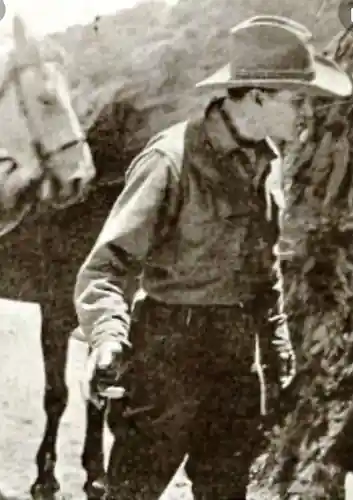
The film culminates in a resolution that is both satisfying and thematically profound. Nedra, having learned the truth about Jones, not only accepts his love but also embraces his unique philosophy: that no man should be a hero to his own wife. This sentiment is key to understanding the film’s message. It’s not a rejection of heroism itself, but a rejection of the performative, public spectacle of it. It’s an embrace of a more intimate, authentic heroism found in everyday acts of kindness, loyalty, and unwavering character. Their marriage, therefore, is founded on a mutual understanding that transcends superficial accolades, valuing genuine integrity over manufactured fame. This nuanced take on love and heroism elevates This Hero Stuff beyond a simple romance or a typical Western, embedding it with a timeless message about the true nature of human connection.
Jules Furthman's screenplay is a masterclass in silent film narrative, expertly balancing action, romance, and character development. His ability to craft a plot that moves swiftly yet allows for profound emotional beats is commendable. The dialogue, conveyed through intertitles, is concise and impactful, serving to advance the story and reveal character without unnecessary exposition. The visual storytelling, characteristic of the era, relies heavily on the actors' expressions and gestures, demanding a high level of performance. William Russell, as Captain Jones, delivers a performance that is both robust and subtle, conveying inner turmoil through his demeanor and actions rather than overt emoting. His portrayal of a man who is physically capable yet emotionally weary is particularly compelling. Winifred Westover's Nedra is equally effective, her transformation from suspicion to understanding handled with grace and conviction. The supporting cast, including J. Farrell MacDonald, Charles K. French, and J. Barney Sherry, contribute to the vibrant tapestry of Goldcity, each character serving a distinct purpose in the unfolding drama.
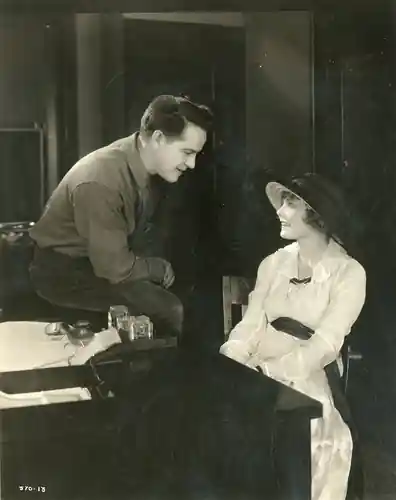
The direction, though uncredited in many historical records, effectively captures the spirit of the Western genre while infusing it with a melodramatic sensibility. The action sequences, such as the train rescue and the barroom brawl, are staged with a dynamism that keeps the audience engaged, while the quieter moments of romantic longing and internal conflict are given ample space to breathe. The cinematography, utilizing the stark contrasts of black and white, effectively conveys mood and atmosphere, from the dusty streets of Goldcity to the intimate glances between lovers. The film's pacing ensures that the audience remains invested in Jones’s journey, eagerly anticipating the moment when his true character will be revealed. This skillful blend of genre elements and character-driven drama makes This Hero Stuff a standout example of silent-era filmmaking, showcasing how complex themes could be communicated effectively through purely visual and gestural means.
In a broader cinematic context, This Hero Stuff can be seen as part of a wave of films that began to explore the psychological impact of war and heroism, moving beyond simplistic portrayals of valor. While not overtly a war film, Jones’s character arc is undeniably shaped by his past service, and his desire for peace reflects a broader societal longing in the wake of global conflict. It's a subtle yet potent commentary on the human cost of being placed on a pedestal. The film also contributes to the evolving landscape of the Western, demonstrating its flexibility to incorporate elements of romantic drama and social commentary alongside traditional action. This expansion of thematic scope is a hallmark of the silent era's artistic ambition, pushing the boundaries of what popular genres could achieve. The film's exploration of reputation versus reality, and the ease with which rumors can poison perception, remains strikingly relevant even today, underscoring its timeless appeal.
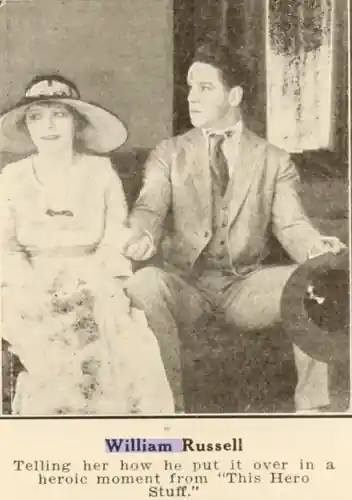
Considering its contemporaries, This Hero Stuff holds its own. While it may not possess the epic scale of a The Whip or the stark dramatic intensity of a Sangre y arena, its strength lies in its intimate focus on character and theme. The internal conflict of Captain Jones, a man who yearns for normalcy despite his extraordinary past, offers a different kind of heroism—one that is introspective and deeply human. This nuanced portrayal of a protagonist, one who actively resists the very definition he embodies, sets the film apart. It’s a compelling counterpoint to more straightforward adventure narratives, inviting audiences to ponder the true meaning of courage and the quiet dignity of a life lived on one's own terms, free from the clamor of public expectation. The film's enduring message about the importance of authenticity in personal relationships, especially within the confines of marriage, provides a surprisingly modern sensibility for a film of its vintage.
Furthermore, the depiction of the adventuress Teddy Craig, while a clear antagonist, is not without its own compelling facets. Her manipulative tactics and the ease with which she sways public opinion highlight the vulnerabilities of a society eager to believe a sensational story. This element adds a layer of social critique, suggesting that heroism is not just about the actions of individuals, but also about how those actions are perceived and, crucially, how reputations can be manufactured or dismantled. Her character, though villainous, serves as a vital catalyst for Jones’s journey, forcing him to confront not only his public image but also his deepest desires. The contrast between her calculated deception and Jones’s reluctant integrity forms the dramatic backbone of the film, providing a rich tapestry of human motivations. The complexities of such character dynamics, though presented in the stylistic idiom of the silent film, speak to universal truths about good and evil, honesty and deceit.
Ultimately, This Hero Stuff is a film that rewards careful viewing. It’s more than just a period piece; it’s a thoughtful meditation on the nature of heroism, the burden of fame, and the enduring power of genuine love. William Russell’s performance anchors the film, imbuing Captain Jones with a quiet dignity that makes his struggles profoundly relatable. The film's resolution, where Nedra accepts Jones not as a public hero but as the man he truly is, offers a refreshing take on romantic fulfillment. It suggests that the most profound connections are forged not in the glare of public adoration, but in the intimate understanding and acceptance of one another’s true selves. For enthusiasts of silent cinema, or indeed anyone interested in the foundational narratives of American film, This Hero Stuff remains a compelling and surprisingly resonant experience, a testament to the enduring power of storytelling in its purest form. Its ability to weave complex themes into an engaging narrative, all without the aid of spoken dialogue, is a powerful reminder of the artistry and ingenuity of early filmmakers. The film stands as a vibrant example of how the silent era, far from being primitive, was a sophisticated canvas for exploring the depths of the human spirit, offering insights that continue to echo through cinematic history.
IMDb 5.9
1923
Community
Log in to comment.