DbcultAccessing Vault...
Cult Review
Senior Film Conservator
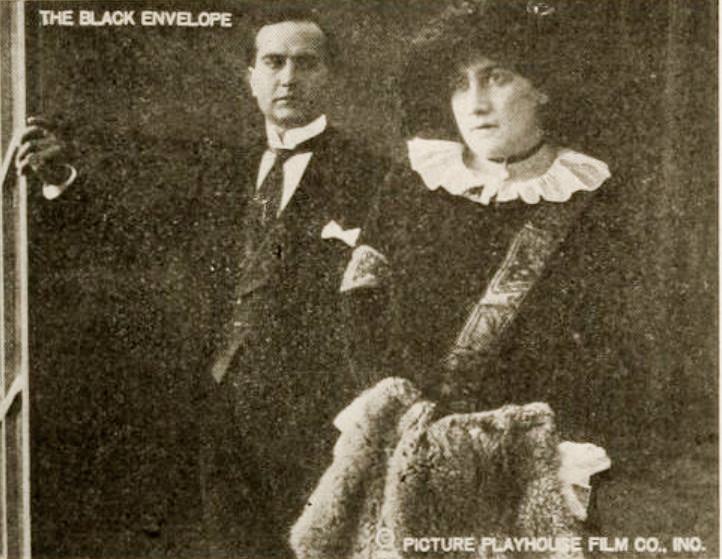
Strip the cellophane off any contemporary political thriller and you’ll still smell the same cheap ink: ambition, sex, receipts brandished like crucifixes. Yet here is a film from the hush of 1920—when the world itself was learning to lip-read—that anticipates every cynical twitch of our era. The Black Envelope is a fever dream shot through with gaslight and nitrate, a morality play that refuses to moralize, a love triangle whose hypotenuse is a missing slip of paper.
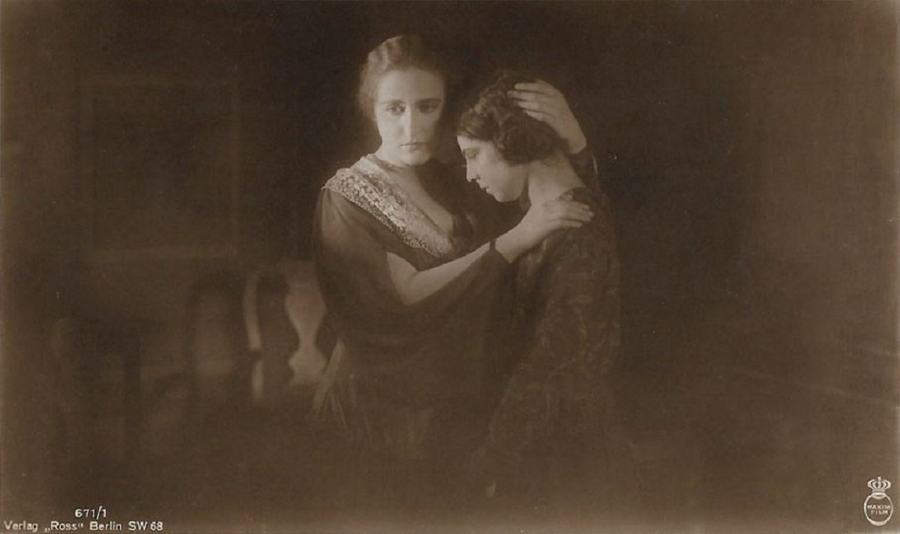
Jim Creelman’s war chest is empty the way only a man who believes in destiny can be empty—achingly, romantically, almost relieved to be rescued by Olga Bateman’s sacrifice. Maria Jacobini plays the actress with the brittle glamour of a chandelier in an earthquake: every glance threatens to shatter. She signs over her fortune as if handing a suicide note to the future, and for one delirious moment the film lets us think this transaction might be enough. Spoiler: no transaction in this narrative buys what it promises.
Once Creelman repays the loan, the receipt becomes more than paper; it is a soul in object form, a passport to civic purity. Its disappearance converts every corridor in town into a potential trapdoor. The eponymous black envelope is the McGuffin before Hitchcock had even coined the term, but unlike the usual MacGuffin it carries moral ballast: it can absolve, it can condemn, it can kill.
Anna Petersen’s Syble arrives draped in the kind of white lace that signals sacrificial lamb. Watch how her shoulders tighten when she scans the newspaper headline—Mayor Creelman Still Indebted to Actress—and realize the film is slyly interrogating our addiction to public shaming a century before Twitter. Her decision to visit DeBussy’s townhouse is less a concession to extortion than a gallant, suicidal fact-finding mission. She goes, as the intertitle confesses, to baptize her marriage in the dirty water of politics.
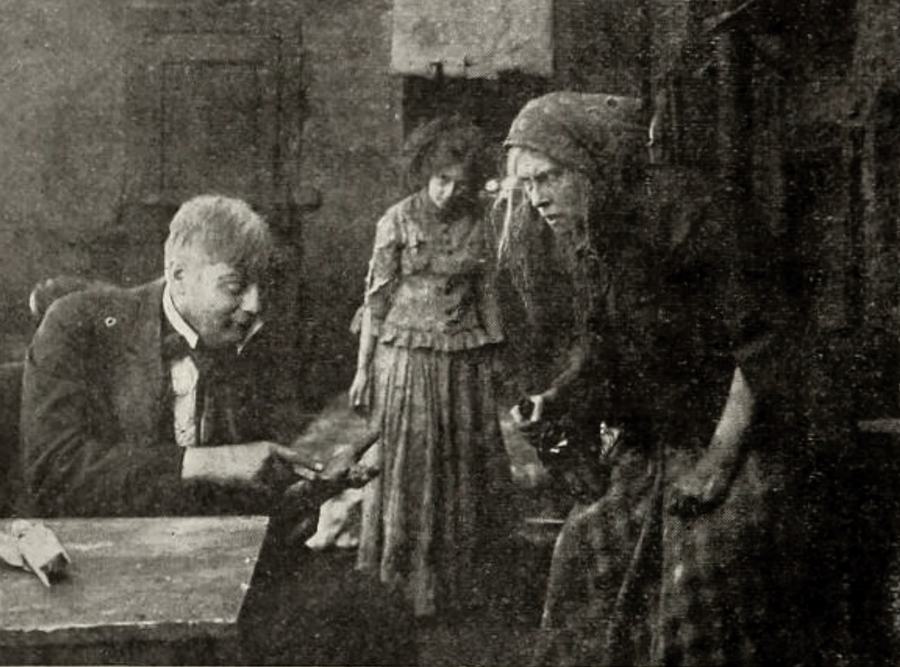
Gustavo Serena gives the spurned editor a silk cravat and a cobra’s patience. His office is an amphitheater of shadows: venetian-blind bars slice across stacks of newsprint like a prison in paper form. When he hisses that words can break bones if the font is heavy enough,
the line lands as both brag and prophecy. He hoards the receipt the way a miser fondles coins, but the film never lets us forget that his real currency is resentment, not evidence.
The newlyweds’ carriage ride—superimposed over spinning newspaper presses—plays like a wedding march scored by guillotine blades. Director Nello Carotenuto (who also essays Creelman) cross-cuts between their chaste kisses and compositors setting the scandal in lead type. The montage is so modern it feels illegal in 1920; suddenly the viewer is complicit, an accomplice thirsting for calamity.
The sequence in DeBussy’s mansion is a master-class in chiaroscuro economics: every candle removed heightens the price of survival. Syble glides through corridors that seem to elongate in negative space, her silhouette a trembling interrogation mark. When she finally clutches the black envelope, her gasp fogs the lens—an accidental flourish that renders the audience a peepshow voyeur. The ensuing struggle is not the flailing cat-fight of so many silents but a brutal, intimate ballet: a push, a topple, a letter-opener finding the hollow between ribs with the precision of a seamstress threading silk.
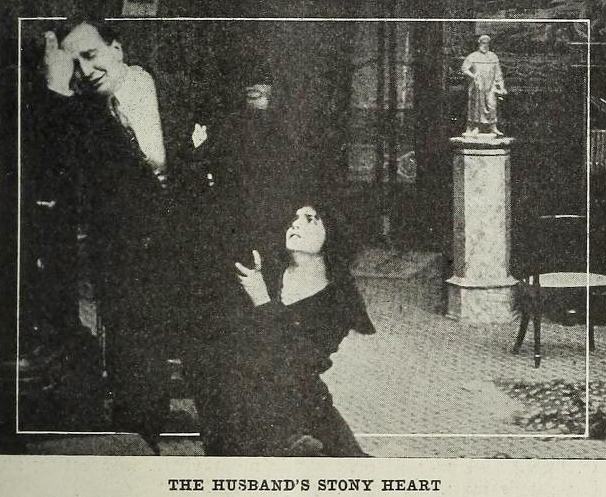
Back home, Creelman’s hug is that of a man embracing a phantom. He smells gunpowder on her glove, notices a crimson comma on her cuff, and instantly convicts her of betrayal rather than heroism. The film’s cruelest cut is not the stabbing but the husband’s refusal to believe the alibi written in blood on his wife’s palms. Left alone, Syble toys with the envelope, folds it into a paper boat, then sets it afloat in a basin of water tinged pink. She next presses the pistol barrel to her temple with the resigned tenderness of a poet dotting the final period. Fade to black—and the envelope bobs downstream toward an open drain.
Shot on unstable 35mm stock speckled like a leopard, the surviving print (yes, one survives, digitized by Cineteca di Bologna) pulses with mildewed grandeur. The tinting alternates between arsenic green for interiors and a bruised amber for exteriors, turning Boston locations into a plague city. Carotenuto’s camera is restless: it stalks characters from behind balustrades, peers through keyholes, climbs chandeliers for overhead shots that prefigure Welles’ kitchen-sink ceilings in The Magnificent Ambersons.
Maria Jacobini’s Olga is tragedy’s showroom dummy come alive—her final close-up, eyes swollen with unreturned love, could advertise heartbreak. Anna Petersen has the translucent panic of Lillian Gish minus the sentimental saintliness; when her Syble dies, the moral ledger feels neither balanced nor tragic—merely wasteful. Carotenuto directs himself with the mercilessness of a man carving his own effigy: his Creelman ends the picture a hollow victor, mayor of a cemetery.
No original score survives, yet modern festival screenings have paired it with a live trio improvising sul ponticello strings and damped piano—an atonal fog that makes every intertitle read like ransom demand. Try hearing those dissonances and you’ll understand why some historians call this the first horror film without a monster.
Place The Black Envelope beside its blood-relatives and watch it bite. Where Beatrice Cenci aestheticized incestuous defiance into baroque tableaux, this picture wallows in the muck of campaign finance. Where The Student of Prague externalizes guilt through doppelgängers, here guilt is paper-thin, losable, forgeable. Even Under the Gaslight—that granddaddy of railroad suspense—romanticizes rescue, whereas Envelope insists rescue is just another word for slower ruin.
Olga bankrolls love; Creelman repays with public amnesia. DeBussy trades information for flesh; Syble pays with homicide, then self-immolation. Every debt ricochets, accumulating interest in bodies rather than dollars. The film’s nihilism is so pristine it feels like a philosophical proof: if power is the ability to rewrite memory, then forgetting is the final currency, more lethal than any bullet.
For decades historians listed The Black Envelope among the dead, a casualty of studio fires and nitrate rot. Then in 2018 a rusted film can turned up in a Neapolitan flea market, labeled only Politico / 1920 / 6 rulli.
Restorers peeled emulsion off the base like flaking skin, realigning 14,000 water-warped frames. The digital rescue leaves scars—vertical scratches that look like lightning over a charred city—but the wounds amplify the picture’s bruised poetry.
Today, when microfilm receipts of hush-money replace paper envelopes and tweets supplant broadsheets, the film plays like prophecy. It whispers that political survival is no longer about virtue but about version control—who gets to archive the PDF, who deletes the email, who controls the narrative after the bodies hit the floor. Syble’s suicide is the 1920 equivalent of falling on one’s sword to prevent a news cycle; her tragedy lies in believing honor still matters to a public addicted to outrage.
Is The Black Envelope perfect? Hardly. Its middle act sags under reelection montages, and one too many intertitles moralize about the wages of ambition.
Yet its imperfections feel alive, like cracks that let the abyss seep through. For courage of cynicism, for chiaroscuro that could teach Lang and Welles new tricks, for a femme fatale who kills not for lust but for ledger balance, this film deserves resurrection in every cinephile’s pantheon. Enter expecting a curio; exit tasting iron in your mouth, wondering which of your own receipts might one day demand payment in blood.
Watch it late, with the lights off, and keep a black envelope handy—you may feel compelled to file your faith in human decency next to the missing receipt.
Rating on the retro-scale: 9 / 10 nitrate lightning bolts.
IMDb 7.4
1925
Community
Log in to comment.