DbcultAccessing Vault...
Cult Review
Senior Film Conservator
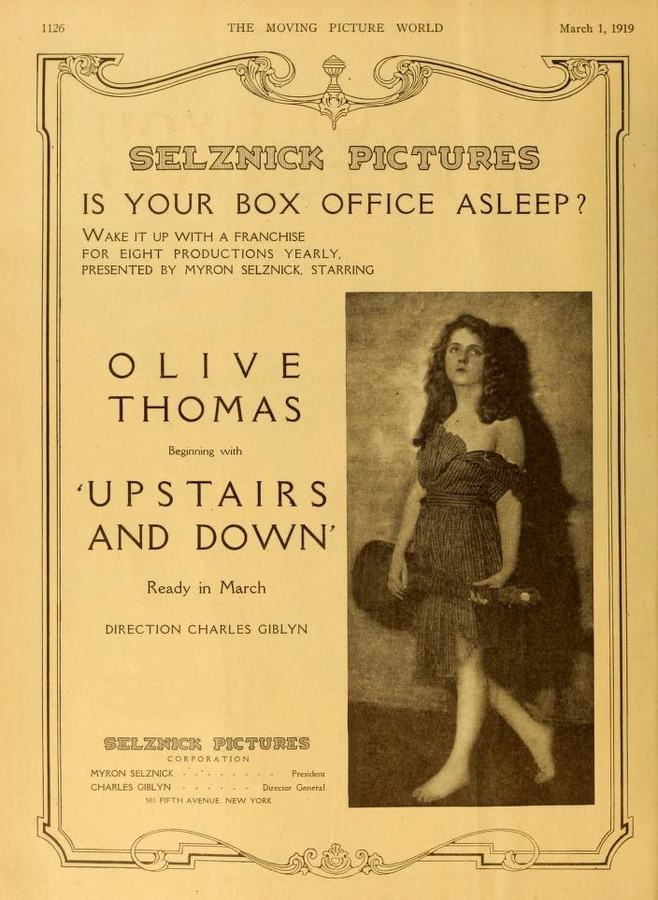
In the annals of early American cinema, where the silent screen often served as both a mirror and a magnifying glass for the burgeoning social shifts of the nascent 20th century, Upstairs and Down emerges as a particularly piquant example. Released in 1919, on the cusp of the Roaring Twenties, this film is far more than a mere romantic comedy; it is a shrewd, often satirical, observation of class dynamics, gender roles, and the intricate, often deceptive, dance of courtship within a privileged milieu. At its heart lies the magnetic, albeit mischievous, presence of Olive Thomas, whose portrayal of Alice Chesterton, the quintessential 'Baby Vamp,' cements her status as an icon of a bygone era, perfectly embodying the spirit of a generation teetering on the edge of profound cultural transformation.
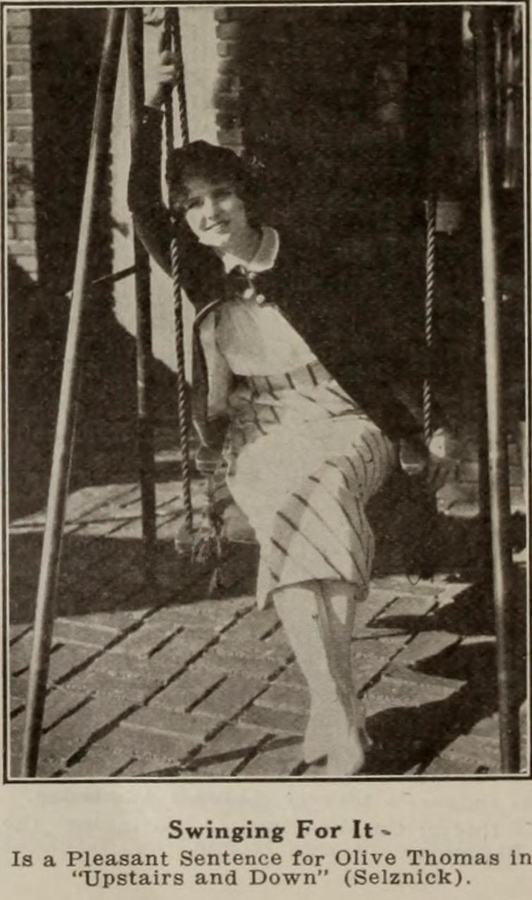
The narrative tapestry of Upstairs and Down is woven with threads of flirtation, deception, and eventual, if somewhat unconventional, romance. We are introduced to Alice Chesterton, a character whose designation as a 'Baby Vamp' is less an insult and more an affectionate, if slightly exasperated, descriptor by her social set. Engaged to the thoroughly unexciting Tom Carey, Alice finds her true calling in the art of charming every eligible, and sometimes ineligible, male guest at the lavish Ives' Long Island house party. Her restless spirit and captivating allure lead her into the orbit of Terence O'Keefe, an Irish polo player ostensibly in New York to purchase horses for the British army. O'Keefe, a man clearly more adept at social maneuvering than equine procurement, becomes Alice’s willing accomplice in a series of clandestine meetings that culminate in a scandalous appearance at the infamous 'Midnight Frolic.' This public display of impropriety, a veritable social faux pas in a time when decorum was rigorously enforced, prompts Mrs. Ives to summon Alice's sister, Betty, a character designed as a foil to Alice's vivacity, to rein in her wayward sibling. Betty, however, proves to be more resourceful than initially perceived. She orchestrates a dramatic automobile accident, a classic cinematic trope, which allows Terence to play the hero, reviving her with a kiss. This staged moment of peril and rescue, ironically, sparks a genuine and passionate love between Betty and Terence. Their plans for matrimony are, predictably, derailed by Alice's simmering jealousy. In a fit of pique, Alice falsely claims that Terence had 'ruined' her, a grave accusation in an era obsessed with female virtue. Betty, heartbroken and bewildered, confronts Terence, who, with a keen understanding of Alice's manipulative nature, forces her to confess her mendacity. The resolution of Alice's own romantic entanglements takes an unexpected turn when Tom Carey, advised by Terence, abandons his mild-mannered approach and employs 'caveman' tactics, overwhelming Alice with a newfound assertiveness that, to the film's credit, she surprisingly finds appealing. The film closes with a delightful, almost anthropological, observation: the servants, having diligently watched the romantic machinations of their employers, begin to mimic their masters' flirtatious mannerisms, a subtle commentary on the pervasive influence of the 'upstairs' world on the 'downstairs.'
Olive Thomas, in the role of Alice Chesterton, is nothing short of captivating. Her performance is a masterclass in silent screen acting, conveying layers of mischief, vulnerability, and a certain world-weariness beneath the surface of youthful exuberance. Thomas’s Alice is not merely a flapper avant la lettre; she is a symbol of a generation pushing against the strictures of Victorian morality, eager to embrace a more liberated, albeit sometimes reckless, existence. Her 'Baby Vamp' persona, characterized by a playful sensuality and a knack for drawing male attention, resonates with the societal anxieties and fascinations of the time. One can draw parallels to other strong female characters of the era, though Alice's particular brand of charming capriciousness sets her apart. While films like The Adventures of Kathlyn showcased adventurous heroines, Alice’s adventure is primarily social and romantic, navigating the treacherous waters of high society rather than exotic locales. Her character is a precursor to the more overt flapper archetypes that would dominate the screen in the subsequent decade, making her portrayal in Upstairs and Down particularly significant for its early glimpse into this evolving female identity.
The film's exploration of class dynamics is subtle yet insightful. The 'upstairs' world of the Ives' Long Island estate is a microcosm of privilege, where boredom often begets scandalous dalliances. The arrival of Terence O'Keefe, an Irishman, adds another layer to this social tapestry. While seemingly accepted, his status as an outsider, albeit a charming and wealthy one, allows him a certain detachment, enabling him to observe and even manipulate the social games around him. His advice to Tom Carey – to adopt 'caveman' tactics – is a fascinating commentary on prevailing ideas of masculinity and courtship, suggesting that beneath the veneer of polite society, primal instincts still held sway. This transformation of Tom from a milquetoast fiancé to an assertive suitor is one of the film's more intriguing character arcs, hinting at a societal fascination with dominance and submission, however playfully presented.
The 'Midnight Frolic' scene, though brief, is pivotal. It represents a boundary-pushing moment, a public transgression that underscores Alice's rebellious spirit and the loosening moral codes of the era. The very existence of such a place, a haven for late-night revelry, speaks volumes about the changing social landscape. Films like Eve's Daughter might have explored similar themes of female agency, but Upstairs and Down frames it within a more direct social satire, where reputation is everything, yet easily gambled away for a thrill. The societal pressure exerted by Mrs. Ives on Betty to 'look after' Alice highlights the communal responsibility for upholding moral standards, particularly for women, in that period.
Writers Tom Bret, Fanny Hatton, Frederic Hatton, and Lillian Ducey craft a narrative that, while ostensibly lighthearted, delves into surprisingly complex themes. The manipulation of events, such as Betty's staged auto wreck, speaks to a theatricality inherent in silent film storytelling, where visual spectacle often drove the plot. Yet, this contrivance leads to genuine emotion, highlighting the accidental nature of love. Alice's jealousy and subsequent lie about being 'ruined' by Terence are potent elements, reflecting the precariousness of a woman's reputation and the devastating power of a false accusation. This theme of deception and its consequences can be seen, albeit in a more dramatic light, in films like Vanity and Vengeance, which explores the darker side of human machinations. Here, however, the tone remains largely comedic, with the resolution leaning towards reconciliation rather than tragedy.
The film's ending, with the servants mimicking their masters' romantic antics, is a stroke of genius. It's a comedic coda that elevates the film from a simple romantic comedy to a sharper social commentary. This 'downstairs' reflection of the 'upstairs' world underscores the universality of human desires and foibles, regardless of social standing. It also subtly critiques the performative nature of upper-class life, suggesting that their elaborate flirtations and romantic games are merely a spectacle, one that can be easily imitated, if not fully understood, by those who observe them from below. This kind of observational humor, rooted in class differences, would become a staple in subsequent decades of filmmaking, but Upstairs and Down offers an early, charming example.
Beyond Olive Thomas's luminous central performance, the supporting cast contributes significantly to the film's charm. Bertram Grassby as Terence O'Keefe embodies the dashing, slightly roguish playboy with an appealing blend of charm and cunning. Donald MacDonald's Tom Carey undergoes a believable transformation, making his 'caveman' conversion surprisingly effective within the comedic framework. Mary Charleson as Betty provides a sweet counterpoint to Alice's wildness, portraying the earnest ingenue with grace. The direction, while not overtly flashy, effectively captures the mood and pace of the story, allowing the actors' expressions and body language to convey the nuances of their characters. The film utilizes its settings – from the opulent Long Island estate to the bustling New York City nightlife – to establish a clear sense of place and atmosphere, enhancing the narrative's immersion.
Upstairs and Down stands as a delightful artifact from a pivotal moment in cinematic history. It's a film that, despite its age, retains a surprising freshness and wit. Its exploration of female agency, the complexities of romantic relationships, and the subtle interplay of class distinctions ensures its relevance beyond mere historical curiosity. It offers a window into the social mores of the late 1910s, capturing the anxieties and excitements of a society on the brink of radical change. The film's ability to blend comedic elements with astute social observation is a testament to the skill of its creators and the enduring power of its themes. While not as overtly slapstick as films like Tillie's Punctured Romance, its humor is more character-driven and situational, relying on the foibles of human nature rather than exaggerated physical comedy.
In conclusion, Upstairs and Down is a charming, insightful, and often humorous look at love and social climbing in the early 20th century. Olive Thomas, in a role that perfectly encapsulates her star persona, leads a strong cast through a narrative that is both entertaining and subtly profound. It’s a film that deserves to be rediscovered, not just for its historical value, but for its timeless portrayal of human relationships and societal theatrics. It reminds us that while the costumes and customs may change, the fundamental desires and deceptions of the human heart remain remarkably constant, whether 'upstairs' or 'down'. This silent gem offers a rich tapestry of social commentary, making it a valuable piece for anyone interested in the evolution of romantic comedy and the cinematic portrayal of societal shifts. Its blend of lighthearted romance with sharp observation ensures its place as a notable, if often overlooked, work of early cinema.
IMDb 6
1935
Community
Log in to comment.