DbcultAccessing Vault...
5.4/10
Senior Film Conservator
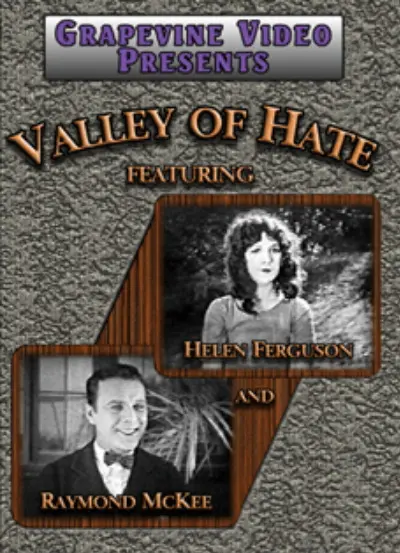
A definitive 5.4/10 rating for a film that redefined the boundaries of cult cinema. Valley of Hate remains a cornerstone of transgressive art.
In the annals of silent cinema, certain films, though perhaps not enjoying the widespread recognition of their more celebrated contemporaries, nonetheless offer a captivating glimpse into the societal fabric and narrative conventions of their time. Such is the case with Valley of Hate, a 1923 production that, despite its rather stark and unassuming title, unfurls a rich tapestry of mistaken identity, forbidden romance, and the enduring clash between tradition and modernity. This cinematic artifact, directed by George Hively and Harry MacPherson, with a screenplay by the same duo, transports us to a specific historical moment – the Prohibition era – and a particular geographical locale – the isolated valleys of South Carolina – to tell a story that, while archetypal, resonates with a potent, visceral energy.
At its core, Valley of Hate is a romantic drama, yet it is layered with elements of social commentary and suspense. The narrative pivots around a young, affluent man, portrayed with earnest conviction by Raymond McKee, who finds his life’s trajectory irrevocably altered by an unexpected inheritance. He becomes the rightful owner of a significant tract of land, situated in a valley so remote and untouched that it has remained entirely outside his previous sphere of experience. This premise immediately establishes a crucial dichotomy: the protagonist, a product of urban sophistication and privilege, is about to be thrust into a world fundamentally antithetical to his own. It’s a classic fish-out-of-water scenario, pregnant with potential for both comic misunderstanding and profound dramatic tension.
His journey to inspect his new holdings is not merely a practical excursion; it is a descent into an unfamiliar culture, a community forged by necessity and defiance. The valley's inhabitants, fiercely independent and deeply suspicious of outsiders, sustain themselves by circumventing the Volstead Act – the very legislation that criminalized the production and sale of alcohol. Their livelihood, indeed their very way of life, hinges on the clandestine operation of moonshine stills, making them inherently wary of any perceived threat from federal authority. It is this precarious societal balance that the protagonist inadvertently disrupts. His arrival, innocent in intent, is tragically misconstrued; he is mistaken for a revenue officer, an agent of the very government they strive to evade. This central misunderstanding forms the dramatic engine of the film, fueling the initial hostility and setting the stage for a series of perilous encounters.
Amidst this backdrop of suspicion and veiled threats, a tender, improbable romance begins to blossom. The young man finds himself drawn to, and eventually falls deeply in love with, the spirited ward of one of the valley's prominent moonshiners. This relationship is, by its very nature, a transgression against the established order, a bridge between two worlds that are seemingly irreconcilable. Helen Lynch, as the moonshiner's ward, embodies a compelling blend of innocence and resilience, representing the heart and soul of the valley, yet open to the possibilities that the outside world, personified by McKee, might offer. Their love story is not simply a personal affair; it becomes a symbolic struggle, a quest for connection across cultural divides. The path to true love, however, is rarely smooth, and in this rugged landscape, it culminates in a primal confrontation: the protagonist must fight another man, presumably a local suitor deeply entrenched in the valley's ways (perhaps Ralph Yearsley or Earl Metcalfe, who often played such roles), to win her hand in marriage. This ultimate test of strength and commitment is a trope as old as storytelling itself, yet rendered with a raw immediacy in the silent film idiom.
Raymond McKee, a prolific actor of the silent era, brings a certain earnest charm to his role. His character’s journey from bewildered outsider to determined lover is conveyed through the exaggerated gestures and facial expressions characteristic of the period, yet he manages to imbue his performance with a genuine sense of vulnerability and resolve. We witness his initial apprehension, his gradual understanding of the valley’s customs, and ultimately, his unwavering commitment to the woman he loves. It is a performance that, while adhering to the dramatic conventions of the 1920s, allows for a compelling arc of personal growth.
Helen Lynch, as the object of his affection, is equally captivating. Her portrayal of the moonshiner's ward is nuanced, capturing the inherent conflict of a young woman caught between loyalty to her family and community, and the magnetic pull of an outsider. She embodies the spirit of the valley – resilient, resourceful, and fiercely independent – but also possesses a yearning for something beyond its confines. Her emotional journey, from initial suspicion to burgeoning affection, is crucial to the film’s romantic core. Wilfred Lucas, likely playing the stern but ultimately principled moonshiner patriarch, adds gravitas and authority, representing the entrenched traditions and the fierce protectiveness of the community. His performance would have anchored the local perspective, providing a formidable, yet understandable, opposition to the protagonist.
The supporting cast, including Ralph Yearsley, Earl Metcalfe, Helen Ferguson, and Frank Whitson, would have collectively painted a vivid picture of this isolated community. Their collective portrayal of suspicion, solidarity, and eventually, grudging acceptance, is vital in establishing the believable social dynamics of the valley. The rival for the ward's affection, a character often designed to be a foil for the hero, would have been played with a blend of ruggedness and perhaps a touch of menace, highlighting the stakes of the final confrontation.
George Hively and Harry MacPherson, as both writers and directors, craft a narrative that, while straightforward in its progression, is adept at building tension and emotional resonance. The silent film medium, with its reliance on visual storytelling, intertitles, and expressive acting, demanded a particular kind of directorial prowess. Here, the directors likely leveraged the natural beauty and ruggedness of the South Carolina setting to enhance the film's atmosphere. The sweeping landscapes, dense forests, and hidden hollows would have served as more than mere backdrops; they would have been active participants in the drama, emphasizing the isolation of the community and the wildness that defined its existence. One might draw parallels to the way natural environments shape narratives in other silent films, such as the untamed wilderness in On the Night Stage, where the landscape itself becomes a character, dictating the challenges and trials faced by its inhabitants.
The use of intertitles would have been crucial for exposition, dialogue, and conveying internal thoughts, guiding the audience through the complexities of the plot, particularly the central misunderstanding. The pacing, a critical aspect of silent film, would have carefully balanced moments of dramatic tension with quieter, character-driven scenes, allowing the audience to invest emotionally in the burgeoning romance. The directors would have understood the power of visual metaphors – perhaps a shot of a winding mountain path symbolizing the protagonist's arduous journey, or a close-up on a shared glance between the lovers, conveying volumes without a single spoken word. The silent film's unique ability to transcend language barriers through universal emotions and actions is particularly evident in stories of cross-cultural understanding, making Valley of Hate a compelling example.
The film’s backdrop, the Volstead Act and its impact, is far from incidental; it is integral to the narrative’s very fabric. The Prohibition era (1920-1933) was a period of immense social upheaval in the United States, marked by a nationwide ban on the production, importation, transportation, and sale of alcoholic beverages. While well-intentioned in its aim to reduce crime and corruption, it inadvertently spurred the rise of organized crime and, more relevant to this film, fostered a culture of defiance in many rural, economically marginalized communities. For many in regions like the Appalachian South, moonshining was not merely a criminal enterprise; it was a deeply ingrained tradition, a means of subsistence, and an assertion of independence against perceived federal overreach. The revenue officer, therefore, was not just a law enforcer, but an intrusive symbol of an external authority threatening their way of life.
Valley of Hate effectively taps into this historical tension, portraying the moonshiners not as one-dimensional villains, but as a community fighting for its survival and traditions. Their suspicion of the outsider is born not of malice, but of a deep-seated fear for their livelihood and autonomy. This nuanced portrayal elevates the film beyond a simple good-versus-evil narrative, adding layers of social realism. The misunderstanding at the heart of the plot – the protagonist being mistaken for a revenue officer – is therefore not just a convenient plot device, but a direct consequence of the era's socio-political climate. This conflict between federal law and local custom mirrors tensions seen in other films dealing with societal friction, though perhaps in different contexts. For instance, the clash of values and the struggle for personal freedom against societal constraints are central to narratives like The Price They Pay, albeit exploring different forms of societal pressures.
Beyond its specific historical context, Valley of Hate also draws upon timeless narrative archetypes. The wealthy outsider falling for the spirited local, the clash with a rival suitor, and the ultimate test of worthiness are narrative staples that resonate across cultures and generations. This film, like many silent romantic dramas, understands the universal appeal of these themes. The love story between McKee’s character and Lynch’s ward is the emotional anchor, providing a counterpoint to the underlying tension and conflict. Their romance represents a hope for reconciliation, a possibility that understanding can bridge divides, and that love can transcend prejudice. The final confrontation, where the protagonist must fight for his beloved, is a classic dramatic device, symbolizing his complete immersion into, and acceptance by, the community he initially entered as an unwelcome stranger. It is a rite of passage, a demonstration of his courage and commitment, which ultimately earns him the respect, and the hand, of the woman he loves. This kind of romantic struggle, where the hero must prove his mettle against a rival, is a motif seen in countless films, from the frontier romances of the era to more contemporary love triangles, and even echoes in historical dramas like The Courtship of Myles Standish, where romantic rivalry is central to the narrative.
While Valley of Hate may not be as widely discussed as, say, The Black Stork or The Auction Block when considering the breadth of 1920s cinema, its value lies in its faithful reflection of popular entertainment of its time. It encapsulates the storytelling sensibilities of the era: dramatic narratives driven by clear conflicts, strong romantic elements, and a moral compass that, while perhaps simplistic by today's standards, was deeply resonant with contemporary audiences. Films like this were the mainstream entertainment, shaping public perception and offering escapism and emotional engagement. Its themes of overcoming prejudice, finding love in unexpected places, and the struggles of isolated communities against external pressures remain perennially relevant. It reminds us that even in the absence of spoken dialogue, cinema possessed a profound capacity to tell compelling human stories.
For modern viewers, rediscovering films like Valley of Hate offers more than just a nostalgic trip. It provides an invaluable window into the evolution of cinematic language, the social concerns of a bygone era, and the enduring power of classic narratives. It invites us to appreciate the artistry of silent actors, the ingenuity of early filmmakers, and the timeless appeal of a good story well told. The film, in its quiet determination, stands as a testament to the diverse and rich tapestry of silent American cinema, a testament to the fact that even in the 'valley of hate,' love and understanding can ultimately prevail.
In conclusion, Valley of Hate, with its compelling plot, engaging performances, and evocative setting, is a film that deserves a place in the discussion of early American cinema. It’s a compelling example of how a familiar narrative framework can be infused with specific historical and cultural details to create a work that is both universally relatable and uniquely of its time. Its exploration of identity, love, and societal friction continues to offer insights into the human condition, proving that some stories, like the spirit of the valley itself, are truly timeless.
IMDb —
1924
Community
Log in to comment.