DbcultAccessing Vault...
Cult Review
Senior Film Conservator
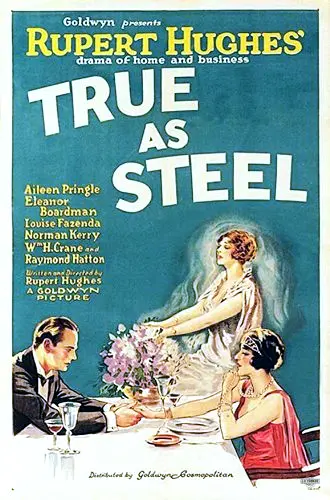
The silent era of cinema often functioned as a crucible for the burgeoning anxieties of a society caught between the Victorian remnants of the past and the relentless acceleration of the industrial future. Rupert Hughes, a polymath of the written word and the silver screen, captured this tension with surgical precision in his 1924 opus, True As Steel. Far from being a mere morality play, the film operates as a sophisticated interrogation of the American Dream's byproduct: the existential restlessness of the successful man. Frank Parry, portrayed with a nuanced blend of gravitas and vulnerability, is the quintessential manufacturer whose life is as structured and predictable as the machinery he oversees. Yet, when he steps into the neon-drenched labyrinth of New York, the structural integrity of his moral framework begins to buckle under the weight of an unforeseen magnetism.
At the center of Parry’s destabilization is Eva Boutelle. In an era where female characters were frequently relegated to the roles of the virginal ingenue or the predatory vamp, Eva stands as a refreshing anomaly. As the manager of the Swansea Cotton Mills, she embodies a synthesis of professional steel and emotional complexity. This is not the simplistic flirtation found in A Flirt There Was; rather, it is a collision of two intellectual equals. Eva’s refusal to capitulate to Parry’s demands for a double divorce is the film’s moral fulcrum. She represents a brand of loyalty that is not born of submissiveness, but of a rigorous self-defined code of ethics. Her character arc suggests that true liberation for the modern woman lies not in the rejection of commitment, but in the agency to choose which commitments are worth upholding.
The chemistry between the leads is palpable, even through the flickering grain of a century-old master. The direction leverages the claustrophobia of the urban environment to mirror the internal entrapment Parry feels. Unlike the wide-open, rugged landscapes of Bucking Broadway, the settings here are interior, opulent, and suffocating. The office spaces and hotel suites become arenas of psychological combat. Hughes utilizes light and shadow—not quite in the German Expressionist vein, but with a distinctly American pragmatism—to highlight the stark divide between Parry’s public persona and his private turmoil.
One cannot overlook the symbolic weight of the film’s title. True As Steel refers as much to the tensile strength of the characters' resolve as it does to the literal metals that built the 1920s skyline. The film juxtaposes the cold, unyielding nature of the manufacturing world with the soft, often treacherous terrain of human emotion. While films like The Brute Breaker focused on physical dominance, Hughes’ work is concerned with the endurance of the spirit. The subplot involving Parry’s daughter, Ethel, is particularly prescient. Her insistence on entering the business world is not treated as a comedic whim but as an inevitable evolution of the family legacy. It mirrors the shifting tectonic plates of gender roles, suggesting that the 'steel' of the next generation will be forged by women as much as men.
"The brilliance of Hughes lies in his ability to make the boardroom as dramatic as the bedroom, proving that the gears of industry and the heartbeats of lovers are governed by the same volatile physics."
The supporting cast provides a rich tapestry of societal archetypes. Eleanor Boardman and Aileen Pringle deliver performances that transcend the limitations of the silent medium, using micro-expressions to convey volumes of unsaid resentment and longing. The narrative pacing avoids the frantic energy of contemporary shorts like Jumping Beans, opting instead for a slow-burn tension that mirrors the gradual heating of metal in a forge. Every scene is meticulously constructed to reinforce the central conflict: the agonizing choice between the ephemeral thrill of the 'now' and the enduring weight of the 'always'.
When examining True As Steel against its contemporaries, its sophistication becomes even more apparent. While The Discard might lean into the more melodramatic tropes of the era, Hughes maintains a level of restraint that feels surprisingly modern. The film’s exploration of infidelity is not judgmental in a puritanical sense; rather, it is observational. It views Parry’s transgression as a symptom of a larger cultural malaise—a search for meaning in a world that is increasingly defined by production quotas and profit margins. In this regard, it shares a thematic kinship with the gritty realism found in Dzhymmi Hihhins, though it operates within a much more affluent milieu.
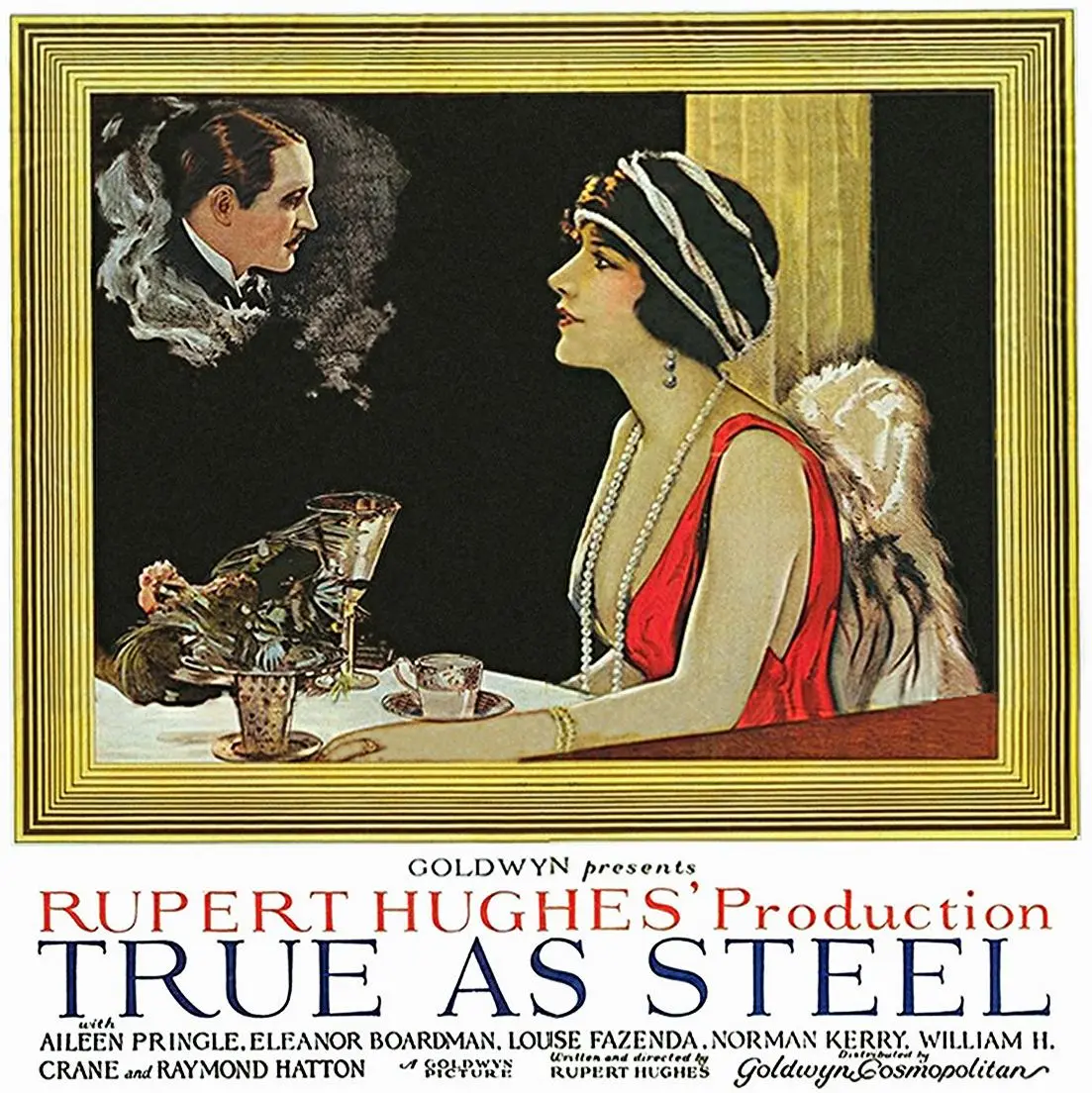
The visual storytelling is bolstered by a keen eye for detail. The Swansea Cotton Mills are not just a backdrop; they are a character in their own right, representing the relentless grind of the quotidian that Parry so desperately wishes to escape. The contrast between the rhythmic clatter of the looms and the silent, heavy stares exchanged between Parry and Eva in New York creates a sensory dichotomy that is expertly handled. Even without the benefit of sound, the audience can feel the cacophony of the factory floor and the deafening silence of a broken promise.
The final act of the film, where Parry returns to his wife’s forgiveness, is perhaps its most controversial element for a modern audience. Is it a cowardly retreat to the status quo, or is it the ultimate act of 'steel'—the strength to face the wreckage one has caused? Unlike the escapist fantasies of Up in the Air or the straightforward heroism of The Blue Streak, True As Steel offers no easy catharsis. The forgiveness Parry receives is heavy; it is a burden he must carry, a constant reminder of the fragility of the bonds he nearly severed. The inclusion of Ethel’s professional ambition in the denouement serves as a hopeful counterpoint, suggesting that while the old structures of marriage and fidelity are being tested, new structures of individual purpose are being built.
Technically, the cinematography by the uncredited but clearly skilled crew utilizes long takes and medium shots that allow the actors to inhabit the space fully. There is a notable absence of the hyper-kinetic editing found in Join the Circus, which serves the film's contemplative tone. The lighting in the New York sequences has a shimmering, almost ethereal quality, contrasting sharply with the flat, utilitarian lighting of the Parry household, effectively visualizing the allure of the affair versus the mundane reality of the marriage.
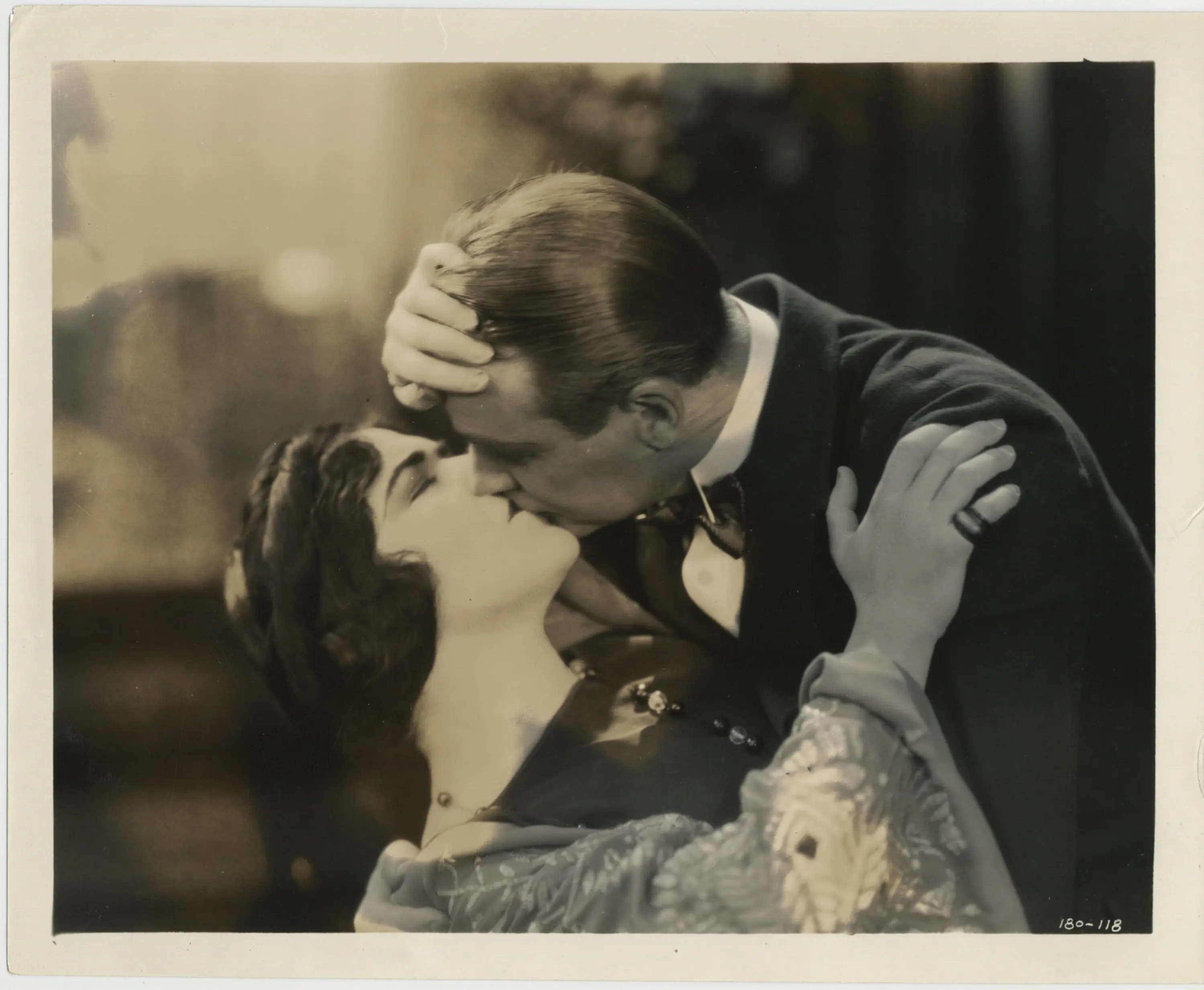
Looking back from a century’s distance, True As Steel remains a vital piece of cinematic history. It challenges the notion that silent films were primitive or intellectually shallow. Rupert Hughes crafted a narrative that is as relevant today as it was in 1924, touching on the perennial struggle to balance personal desire with social responsibility. It avoids the slapstick tropes of Why Smith Left Home and the escapism of Beach Nuts, demanding instead that the viewer engage with the uncomfortable nuances of human failing.
The film’s endurance lies in its refusal to offer a simplistic villain. Frank Parry is not a monster; he is a man lost in the transition of an era. Eva Boutelle is not a temptress; she is a woman of principle caught in the crosshairs of another man’s crisis. This refusal to resort to caricature elevates the film into the realm of high art. It is a cinematic tapestry woven with threads of ambition, regret, and the unyielding strength of the human spirit—truly, a work that is as enduring and as complex as steel itself.
In the grand pantheon of 1920s cinema, where many films have faded into obscurity or are remembered only for their technical novelties, this work stands out for its psychological depth. It invites us to look past the velvet curtains and the high-collared shirts into the very machinery of the human heart. Whether compared to the historical sweep of Iwami Jûtarô or the dualistic nature of Les frères corses, True As Steel maintains a unique position as a precursor to the modern psychological drama, proving that even in silence, the truth can be deafening.
IMDb 6.6
1934
Community
Log in to comment.